

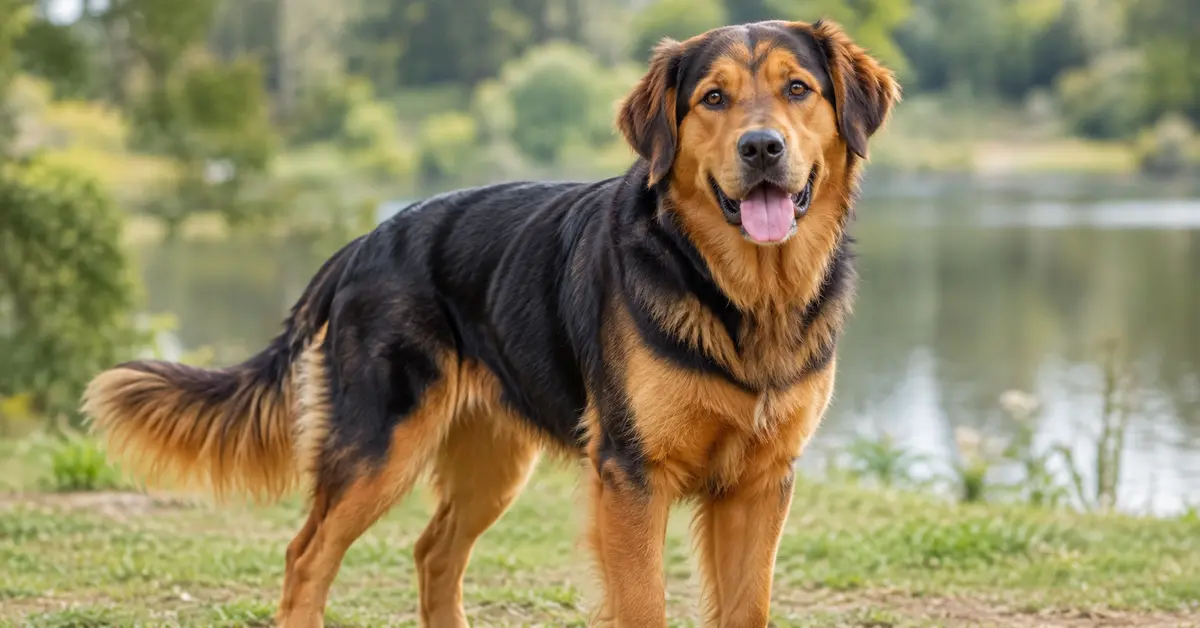
Picture a dog with a Golden Retriever’s easy affection and a Rottweiler’s watchful confidence, all wrapped into one family companion. A golden retriever and rottweiler mix, also commonly called a Golden Rottie or Golden Rottie Retriever, is a hybrid dog that combines these two breeds, usually producing a large, affectionate dog with a naturally protective streak.
This guide breaks down everything you need to know before bringing one home, from size and health to training and daily costs.
What Is a Golden Rottie?
A Golden Rottie is a hybrid between a purebred Golden Retriever and a purebred Rottweiler. Because it is a cross and not a recognized breed, no official breed standard exists. Many breeders and breed-profile sites estimate adults at 22 to 27 inches tall and 65 to 95 pounds, which puts them in the large-breed group. Some dogs, especially males that lean toward the Rottweiler side, can grow heavier than that.
Their coats often show the Rottweiler’s black and tan pattern over the Golden’s softer, longer fur, though some puppies lean toward solid gold. Temperament usually blends the Golden’s warmth with the Rottweiler’s alertness, giving a dog that is loyal, watchful, and typically devoted to its own family. Individual traits still vary a lot from one litter to the next, so the descriptions in this guide describe tendencies, not promises.
Where This Hybrid Comes From
Mixed breeds like this one rarely have a documented origin story. Breeders began crossing Golden Retrievers and Rottweilers on purpose sometime in recent decades, probably hoping to pair a friendly family dog with a naturally protective one. No breed club tracks exact dates or founding kennels, so most of what is known comes from the two parent breeds.
Golden Retriever Background
The Golden Retriever began in 19th-century Scotland, where Dudley Marjoribanks, better known as Lord Tweedmouth, set out to create a hunting dog suited to wet, rugged ground. He spent decades on selective breeding and careful record-keeping. The result was a retriever with a soft mouth, a strong desire to work with people, and a coat that shrugged off water.
The breed later spread to North America and became a favorite family dog. Goldens are known for patience, steady temperament, and easy trainability, and they still work as gundogs, therapy dogs, and service dogs. That people-first wiring is what most owners hope will show up in the mix.
Rottweiler Background
Rottweilers trace back to the Roman era, and they are often described as descendants of mastiff-type dogs that drove cattle alongside Roman armies. The breed takes its name from the German town of Rottweil, where these dogs herded livestock and pulled carts loaded with meat for local butchers. Jobs like these rewarded strength, confidence, and a habit of guarding what belonged to the family.
The American Kennel Club recognized the Rottweiler in 1931. Today the breed is known for loyalty, courage, and a calm, watchful manner, and it does best with an owner who trains consistently and socializes the dog early. That guarding streak is the trait that most often shows up in the mix.
Why the Mix Became Popular
Interest in this cross grew alongside the wider designer-dog trend, in which breeders combine two established breeds hoping to capture the best of each. With this pairing, the goal is usually a family-friendly dog that also keeps an eye on the house. The Golden supplies friendliness and trainability, while the Rottweiler adds confidence and a sturdier frame. Many owners also like the look, which can range from a gold-and-cream Retriever build to a bold black-and-tan coat.
Popularity does not mean predictability, though. No registry or breed standard guides these litters, so results depend on the parent dogs and the breeder’s choices. That gap is why health testing and a close look at both parents matter more than the mix’s reputation.
What a Golden Rottie Looks Like
A Golden Rottie’s looks depend on which parent’s genes show up more strongly, and that can differ between siblings in the same litter. Many dogs end up with a body closer to the Golden Retriever, meaning a more athletic, less bulky frame than a purebred Rottweiler. The head and ears often split the difference, with a moderately broad skull and hanging, folded ears.
Coat Colors, Including the Black and Tan Pattern
The black-and-tan coat many people associate with this mix comes from the Rottweiler side. It usually appears as a black base with tan or rust markings on the legs, chest, and face. Some puppies take after the Golden Retriever instead and show solid gold or cream, while others land somewhere in between with a blend of both patterns.
Eye color is usually brown, and the nose is most often black. Coat color and length can shift as a puppy grows, so the look at eight weeks may not match the adult coat. Ask the breeder for photos of both parents, since they show the range of colors a puppy could grow into.
Coat Length and Texture
Coat length runs from short to medium-long, depending on which parent contributes more. Dogs with more Golden influence tend to have softer, slightly wavy fur with feathering on the legs and tail. Dogs closer to the Rottweiler side usually have a shorter, denser coat that lies flat.
Either way, expect a double coat, meaning a soft undercoat beneath a firmer outer layer. That structure sheds and needs regular care, and it also means these dogs handle cool weather better than heat. On hot days, shade, fresh water, and shorter walks matter. Avoid shaving a double coat to keep a dog cool, because the coat also helps regulate body temperature.
Why Littermates Can Look Different
Because this is a cross and not a standardized breed, each puppy inherits a random mix of genes from its parents. One pup may favor the Golden with a light, feathered coat, while a sibling looks like a smaller Rottweiler with a black-and-tan pattern. Neither outcome is unusual.
There is no reliable way to know which traits a puppy will show before it matures. Size, coat, and even energy level can settle into a pattern only after several months. Meeting both parents helps, since their build and coat show the range a litter can produce.
Size Considerations and Growth Stages
This is a large-breed dog, and size affects everything from crate choice to joint health during growth. Owners should plan for a dog that needs room to move and a feeding plan built for large-breed development, not a standard puppy formula that pushes fast growth.
Puppy Growth Timeline
Puppies grow fast in the first six months. Many large-breed pups reach roughly half their adult weight somewhere around four to five months, though individual dogs vary. Growth slows between six and twelve months, and most dogs are close to full height by their first birthday.
Filling out takes longer. Muscle and skeletal maturity often arrive between 18 and 24 months, which is why controlled exercise matters through the first year and a half. Long runs, repeated jumping, and hard stair climbing can strain joints that are still developing. Short walks, free play on soft ground, and training games give a young Golden Rottie an outlet without piling stress on those joints. Regular weigh-ins at vet visits show whether growth is on track.
Average Adult Height and Weight
Numbers for this cross are estimates, since no breed standard exists. Most sources place adults in the ranges below, with females usually near the lower end and males near the upper end or slightly above it. A dog that leans toward the Rottweiler side can end up heavier than the table suggests.
| Measurement | Typical Range |
| Height | 22–27 inches |
| Weight | 65–95 lbs |
| Age at full height | About 12 months |
| Age at full maturity | 18–24 months |
Body condition tells you more than a number on a chart. A lean dog, with a visible waist and ribs you can feel but not see, puts less strain on hips and elbows than a heavy dog of the same height. Weight is one of the few health factors owners control directly.
Temperament and Behavioral Traits
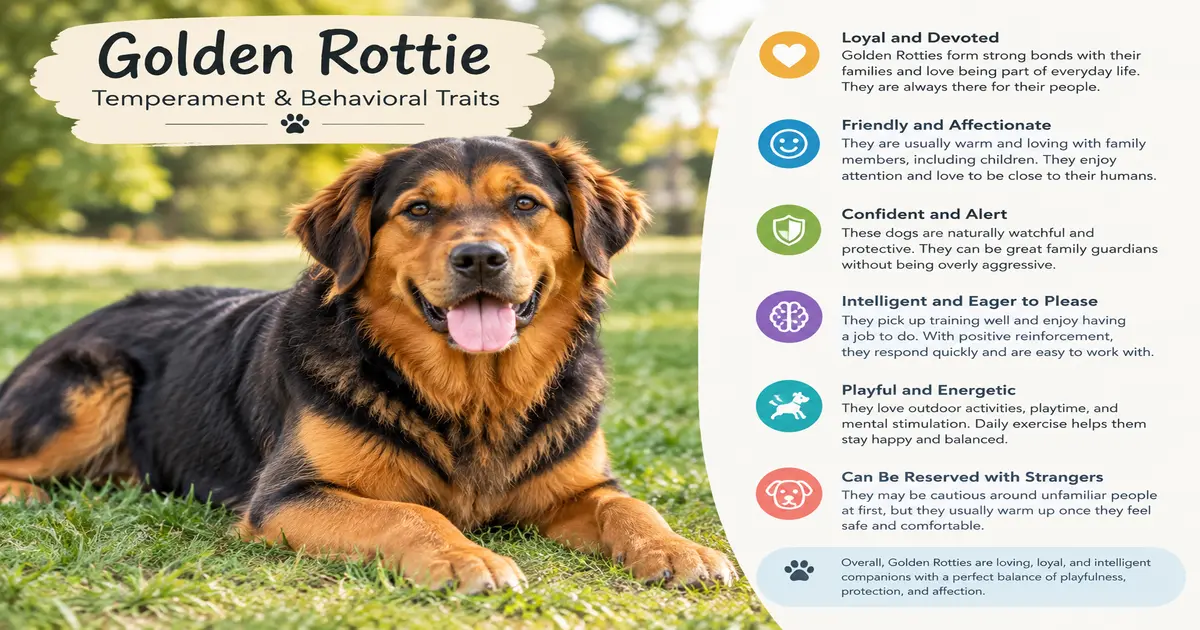
Temperament in this cross usually blends the Golden Retriever’s eagerness to please with the Rottweiler’s natural wariness of strangers. Most owners describe a dog that is deeply attached to its family, alert to its surroundings, and quick to settle once it trusts a new person or situation. Early socialization matters more here than with many single-breed dogs, since the guarding instinct needs guidance to stay balanced instead of turning reactive.
Guarding Instincts vs. Friendliness
The Rottweiler side often contributes an instinct to watch the front door, size up visitors, and stay close to family in unfamiliar places. That is not the same as aggression. With proper socialization, most of these dogs learn to read situations calmly and react only when something truly seems off.
Without early exposure to different people, places, and sounds, the guarding streak can tip toward excess suspicion or reactivity. The Golden Retriever side pulls the other way, adding a friendly, social streak that often softens first meetings once the dog decides a person is safe. The balance differs from dog to dog, so watch how a puppy handles new situations from the first weeks.
Intelligence and Problem-Solving
Both parent breeds rank among the more trainable working and sporting breeds, and this mix usually inherits that mental sharpness. Dogs pick up commands quickly and often work out household routines, door latches, and gate mechanisms faster than owners expect.
That intelligence needs an outlet. A bored, clever dog invents its own entertainment, and the results tend to be chewed shoes, dug-up gardens, or raided trash cans. Puzzle feeders, scent games, short training sessions, and new tricks keep the mind busy. A ten-minute training session can tire a dog out about as much as a longer walk, and rotating toys every week keeps the house interesting.
How This Mix Behaves With Family, Kids, and Other Pets
Family life tends to suit this hybrid well, especially in households that offer steady structure and daily interaction. Around children, these dogs typically lean gentle and patient, drawing on the Golden Retriever’s tolerant nature. Size still calls for supervision, since a fully grown dog can knock over a toddler with a happy wag. A well-socialized dog usually treats kids as part of its group to look after, not something to guard against.
With other pets, results depend on how early and how often the dog met animals outside its own home. Dogs introduced to cats, smaller dogs, and other pets as puppies generally adjust well and often form close bonds. Dogs that missed that early exposure can show more caution or chase instinct toward smaller animals. Training improves this, but it rarely erases it completely. As with most large, protective dogs, supervised introductions and gradual exposure give the most reliable results. Keep first meetings short, on neutral ground, and end them while everyone is still calm.
Genetics Explained: Why Traits Vary So Much Litter to Litter
A cross between two purebreds does not follow the predictable inheritance pattern you would see in a purebred litter. Each puppy receives a random combination of genes from both parents, so coat color, size, and even temperament tendencies can land anywhere between the two breeds. That differs from a multi-generation designer breed, where breeders have selected for consistency over several generations.
This randomness explains why descriptions of the mix keep using phrases like “can vary” and “depends on the individual dog.” A puppy might inherit the Golden’s coat with the Rottweiler’s guarding instinct, or the reverse. No genetic test can predict that combination before a puppy is born. Reputable breeders share information about the temperament and health of both parents, which tells you more than guesswork does. Even then, expect some variation. Treat breed descriptions as a starting point, then judge the puppy in front of you by how it behaves.
Training and Obedience
This mix generally responds well to training, especially when it starts early and stays consistent. Both parent breeds were developed for jobs that required taking direction from a handler, and that heritage shows up as a dog that is usually eager to learn once it understands what is being asked.
Puppy Training Basics
Start basic obedience the day the puppy arrives. Focus on name recognition, sit, stay, come, and loose-leash walking, and keep sessions short, since puppies tire quickly. Positive reinforcement, meaning treats, praise, or play for correct behavior, usually works better than correction-based methods with this cross. Harsh handling can make the guarding instinct worse instead of better.
Puppy socialization classes give a controlled way to meet new people, sounds, surfaces, and dogs during the early window when that exposure has the biggest effect. Crate training and a steady daily routine help too, especially for housebreaking and for teaching a young dog to settle when the house is busy.
Handling the Protective Streak During Training
Managing the guarding instinct means teaching the dog to look to its owner for cues instead of deciding for itself who counts as a threat. Structured greetings help, such as asking the dog to sit calmly before it meets a new person. Reward quiet behavior when the doorbell rings or a stranger walks past the window, so the dog learns that watching is fine and barking is not required.
Owners who wait until adulthood to address protective behavior often find it takes longer to reshape, which is why trainers recommend starting in puppyhood. If a dog shows growling, lunging, or fear toward visitors, work with a qualified trainer or veterinary behaviorist early instead of waiting to see if it passes.
Exercise Needs and Daily Activity
This is a high-energy hybrid that needs real daily exercise, not just a quick walk around the block. Most owners should plan for roughly 60 to 90 minutes of combined activity per day, split between structured walks, off-leash play in a secure area, and some mental engagement such as training games or puzzle feeders. Both parent breeds were bred for active working roles, and that energy does not disappear because the dog lives in a home instead of on a farm or in a hunting field.
Without enough outlet, these dogs commonly develop destructive habits, from chewed furniture to excessive barking or digging. Swimming, fetch, and hiking work particularly well, since they combine physical effort with the kind of engagement an intelligent dog craves. Puppies need shorter, gentler sessions until their joints mature. A fenced yard makes meeting these needs easier, though apartment living can still work with a committed routine and regular access to dog parks or open space.
Grooming and Shedding Management

Grooming needs sit in the moderate range: more involved than a short-haired breed, less demanding than a heavily coated one. The double coat sheds year-round, with heavier shedding during seasonal coat changes in spring and fall, so regular brushing makes a visible difference in how much fur ends up on furniture and clothing.
Brushing Routine
Brush two to three times a week to remove loose hair and prevent matting, especially in dogs with a longer, Golden-leaning coat. A slicker brush pulls out loose undercoat, and a pin brush smooths the topcoat afterward. Regular brushing also lets you spot lumps, skin irritation, and ticks early.
Trim nails every three to four weeks. Check the ears weekly and dry them after baths or swimming, since folded ears trap moisture and raise the risk of infection. Brushing the teeth several times a week keeps gum disease in check, and a puppy that learns to enjoy handling early will be far easier to groom as an adult.
Managing Seasonal Shedding
During heavy shedding periods, daily brushing for a week or two keeps loose fur from taking over the house. A deshedding tool made for double-coated dogs removes far more undercoat than a standard brush. Work in the direction of hair growth and avoid pressing hard on the skin.
Bathing more than once every four to six weeks usually is not necessary and can strip natural oils from the coat, so spot-cleaning between baths works better for everyday mess. A good diet also supports coat health. If shedding suddenly increases outside the normal seasons, or patches of skin look bare or red, check with your vet, since skin problems and hormone conditions can change the coat.
Common Health Issues to Watch For
Like most large mixed breeds, this hybrid can inherit health conditions found in either parent breed. Knowing the risks helps owners catch problems early and make informed choices about preventive care.
Joint and Orthopedic Conditions
Hip and elbow dysplasia rank among the most common concerns for both Golden Retrievers and Rottweilers, and the mix carries the same risk. Both conditions involve abnormal joint development, which can lead to arthritis and reduced mobility over time. Signs include limping, stiffness after rest, trouble rising, and a reluctance to climb stairs or jump.
Keeping a healthy weight and avoiding high-impact exercise during the growth phase both reduce strain on developing joints. A dog with suspected joint trouble needs a vet exam and often X-rays, so mention any change in movement at the next visit instead of waiting for it to worsen.
Heart and Eye Conditions
Subaortic stenosis, a narrowing near the heart valve, appears more often in Golden Retrievers and Rottweilers than in many other breeds. A vet can sometimes hear it as a heart murmur during a routine exam, so mention it at checkups, especially for young dogs. Eye conditions such as progressive retinal atrophy and cataracts also appear in both parent breeds’ health histories.
Regular veterinary exams that include listening to the heart and a basic eye check can catch these problems before they become serious. Any sudden change, such as cloudy eyes, bumping into objects, fainting, or tiring quickly on walks, deserves a prompt call to the vet.
What Health Testing to Ask Breeders About
Reputable breeders can share hip and elbow evaluations, cardiac clearances, and eye examination results for both parent dogs. The Orthopedic Foundation for Animals keeps a public database where many of these results are listed, which makes them easy to confirm. Ask to see the paperwork instead of accepting a verbal promise.
A breeder who shares documents, explains what each result means, and welcomes questions is a good sign. A breeder who avoids the topic, says the dogs are “vet checked” without any specifics, or pushes you to decide quickly is worth walking away from. Health testing does not guarantee a healthy puppy, but it lowers the odds of avoidable problems.
What Research Says About Mixed-Breed Health and Temperament
Since 2012, the Morris Animal Foundation has followed more than 3,000 Golden Retrievers through their lives to learn what raises the risk of cancer and other diseases. The Golden Retriever Lifetime Study has recorded more than 500 diagnoses of four major cancers: hemangiosarcoma, lymphoma, high-grade mast cell tumor, and osteosarcoma. One of its main findings was a higher-than-expected rate of hemangiosarcoma. This matters for a Golden Rottie because the mix gets about half its genes from the Golden Retriever side, and having a Rottweiler parent does not guarantee the dog avoids that risk.
The study is also looking at factors such as neutering, obesity, and gut bacteria, but those questions are still being worked out, so owners should treat them as open questions, not settled advice. What owners can do today is ask breeders about cancer history in both parent lines, keep the dog lean, and book regular vet checkups. Temperament follows a similar rule: for a first-generation cross, early socialization and steady training play a big role in how the adult dog turns out.
Diet Recommendations by Life Stage
Feeding needs shift as this large-breed dog moves through life stages. Puppies do best on a formula made for large-breed puppies, since regular puppy food often supports faster growth than is ideal for developing joints and can raise the risk of orthopedic problems. Look for controlled calcium and phosphorus levels and a calorie density that supports slow, steady growth.
Adult dogs generally do well on a complete, high-quality food, split into two meals a day. Some veterinarians recommend smaller, more frequent meals for deep-chested dogs to lower the risk of bloat, although the research on prevention is mixed. Many adults eat roughly 3 to 4 cups of dry food a day, but the right amount depends on the food’s calories, the dog’s activity, and body condition, so rely on the label’s guide and your vet’s advice instead of a fixed number.
Senior dogs often benefit from a formula with joint-support ingredients such as glucosamine and chondroitin, along with slightly fewer calories to match lower activity. Change foods gradually over a week or two to avoid stomach upset. Owners with specific health concerns should choose food together with their vet.
Lifespan: What to Expect
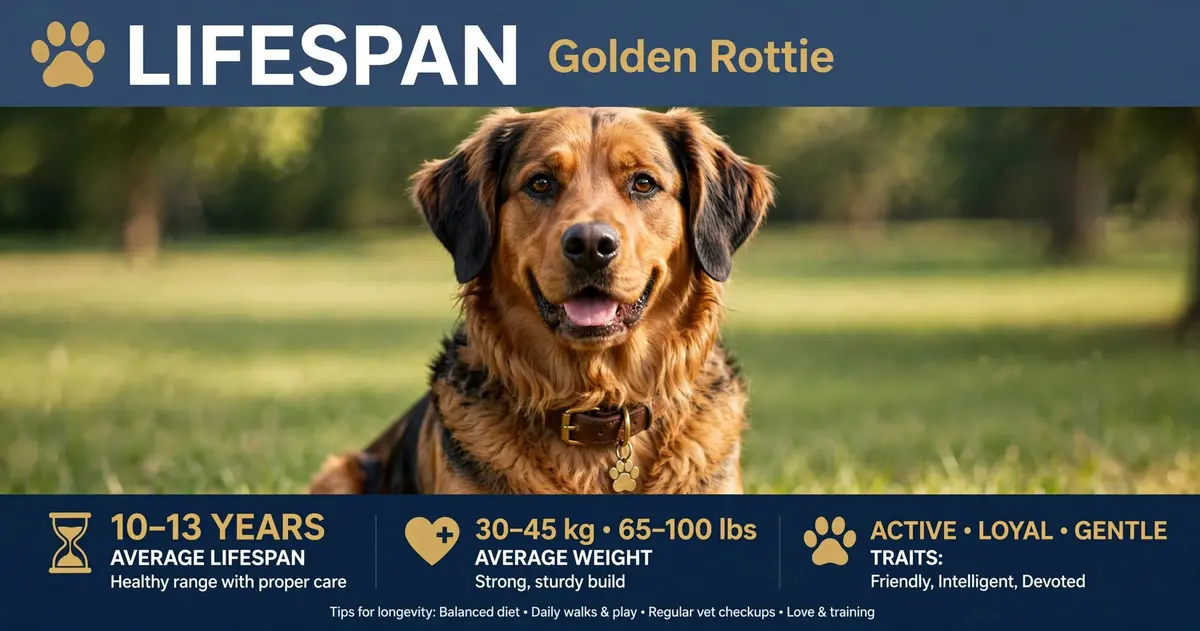
Most dogs from this cross live roughly 9 to 12 years. Golden Retrievers often reach 10 to 12 years, while Rottweilers usually live a little less, around 8 to 10. A Golden Rottie tends to fall somewhere between the two, though no long-term study of this specific cross exists, so that range is an estimate drawn from the parent breeds.
Genetics, diet, exercise, and preventive vet care all influence where an individual dog lands. Dogs that stay lean and get regular checkups usually age more comfortably. Size plays a role as well, since larger dogs generally have shorter average lifespans than smaller ones. Knowing the ages and health histories of both parent dogs and their close relatives gives a better clue than any breed average. Ask the breeder how long the parents and grandparents lived, and what health problems they faced along the way.
Average Cost: Puppy Price, First-Year Costs, and Ongoing Expenses
Understanding the full cost helps set realistic expectations before a puppy comes home. The figures below are rough estimates that vary by region, breeder, and vet, so treat them as a starting point for your own budget.
| Cost Category | Estimated Range |
| Puppy purchase price | $500–$1,500 |
| First-year costs (vaccines, spay/neuter, supplies) | $1,500–$2,500 |
| Annual food cost | $500–$700 |
| Annual routine vet care | $300–$500 |
| Unexpected vet bills (varies widely) | $1,000–$3,000+ |
Adoption fees from rescues often run lower than breeder prices, commonly somewhere between $150 and $400, and they usually include initial vaccinations and spay or neuter surgery. Ongoing costs add up over the dog’s lifetime, so plan for food, grooming supplies, routine vet visits, and pet insurance premiums along with the upfront price. Large dogs also tend to cost more for medications and boarding, since doses and fees often scale with weight. An emergency fund or an insurance policy eases the impact of a surprise vet bill, which is the hardest cost to predict.
Is a Golden Rottie a Good Fit for Your Home?
This mix tends to do best in homes that offer consistent structure, daily exercise, and enough space for a large, active dog to move comfortably. A fenced yard makes life easier, though it is not required for owners who commit to regular outdoor activity elsewhere.
Apartment vs. House Living
Apartment living can work for this hybrid, but it takes more deliberate effort than a house with a yard. Daily walks, trips to a dog park, and structured play become requirements, not extras. Indoor games such as hide-and-seek or scent work help on rainy days.
Noise is the other factor. A watchful dog may bark at hallway footsteps, elevator dings, or neighbors, and shared walls make that a bigger problem than it would be in a detached home. Teaching a quiet cue early, and giving the dog a resting spot away from the front door, cuts down on alert barking. Check your lease too, since some buildings limit dog size or breed.
First-Time Owner Considerations
This cross can work for a first-time owner who has realistic expectations about the training and exercise commitment. A dog of this size and protective instinct needs early socialization, and owners who skip it often face behavior problems that would have been easier to prevent.
Budget time as well as money: daily exercise, weekly grooming, and puppy classes add up. First-time owners who enroll in training classes and keep routines steady tend to do well. Asking the breeder or rescue for honest guidance on a specific puppy’s personality helps match the right dog to the right home, and an experienced trainer can review your plan before the puppy arrives.
Adoption vs. Buying From a Breeder
Both paths can lead to a great dog, though each comes with different tradeoffs worth understanding before you decide.
Questions to Ask a Breeder
A responsible breeder welcomes questions about health testing for both parent dogs, the conditions puppies are raised in, and how much early socialization the litter gets before going home. Ask to meet at least one parent, usually the mother, since her temperament and health offer clues about what to expect.
Also ask what the breeder will do if the dog cannot stay with you later. Good breeders usually offer to take a dog back. Be cautious if a breeder cannot provide health documents, keeps puppies in poor conditions, has many litters available at once, or rushes the sale.
Where to Find Rescues
Breed-specific rescues for Golden Retrievers and Rottweilers sometimes take in mixes, and general shelters often have dogs that fit this profile, since mixed breeds make up a large share of shelter dogs. Online listing sites that gather shelter and rescue dogs let you filter by size, breed type, and location.
Shelter breed labels are often educated guesses, so treat “Golden Rottie” on a kennel card with caution and judge the dog by how it behaves. Ask staff about known behavior patterns, health issues, and how the dog acts around kids and other pets. Consider a foster-to-adopt trial if the organization offers one.
Common Myths About This Mix
Several misconceptions follow this cross around, and most of them come from assumptions about the Rottweiler half rather than how these dogs actually behave. Sorting fact from fiction helps set realistic expectations before bringing one home.
Myth: A Golden Rottie is dangerous because it is half Rottweiler. Rottweiler ancestry does not make a dog dangerous on its own. The breed’s watchfulness comes from centuries of guarding livestock and property, not from a hardwired aggression trait, and pairing that instinct with the Golden Retriever’s people-focused temperament usually produces a dog that is alert rather than hostile. Behavior problems in this cross, like in any dog, trace back to poor socialization, inconsistent training, or mishandling.
Myth: Because one parent is a Golden Retriever, this mix is automatically gentle and easygoing. The Golden Retriever side does soften the mix, but it does not cancel out the Rottweiler’s guarding instinct or its need for a confident, consistent handler. Owners who treat a Golden Rottie puppy exactly like a purebred Golden, skipping structured training because “Goldens are easy,” often end up surprised when the protective streak shows up around adolescence.
Myth: The black-and-tan coat means a puppy will act more like a Rottweiler, while a gold coat means it will act more like a Golden. Coat color comes from a different set of genes than temperament, and the two do not travel together in a first-generation cross. A puppy with a classic Rottweiler coat pattern can turn out to be the more laid-back, people-pleasing one in the litter, and a gold, Golden-looking puppy can be the one that stays wariest of strangers.
Myth: This mix is banned or restricted everywhere Rottweilers are. Breed-specific legislation targets purebred Rottweilers and a handful of other breeds by name in some cities and insurance policies, and enforcement for mixed dogs varies by location and by how the dog is classified. A Golden Rottie is not automatically covered by every Rottweiler-specific rule, but owners in an apartment, a rental, or an area with breed restrictions should check local ordinances and their insurance policy directly rather than assume either way.
What Real Owners Say: Patterns in Temperament and Behavior
Owner reviews on public breed-profile pages describe a fairly consistent pattern. Many owners say their dog stays alert around unfamiliar visitors, sometimes positioning itself between a stranger and the family without acting hostile, then relaxing once it decides the person is safe. This matches what the two parent breeds are known for, though reviews are personal accounts, not controlled data.
A second pattern is strong affection toward children in the household, even from dogs that stay more reserved with adult strangers. Several reviewers also describe rescue dogs that started life in rough conditions and settled into steady adult dogs with consistent training and patience. A few owners report dogs that resist hugging or handling, or that struggled with separation anxiety at first, which shows that not every dog fits the friendly-and-protective description. Taken together, these accounts suggest a dog whose protective instincts, when guided early, tend to show up as loyalty instead of general wariness, though your own dog may differ.
If you are considering this cross, start by asking breeders or rescues about the specific parent dogs or the dog’s known history, since that tells you more than any general breed description. Plan your budget and living space around a large, active dog before bringing one home, and begin socialization in the first week instead of waiting to see how the personality develops.
Frequently Asked Questions
Is a golden retriever rottweiler mix good with kids?
Yes, in most cases. The Golden Retriever side usually brings patience and warmth around children, and many owners report close bonds between these dogs and kids in the household. Supervision still matters because of the dog’s size and strength once it is fully grown. Teach children to respect the dog’s space.
Are they hypoallergenic?
No. Neither parent breed is considered hypoallergenic, and this mix sheds a moderate to heavy amount, especially during spring and fall coat changes. Households with allergy concerns should spend time with an individual dog before committing, since sensitivity varies from person to person.
How big do they get full grown?
Most estimates put adults at 22 to 27 inches tall and 65 to 95 pounds, which places them in the large-breed group. Males usually land near the top of that range, and some dogs that lean toward the Rottweiler side grow heavier. Full height arrives around 12 months, while filling out can take up to two years.
Are they easy to train for a first-time owner?
Generally yes, thanks to the intelligence and eagerness to please that both parent breeds bring. Success depends on starting early and staying consistent, particularly with socialization and the guarding instinct. A first-time owner who commits to training classes and a steady routine has the best chance of a well-mannered adult dog.
Do they do well in apartments?
They can, though it takes more effort than living in a house with a yard. Daily exercise becomes a fixed part of the schedule, and owners should train early against barking at hallway noise. A committed routine of walks, play, and mental work makes apartment life workable for most of these dogs.

Hi, I’m Jack Austin, founder of Cool Goldens. I share practical, research-backed advice on training, nutrition, and daily care to help you give your Golden Retriever the happiest, healthiest life possible.