

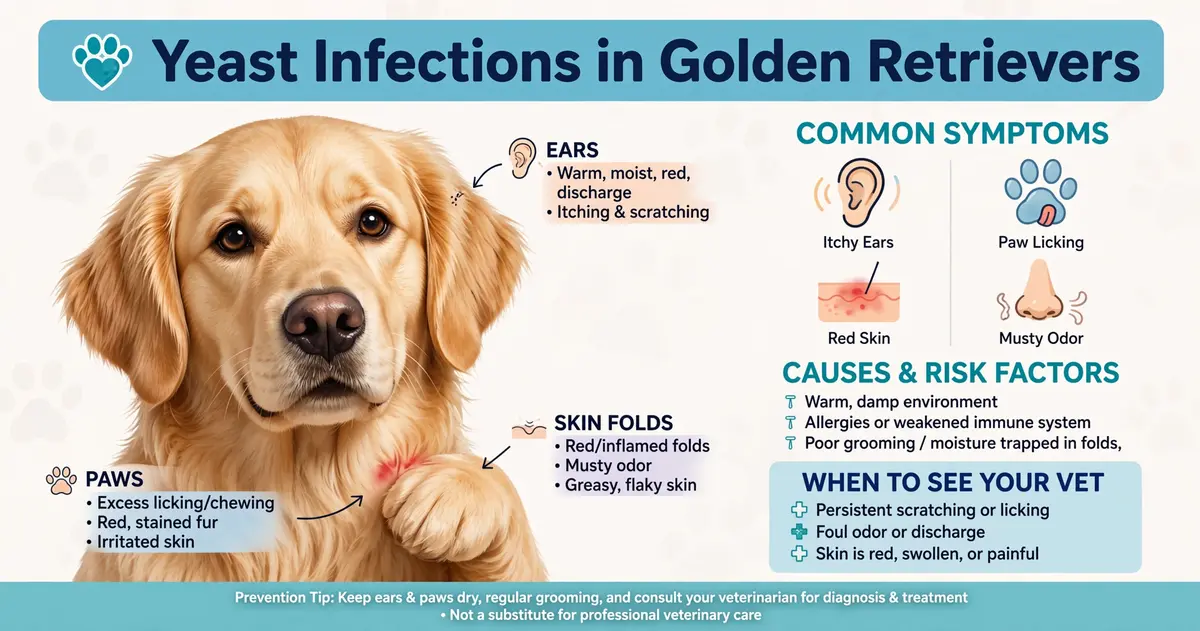
Yeast infections in Golden Retriever dogs are common, uncomfortable, and directly tied to the breed’s coat and ear shape. Moisture gets trapped, yeast multiplies, and symptoms like itching, odor, and skin irritation follow.
This isn’t random bad luck. It’s a pattern rooted in how Goldens are built, and once you know the pattern, prevention gets a lot easier. Here’s what causes it, how to recognize it early, and what treatment actually looks like.
What Is a Yeast Infection in Dogs? (Quick Answer)
Yeast is a type of fungus that lives on your dog’s skin in small, harmless amounts. A healthy immune system and normal skin bacteria keep it in check without any problem.
Trouble starts when something disrupts that balance. Excess moisture, allergies, or hormonal changes can let yeast multiply faster than the body can control. This overgrowth is what causes the itching, redness, and smell that dog owners notice.
Yeast infections are not contagious. Your Golden Retriever didn’t catch it from another dog at the park or from you. It develops internally, from conditions on your own dog’s skin.
Why Golden Retrievers Are More Prone to Yeast Infections
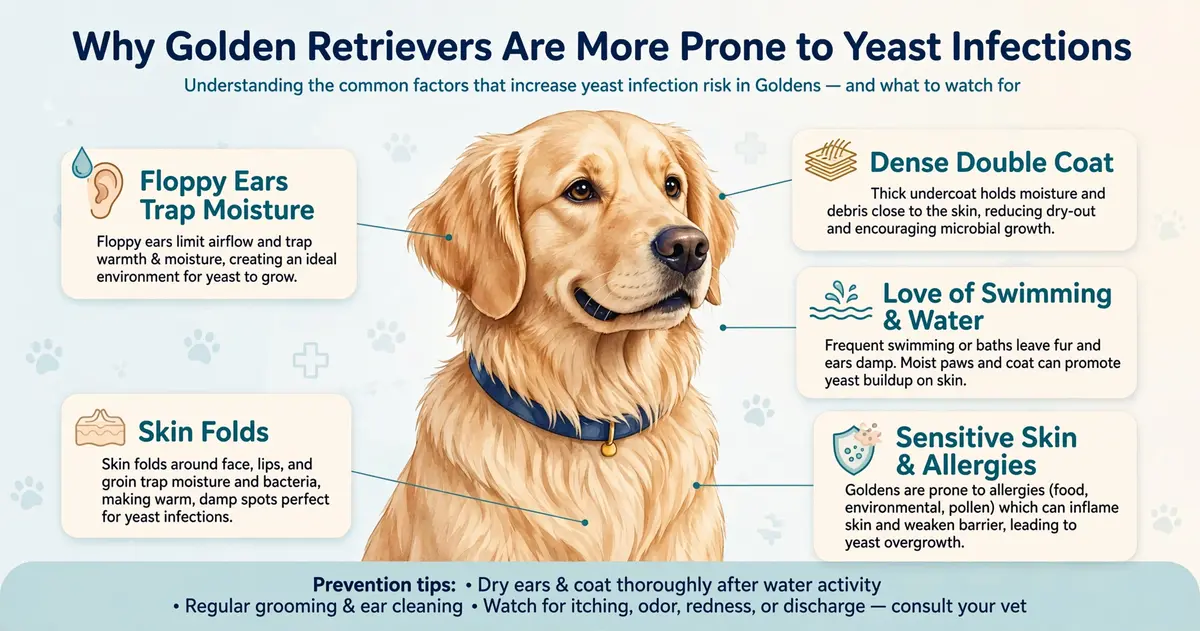
Golden Retrievers aren’t unlucky. Their physical traits just happen to line up with everything yeast needs to grow.
According to research in the Journal of Veterinary Diagnostic Investigation, Malassezia yeast overgrowth is heavily driven by trapped moisture and allergic skin disease—two factors that disproportionately affect double-coated, floppy-eared breeds like Goldens.
Their coat traps moisture. Goldens have a dense double coat built for water and cold weather. That same coat holds onto dampness long after a swim or bath, giving yeast a warm, humid place to settle in.
Their ears don’t dry out easily. Floppy ears block airflow to the ear canal. Add water from swimming or bathing, and moisture can sit there for hours, sometimes longer if it’s not dried properly.
Their skin folds hold onto humidity. Goldens don’t have the deep folds you’d see on a Bulldog, but areas like the neck, armpits, and paw creases can still trap sweat and water.
Allergies are common in the breed. Golden Retrievers are known for food and environmental allergies, which weaken the skin’s natural defenses. That makes it easier for yeast to take hold once it starts.
None of this means yeast infections are guaranteed. It just means Golden Retriever owners need to pay closer attention to drying routines and skin checks than owners of short-haired, upright-eared breeds might.
Common Symptoms: How to Tell If Your Golden Retriever Has a Yeast Infection
Most yeast infections show up in a pattern owners can learn to recognize. Catching it early makes treatment faster and less uncomfortable for your dog.
Frequent scratching. Your dog focuses on one spot over and over, or rubs their face against furniture and carpet to relieve the itch.
A strong, distinct smell. Yeast has a musty odor that many owners compare to corn chips or moldy bread. It tends to stick around even right after a bath.
Changes in skin texture and color. Look for skin that’s turned pink, red, or darker than usual. Thickened, leathery patches or greasy, flaky skin are also common signs.
Paw licking and staining. Constant licking can turn the fur between the toes a rust-brown color from saliva staining.
Ear discharge and head shaking. A yeasty ear infection often comes with brown or waxy discharge, redness inside the ear, and a dog that shakes its head more than usual.
If you notice more than one of these signs at once, it’s worth scheduling a vet visit rather than waiting to see if it clears up on its own.
Yeast Infection or Something Else? Comparing Similar Skin and Ear Problems
Yeast infections share symptoms with a few other common conditions, which makes self-diagnosis tricky. A side-by-side comparison helps narrow things down before your vet confirms it under a microscope.
Yeast vs. Bacterial Infections
| Feature | Yeast Infection | Bacterial Infection |
| Smell | Musty, yeasty odor | Often less distinct, sometimes sour |
| Skin appearance | Greasy, red, sometimes thickened | Often has pustules or pimple-like bumps |
| Discharge (ears) | Waxy, tan to dark brown | Yellow, sometimes with pus |
| Common cause | Moisture, allergies | Skin damage, secondary infection |
Dogs can have both at the same time, which is one reason a vet exam matters. Treating only one won’t clear up symptoms caused by the other.
Yeast vs. Ear Mites or Allergies
Ear mites produce a dry, dark discharge that looks like coffee grounds, and they’re far more common in puppies. Yeast infections tend to show up in adult dogs and produce a wetter, waxier discharge with that telltale smell.
Allergies alone can cause itching and redness without any infection present. In many Golden Retrievers, though, allergies come first and set up the skin for a yeast infection to follow. This is why treating the allergy is often part of preventing yeast from coming back.
What Causes Yeast Overgrowth in Golden Retrievers

Yeast doesn’t need much of a reason to start multiplying. A few common triggers show up again and again in Golden Retrievers specifically.
- Moisture from swimming or bathing. Water trapped in ears, paw pads, or coat folds creates the damp environment yeast needs.
- Food allergies. Certain proteins or grains can trigger inflammation that disrupts the skin’s natural balance.
- Environmental allergies. Pollen, dust mites, and mold can cause the same effect, especially during high-humidity seasons.
- Antibiotics or steroids. Antibiotics can kill off the healthy bacteria that normally keep yeast in check. Steroids can suppress the immune response that controls yeast overgrowth.
- Underlying health conditions. Hormonal issues like hypothyroidism and metabolic conditions like diabetes can make a dog more susceptible to skin infections generally.
It’s worth mentioning that in many cases, more than one of these factors is happening at once. A Golden Retriever with mild food allergies who swims regularly is dealing with two risk factors stacked together, not just one.
How Vets Diagnose and Treat Yeast Infections
A vet usually starts with a physical exam and a quick, painless test called skin cytology. This involves pressing a slide against the affected skin or swabbing the ear canal, then checking the sample under a microscope. Yeast cells have a distinct shape, often described as looking like small footprints, which makes them easy to identify this way.
Topical Treatments (Medicated Shampoo, Ear Cleaners)
For mild to moderate cases, vets often start with topical treatment. Medicated shampoos containing chlorhexidine or miconazole are common choices, used a few times a week for several weeks. Antifungal ear cleaners work the same way for ear-based infections, breaking down the yeast directly where it’s growing.
Topical treatment alone often isn’t enough for a well-established infection, but it plays a useful role alongside oral medication or as ongoing maintenance for dogs prone to recurring flare-ups.
Oral or Systemic Medications
For more stubborn or widespread infections, vets may prescribe oral antifungal medication such as ketoconazole, fluconazole, or itraconazole. These work from the inside out and are usually given for several weeks, even after visible symptoms improve.
Stopping the medication early is one of the most common reasons yeast infections come back. The full course matters, even once your dog stops scratching and the smell fades.
At-Home Care to Prevent Flare-Ups
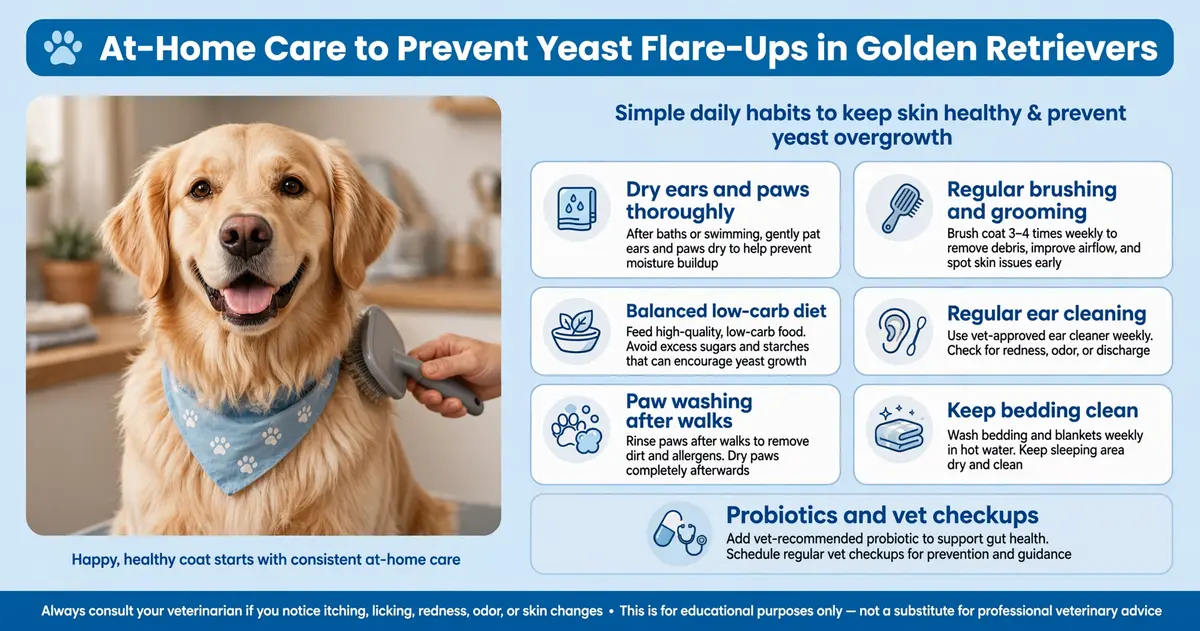
Vet treatment clears the active infection, but daily habits are what keep it from coming back. This matters more for Golden Retrievers than for drier-coated breeds, simply because they get wet more often.
Ear Cleaning Tips
Dry your dog’s ears thoroughly after every swim or bath using a soft towel or a vet-approved ear-drying solution. Avoid inserting cotton swabs deep into the ear canal, since this can push moisture and debris further in rather than removing it. If your Golden Retriever swims regularly, ask your vet about a routine ear-cleaning schedule built around that lifestyle.
Paw Care after Walks or Swimming
Check between the toes after walks on wet grass or after time at the beach or lake. Trapped moisture here is a common, often-overlooked cause of paw licking and yeast buildup. Wiping paws dry, especially between the pads, takes less than a minute and can meaningfully reduce flare-ups over time.
Do Home Remedies Actually Help? Separating Fact from Myth
Search results are full of home remedy suggestions for yeast infections, and it’s worth being honest about what’s actually supported and what isn’t.
Apple cider vinegar rinses are commonly recommended online and some owners report mild relief from itching. There isn’t strong scientific evidence that vinegar clears an active yeast infection on its own, and using it on broken or raw skin can cause stinging or further irritation.
Coconut oil contains compounds with some antifungal properties in laboratory settings, but this doesn’t necessarily translate to clearing an infection on a dog’s skin. Applying oil to already greasy, yeast-prone skin can sometimes make the environment more favorable for yeast rather than less.
Diet changes, on the other hand, have a more solid basis. If food allergies are driving the yeast overgrowth, switching to a diet that avoids the trigger ingredient can meaningfully reduce recurrence, though this typically requires guidance from a vet to identify the actual allergen.
The honest takeaway: home remedies can support a treatment plan, but they shouldn’t replace an actual diagnosis and prescribed treatment for an active infection. Mild, early-stage irritation is a different situation than a confirmed yeast overgrowth.
FAQs
Can yeast infections go away without treatment?
Mild cases sometimes improve if the underlying moisture or allergy trigger is resolved quickly. Most established infections need antifungal treatment to fully clear, since the yeast overgrowth won’t reverse on its own once it’s taken hold.
Are yeast infections contagious to other pets or humans?
No. Yeast infections in dogs develop from an imbalance on the individual dog’s skin and aren’t passed between pets or to people through contact.
How long does treatment usually take?
Itching often improves within the first week, but full skin healing typically takes two to six weeks depending on severity. Ear infections may clear faster with consistent topical treatment
Will my Golden Retriever get this again?
It’s possible, especially if an underlying allergy or moisture habit isn’t addressed. Dogs with chronic allergies often need ongoing management rather than a one-time fix.
Key Takeaway
Yeast infections are uncomfortable for Golden Retrievers, but they’re manageable once you understand the pattern: moisture and allergies create the conditions, and consistent drying and skin care help prevent it from starting over again. If you notice scratching, odor, or skin changes that don’t improve within a few days, a vet visit for proper diagnosis is the fastest path to relief for your dog.
For broader background, the American Veterinary Medical Association has general resources on canine skin health that may be useful alongside your vet’s specific guidance.

Hi, I’m Jack Austin, founder of Cool Goldens. I share practical, research-backed advice on training, nutrition, and daily care to help you give your Golden Retriever the happiest, healthiest life possible.