

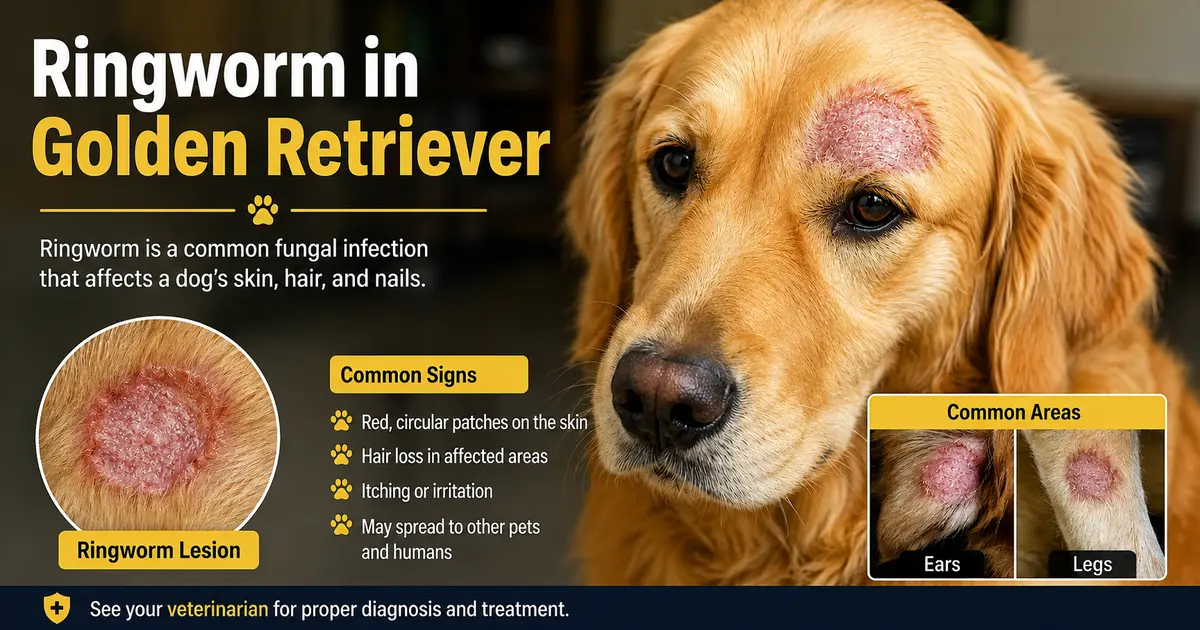
Ringworm in golden retriever dogs is a fungal skin infection, not a worm, and it causes circular, hairless patches that can spread to other pets and people.
Golden retrievers aren’t more prone to it biologically, but their thick coat can hide early symptoms longer than most breeds. Left untreated, it spreads. Treated properly, it clears up in weeks. This guide covers the symptoms, causes, and treatment steps that actually work..
What Is Ringworm in Golden Retriever Dogs?
Despite the name, ringworm has nothing to do with worms. It’s caused by a group of fungi called dermatophytes, which feed on keratin — the protein found in skin, hair, and nails. The name comes from the ring-shaped patches these fungi often create on skin.
In dogs, the most common culprit is a fungus called Microsporum canis. It spreads through spores that can survive on surfaces, bedding, and grooming tools for months. This is part of why ringworm tends to show up in multi-pet households or after a dog spends time around other animals.
Golden retrievers can catch ringworm just like any other breed. The infection itself isn’t picky about coat color or size. What changes is how quickly an owner notices it, since a golden’s dense fur can hide a small patch until it grows or spreads.
Early Signs and Symptoms to Watch For
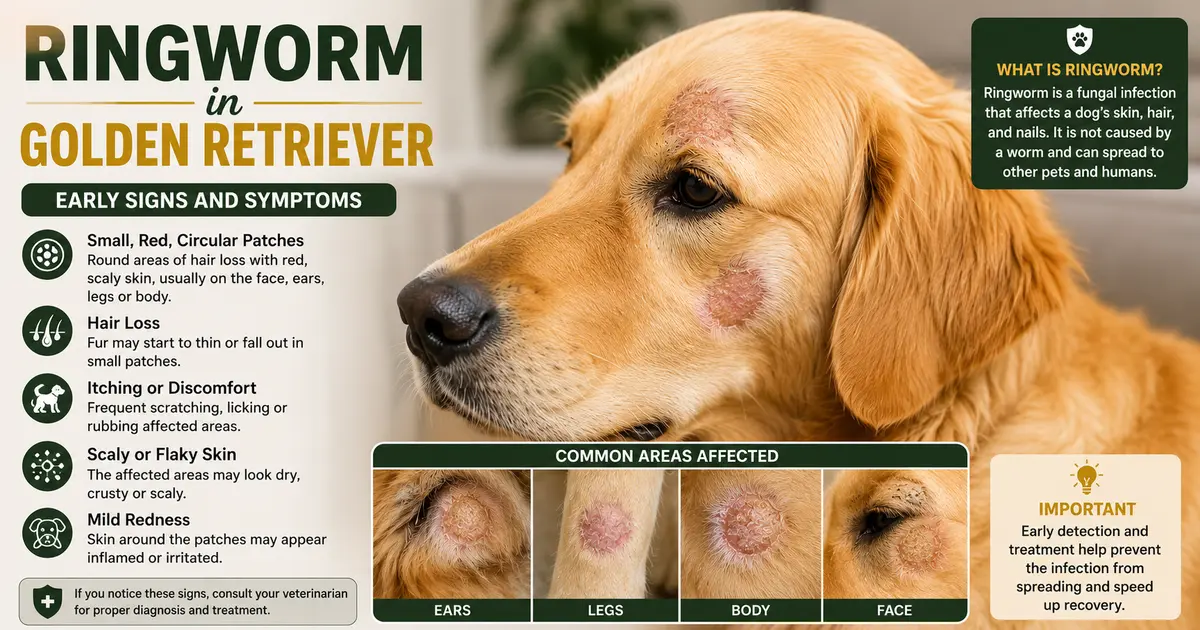
Ringworm symptoms usually start small and grow if left untreated. The classic sign is a circular patch of hair loss with a red, scaly, or crusty edge. The center of the patch may look clearer as the ring expands outward.
Other symptoms include:
- Dry, brittle, or broken-off hair
- Scaly skin that resembles dandruff
- Scabs or crusty lesions
- Darkened or thickened skin in affected spots
- Mild to moderate itching (though some dogs show none)
Not every dog shows textbook symptoms. Some golden retrievers carry the fungus without any visible signs, which is one reason vets recommend testing rather than guessing based on appearance alone.
Where Ringworm Usually Shows Up on a Golden Retriever
Ringworm tends to appear on the face, ears, paws, and legs first, since these areas make the most contact with other animals and surfaces. On a golden retriever, the feathering around the ears and legs can trap moisture and debris, which may allow patches to go unnoticed longer than they would on a short-haired dog.
Regular brushing helps here in two ways. It keeps the coat manageable, and it gives you a reason to check the skin underneath on a regular basis.
Why Golden Retrievers Can Be Especially Prone to Ringworm
Golden retrievers aren’t genetically more susceptible to ringworm than other breeds, but a few common traits in the breed can raise practical exposure risk. This is worth understanding, since it shapes how you’ll want to manage prevention.
Golden retrievers are known for loving water, mud, and long outdoor sessions. Damp fur creates a warmer, more humid environment against the skin, and fungi generally do well in warm, moist conditions. A coat that takes hours to fully dry after a swim gives spores more time to settle in.
Their friendly, social nature also means more contact with other dogs at parks, daycare, or grooming salons. Since ringworm spreads through direct contact and shared surfaces, a breed that enjoys close interaction with other animals has more chances for exposure.
None of this means a golden retriever will get ringworm. It just means routine drying, grooming, and skin checks matter more for this breed than for one that avoids water and crowds.
“Golden retrievers love spending time outdoors, playing in the yard, and exploring lawns. If your golden also has a habit of eating grass while outside, make sure they aren’t picking up parasites or fungal spores from contaminated soil.”
What Causes Ringworm and How It Spreads
Ringworm spreads through contact with fungal spores, and dogs can pick it up in several ways. Understanding the paths of transmission makes prevention far more practical.
According to a study in Veterinary Parasitology, Microsporum canis spores attach to hair keratin and can survive in carpets and furniture for up to 18 months. This is why ringworm spreads easily to other pets and humans, requiring both medical and environmental treatment.
Common ways dogs catch ringworm include:
- Direct contact with an infected animal, including cats, since ringworm crosses species easily
- Contaminated objects, such as brushes, bedding, collars, and grooming tools
- Soil contact, since some dermatophyte species live in soil and can infect dogs that dig or roll outdoors
- Contact with contaminated surfaces, including carpets, furniture, and car interiors
Ringworm spores are unusually tough. They can survive in the environment for many months, which is why treating the dog alone often isn’t enough. If the household environment isn’t cleaned properly, the same dog — or another pet — can get reinfected after treatment is complete.
Puppies, senior dogs, and dogs with weaker immune systems tend to be more vulnerable to infection and may have a harder time clearing it. A healthy adult golden retriever’s immune system can sometimes suppress the infection on its own, though this shouldn’t be relied on as a treatment plan.
How Vets Diagnose Ringworm
A vet visit is the most reliable way to confirm ringworm, since several other skin conditions can look similar. Diagnosis usually involves one or more of the following methods.
| Diagnostic Method | What It Involves | Accuracy Notes |
| Wood’s lamp exam | UV light shone on the coat; some infected hairs glow | Only about half of ringworm-causing fungi fluoresce, so a negative result doesn’t rule it out |
| Fungal culture | Hair and skin samples grown in a lab | Considered the most reliable method; can take 1–3 weeks for results |
| Microscopic hair exam | Hair examined under a microscope for fungal spores | Fast, but requires skill to read accurately |
| PCR testing | Detects fungal DNA in a sample | Faster than culture and highly accurate, though not offered by every clinic |
Because no single test is perfect, vets often combine methods, especially when early treatment decisions need to be made before culture results come back. If your golden retriever has a suspicious patch, it’s worth asking your vet which combination of tests they recommend.
Treatment Options That Actually Work
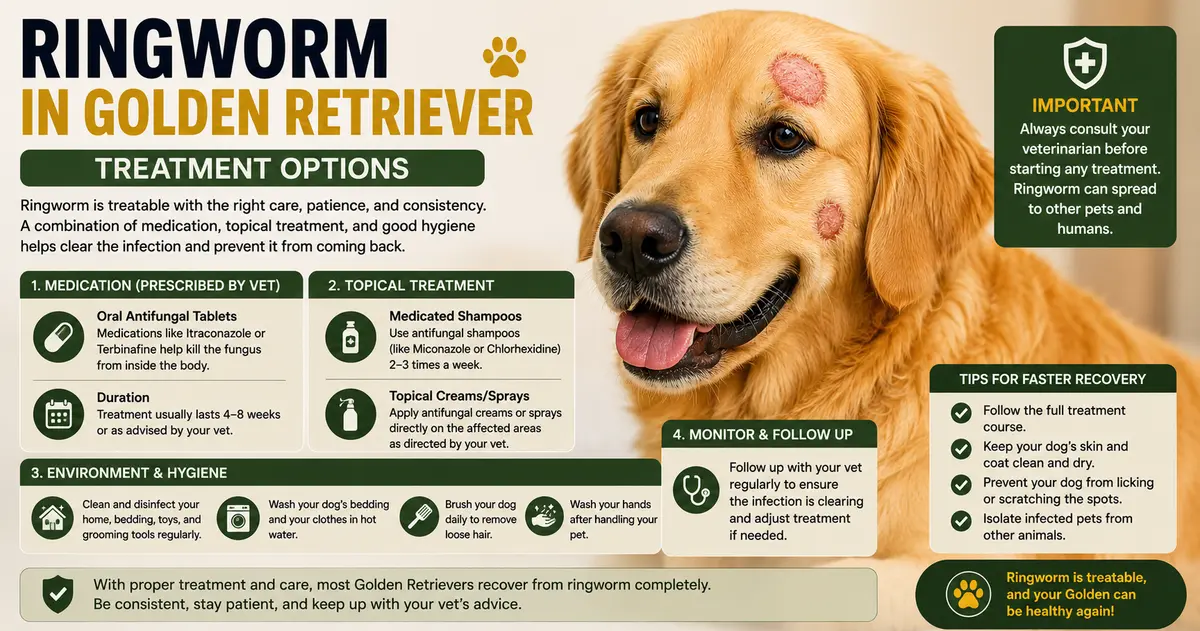
Ringworm treatment almost always works best as a combined approach. Relying on just one method — like a single antifungal shampoo — tends to slow recovery and increases the risk of the infection lingering.
Standard antifungal treatment options include:
- Topical treatments: antifungal shampoos, creams, or dips applied directly to affected areas
- Oral antifungal medication: prescribed for more widespread or stubborn infections, taken over several weeks
- Environmental decontamination: cleaning the home to remove spores and prevent reinfection
Vets often recommend clipping the hair around affected patches, since this helps topical treatments reach the skin and reduces the amount of fungus-contaminated hair in the environment. This step matters more for golden retrievers than short-haired breeds, given how much fur can surround a single lesion.
How Long Treatment and Recovery Usually Take
Most cases clear up within 4 to 8 weeks with consistent treatment, though some infections take longer, especially in dogs with weaker immune systems or larger affected areas. Stopping treatment too early is one of the most common reasons ringworm comes back.
A dog is generally considered no longer contagious once symptoms have resolved and follow-up testing (such as a negative fungal culture) confirms the infection has cleared. Visual improvement alone isn’t a reliable stopping point, since spores can still be present after the skin looks better.
Cleaning and Disinfecting Your Home to Stop Reinfection
Disinfecting the environment is just as important as treating the dog. Ringworm spores can survive on soft surfaces for months, so skipping this step is one of the main reasons treatment fails or infections return.
A practical cleaning routine includes:
- Vacuuming carpets, rugs, and furniture daily during active treatment
- Washing bedding, blankets, and removable covers in hot water weekly
- Disinfecting hard surfaces, food bowls, and crates with a product effective against dermatophytes (ask your vet for a specific recommendation)
- Replacing items that are hard to fully disinfect, such as worn fabric toys or old bedding
- Limiting the infected dog’s access to soft furniture and carpeted rooms until cleared
Diluted bleach is commonly used on non-porous surfaces, but it isn’t appropriate for every material and can damage fabrics or discolor floors. Your vet can point you toward a disinfectant proven effective against ringworm that’s also safe for your specific surfaces.
Common Mistakes and Misconceptions Golden Retriever Owners Make

A few misunderstandings about ringworm come up often enough to be worth addressing directly, since acting on them can slow recovery or lead to reinfection.
“My dog looks better, so treatment is done.” Visible improvement doesn’t mean the infection is gone. Spores can still be present on skin that looks nearly healed, which is why vets often recommend a follow-up test before stopping treatment.
“Only the dog’s bedding needs cleaning.” Spores spread far beyond a dog’s bed. Carpets, furniture, car seats, and even human clothing that’s had contact with the dog can carry spores.
“Ringworm isn’t contagious to humans.” It is. Ringworm is zoonotic, meaning it can pass from dogs to people, particularly children, older adults, and anyone with a weakened immune system. Basic hygiene, like washing hands after handling an infected dog, matters during treatment.
“Indoor dogs can’t get it.” Indoor dogs can still pick up ringworm from other pets, contaminated household items, or visitors who’ve had contact with an infected animal elsewhere.
When to Worry About Secondary Infections or Complications
Constant scratching or licking at a ringworm patch can break the skin, which opens the door to secondary bacterial infections. These show up as increased swelling, pus, a stronger odor, or skin that seems more painful than the original patch.
Contact your vet promptly if you notice any of the following:
- Signs of secondary infection, such as pus or a foul smell
- Rapid spreading of patches despite treatment
- No improvement after several weeks of consistent treatment
- A dog that seems unusually lethargic or off its food
Most ringworm cases in otherwise healthy golden retrievers resolve without serious complications when treated properly. Complications tend to happen when treatment is inconsistent, the home environment isn’t decontaminated, or an underlying health issue is weakening the dog’s immune response.
For broader guidance on keeping your golden retriever’s coat and skin healthy between infections, a grooming routine guide can help you build habits that catch problems early. If ringworm symptoms overlap with other skin issues you’re unsure about, a guide comparing common golden retriever skin conditions can help you tell them apart before your vet visit.
Key Takeaway
Ringworm in golden retriever dogs is treatable, but it takes a combined effort: proper diagnosis, consistent antifungal treatment, and thorough home cleaning to prevent reinfection. Skipping any one of these three usually means dealing with the infection twice.
If you notice a suspicious patch on your dog’s skin, don’t wait it out. Book a vet visit for proper testing, and for more detail on veterinary-confirmed skin conditions in dogs, the American Veterinary Medical Association offers reliable, up-to-date information you can trust alongside your vet’s guidance.

Hi, I’m Jack Austin, founder of Cool Goldens. I share practical, research-backed advice on training, nutrition, and daily care to help you give your Golden Retriever the happiest, healthiest life possible.