

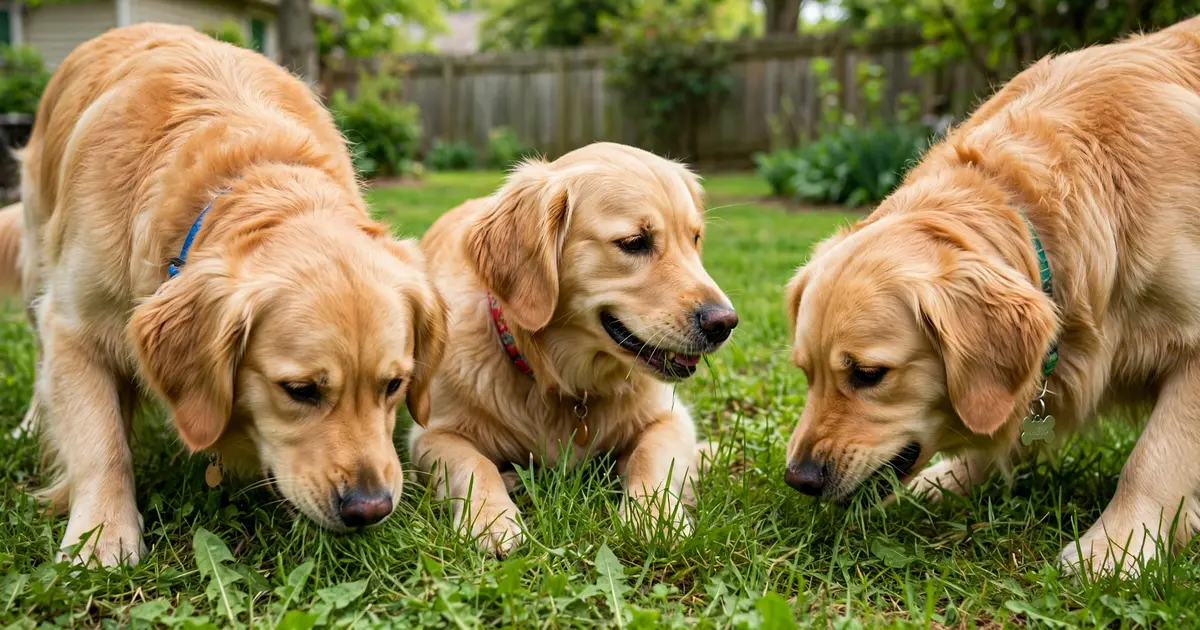
Grass isn’t exactly gourmet, yet your Golden Retriever treats your lawn like an all-you-can-eat buffet. If you’re trying to figure out how to stop your Golden Retriever from eating grass, you’re dealing with one of the most puzzling — and oddly common — dog habits out there.
Most Goldens do this at some point, and it’s rarely a red flag on its own. Still, watching your dog graze like a small, fluffy cow raises fair questions: Is this normal? Should you be worried? Is your yard about to go extinct? Here’s what’s actually behind the habit, plus what helps most dogs quit the grazing routine for good.
Why Do Golden Retrievers Eat Grass?
The short answer: most dogs eat grass out of instinct, boredom, mild stomach upset, or simple enjoyment of the taste and texture. It’s rarely a sign of a serious problem on its own.
Here’s a closer look at each reason:
- Instinct and scavenging: Wild canines eat plant matter too, so this behavior has deep roots in dog biology.
- Boredom: Dogs left alone in a yard with little to do often turn to grazing as a way to pass time.
- Mild digestive discomfort: Some dogs eat grass when their stomach feels slightly off, though this isn’t true for every dog that grazes.
- Taste and texture: Fresh grass, especially after rain, seems to appeal to many dogs for no deeper reason than that.
None of these reasons point to an emergency. But it helps to know which one applies to your dog, since that shapes which fix will actually work.
Is Grass Eating Normal, or Should You Worry?
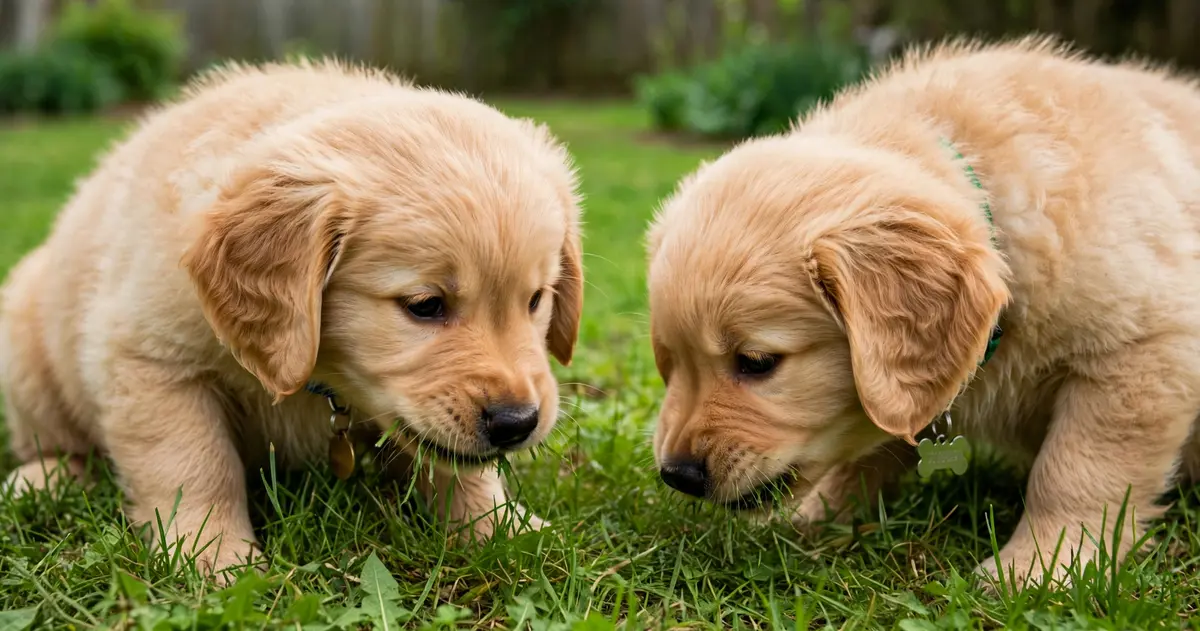
For most Golden Retrievers, eating grass now and then is normal and not something to worry about. Occasional grazing without other symptoms rarely signals illness.
Problems arise when the behavior changes in frequency or comes with other symptoms. A dog that suddenly grazes far more than usual, or seems uncomfortable while doing it, is telling you something different than a dog casually nibbling on a walk.
Context matters too. A Golden eating a few blades of grass in the yard and walking away is very different from one repeatedly searching out grass and eating large amounts.
Signs That Mean It’s Time to Call the Vet
Contact your vet if you notice any of the following alongside grass eating:
- Frequent vomiting after grazing
- Diarrhea or loose stools
- Loss of appetite
- A sudden, sharp increase in how often your dog eats grass
- Signs of stomach pain, like restlessness or a hunched posture
One symptom on its own may not mean much. Several appearing together, especially if they last more than a day, is a stronger reason to get checked out.
Common Misconceptions About Dogs Eating Grass
A lot of what people believe about grass eating doesn’t hold up well under closer study. Clearing up a few of these misconceptions can save you unnecessary worry.
Myth: Dogs eat grass to make themselves throw up. This is one of the most repeated claims about the behavior, but it doesn’t match what researchers have found. Most dogs that eat grass don’t seem sick beforehand, and most don’t vomit afterward either. Vomiting appears to be a side effect for some dogs, not the goal.
Myth: Grass eating always means a nutrient deficiency. This idea gets repeated a lot, but it isn’t well supported. Dogs eating a complete, balanced commercial diet are unlikely to be missing key nutrients. Fiber balance may play a small role in some cases, but it’s not the default explanation.
Myth: Only bored or untrained dogs eat grass. Well-exercised, well-trained Goldens graze sometimes too. Boredom is one contributing factor, not the only one.
Being honest about what’s actually known here matters more than offering a tidy explanation. Veterinary researchers still don’t have a single, universally agreed-upon reason dogs do this — and that uncertainty is worth acknowledging rather than glossing over.
Are Golden Retrievers More Likely to Eat Grass Than Other Breeds?

There isn’t solid breed-by-breed research comparing how often different dogs eat grass. But a few known Golden Retriever traits make the behavior easier to understand in this breed specifically.
Goldens were bred to carry things gently in their mouths, which gives them a naturally strong mouth-oriented way of exploring the world. Combine that with their well-known food drive, and grazing on interesting plants becomes an easy habit to fall into.
Golden Retriever puppies especially explore with their mouths the way human toddlers explore with their hands. If you’re working through the early stages of puppy development, this kind of mouthing and grazing behavior often fits into a broader pattern covered in Golden Retriever growth timelines, where teething and curiosity peak before settling down with age and training.
None of this means every Golden will graze heavily. It just means the breed’s natural tendencies make the behavior a bit more understandable than it might be in a less food-motivated or less mouth-oriented breed.
How to Stop Your Golden Retriever From Eating Grass
Once you’ve ruled out anything concerning, the goal shifts to reducing or stopping the habit. These methods work together, so combining a few usually gets better results than relying on just one.
Adjust Diet and Address Nutritional Gaps
Start with the basics. A high-quality, balanced commercial diet covers most nutritional needs for a healthy adult Golden.
If fiber balance seems like a factor, a small addition like plain canned pumpkin can help, but introduce any change gradually over 7 to 10 days. Sudden diet changes are more likely to upset your dog’s stomach than fix anything.
Add Mental and Physical Stimulation to Reduce Boredom
Boredom is one of the more fixable causes of grass eating. Goldens are active, social dogs that need more than a backyard to feel satisfied.
Try adding:
- Longer daily walks
- Puzzle feeders at mealtime
- Rotating toys every week or two
- Short training sessions to build mental engagement
A dog that’s mentally worn out by the end of the day has less reason to wander the yard looking for something to do.
Teach a Reliable “Leave It” Command for Walks
If your dog stops to graze constantly during walks, training helps more than pulling on the leash.
- Keep your dog on a short leash for better control near grassy patches.
- Teach “leave it” using treats, starting in low-distraction settings before trying it outdoors.
- Reward calmly and immediately the moment your dog looks away from the grass.
- Practice consistently — a few short sessions a week beats one long session.
Food-motivated Goldens sometimes need more repetition here than other breeds. That’s normal, not a sign the training isn’t working.
Offer Safe Chew Alternatives
Goldens like to chew, and giving them an approved outlet reduces the pull toward grass and plants.
Good options include rubber chew toys, frozen carrots, and long-lasting dental chews designed for dogs. Rotating a few different textures keeps things interesting.
Manage Access to Your Yard
If most of the grazing happens in your own yard, supervision and small environmental changes go a long way.
- Supervise outdoor time, especially early on
- Keep grass trimmed shorter, since some dogs graze less on short grass
- Avoid letting your dog into areas that have been recently treated with lawn chemicals
Home Remedies and Simple Habits That Can Help

Alongside the training and diet changes above, a few gentle daily habits can support the process without adding any risk.
Feeding on a consistent schedule, rather than free-feeding, helps some dogs feel more satisfied between meals. A predictable routine also reduces the restlessness that sometimes drives grazing.
Supervised time in a fenced area, rather than unsupervised free access to the whole yard, lets you redirect grazing habits as they start rather than after they’ve become routine. Small, early corrections tend to work better than trying to break an established pattern later.
These home adjustments aren’t a replacement for the methods above. Think of them as a supportive layer that makes the bigger changes easier to stick with.
When Grass Eating Points to a Digestive Health Problem
Sometimes grass eating isn’t a habit at all — it’s a symptom of something going on with your dog’s digestive health. This is different from occasional, casual grazing.
Dogs dealing with gastrointestinal issues, like mild nausea, parasites, or food sensitivities, sometimes seek out grass more often as their stomach discomfort increases. In these cases, no amount of training or boredom-busting will fully solve the problem, because the root cause is medical.
If grass eating has increased noticeably, or coincides with changes in appetite, energy, or stool quality, it’s worth having your vet check for underlying issues rather than assuming it’s behavioral. Fecal testing, a physical exam, and sometimes dietary trials are common first steps vets use to rule out gastrointestinal causes.
Addressing the actual digestive issue, rather than just the grazing itself, is usually what resolves this version of the behavior long-term.
Lawn Chemicals and Plant Toxicity: What to Know Before Your Dog Grazes
Grass itself is generally safe for dogs to eat in small amounts. What’s often more concerning is what’s been sprayed on it.
Fertilizers, herbicides, and pesticides can be harmful if a dog ingests them shortly after application. Even a small amount of residue can cause stomach upset, and larger exposures can lead to more serious poisoning symptoms.
Many lawn product labels include a recommended waiting period before pets or people should walk on treated grass. Checking and following that guidance is one of the simplest ways to reduce risk. The Pet Poison Helpline is a reliable resource if you think your dog may have ingested a treated area or a toxic plant.
Beyond lawn chemicals, some common garden and house plants are toxic to dogs if chewed or swallowed. If your Golden grazes near flower beds or landscaped areas, it’s worth knowing which plants in your yard could pose a risk, separate from the grass itself.
Frequently Asked Questions
Is it normal for a Golden Retriever to eat grass every day?
Occasional daily grazing in small amounts isn’t unusual and often isn’t a concern. If it becomes constant, intense, or replaces normal eating and play, it’s worth mentioning to your vet.
How long does it take for training to reduce grass eating?
Most owners notice some improvement within a few weeks of consistent training and enrichment. Highly food-motivated dogs may need more repetition before the habit fades.
What can I feed my dog instead of letting them eat grass?
Safe chew alternatives like dental chews, frozen carrots, or puzzle feeders filled with regular kibble can redirect the urge to chew or forage without the risks tied to lawn grazing.
Do puppies outgrow grass eating?
Many puppies graze less as they mature, especially with structured training and enrichment. Teething and curiosity both play a role in why puppies do this more than adult dogs.
Can grass eating be linked to allergies?
It’s possible in some cases, since food sensitivities can cause mild stomach discomfort that leads to grazing. A vet visit is the best way to check if allergies are contributing.
Key Takeaway
Grass eating in Golden Retrievers is usually normal and manageable with the right combination of diet, enrichment, and training. Watch for the warning signs covered above, and don’t hesitate to loop in your vet if the behavior changes suddenly or comes with other symptoms.
Start with one or two changes, like adding a puzzle feeder or working on “leave it,” rather than trying everything at once. Small, consistent adjustments are usually what make the difference over time.

Hi, I’m Jack Austin, founder of Cool Goldens. I share practical, research-backed advice on training, nutrition, and daily care to help you give your Golden Retriever the happiest, healthiest life possible.