

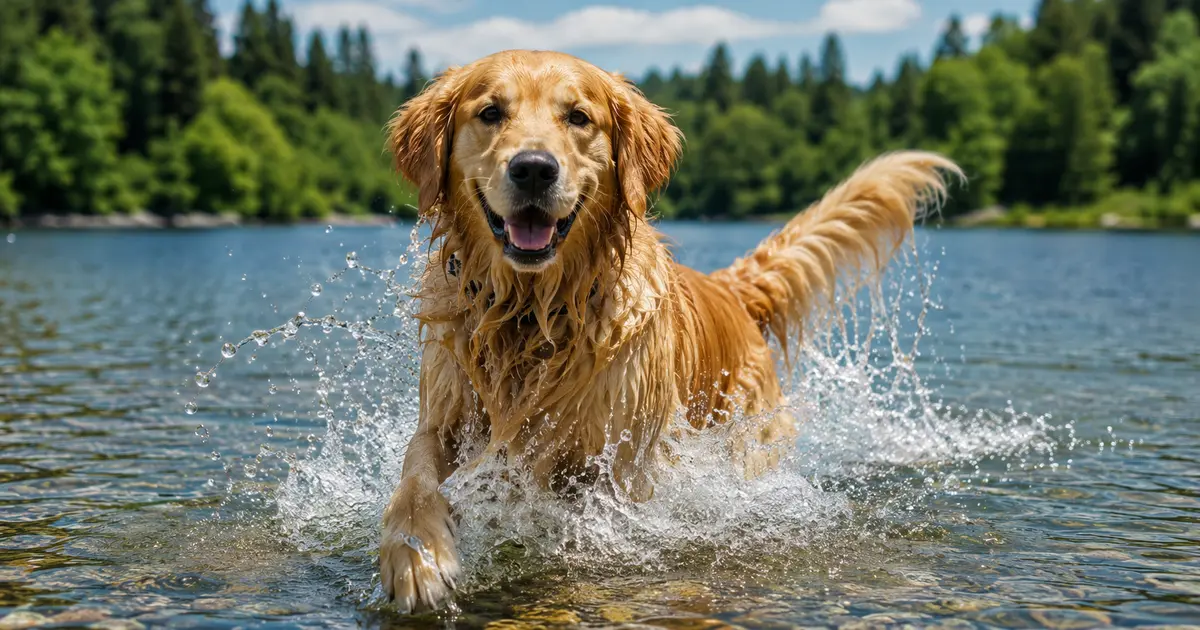
Yes, most of them, and it’s not a coincidence. Golden Retrievers were bred as waterfowl retrievers, so their attraction to lakes, pools, and puddles comes straight from generations of purposeful breeding, not random chance.
Add webbed feet and a water-repellent coat, and swimming becomes something the breed is genuinely built for. Not every Golden fits this pattern perfectly, though, and some dogs need a slower introduction to water. This article breaks down the reasons behind the instinct, what to do if your dog doesn’t share it, and how to keep water play safe..
Do Golden Retrievers Like Water?
Yes. Golden Retrievers are one of the most water-loving dog breeds around, and this comes from their history as hunting companions. They were developed specifically to swim into lakes and rivers to retrieve shot waterfowl for hunters.
That job required a dog that would jump into cold water without hesitation, again and again, for hours. Breeders selected for that trait over generations, and it stuck. Today’s Goldens still carry that instinct, even the ones who’ve never seen a hunting field.
This doesn’t mean every single Golden Retriever will love water equally. It’s a strong breed tendency, not a guarantee for every dog. The next sections explain why the tendency exists and where it can vary.
Why Golden Retrievers Love Water So Much
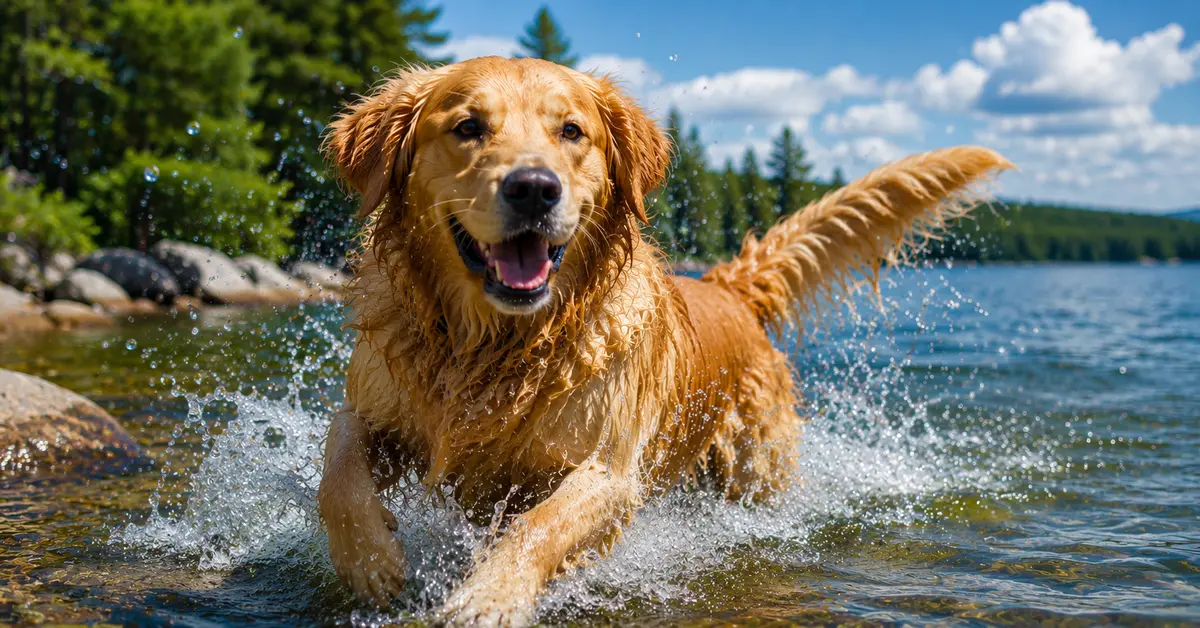
A Golden’s attraction to water comes from a mix of history and physical traits working together. Understanding both helps explain why this breed takes to swimming so naturally.
Bred to Retrieve From Water
Golden Retrievers trace back to breeding programs in Scotland during the 1800s, where hunters needed a dog that could retrieve waterfowl from lakes and marshes. The dogs used to create the breed included water-focused retrievers and spaniels, chosen for their willingness to swim in cold, rough conditions.
This history matters because temperament is partly inherited. A dog bred for generations to enter water without fear is more likely to enjoy water as an adult, even without any hunting background.
Webbed Feet and a Water-Repellent Coat
Golden Retrievers have partial webbing between their toes, which works like a built-in paddle and helps them move through water more efficiently than breeds without it. You can often see this webbing by gently spreading a Golden’s toes apart.
Their coat helps too. The outer layer resists water thanks to natural oils, while the dense undercoat traps air and helps the dog stay warm even in cold water. Together, these traits make swimming physically easier and more comfortable, which likely reinforces the behavior over time.
Do All Golden Retrievers Naturally Like Water?
Not every Golden Retriever is a natural swimmer, even though the breed as a whole leans strongly toward loving water. Individual temperament, past experiences, and early exposure all play a role.
A few things that can affect this:
- Genetics set the tendency, not the certainty. A dog can carry all the physical traits for swimming and still feel unsure about water, especially without positive early experiences.
- A bad first experience can create lasting hesitation. A puppy that gets startled or dunked too soon may stay cautious around water into adulthood.
- Age and health matter. Senior Goldens or dogs with joint pain may swim less, not because they dislike water, but because it’s physically harder for them.
If your Golden isn’t drawn to water, that doesn’t mean something is wrong with the dog. It just means this particular Golden falls outside the breed’s typical pattern.
Learn more about our post Golden Retrievers Known for Being So Friendly
Do English Cream Golden Retrievers Like Water Too?
English Cream Golden Retrievers are the same breed as traditional Goldens, just with a lighter coat color that comes from certain European breeding lines. The coat color doesn’t change the underlying traits that make Goldens good swimmers.
English Cream Goldens still have webbed feet, a water-repellent double coat, and the same retrieving instinct passed down from the breed’s working history. Coat color is a cosmetic difference, not a behavioral one, so there’s no meaningful reason to expect an English Cream Golden to like water any less than a traditional golden-coated dog.
Signs Your Golden Retriever Loves (or Fears) Water
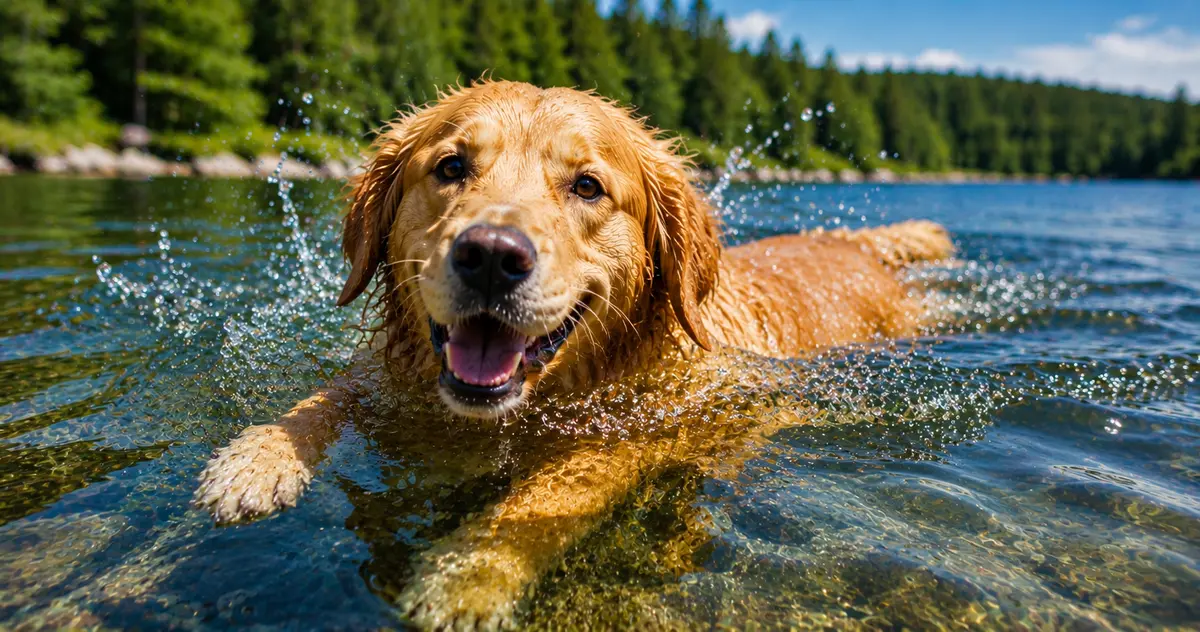
Reading your dog’s body language around water helps you know when to encourage play and when to slow down. Most signs are easy to spot once you know what to look for.
Signs a Golden Retriever loves water:
- Running ahead toward lakes, puddles, or sprinklers
- Wagging tail and relaxed body while wading in
- Repeatedly retrieving floating toys without hesitation
- Whining or pacing with excitement near water
Signs a Golden Retriever is fearful or unsure:
- Barking at water instead of approaching it
- Stiff body posture or tucked tail near the water’s edge
- Backing away when water touches their paws
- Refusing treats or toys offered near the water
Barking at water is common in dogs that are curious but uncertain. It’s often a sign that the dog wants to investigate but hasn’t built confidence yet, rather than outright fear.
How to Teach a Golden Retriever to Swim
Most Golden Retriever puppies take to swimming with little guidance, but a slow, low-pressure introduction works better than tossing a nervous dog straight into deep water. This approach also works for adult Goldens that missed out on early water exposure.
- Start in shallow water. Let your dog wade at their own pace in a calm, shallow spot like the edge of a lake or a kiddie pool.
- Bring a confident swimming buddy. Dogs often gain confidence by watching another dog enjoy the water first.
- Use motivation, not force. A favorite floating toy or treats near the water’s edge can encourage a hesitant dog to get closer on their own terms.
- Support their first swim strokes. If your dog goes into deeper water, a hand under the belly for a few seconds can help them find their paddling rhythm.
- Keep sessions short and positive. End on a good note before your dog gets tired or overwhelmed, especially during the first few tries.
Never force a fearful dog into water by picking them up and placing them in. This usually makes the fear worse and can take much longer to undo than a slow introduction would have taken in the first place.
Water Safety Tips for Golden Retrievers
Loving water comes with some real risks that are worth taking seriously, even for strong swimmers. Golden Retrievers’ enthusiasm can sometimes outpace their judgment, especially around retrieving toys.
| Risk | What to Watch For | What to Do |
| Water intoxication | Bloated belly, vomiting, glazed eyes, stumbling | Limit how long your dog swims and retrieves without a break; seek emergency vet care immediately if symptoms appear |
| Strong currents or waves | Struggling to stay in place, drifting further than expected | Keep swims in calm, familiar water and use a life vest in open water |
| Blue-green algae | Visible scum on ponds or lakes, discolored water | Keep dogs out of stagnant or algae-covered water entirely |
| Exhaustion | Slower paddling, head sinking lower in the water | Call your dog out of the water for rest breaks, even if they resist |
Water intoxication deserves extra attention because it’s easy to miss and can turn serious fast. It happens when a dog swallows large amounts of water, usually while repeatedly retrieving a toy, which dilutes the sodium in their blood. Symptoms can include vomiting, loss of coordination, and lethargy, and severe cases require emergency veterinary treatment. Giving your dog regular breaks during fetch sessions in water is one of the simplest ways to lower this risk.
For open water or boating, a properly fitted doggie life vest is worth the investment. Look for one with a sturdy handle on the back, so you can lift your dog out of the water quickly if needed, and enough buoyancy panels along the chest and belly to keep their head up with minimal effort.
Caring for Your Golden Retriever After Water Play
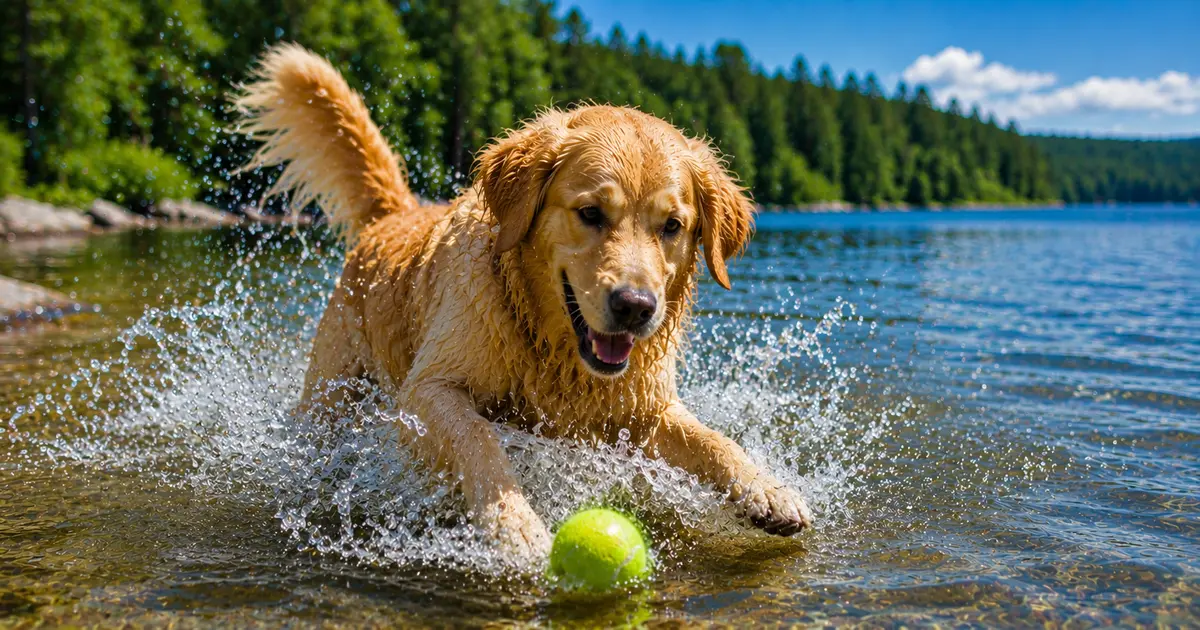
A Golden’s coat and floppy ears need some attention after swimming, since both can trap moisture in ways that lead to health problems if ignored.
- Dry the ears thoroughly. Trapped moisture in a Golden’s ear canal is a common cause of ear infections, so use a towel or dog-safe ear-drying solution after every swim.
- Rinse the coat. Chlorine, salt water, and pond debris can irritate skin if left in the fur, so a plain water rinse after swimming helps prevent itching.
- Check for hot spots. Damp fur that stays wet for hours can lead to irritated skin patches, especially in warm weather, so let your dog dry fully rather than staying damp for long periods.
- Brush out the undercoat regularly. A well-maintained coat sheds water more effectively, so regular brushing supports the same water-repellent function that helps your dog swim comfortably.
Frequently Asked Questions
Can Golden Retriever puppies swim, and at what age?
Most puppies can start supervised, shallow-water experiences around 8 to 12 weeks old, but full swimming is usually safer closer to 4 months, once they have more muscle coordination and stamina. Always supervise closely and keep early sessions short.
Do Golden Retrievers like ocean water as much as pools or lakes?
Many Goldens enjoy ocean swimming, but waves and currents make it riskier than calm lakes or pools. Rinse off salt water afterward, since it can dry out skin and coat if left in the fur.
Are Golden Retrievers naturally strong swimmers, or do they need lessons?
Most Goldens swim instinctively without formal lessons, thanks to their webbed feet and retrieving drive. That said, a slow, guided introduction still helps build confidence and good habits, especially for puppies or hesitant dogs.
Why does my Golden Retriever bark at water instead of swimming?
Barking at water often means curiosity mixed with uncertainty, not dislike. Many dogs grow more comfortable with a slow introduction and a confident swimming companion nearby.
Key Takeaway
Golden Retrievers are built for water, both by history and by physical design, but that doesn’t mean every dog will jump in without hesitation. Pay attention to your own dog’s comfort level, introduce swimming gradually if needed, and keep safety steps like breaks and ear-drying part of your routine. A little preparation lets your Golden enjoy the water the way the breed was meant to.

Hi, I’m Jack Austin, founder of Cool Goldens. I share practical, research-backed advice on training, nutrition, and daily care to help you give your Golden Retriever the happiest, healthiest life possible.