


Yes, particularly as puppies, though it’s rarely tied to aggression. Biting shows up during teething, play, and normal exploration, and it usually fades with consistent training. Adult Goldens bite far less often, and when they do, there’s typically a clear trigger behind it, like fear, pain, or poor socialization.
Knowing the difference between normal mouthing and a real warning sign matters, especially in homes with kids or other pets. Here’s a full breakdown of why it happens and how to handle it at every stage..
Do Golden Retrievers Bite?
Yes, but context matters a lot here. Golden Retrievers rank among the more mild-tempered breeds, and true aggressive biting is uncommon in dogs bred and raised well.
According to a landmark University of Pennsylvania study, Golden Retrievers score among the lowest of all dog breeds for human and dog-directed aggression. In overall breed statistics, their official bite rate remains exceptionally low, with most biting falling into two normal categories: puppy teething/exploration and situational reactions in adults (like fear or pain).
Most biting from this breed falls into two categories: normal puppy behavior and situational reactions in adults. Puppies use their mouths to explore the world, similar to how toddlers touch everything they can reach. Adult Goldens who bite are usually responding to something specific, like fear, pain, or a startling situation, rather than acting out of general aggression.
This doesn’t mean biting should be ignored. Even soft nipping needs correction early, and any adult biting deserves a closer look at what’s triggering it. Golden Retrievers have a reputation for a gentle temperament for good reason, but that reputation exists because owners typically put in the training work during puppyhood.
Why Golden Retriever Puppies Bite So Much
If you’ve brought home a Golden Retriever puppy and wondered why it feels like living with a tiny shark, you’re not imagining things. Puppy biting is intense, and yes, Golden Retrievers do bite a lot as puppies compared to how they’ll behave as adults.
Three things drive this. Teething causes real discomfort, and chewing helps relieve it. Puppies also explore textures, people, and objects with their mouths because they don’t have hands. On top of that, biting is part of normal play, especially with littermates or other dogs.
None of this means the behavior should be allowed to continue unchecked. Puppies need to learn bite inhibition, which is the skill of controlling how much pressure they use when their mouth touches skin. Dogs that never learn this as puppies carry a higher risk of biting too hard later, even in play.
The Teething Timeline
Puppy biting follows a fairly predictable pattern tied to dental development:
| Age | What’s Happening | Typical Biting Behavior |
| 8–12 weeks | Baby teeth are in, mouth exploration begins | Frequent, gentle mouthing |
| 3–6 months | Adult teeth coming in, teething peaks | Intense chewing, sharper nips |
| 6–18 months | Adolescence, adult teeth settled | Biting should be declining if trained |
By around 18 months, most well-trained Golden Retrievers have grown out of regular mouthing. If a dog older than this is still biting often, it’s worth treating as a training gap rather than something they’ll simply outgrow.
What Causes Biting in Adult Golden Retrievers
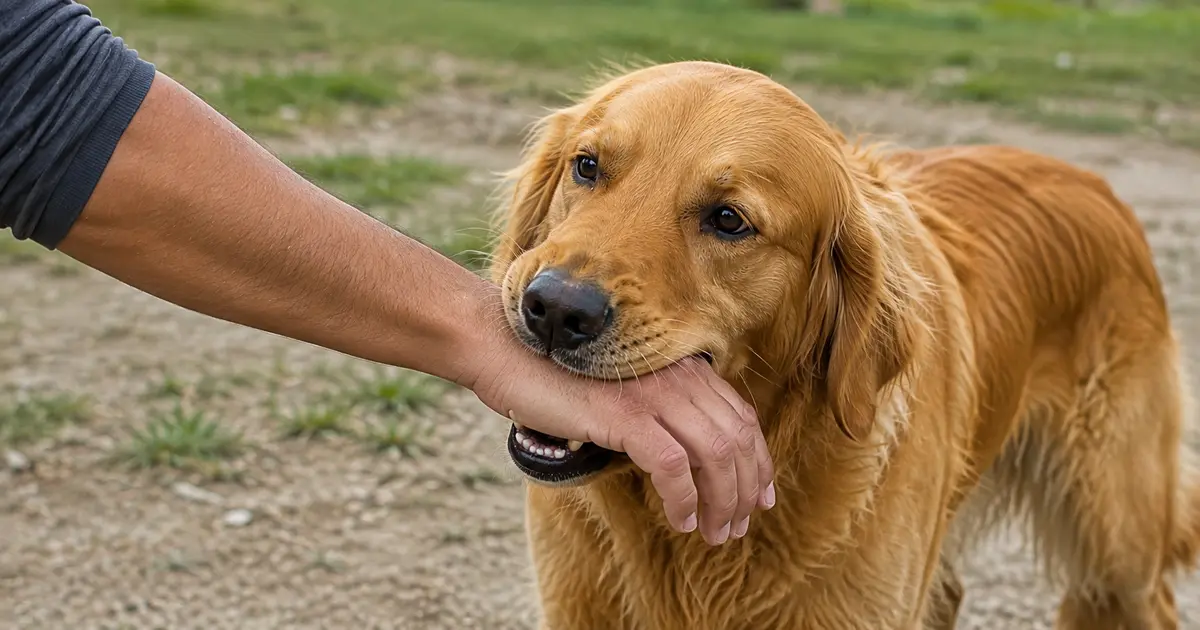
Adult biting is a different issue than puppy nipping, and it’s worth treating it that way. When an adult Golden Retriever bites, something specific is usually triggering it.
Fear is one of the most common causes. A dog that feels cornered, threatened, or unable to escape a situation may bite defensively, even if that dog is normally friendly.
Pain is another major factor. Dogs in pain, from joint issues, dental problems, or an injury you haven’t noticed, may snap when touched somewhere sensitive. A sudden change in behavior, especially in an older dog, is worth mentioning to a veterinarian.
Resource guarding shows up when a dog protects food, toys, or a resting spot. It’s a natural instinct, but it needs management, particularly in homes with children.
Overstimulation can push even a calm dog past its limits. Rough play, too much excitement, or an overwhelming environment sometimes leads to a nip that wouldn’t happen under calmer conditions.
Poor socialization ties several of these together. Dogs that weren’t exposed to a range of people, sounds, and situations as puppies often struggle more with fear-based reactions as adults.
Golden Retriever Bite Force and Severity
People often search for how hard Golden Retrievers bite, usually because they’re worried about kids or other pets. Before getting into numbers, there are really two separate questions: how strong the bite is, and whether the dog would ever mean to use it.
Start with the breed’s history. Goldens were bred to retrieve game for hunters, so they had to carry a bird in their mouths without leaving a mark on it. That’s the “soft mouth” trait, and it hasn’t gone away. Compared to breeds developed for guarding or protection, a Golden’s bite tends to be lighter and more controlled. An adult’s bite force is estimated at roughly 190 to 230 PSI (pounds per square inch).
Still, any dog’s jaws can hurt someone if the bite is full force and deliberate, whatever the breed. And a PSI figure doesn’t tell you much by itself. The dog’s size, the situation, and what the dog intended all change the outcome. A Golden’s bite is generally less likely to be severe than one from a breed built for defensive work, but less likely doesn’t mean never.
The same goes for comparing Goldens with breeds often labeled higher-risk, like pit bulls. How a dog behaves depends far more on its own temperament, training, and upbringing than on its breed. Veterinary and animal behavior organizations across the country also advise against using breed stereotypes to predict bite risk.
Are Golden Retrievers Safe Around Kids and Strangers
Golden Retrievers are frequently recommended as family dogs, and for good reason. Their tolerance for handling, noise, and unpredictable movement tends to be higher than many other breeds, which makes them a common choice for households with children.
That said, “generally safe” doesn’t mean “risk-free.” Children often don’t read a dog’s warning signals, and even a patient dog has limits. Teaching kids to recognize when a dog wants space, and never to approach a dog while it’s eating or sleeping, prevents most bite incidents in family settings.
With strangers, Golden Retrievers usually lean friendly rather than defensive, though individual dogs vary. A poorly socialized Golden, or one that’s frightened by an unfamiliar person’s sudden movement or loud voice, can still react defensively. Supervised introductions and letting the dog approach on its own terms go a long way here.
Warning Signs Before a Bite Happens
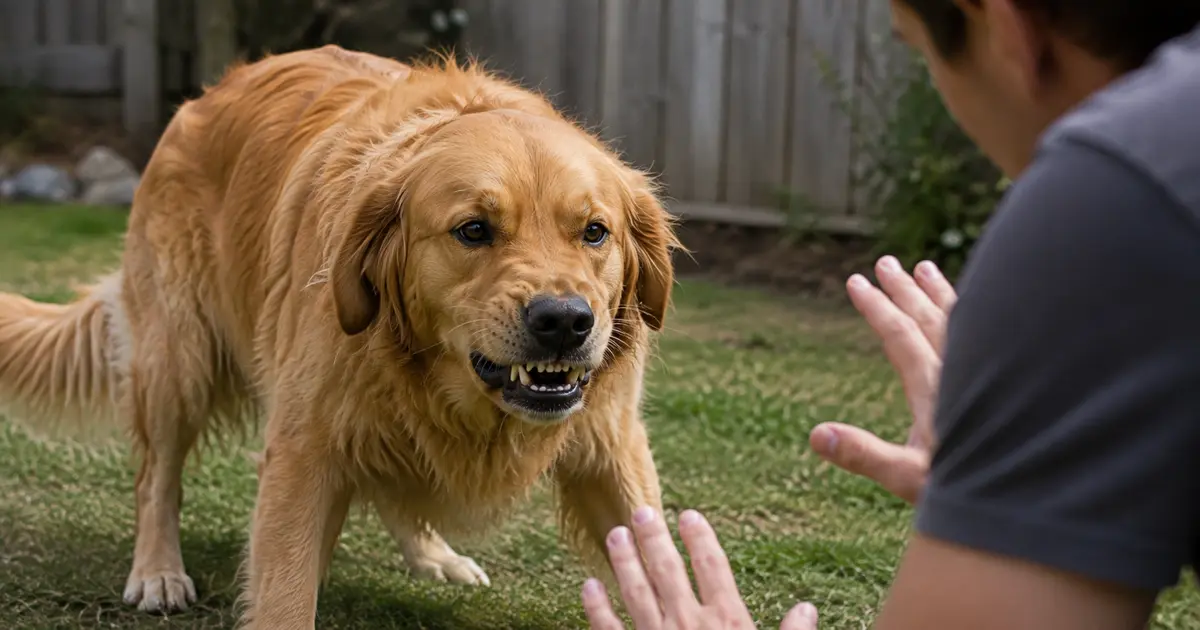
Most bites don’t come out of nowhere. Dogs usually give signals first, and learning to read them can prevent a bite before it happens.
Watch for these cues:
- Lip licking or yawning when nothing about the situation calls for it
- Stiff body posture or a tail held rigid rather than loose
- Whale eye, where you can see the whites of the dog’s eyes as it turns its head away
- Ears pinned back against the head
- Low growling or a freeze, where the dog stops moving entirely
Any of these signs mean the dog wants space or the interaction to stop. Giving the dog room at this stage, rather than pushing further, is one of the most effective bite-prevention habits an owner can build.
Learn more about why Golden Retrievers Are the Worst for Some Owners.
How to Stop a Golden Retriever From Biting
Correcting biting works differently depending on the dog’s age, but the goal is the same: teach the dog that mouths on skin aren’t acceptable, without creating fear or confusion.
For puppies, bite inhibition training works well. When a puppy bites too hard during play, a sharp “ow” and briefly stopping the interaction teaches the puppy that hard bites end the fun. Consistency matters more than intensity here, since puppies learn through repetition.
Redirection also helps. Keeping chew toys nearby and swapping them in whenever a puppy starts mouthing hands or clothing gives the puppy an acceptable outlet.
For adult dogs, positive reinforcement tends to work better than punishment. Rewarding calm behavior in situations that used to trigger biting, rather than scolding after the fact, helps the dog build new associations. Punishment-based approaches can sometimes increase fear and make biting more likely, not less.
A few practical steps that apply to most dogs:
- Stay calm and consistent every time biting happens, rather than reacting differently based on mood
- Avoid rough hand games that encourage biting as play
- Reward gentle mouth behavior immediately when you see it
- Keep training sessions short and end on a success
When to Contact a Trainer or Behaviorist
Some situations call for outside help rather than home training alone. Reach out to a professional if:
- Biting draws blood or leaves bruising, even once
- An adult dog’s biting appears suddenly with no clear trigger
- Biting is aimed at family members, not just during play
- Training attempts over several weeks show no improvement
A certified dog trainer can usually help with puppy mouthing and basic manners. A certified applied animal behaviorist, or a veterinary behaviorist, is better suited to adult dogs showing fear-based or aggressive biting, since these professionals can also assess whether a medical issue is contributing to the behavior.
Common Misconceptions About Golden Retriever Biting
A few beliefs about this breed and biting tend to circulate, and they’re worth clearing up.
“Golden Retrievers never bite.” This isn’t accurate. Their gentle reputation is well earned, but no breed is bite-proof. Treating any dog as incapable of biting removes the caution that actually prevents bites.
“Play biting and aggression are the same thing.” They’re not. Play biting is usually loose, bouncy, and paired with relaxed body language. Aggressive biting comes with stiffness, growling, or a fixed stare. Confusing the two leads to either overreacting to normal puppy behavior or underreacting to a real warning sign.
“A dog that bites its owner is being dominant.” Most biting toward owners traces back to pain, fear, overstimulation, or an unclear signal being missed, not a struggle for dominance. Golden Retrievers occasionally do bite their owners, usually during rough play, resource guarding, or when startled, and it’s rarely about status.
“Breed alone tells you if a dog is safe.” Temperament comes from a mix of genetics, upbringing, and training. A well-raised dog from a breed with a tougher reputation can be safer than a poorly socialized Golden Retriever.
Frequently Asked Questions
Is it normal for an adult Golden Retriever to bite?
Occasional mouthing during play can be normal, but repeated biting in an adult dog usually points to an underlying cause like fear, pain, or poor socialization. It’s worth addressing rather than dismissing as typical breed behavior.
What should I do if my Golden Retriever bites someone?
Check the injury first and seek medical care if the skin is broken. Afterward, think through what triggered the bite, and consider contacting a veterinarian to rule out pain or illness, along with a trainer or behaviorist for the behavioral side.
Do Golden Retriever puppies grow out of biting on their own?
Not entirely on their own. Teething-related biting fades as adult teeth come in, but bite inhibition and mouth manners need to be actively taught. Without training, some dogs carry mouthy habits into adulthood.
Can spaying or neutering reduce biting?
It may help with certain hormone-driven behaviors, but it isn’t a guaranteed fix for biting. Fear, pain, and poor socialization all need to be addressed separately, regardless of a dog’s reproductive status.
Key Takeaway
Golden Retrievers bite for the same basic reasons most dogs do: teething, play, fear, pain, or gaps in training and socialization. The breed’s gentle reputation holds up well in general, but it isn’t a guarantee, and it doesn’t replace the need for early training and attentive ownership.
If you’re raising a puppy, focus on bite inhibition and redirection now, since these early months matter most. If you’re dealing with an adult dog that’s started biting, look for a trigger first, and don’t hesitate to bring in a veterinarian or behaviorist if the cause isn’t obvious. Addressing the root cause works far better than hoping the behavior fades on its own.

Hi, I’m Jack Austin, founder of Cool Goldens. I share practical, research-backed advice on training, nutrition, and daily care to help you give your Golden Retriever the happiest, healthiest life possible.