

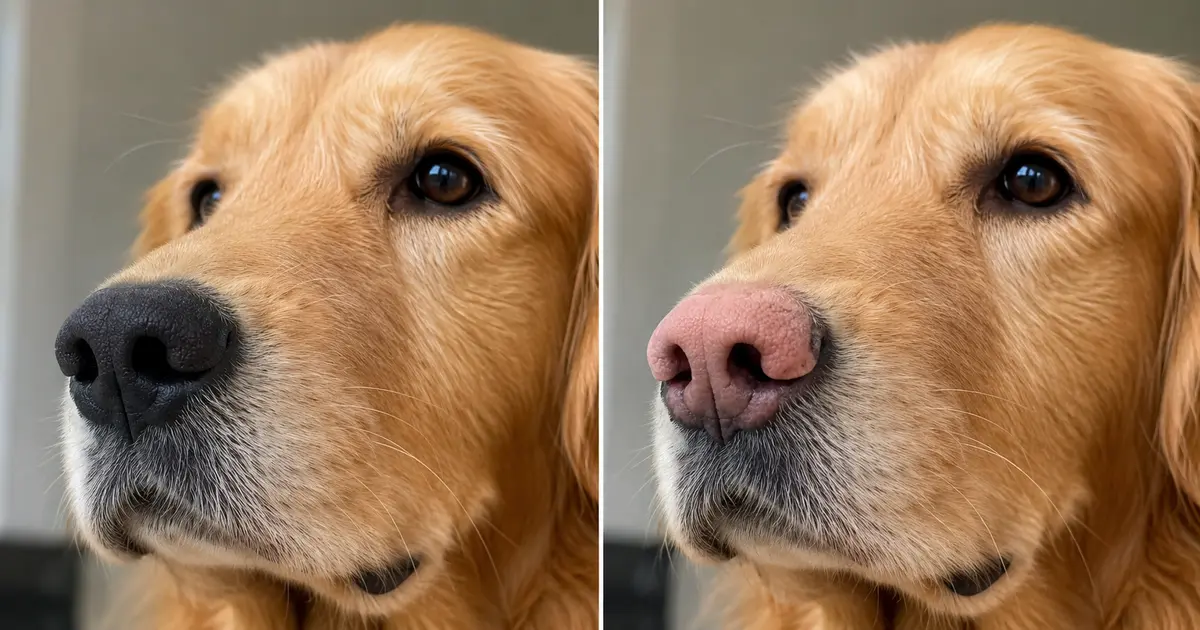
A Golden Retriever’s nose turning pink is usually caused by cold weather, aging, sun exposure, or irritation from a plastic bowl. In rare cases, it can point to a health issue that needs veterinary attention.
This guide covers every major cause, how to tell them apart, and the specific signs that mean it’s time to call the vet. You’ll also find a few common misconceptions worth clearing up, along with practical steps to protect your dog’s nose going forward.
Why Is My Golden Retriever’s Nose Turning Pink?
A Golden Retriever’s nose usually turns pink because of one of five things: snow nose (a seasonal fade tied to cold weather), natural aging, sun exposure, irritation from a plastic bowl, or a less common health issue like an autoimmune condition.
Most of these causes are cosmetic and nothing to worry about. If the color change comes with crusting, sores, or discharge, that’s your signal to call the vet. Otherwise, a pink nose on its own is rarely a red flag.
Snow Nose: The Most Common Cause of Seasonal Fading
Snow nose is the term for a black nose that fades to pink or light brown during colder months. It happens because of an enzyme called tyrosinase, which your dog’s body uses to produce pigment.
Tyrosinase works less efficiently in cold temperatures. Less pigment gets made, so the nose lightens. Once the weather warms up, tyrosinase activity picks back up and the nose usually darkens again.
Golden Retrievers aren’t the only breed that gets this. Labradors, Siberian Huskies, and Bernese Mountain Dogs commonly show the same seasonal shift. There’s no treatment needed, and no way to prevent it — it’s simply how some dogs’ pigment responds to cold.
How to Tell If It’s Snow Nose or Something Else
A few quick signs point toward snow nose rather than a health issue:
- The fading happens gradually, over weeks, during fall or winter
- The nose stays smooth, with no cracking, bumps, or sores
- Your dog acts completely normal otherwise — eating, playing, and breathing fine
- The color has returned to normal in past winters (if this has happened before)
If all of those match, snow nose is the most likely explanation.
Age-Related Nose Color Changes
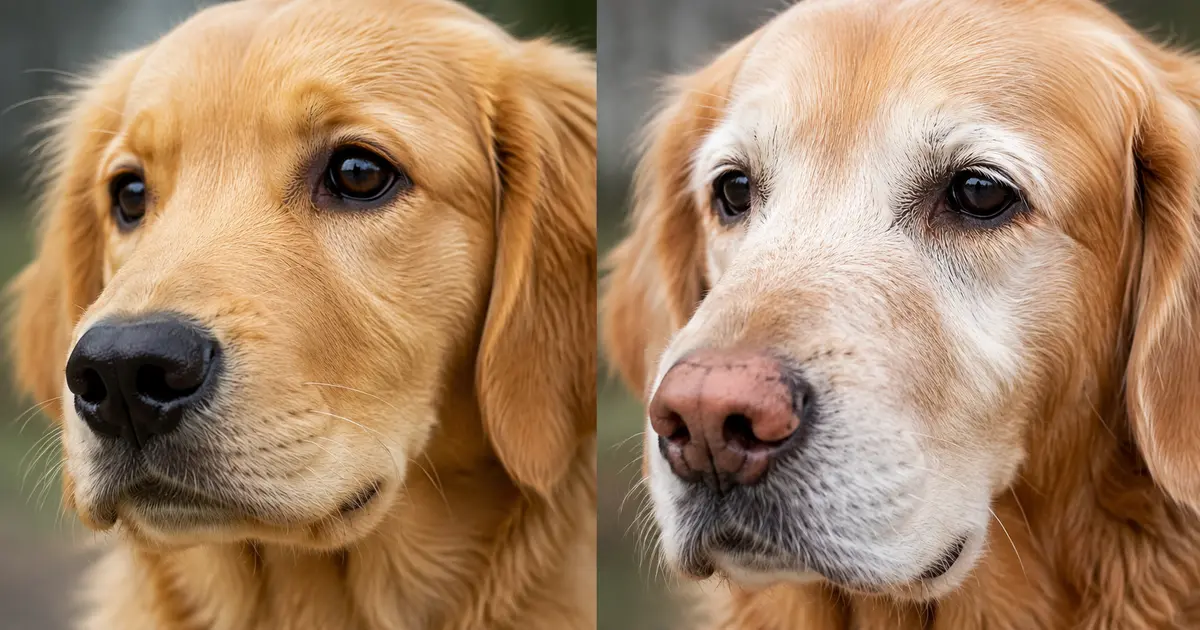
Aging affects pigment production the same way cold weather does, just more permanently. As tyrosinase activity naturally slows with age, many Golden Retrievers develop lighter noses later in life.
Unlike snow nose, this fading doesn’t reverse with the seasons. It tends to happen gradually, often starting around middle age, and the nose may stay a lighter shade of brown or pink from then on.
This is a normal part of getting older, similar to how a dog’s muzzle often turns gray. It doesn’t need any treatment.
Sun Exposure and a Pink Nose
Once a nose loses some of its pigment, it also loses some of its natural sun protection. A darker nose has more melanin, which helps shield skin from UV damage. A pink or fading nose has less.
This matters more than most guides mention. Dogs with lighter noses, whether from snow nose or aging, are more prone to sunburn on that area — especially dogs that spend a lot of time outside in bright weather.
Signs of nose sunburn include redness, dryness, or a rough, chapped texture that gets worse after time outdoors. A dog-safe sunscreen, applied to the nose before long outdoor sessions, can help protect skin that’s already lost some of its pigment.
Plastic Bowl Allergies and Contact Dermatitis
Some dogs develop a reaction called contact dermatitis from constant contact with plastic food and water bowls. Over time, this irritation can cause the nose to lose pigment and turn pink, often along with some swelling or redness on the lips.
This condition sometimes goes by the informal name “plastic dish nasal dermatitis,” though it’s really just an allergic or irritant reaction to the material. Switching bowls is usually enough to see improvement.
Here’s a quick comparison of common bowl materials:
| Bowl Material | Allergy Risk | Durability | Notes |
| Plastic | Higher | Scratches easily, holds bacteria | Most likely to cause irritation over time |
| Stainless Steel | Very low | Very durable | Easiest to clean, most vets recommend it |
| Ceramic | Low | Can chip or crack | Fine if unglazed and lead-free |
If you suspect this is the cause, switching to a stainless steel bowl is a simple first step. Most dogs show some improvement within a few weeks, though full pigment recovery can take longer.
Also Read Golden Retrievers Hypoallergenic
When a Pink Nose Signals a Health Problem

Most causes of a pink nose are harmless, but a few medical conditions can also be behind it. These are less common, so it helps to know what sets them apart.
Autoimmune conditions, such as discoid lupus erythematosus, can affect the skin around the nose and cause pigment loss along with crusting or sores. These conditions usually need a vet’s diagnosis, sometimes including a skin biopsy.
Thyroid issues can also affect skin and coat pigmentation in dogs, though nose color changes from thyroid problems typically show up alongside other symptoms like weight gain, hair loss, or low energy — not as a standalone sign.
It’s worth being clear here: a pink nose by itself is rarely enough to diagnose any of these conditions. They almost always come with other visible symptoms.
Read aslo Hemangiosarcoma in Golden Retrievers
Symptoms to Watch For Beyond Nose Color
Contact your vet if you notice any of these alongside the color change:
- Crusting, scabbing, or open sores on the nose
- Discharge from the nostrils
- Sneezing, wheezing, or noisy breathing
- Swelling around the nose or muzzle
- Noticeable pain when the nose is touched
- Sudden fading rather than a gradual change
One or two of these on their own may not mean much, but a combination is a good reason to get things checked.
Common Misconceptions About Golden Retriever Nose Color
“A pink nose always means my dog is sick.” This isn’t accurate. Snow nose and age-related fading are both completely normal and don’t indicate illness.
“Puppy nose changes are the same as adult pigment loss.” They’re not. Many Golden Retriever puppies are born with a pink or spotted nose that darkens naturally as they grow, usually by six months to a year old. This is pigment developing, not pigment being lost.
“Once a nose turns pink, it stays that way forever.” Not necessarily. Snow nose reverses with the seasons in most dogs. Age-related fading tends to stick around, but it’s still not a health concern.
How to Protect and Care for a Golden Retriever’s Nose
A few simple habits go a long way in keeping your dog’s nose healthy, whatever the cause of the color change:
- Apply a dog-safe sunscreen to the nose before long periods outdoors, especially if the nose has already lightened
- Switch to a stainless steel or ceramic bowl if you currently use plastic
- Keep an eye on the nose during seasonal changes and take note of how it typically behaves
- Avoid harsh grooming products or human sunscreen near the nose, since these can irritate sensitive skin
- Keep your dog’s regular vet visits up to date, since a vet will often spot early skin changes during a routine exam
None of these steps are complicated, but they add up to real protection over time.
When to See a Vet
Most pink noses need nothing more than watching. A vet visit becomes worth scheduling when you notice:
- Sores, cracking, or bleeding on the nose
- Discharge, especially if it’s thick or discolored
- Breathing changes like wheezing or congestion
- A sudden color change rather than a slow fade
- Any sign your dog seems uncomfortable or in pain
If you’re unsure whether what you’re seeing is normal, a quick call to your vet is always a reasonable step. It costs little and rules out anything serious.
Frequently Asked Questions
Will my Golden Retriever’s nose turn black again?
If the cause is snow nose, yes — it typically returns to its normal color once the weather warms up. Age-related fading is usually permanent, though it isn’t harmful.
Is a pink nose painful for my dog?
On its own, no. Pigment loss doesn’t cause pain. Pain usually only shows up if there’s an underlying issue like sunburn, irritation, or an autoimmune condition.
Is nose color change common in Golden Retriever puppies?
Yes, and it’s usually the opposite process. Many puppies have lighter noses that darken naturally as they mature, often by their first birthday.
Does diet affect nose color?
There’s no strong evidence that regular diet changes nose pigmentation in healthy dogs. Nose color is driven mainly by genetics, temperature, age, and skin health rather than food.
Can I prevent snow nose from happening?
Not really. Since it’s tied to temperature-sensitive enzyme activity, there’s no known way to stop it. It’s considered a normal, cosmetic seasonal change.
Final Thoughts
A pink nose on your Golden Retriever is usually nothing more than a normal response to cold weather, aging, or a plastic bowl. Watching how the color changes over time, and whether it comes back on its own, tells you most of what you need to know.
The main exception is when other symptoms show up alongside the color change — sores, discharge, or breathing trouble. In those cases, a vet visit is the right next step rather than waiting it out.

Hi, I’m Jack Austin, founder of Cool Goldens. I share practical, research-backed advice on training, nutrition, and daily care to help you give your Golden Retriever the happiest, healthiest life possible.