

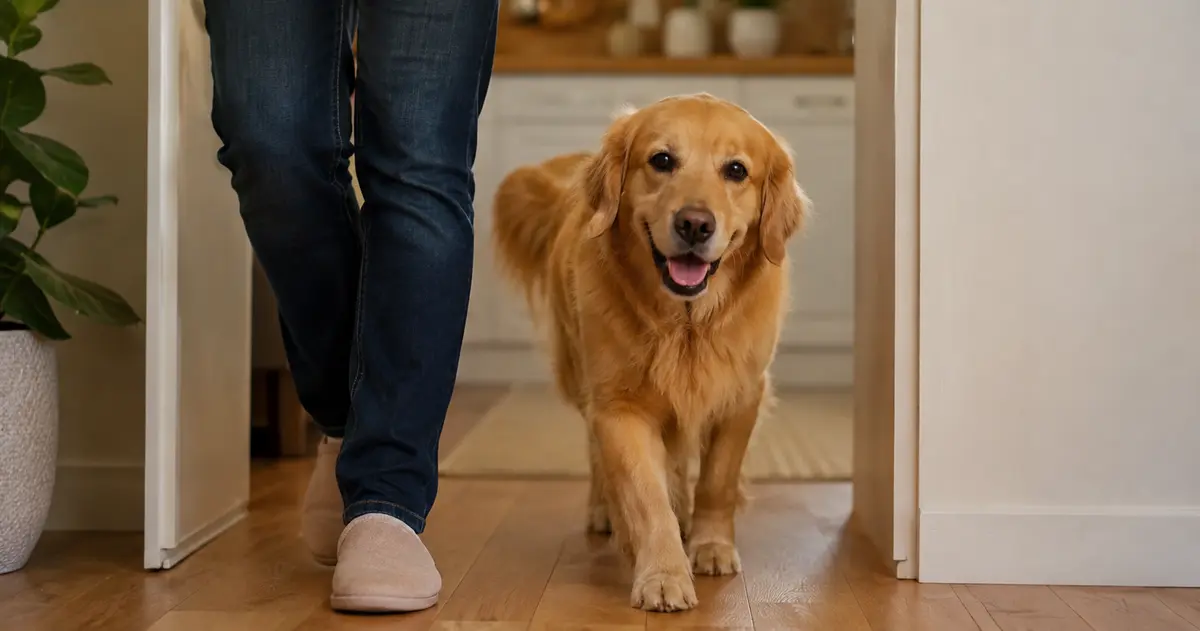
Golden Retrievers follow their owners everywhere due to strong pack instincts, high sociability, and a breeding history built around close human contact. It’s one of the most consistent traits across the breed, and it shows up early, often by the time a puppy comes home.
This guide breaks down the real reasons behind the behavior, what counts as normal versus a possible red flag, and practical ways to manage a dog that never wants to leave your side.
The Main Reasons Behind This Shadowing Behavior
Golden Retrievers rank among the most people-oriented dog breeds. Their tendency to trail you from room to room isn’t random. It comes from a mix of instinct, temperament, and breeding history.
Pack Mentality and Companion Instincts
Dogs descend from animals that lived and hunted in groups. Staying close to the group meant safety and access to food. Your Golden Retriever still carries pieces of that instinct, and in a home setting, you’ve become the pack.
Goldens were also bred as retrieving companions for hunters, working side by side with people rather than independently. That history built a dog that looks to humans for direction and connection, not one that prefers solo time.
Gentle Temperament and Natural Curiosity
Golden Retrievers are known for a soft, easygoing temperament. They form deep bonds quickly and tend to seek out human company rather than avoid it. This isn’t clinginess in a negative sense. It’s closer to companionship instincts working as intended.
Curiosity plays a role too. Goldens like knowing what’s happening around them. If you’re cooking, doing laundry, or working at a desk, your dog often wants to see what you’re doing simply because it’s interesting.
Why Does My Golden Retriever Puppy Follow Me Everywhere?
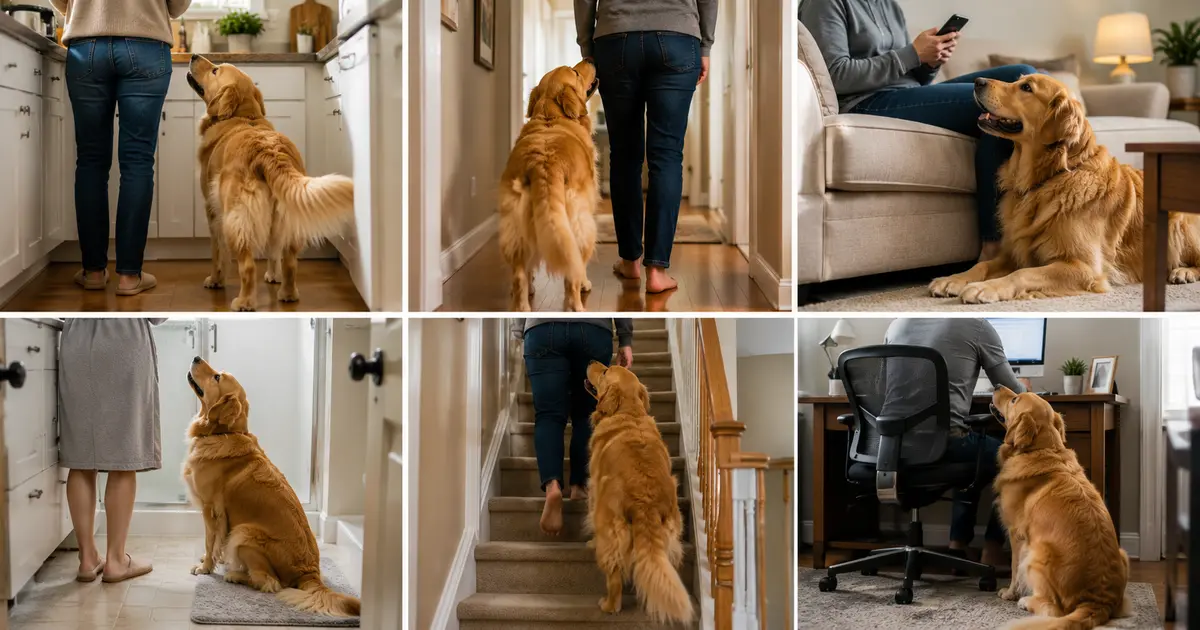
Puppies follow their owners even more closely than adult dogs, and this has a clear explanation. Young puppies are wired to seek security from a trusted figure, especially after leaving their mother and littermates.
At this stage, you become the puppy’s main source of comfort, food, and safety. Shadowing you around the house is a normal part of attachment and learning. Puppies also haven’t developed confidence to explore alone yet, so staying close feels safer.
As a Golden Retriever matures, usually somewhere between one and two years old, this intense following often eases. The dog still enjoys your company, but with more confidence, some puppies grow comfortable spending short stretches of time in another room without distress.
Why Is My Dog Following Me Everywhere All of a Sudden?
A sudden increase in following behavior is worth paying attention to, since it usually points to a change rather than pure personality. Several common triggers explain this shift.
- Changes in routine — a new work schedule, a move, or a different daily pattern can make a dog seek extra reassurance.
- Health issues — pain, vision loss, hearing decline, or early signs of cognitive changes in older dogs can increase clinginess.
- New stressors — loud noises, a new pet, a new person in the home, or construction nearby can all raise anxiety.
- Hormonal changes — intact females may follow owners more closely during certain points in their cycle.
- Aging — senior Golden Retrievers sometimes become more attached as their senses decline and they rely more on you for cues about their surroundings.
If the sudden shift comes with other symptoms, such as appetite changes, limping, or unusual lethargy, a veterinary check is a reasonable next step. Sudden behavior changes in dogs often have a physical cause, not just an emotional one.
Read Aslo Golden Retrievers Frienly
When Following Becomes a Concern: Separation Anxiety vs. Normal Attachment
Most shadowing behavior is simply canine loyalty at work. But there’s a difference between a dog that enjoys your company and one that struggles when you’re apart.
| Normal Attachment | Possible Separation Anxiety |
| Follows you but settles calmly nearby | Paces, whines, or can’t settle even when you’re home |
| Relaxes when left alone briefly | Shows distress (barking, destruction) when left alone |
| Comfortable in another room for short periods | Panics or scratches at doors when separated |
| Greets you calmly after short absences | Extreme, prolonged excitement or stress upon return |
Why Your Dog Stares at You or Cries When You Leave the Room
Staring is a common Golden Retriever trait. It often means the dog is watching for cues, like whether you’re about to grab a leash or head to the kitchen. This is reassurance-seeking behavior, not necessarily a problem.
Crying or whining when you step away briefly can be normal, especially in puppies. However, if it happens every single time and doesn’t fade after a few minutes, it may point toward mild separation-related stress rather than simple attachment.
Common Misconceptions About Clingy Dog Behavior
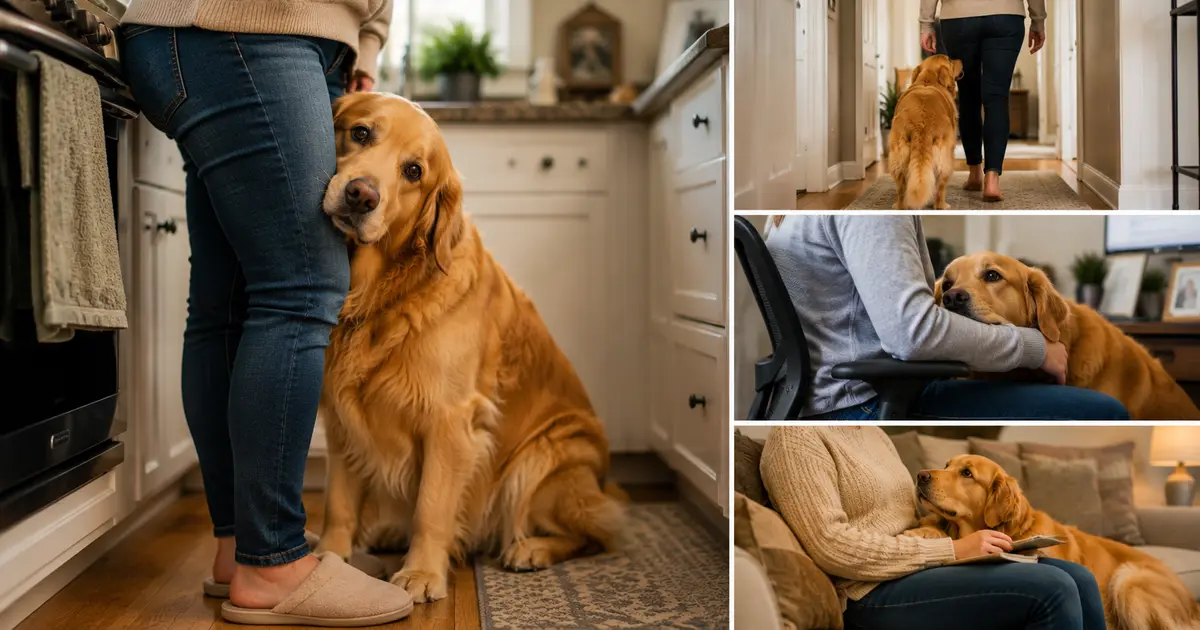
A few myths tend to shape how people interpret this behavior, and clearing them up helps set realistic expectations.
Myth: A dog that follows you is spoiled. Following behavior is largely instinctual and breed-driven, not a result of “too much” affection or poor discipline.
Myth: Constant following always means anxiety. Most of the time, it reflects normal social bonding. Anxiety is usually accompanied by other signs, like distress during actual separation, not just a preference for your company.
Myth: Ignoring the dog will stop the behavior. Golden Retrievers are wired for connection. Ignoring them doesn’t usually reduce following, and it can sometimes increase reassurance-seeking instead.
Myth: This behavior means the dog is untrainable or undisciplined. Following is a temperament trait, not a training failure. Structured independence exercises can help, but the instinct itself isn’t something to “fix.”
Also Read Golden Retrievers Smart
Practical Ways to Manage and Bond With a Velcro Dog
You don’t need to eliminate this behavior, since it’s a normal part of the breed. But a few strategies can support a healthy balance between closeness and independence.
- Give your dog a designated resting spot in the room you’re in, like a bed near your desk, so they can stay close without needing constant contact.
- Practice short, low-pressure separations, such as leaving the room for a minute and returning calmly, to build comfort with brief alone time.
- Provide mental stimulation, like puzzle toys or sniffing games, to reduce reliance on you for entertainment.
- Stick to a predictable routine, since consistency reduces anxiety-driven following.
- Include bonding activities, such as daily walks or short training sessions, which satisfy the dog’s need for connection in a structured way.
FAQs
Is it bad for my Golden Retriever to follow me all the time?
No. This is normal breed behavior rooted in companion instincts. It only becomes a concern if it’s paired with distress, panic, or an inability to settle when you’re nearby.
Do Golden Retrievers outgrow the need to follow their owners?
Many dogs become less intense with age as confidence builds, though most Goldens stay naturally people-focused throughout their lives due to their temperament.
Should I discourage my dog from following me?
There’s usually no need. Redirecting with a comfortable resting spot works better than discouraging the behavior outright, since it respects the dog’s natural instincts.
Are male or female Golden Retrievers more likely to follow their owners?
Individual personality tends to matter more than sex. Some dogs are naturally more attached regardless of gender, though hormonal changes can influence clinginess in intact females.
Key Takeaway
Golden Retrievers follow their owners because of deep-rooted pack instincts, a naturally affectionate temperament, and genuine curiosity about daily life. In most cases, this is simply the breed being itself. Watching for sudden changes or signs of distress, rather than the following behavior alone, is the best way to tell normal attachment apart from something that needs closer attention. If you notice ongoing signs of anxiety, a conversation with your veterinarian or a certified dog behaviorist, such as those listed through the American Veterinary Society of Animal Behavior, is a reliable next step.

Hi, I’m Jack Austin, founder of Cool Goldens. I share practical, research-backed advice on training, nutrition, and daily care to help you give your Golden Retriever the happiest, healthiest life possible.