


Timing matters more than most owners realize when it comes to neutering a male Golden Retriever. Vets generally point toward the back half of his first two years, once his joints have had enough time to finish growing.
Here’s what actually goes into that recommendation, and why this breed gets treated a little differently than most.
Best Age to Neuter a Male Golden Retriever (Quick Answer)
For most male Golden Retrievers, 12 to 18 months is the age range vets recommend for neutering. Waiting until growth plates close lowers the risk of joint problems later in life. Dogs with early health concerns, like undescended testicles, may need surgery sooner.
Why Timing Matters for This Breed
Golden Retrievers grow slowly compared to smaller breeds. Their bones and joints keep developing well past the one-year mark, sometimes closer to 18 months in larger males.
Hormones from the testicles play a role in that growth. Removing them too early can change how bones and joints finish forming, which is part of why timing gets more attention in this breed than in some others.
Golden Retrievers also carry a higher baseline risk for certain cancers compared to many other breeds. That combination of slow growth and elevated cancer risk is why vets treat this decision carefully rather than applying a one-size-fits-all rule.
Joint Health Risks by Neutering Age
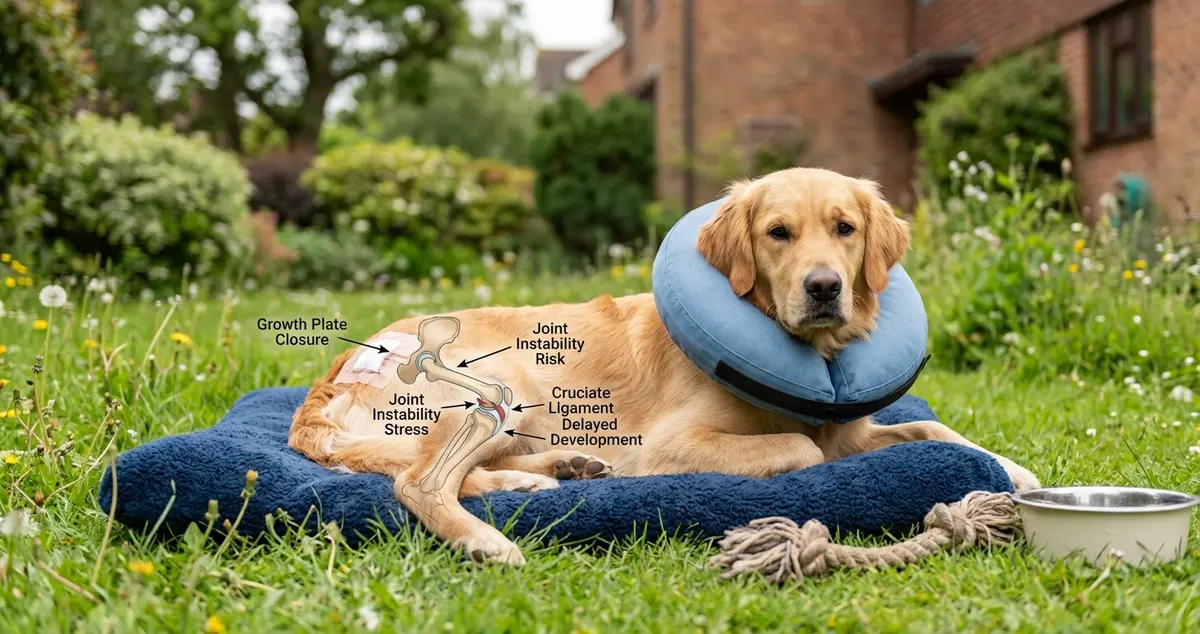
Research on large breeds, including Golden Retrievers, has generally found that neutering before growth plates close is linked to a higher chance of joint issues. The timing matters more here than the surgery itself.
Neutering Before 6 Months
This is the age band associated with the highest joint risk in studies on this breed. Growth plates are still wide open, and removing hormone influence this early appears to affect how joints form.
Neutering Between 6 and 11 Months
Risk in this window tends to sit lower than early neutering but still above dogs neutered after a year. It’s a middle ground rather than a clearly safe zone.
Waiting Past a Year
By 12 to 18 months, most Golden Retrievers have finished the bulk of their skeletal growth. Neutering at this point is associated with the lowest joint-related risk in the studies available.
Cancer Risk in Male Golden Retrievers: What the Numbers Really Mean
Golden Retrievers have one of the higher lifetime cancer rates among dog breeds, whether or not they’re neutered. This baseline matters, because it changes how you should read any study comparing neutered and intact dogs.
Some research has found a modest increase in certain cancers, including lymphoma and hemangiosarcoma, in males neutered very young compared to those neutered later or left intact. The increase reported in these studies is generally small compared to the breed’s overall cancer risk.
It’s worth knowing that much of this research comes from university veterinary hospitals, where dogs with existing health problems are more common than in the general pet population. That doesn’t make the findings wrong, but it does mean the exact percentages don’t automatically apply to every dog. Think of these numbers as a general direction, not a personal prediction for your dog.
For a broader, regularly updated look at this research, the UC Davis School of Veterinary Medicine publishes ongoing studies on neutering age and long-term health across several breeds.
also read Hemangiosarcoma in Golden Retrievers
Early Neutering vs. Waiting: A Side-by-Side Comparison
| Factor | Before 6 Months | 6–11 Months | 12–18 Months |
| Joint disorder risk | Highest | Moderate | Lowest |
| Cancer risk (relative) | Slightly elevated in some studies | Slightly elevated in some studies | Closer to baseline |
| Skeletal development | Still growing | Mostly growing | Usually complete |
| Common reason chosen | Shelter/rescue policy | Owner preference | Vet-recommended for this breed |
| Behavior outcome | Similar long-term | Similar long-term | Similar long-term |
Behavior tends to even out over time regardless of neuter age, so it shouldn’t be the deciding factor on its own.
My Dog Was Already Neutered Early — What Should I Do Now?
If your Golden was neutered before 12 months, there’s nothing to undo, and plenty of early-neutered dogs live full, healthy lives. The best move now is to focus on what you can still control.
Keep him at a lean, healthy weight, since extra weight puts more strain on joints that may already carry some added risk. Regular, moderate exercise helps too, without overdoing high-impact activity like repeated jumping.
Ask your vet to keep an eye on his joints and mobility at routine checkups, especially as he ages. Catching stiffness or lameness early makes it easier to manage. There’s no need for extra worry, just a bit more attention over time.
Behavioral Changes After Neutering
Neutering often reduces roaming, mounting, and marking behavior, but it doesn’t erase them completely, especially if they were already established habits. Some dogs show a noticeable drop within a few weeks; others show very little change.
It won’t fix problems rooted in training, fear, or general temperament. If your dog has behavioral issues beyond typical hormone-driven habits, a trainer or behaviorist is a better first step than surgery.
Timing doesn’t seem to make a major difference in adult temperament either way. Personality is shaped by far more than hormones alone.
When a Vet Might Recommend Neutering Earlier
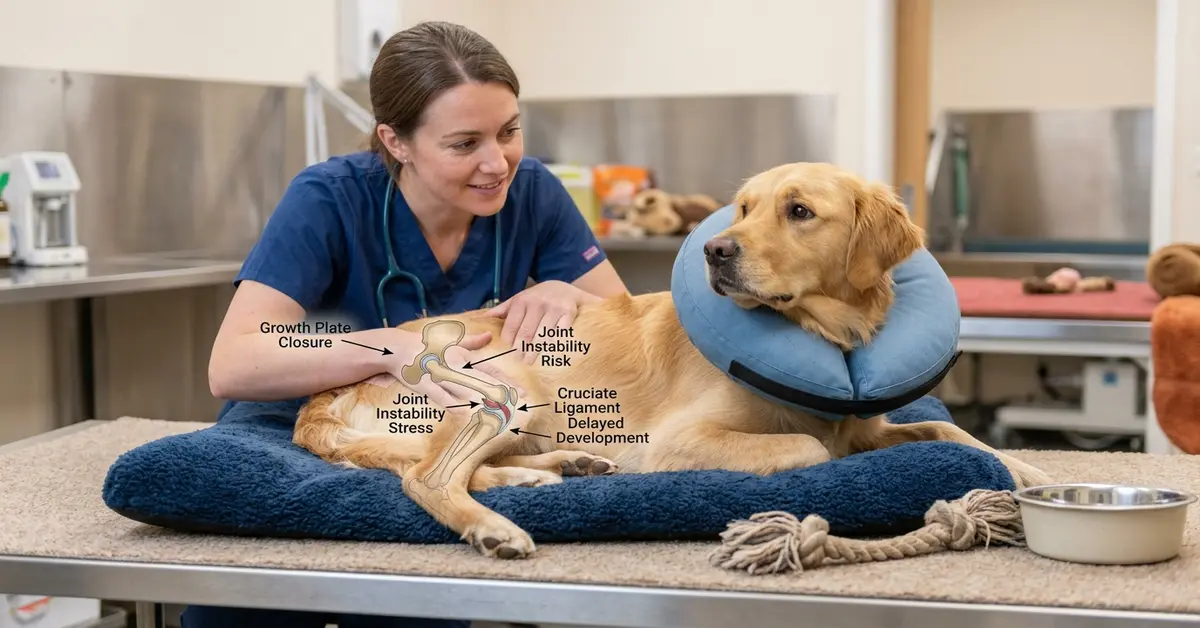
A handful of situations call for earlier surgery regardless of the usual guideline. Undescended testicles, known as cryptorchidism, is the clearest example, since retained testicles carry a higher risk of becoming cancerous and are often removed once the problem is confirmed.
Persistent, disruptive behavior, like intense mounting or repeated escape attempts to find a mate, is another reason a vet might suggest moving the timeline up. In these cases, quality of life and safety concerns can outweigh the benefit of waiting a few extra months.
Every case is different, which is why a conversation with your vet matters more than following a general rule strictly.
Are There Alternatives to Traditional Neutering?
Vasectomy is sometimes offered as an alternative. It prevents reproduction by removing part of the reproductive tract while leaving the testicles in place, so the dog still produces testosterone.
This keeps hormone-related development going, which may help with joint growth, but it doesn’t reduce the risk of testicular cancer or hormone-driven behaviors the way full neutering does. It’s not offered by every clinic, and it’s worth discussing directly with your vet if you’re interested.
There isn’t strong long-term data comparing vasectomy outcomes to traditional neutering in Golden Retrievers specifically, so treat it as an option to ask about rather than a proven alternative.
What to Expect on Surgery Day and During Recovery
Neutering is a routine, same-day procedure for most healthy dogs. Knowing what happens before and after can make the day feel less stressful for both of you.
Before the Surgery
Your dog will likely need to skip breakfast the morning of surgery. Most clinics run basic bloodwork beforehand to check that he’s healthy enough for anesthesia, and he’ll have an IV catheter placed for the procedure.
Recovery Timeline
Most dogs go home the same day with pain medication and are back to their normal selves within 24 to 48 hours. Full healing at the incision site usually takes about 10 to 14 days.
During that time, keep activity calm. No running, jumping, or rough play, even if he seems fine early on. An e-collar or recovery suit helps prevent licking at the incision while it heals.
Weight and Activity Changes to Watch For
Neutering can lower a dog’s metabolic rate slightly, which means he may need fewer calories than before to maintain a healthy weight. Golden Retrievers already tend toward weight gain, so this is worth paying attention to.
Watch his body condition over the weeks after surgery rather than sticking to the exact same feeding amount out of habit. A small adjustment to his food portion or a bit more daily activity can prevent slow, steady weight creep.
Regular walks and playtime matter just as much after neutering as before. Staying lean is one of the most effective things you can do for his joints and long-term health.
also read How Much Do Golden Retrievers Weigh
FAQs About Neutering Male Golden Retrievers
How much does neutering typically cost?
Cost varies by location and clinic, generally ranging from around $150 to $400 at private veterinary practices. Nonprofit and low-cost clinics often charge less. Your vet can give you an accurate quote based on your dog’s size and health needs.
Is neutering age different for female Golden Retrievers?
Yes. Spaying involves a more complex, abdominal surgery, and the health research behind timing differs somewhat from neutering. If you have a female Golden too, it’s worth discussing her timeline separately with your vet.
Does neutering guarantee better behavior?
No. It can reduce certain hormone-driven behaviors like marking and roaming, but it won’t fix behavior problems caused by training gaps, fear, or temperament. Those usually need separate, targeted training.
Can I still breed my dog if I wait longer to neuter?
Yes, as long as he isn’t neutered, he remains capable of breeding. If breeding is part of your plans, that decision should involve a vet and a clear health screening process beforehand.
Conclusion
For most male Golden Retrievers, waiting until 12 to 18 months to neuter gives their joints the best chance to develop fully, while keeping cancer risk close to the breed’s normal baseline.
Individual health issues, like undescended testicles, can change that timeline. Talk with your vet about your dog’s specific growth and health before settling on a date.

Hi, I’m Jack Austin, founder of Cool Goldens. I share practical, research-backed advice on training, nutrition, and daily care to help you give your Golden Retriever the happiest, healthiest life possible.