


A golden retriever and great pyrenees mix is a large, thick-coated dog built from two very different backgrounds: one bred to retrieve and please, the other bred to guard and think for itself. Put them together, and you get a dog that’s usually gentle at home but still watchful of anything unfamiliar.
That combination sounds simple on paper, but the reality is messier. Because this is a cross and not a standardized breed, one puppy can grow up bouncy and social while a littermate turns out quieter and more independent. Before you fall for a photo of a fluffy puppy online, it helps to know what actually shapes this mix’s size, temperament, and long-term care needs.
Golden Pyrenees Size and Weight by Age
Puppy Growth Timeline (8 Weeks to 1 Year)
A Golden Pyrenees puppy usually weighs 10 to 15 pounds at eight weeks old, though this varies depending on litter size and which parent breed the puppy takes after more strongly. Growth speeds up fast during the first six months. By four months, many puppies already weigh 30 to 40 pounds, and by six months, some are pushing past 50.
Growth slows after that, but it doesn’t stop. Large-breed mixes like this one often keep filling out in muscle and bone density until 18 to 24 months, even after they’ve reached their adult height. Feeding a large-breed puppy formula during this stage helps support joint development without pushing growth too fast, which can add stress to developing hips and elbows.
Full-Grown Size and Weight Range
Adult Golden Pyrenees dogs typically stand 24 to 32 inches at the shoulder and weigh between 70 and 100 pounds, with some males exceeding 110 pounds. Females tend to land on the lighter end of that range. Because the Great Pyrenees is one of the larger working breeds, a puppy that favors that side of its ancestry can end up noticeably bigger than one that leans toward the retriever.
There’s no reliable way to predict adult size from a puppy’s appearance alone. Paw size and bone thickness at a young age offer rough clues, but genetics from a multi-generation cross can produce real variation even within the same litter.
Coat, Shedding, and Grooming Needs
How Often They Shed and Why
Both parent breeds carry a double coat, so this mix almost always inherits one too. A double coat means a soft, insulating undercoat beneath a coarser outer layer, and it sheds in noticeable amounts year-round, with heavier shedding during seasonal coat blowouts in spring and fall. Owners looking for a low-shedding dog should look elsewhere. This is not a hypoallergenic breed mix, and no responsible source should claim otherwise.
The coat itself may lean toward the retriever’s wavy, water-resistant fur or the Pyrenees’ longer, weather-resistant coat, sometimes combining traits from both. Either way, expect fur on furniture, clothing, and floors as a normal part of ownership.
Brushing and Bathing Routine That Works
Brushing three to four times a week keeps shedding manageable and prevents mats, especially around the ears, legs, and tail. During heavy shedding seasons, daily brushing for a short stretch makes a real difference. An undercoat rake works better than a standard slicker brush for reaching the dense undercoat these dogs carry.
Bathing every six to eight weeks is usually enough, since overbathing strips natural oils that protect the skin and coat. Nail trims, ear checks, and teeth brushing round out a basic routine. Because of the coat’s density, it’s worth checking the skin underneath regularly for hot spots or irritation, which can hide beneath thick fur longer than owners expect.
Temperament: What This Mix Is Really Like
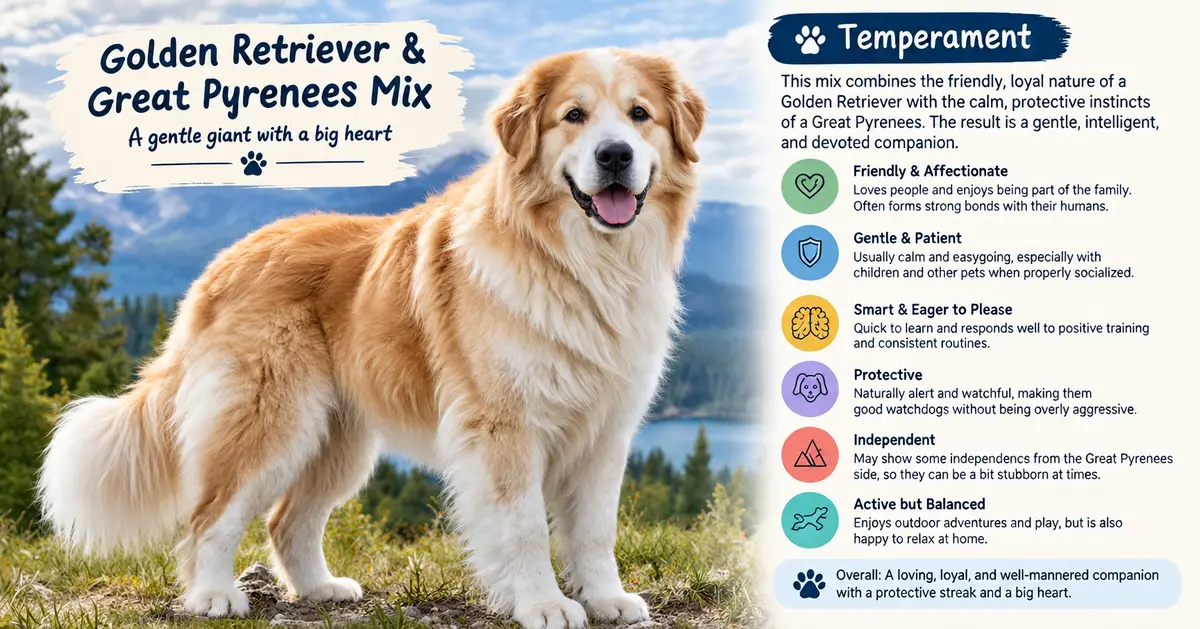
Traits Inherited from the Golden Retriever Side
The golden retriever side brings warmth, eagerness to please, and a strong drive to stay close to its people. Dogs that lean this direction tend to be more food-motivated, easier to train with positive reinforcement, and quicker to bond with new people. This is the side responsible for the breed’s reputation as a gentle family companion.
Retrievers were originally bred to work closely with handlers, retrieving game on command, and that cooperative instinct often carries into the mix. Dogs with a stronger retriever influence are usually more social with strangers and less likely to act as independent decision-makers.
Traits Inherited from the Great Pyrenees Side
The Great Pyrenees was bred to guard livestock alone, often making decisions without human direction for hours at a time. That history shows up as independence, a tendency to bark at anything unfamiliar, and a calm but watchful demeanor. Dogs leaning this direction are often less eager to please and more likely to think for themselves before responding to a command.
This independence isn’t stubbornness for its own sake. It’s a working trait that made sense for a dog guarding sheep on a mountainside without supervision. In a mixed dog, it can translate into a pet that’s affectionate at home but slower to respond to obedience training than a purebred retriever would be.
Are They Good with Kids and Other Pets?
Most Golden Pyrenees dogs do well with children, drawing on the retriever’s patience and the Pyrenees’ protective instinct toward family members it considers part of its group. Supervision still matters, particularly with toddlers, simply because of the dog’s size. A large adult dog can knock over a small child by accident, even during friendly play.
With other pets, results depend heavily on socialization and which parent traits show up more strongly. The Pyrenees’ guarding background can make some individuals watchful or reactive toward unfamiliar dogs, while the retriever side generally supports easier introductions. Early socialization with a variety of people, animals, and environments during puppyhood makes a noticeable difference in how confidently the adult dog handles new situations later on.
also read Golden Retriever and Pitbull Mix
Exercise and Mental Stimulation Requirements
This mix needs moderate exercise, typically 45 to 60 minutes a day split between walks and active play. It’s not as high-energy as a working-line retriever, but it’s also not a couch-only breed. A bored, under-exercised dog of this size can develop destructive habits like chewing or excessive barking.
Mental stimulation matters just as much as physical activity, especially given the Pyrenees’ independent streak. Puzzle feeders, scent games, and short training sessions throughout the week help keep the mind engaged without requiring hours of exercise. Because the Pyrenees side isn’t built for high-intensity activity in hot weather, exercise should shift to cooler parts of the day during summer months.
Common Health Issues and Joint Care
Hip and Elbow Dysplasia Risk
Both parent breeds carry documented risk for hip dysplasia, a condition where the hip joint doesn’t fit together properly, leading to pain and arthritis over time. Data compiled by the Orthopedic Foundation for Animals shows hip dysplasia rates of roughly 19.8% in Golden Retrievers, compared to about 9.2% in Great Pyrenees (listed under Pyrenean Mountain Dog), based on decades of radiographic evaluations submitted by breeders and veterinarians. A mixed-breed puppy from these two parents inherits some combination of that risk, though crossbreeding does not guarantee a lower rate on its own.
Asking a breeder for OFA or PennHIP clearances on both parent dogs is one of the most useful steps a buyer can take. Elbow dysplasia, a related joint condition, is also worth screening for in large-breed dogs of this size.
Other Conditions to Watch For
Beyond joint issues, large mixed breeds like this one can be prone to bloat, a life-threatening stomach condition more common in deep-chested dogs. Feeding smaller, more frequent meals instead of one large portion, and avoiding vigorous exercise right after eating, are commonly recommended precautions.
Golden Retrievers also carry a documented predisposition toward certain cancers and heart conditions, including subvalvular aortic stenosis. While a mixed-breed dog doesn’t automatically inherit every risk at the same rate as a purebred, responsible owners should still schedule regular veterinary checkups and stay alert to changes in appetite, energy, or mobility.
Life Expectancy and Factors That Affect It

A Golden Pyrenees typically lives 10 to 12 years, landing between the Golden Retriever’s average of 10 to 12 years and the Great Pyrenees’ typical range of 10 to 12 years as well, since both parent breeds fall in a similar bracket. Larger dogs generally have shorter lifespans than smaller breeds due to faster aging in bigger bodies, a pattern well documented across canine size categories.
Diet, weight management, and joint care all influence how many of those years are spent active and comfortable rather than managing chronic pain. Keeping a dog at a healthy weight reduces strain on joints already carrying genetic risk, which matters more for a large mixed breed than it might for a smaller dog.
What Vets and Breed Researchers Say About Mixed-Breed Health
There’s a common assumption that mixed-breed dogs automatically enjoy better health than purebreds, a concept sometimes called hybrid vigor. The reality is more nuanced, and it helps to look at the specific risks each parent breed carries rather than relying on the general idea alone.
Great Pyrenees are a deep-chested, large breed, which puts them at meaningfully higher risk for gastric dilatation-volvulus, commonly known as bloat, a sudden and life-threatening condition where the stomach fills with gas and twists on itself. The American College of Veterinary Surgeons, Bloat/GDV Overview identifies deep-chested large breeds as a primary risk group and recommends owners learn the early warning signs, since rapid veterinary treatment makes a significant difference in outcomes. A smaller but well-documented concern in the breed is a genetic form of polyneuropathy, an inherited nerve condition that can affect movement and coordination in young dogs.
Since bloat risk in particular is tied to body structure rather than a single recessive gene, a mixed puppy from a Great Pyrenees and Golden Retriever doesn’t automatically avoid this risk just by being a cross. Feeding practices, like avoiding large single meals and rapid eating, along with awareness of the early symptoms, matter more here than assumptions about hybrid vigor. Buyers who assume “mixed means healthier” without understanding these breed-specific risks are working from a myth, not a guarantee.
Golden Pyrenees vs. Purebred Golden Retriever vs. Purebred Great Pyrenees
| Trait | Golden Pyrenees | Golden Retriever | Great Pyrenees |
| Adult weight | 70–100+ lbs | 55–75 lbs | 85–115 lbs |
| Shedding | Heavy, double coat | Moderate to heavy | Heavy, double coat |
| Temperament | Friendly, watchful | Very social, eager to please | Independent, protective |
| Trainability | Moderate | High | Lower, needs patience |
| Exercise needs | Moderate | Moderate to high | Low to moderate |
| Barking tendency | Moderate to high | Low | High |
| Lifespan | 10–12 years | 10–12 years | 10–12 years |
This table highlights something the size and temperament sections already suggest: this mix tends to land between its two parents rather than fully resembling either one. A buyer who wants a dog that’s calmer than a retriever but more people-focused than a Pyrenees is often looking at the right combination.
Common Myths About This Mix, Debunked
One persistent myth is that any Golden Retriever mix is automatically low-maintenance because retrievers have a reputation for being easygoing. The Pyrenees side pushes back against that assumption, since it brings independence, a strong guarding instinct, and a tendency to bark at unfamiliar sounds, none of which are low-maintenance traits.
Another myth involves designer breed registries. Groups like the American Canine Hybrid Club or Designer Breed Registry issue names and paperwork for mixed breeds, but registration with these organizations doesn’t verify health testing, temperament, or breeding quality. It simply logs that a dog exists as a named cross. A registry certificate is not the same as a health clearance, and buyers shouldn’t treat it as proof of a well-bred puppy.
A third myth is that mixed-breed dogs can’t develop the same health issues as their purebred parents. As the health section above shows, shared risks like hip dysplasia carry over regardless of whether a dog is purebred or mixed.
Living Space and Climate Fit
Apartment Living vs. a Home with a Yard
A dog this size generally does better with access to a yard, simply because of the physical space a 70-to-100-pound dog needs to move comfortably. Apartment living isn’t impossible, but it requires committed daily exercise to make up for the lack of space, along with patience for a dog that may bark at hallway noises due to its Pyrenees instincts.
Houses with secure, fenced yards suit this mix well, giving it room to patrol, a behavior many Pyrenees-influenced dogs enjoy. Without a fence, this same instinct can lead to wandering, since guardian breeds are historically bred to cover territory rather than stay close to one spot.
also read Crate for a Golden Retriever
Cold vs. Hot Climate Tolerance
Great Pyrenees dogs were bred for cold mountain climates, and that heritage shows up clearly in this mix’s coat density and cold tolerance. These dogs generally handle winter weather well and often enjoy time outside in the cold.
Hot climates are a different story. The same thick double coat that protects against cold makes heat regulation harder, so owners in warm regions need to watch for signs of overheating during summer months, limit exercise to cooler hours, and always provide shade and water outdoors.
Training Tips for a Naturally Independent Dog
Training a Golden Pyrenees works best when it starts early and stays consistent, since the Pyrenees side’s independence can make adult dogs more set in their ways. Short, positive training sessions, five to ten minutes at a time, tend to hold attention better than long sessions, especially with a puppy that inherited more Pyrenees-like patience for ignoring commands it doesn’t see the point of.
Socialization matters just as much as obedience work. Exposing a puppy to different people, sounds, and environments between eight weeks and four months old builds the confidence that keeps a watchful, guarding instinct from turning into excessive reactivity later on. Positive reinforcement, using treats, praise, and play as rewards, generally works better than correction-based methods for a dog with this temperament blend, since punishment can make an already independent dog more resistant rather than more cooperative.
Cost to Adopt or Buy a Golden Pyrenees
Finding a Responsible Breeder
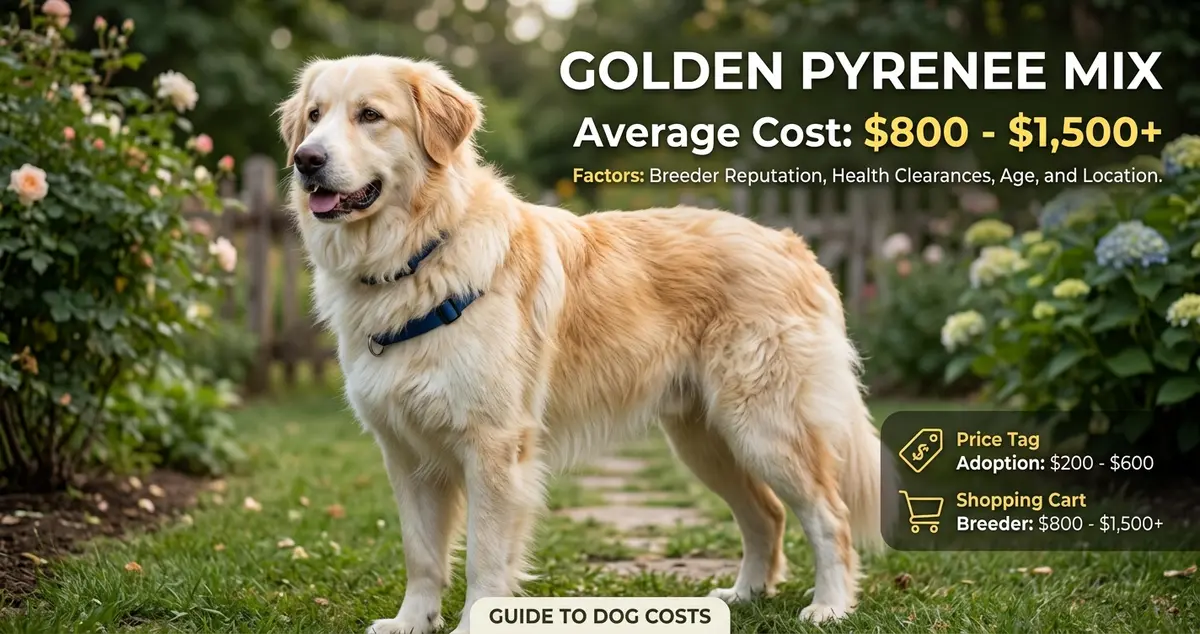
Breeders working with this cross typically charge between $800 and $1,500+ per puppy, though prices vary by region and litter demand. A responsible breeder should provide OFA or PennHIP hip clearances for both parent dogs, along with basic health records and the chance to meet at least one parent in person.
Red flags include breeders who can’t produce health testing documents, who have puppies available year-round without any waitlist, or who push registry paperwork as a substitute for actual health guarantees. A designer breed registration means very little without health testing behind it.
Rescue and Adoption Options
Large mixed breeds, including Golden Pyrenees dogs, do show up in shelters and breed-specific rescues, often because owners underestimated the size or exercise needs before adopting. Adoption fees typically range from $150 to $400 and usually include spay or neuter surgery, vaccinations, and a basic health check.
Rescue organizations focused on Great Pyrenees or large mixed breeds are a good place to start, since their staff often has direct experience with the temperament traits this mix tends to show. Adopting an adult dog also comes with an advantage puppies can’t offer: you can see the dog’s actual size, coat type, and temperament before committing, rather than guessing at how the genetics will turn out.
Is a Golden Pyrenees Right for You?
This mix tends to fit best with:
- Households with a fenced yard rather than a small apartment
- Owners who can commit to 45–60 minutes of daily exercise
- Families comfortable with heavy, year-round shedding
- People willing to start training and socialization early, given the independent streak
- Cooler or moderate climates, or a plan to manage heat carefully in warmer regions
It’s a harder fit for:
- First-time dog owners looking for an easy, highly obedient dog
- Anyone hoping for a low-shedding or hypoallergenic pet
- Small living spaces without consistent outdoor access
- Households unable to handle a dog that may bark at unfamiliar noises or visitors
Frequently Asked Questions
Are Golden Pyrenees dogs hypoallergenic?
No. Both parent breeds carry a double coat and shed heavily throughout the year, with even heavier shedding during seasonal coat changes. No dog is truly hypoallergenic, but this mix is especially unsuitable for anyone with pet dander allergies.
Do Golden Pyrenees dogs bark a lot?
Many do, largely because of the Great Pyrenees’ guarding instinct, which involves barking at unfamiliar sounds or movement. Early training can reduce excessive barking, but a dog with a strong Pyrenees influence will likely stay alert and vocal by nature.
Can a Golden Pyrenees live outside full-time?
While the coat handles cold weather well, this mix generally does better as an indoor-outdoor dog that spends real time with its family. The retriever side in particular tends to form strong bonds with people and doesn’t do well isolated outdoors long-term.
How much do Golden Pyrenees puppies cost?
Prices from breeders typically range from $600 to $1,500, depending on location and breeder reputation, while rescue adoption fees usually fall between $150 and $400 and often include basic veterinary care already completed.
Do Golden Pyrenees mixes get along with cats?
It depends on socialization and individual temperament. Early exposure to cats during puppyhood improves the odds significantly, though the Pyrenees’ guarding instinct can make some individuals more watchful around smaller animals they haven’t grown up with.
If you’re considering this mix, the most useful next step is contacting a breeder or rescue directly and asking for hip and elbow health clearances on the parent dogs, along with any temperament notes from people who’ve spent time with the litter. That combination of health data and firsthand behavior observation will tell you more than any general breed guide, including this one, about whether a specific puppy fits your household.

Hi, I’m Jack Austin, founder of Cool Goldens. I share practical, research-backed advice on training, nutrition, and daily care to help you give your Golden Retriever the happiest, healthiest life possible.