


Six months old, fifteen months old, somewhere in between — golden retriever first heat doesn’t follow one fixed date, and that’s exactly what makes it confusing for new owners. Genetics and growth rate decide the timing, not a strict calendar.
Swelling, a shift in mood, maybe a spot of discharge on her bed — these details can feel alarming if nobody warned you beforehand. They’re not random, though. Each one is part of a predictable cycle with its own stages and its own timeline, and knowing what’s coming next makes the whole thing far less stressful to manage.
“Golden Retriever heat cycle calculator”, “find her next heat date”
When Does This Cycle First Begin?
A Golden Retriever typically enters her first heat cycle somewhere between 6 and 15 months old. The average tends to fall around the 9 to 10 month mark, though breed size plays a real role here. Large breeds like Goldens often mature a bit slower than small dogs, which can push that first cycle out closer to the one-year mark for some individuals.
There’s no exact date you can circle on a calendar. Genetics, body weight, and even the individual dog’s growth pace all factor into the timing. A few Goldens cycle as early as 6 months, while others don’t show any signs until 15 or even 18 months. Neither extreme is automatically a red flag, but if your dog hasn’t cycled by 18 months, a vet visit is worth scheduling just to rule out anything unusual.
Golden Retriever Heat Cycle Age Chart
Breaking the timeline into ranges makes it easier to know what’s typical for your specific dog. Use this as a general reference rather than a strict rule, since every Golden develops on her own schedule.
| Age Range | Category | What’s Happening |
|---|---|---|
| 6–8 months | Early onset | Less common in Goldens, but not abnormal |
| 9–12 months | Average onset | Most common window for this breed |
| 12–15+ months | Late onset | Still normal, especially in larger-framed females |
| 18+ months, no cycle | Worth a vet check | Not urgent, but should be evaluated |
Early Onset (6-8 Months)
A small number of Golden Retrievers cycle this early, and it usually catches owners off guard because they weren’t expecting signs so soon. Early onset is more typical in smaller breeds, so when it happens in a Golden, it’s simply on the earlier edge of normal rather than a warning sign.
If your puppy starts showing symptoms at 6 or 7 months, there’s usually nothing to worry about. Keep an eye on her energy levels and appetite during this period, since a first cycle at a younger age can sometimes come with milder symptoms that are easy to miss entirely.
Average Onset (9-12 Months)
This window covers the majority of Golden Retrievers. By this age, most dogs have reached close to their adult height, even if they haven’t finished filling out in weight and muscle. The body has matured enough to support a full reproductive cycle.
Owners in this age range tend to notice more obvious signs, including visible swelling and a clearer shift in behavior. This is also the point where many breeders and vets start reminding owners to think seriously about supervision, since a first heat means your dog can get pregnant.
“Golden Retriever pregnancy calculator”, “work out the due date”
Late Onset (12-15+ Months)
Larger and heavier-boned Goldens sometimes take longer to reach this milestone, and that’s consistent with how larger dog breeds generally mature. A first cycle at 13 or 14 months doesn’t point to a health issue on its own.
What matters more than the exact month is whether your dog is otherwise healthy, active, and growing normally. If she’s hitting her expected weight and showing no other symptoms of concern, a later first heat is simply part of her individual timeline.
Early Signs Your Golden Retriever Is Going Into Heat

Recognizing the first signs early gives you time to prepare rather than react. Some signs are physical and easy to spot, while others show up as subtle shifts in mood or behavior that build gradually over a few days.
Physical Signs (Swelling, Discharge)
The clearest early sign is swelling around the vulva, which can appear a few days before any discharge starts. Many owners notice their dog licking herself more frequently around this time, which is often the first clue something is changing.
Discharge usually follows shortly after, starting as a light pink or reddish color before becoming heavier. In long-coated breeds like Goldens, this can be harder to spot at first because the fur around the area hides small amounts of spotting. Checking your dog’s bedding for marks is a practical way to catch it early if visual signs aren’t obvious yet.
Behavioral and Mood Changes
Alongside the physical changes, you’ll likely notice shifts in temperament. Some Goldens become clingier and seek out more attention than usual, while others seem restless or slightly anxious for no clear reason.
A few dogs also show changes in appetite, either eating less than normal or showing more interest in food. Tail flagging, where she holds her tail to the side when approached from behind, is another classic sign that often appears once she enters the more fertile phase of her cycle.
also read Golden Retrievers Smart
Stages of the Heat Cycle and How Long It Lasts
A full heat cycle isn’t a single event. It moves through four distinct stages, and understanding each one helps explain why symptoms shift throughout the process instead of staying constant.
- Proestrus — Lasts roughly 7 to 10 days. This is when swelling and bloody discharge begin, but the female isn’t yet receptive to mating.
- Estrus — Also around 7 to 10 days. Discharge often lightens in color, and this is the fertile window when pregnancy is possible.
- Diestrus — Lasts about 60 to 90 days. Physical signs fade, and hormone levels gradually return to baseline.
- Anestrus — The resting phase between cycles, typically lasting several months until the next heat begins.
In total, the visible portion of a heat cycle (proestrus plus estrus) usually runs about 2 to 3 weeks. First cycles can sometimes be irregular or shorter than later ones, so don’t be surprised if your dog’s first heat doesn’t follow the timeline exactly.
What Affects the Timing of a Golden Retriever’s First Cycle?
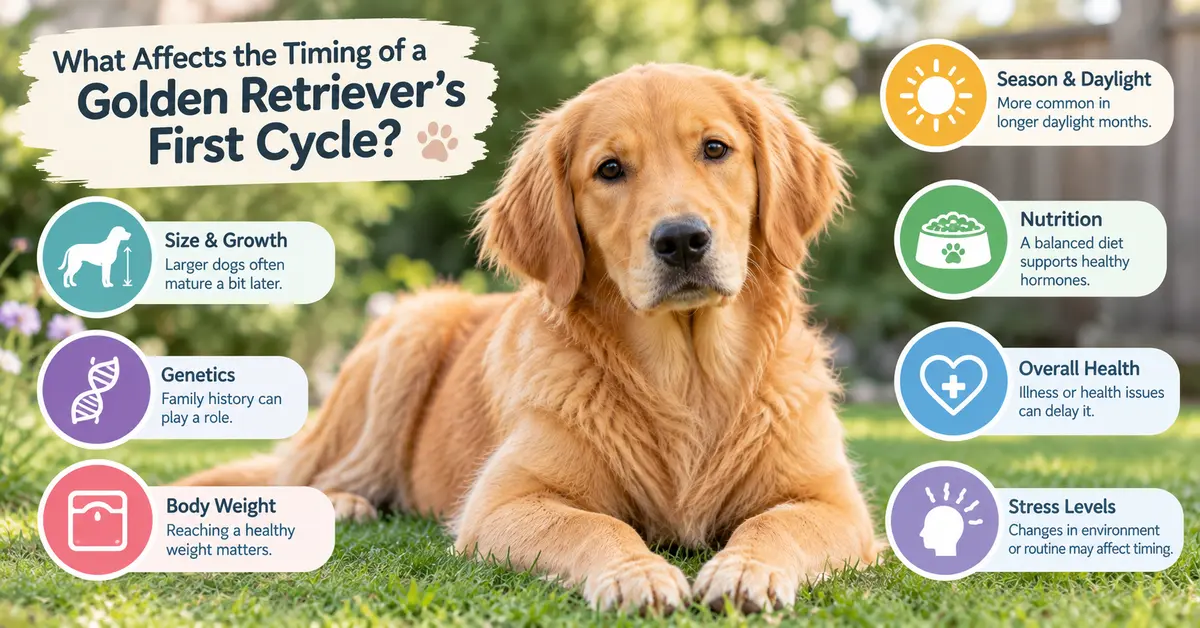
Several factors shape exactly when a first heat arrives, and no single one determines the outcome on its own. Genetics plays the biggest role, since dogs from lines that mature earlier tend to pass that pattern to their offspring.
Body weight and overall growth rate matter too. A Golden that reaches her adult frame faster often cycles sooner than one still filling out at the same age. Field-line Goldens, which are typically leaner and more athletic, sometimes mature at a slightly different pace than show-line dogs bred for a heavier build. Litter size and even the mother’s own cycling history can offer clues, though none of these factors guarantee an exact outcome for an individual puppy.
What to Expect During This Stage
Once the cycle starts, daily routines need a few adjustments. Walks should happen on a secure leash, since an unspayed female in heat attracts male dogs from surprising distances, sometimes well beyond what you’d expect in your own neighborhood.
Expect some mess during the heavier discharge days. Many owners use washable or disposable doggy diapers to protect furniture and flooring. Your dog’s energy may also dip slightly, especially during the diestrus phase that follows, so don’t be alarmed if she seems a bit more tired than usual for a few weeks after the visible signs fade. Keep her away from unneutered males for the full three-week window, not just the days when discharge is visible, since she can become fertile before symptoms peak.
Preparing for This Milestone
A little preparation makes the whole process smoother for both of you. Having supplies ready before the first signs appear means you won’t be scrambling once discharge starts.
- Doggy diapers or washable heat pads for furniture protection
- A calendar or app to track start dates for future cycle predictions
- A secure, fenced area for bathroom breaks instead of open yard access
- Extra bedding that’s easy to wash
- A plan for keeping male dogs away, including neighbors’ pets
Tracking each cycle’s start date builds a useful record over time. Most Goldens settle into a pattern of cycling roughly every 6 months, though the interval can vary from dog to dog, and having that history helps you anticipate the next one with more confidence.
Common Myths About This Cycle
A few persistent myths cause confusion for new owners, and clearing them up helps you make better decisions.
Myth: A female must go through one heat before spaying.
There’s no medical requirement for this. Many vets now recommend spaying before the first heat specifically to avoid the complications and behavioral changes that come with cycling.
Myth: A first heat means she’s ready to breed.
Physical readiness isn’t the same as being ready for a healthy pregnancy. Breeding during the first cycle carries higher risks, and most reputable breeders wait until at least the second or third heat.
Myth: Heat cycles only affect physical health, not behavior.
Hormonal swings during heat genuinely affect mood, energy, and even appetite. Owners who expect only physical symptoms are often caught off guard by the emotional and behavioral side of the cycle.
What Science Says About Heat Cycle Timing in Golden Retrievers

Veterinary reproductive research backs up much of what breeders have observed for years about the connection between body size and puberty onset. Bitches generally reach puberty two to three months after achieving adult body size, with the average onset falling between six and 12 months and a documented range of four to 24 months, according to research summarized in Canine Estrous Cycle and Ovulation, dvm360. This directly explains why larger breeds like Goldens often cycle later than small dogs, since they simply take longer to reach their adult frame.
Smaller breeds reach adult size earlier and therefore reach puberty sooner than larger breeds, and the timing of a first cycle also tends to shift earlier when a young female is housed alongside a mature, already-cycling female. This social influence is worth knowing if you have multiple female dogs in the same household, since one dog’s cycle can sometimes nudge another’s timeline earlier than it might have started on its own.
Spaying Options and Timing Around This Cycle
The decision about when to spay is one of the most common questions owners face once they understand the heat cycle timeline. Spaying before the first heat is often recommended because it eliminates the chance of an unplanned pregnancy entirely and removes the annual disruption of cycling.
Some vets suggest waiting until after the first heat, or even after the dog reaches full skeletal maturity around 18 to 24 months, based on research into orthopedic health in larger breeds. This is a genuine trade-off worth discussing directly with your vet, since Golden Retrievers as a breed have documented sensitivity to joint issues that some studies link to spay timing. There’s no single right answer for every dog, and your vet can weigh your dog’s specific growth pattern, activity level, and health history to recommend the best window.
also read Best Age to Neuter a Male Golden Retriever
When to Call Your Vet
Most first heats proceed without complications, but a few warning signs deserve prompt attention rather than a wait-and-see approach.
- Bleeding that continues past 4 weeks without slowing down
- No signs of a first heat by 18 months of age
- Discharge with a strong, unpleasant odor
- Signs of pain, lethargy, or refusal to eat during the cycle
- Swelling that seems excessive or doesn’t reduce after the cycle ends
None of these symptoms are common, but catching them early makes treatment simpler if something does need attention. A quick call to your vet costs little and can rule out anything serious.
Your Golden’s first heat is a normal part of growing up, not something to fear. Track the start date, keep her secure and supervised, watch for the warning signs above, and use this window to have an honest conversation with your vet about spaying timing that fits her specific growth and health profile.
FAQ
Can she get pregnant during her first cycle?
Yes, a female can become pregnant during her very first cycle once she reaches the fertile estrus stage. This is exactly why supervision matters from the moment signs appear, not just once you notice full symptoms, since fertility can begin before discharge is obvious.
How often will she go into heat after the first one?
Most Golden Retrievers settle into a pattern of cycling roughly every 6 months, though the first few cycles can be irregular in timing and length. It typically takes a couple of cycles before a consistent pattern becomes predictable.
Does spaying before the first heat affect growth or temperament?
Spaying doesn’t meaningfully change temperament. Growth plate closure and joint development are the main considerations some vets weigh when discussing timing, particularly in larger breeds like Goldens, which is why this decision is best made individually with your vet.

Hi, I’m Jack Austin, founder of Cool Goldens. I share practical, research-backed advice on training, nutrition, and daily care to help you give your Golden Retriever the happiest, healthiest life possible.