

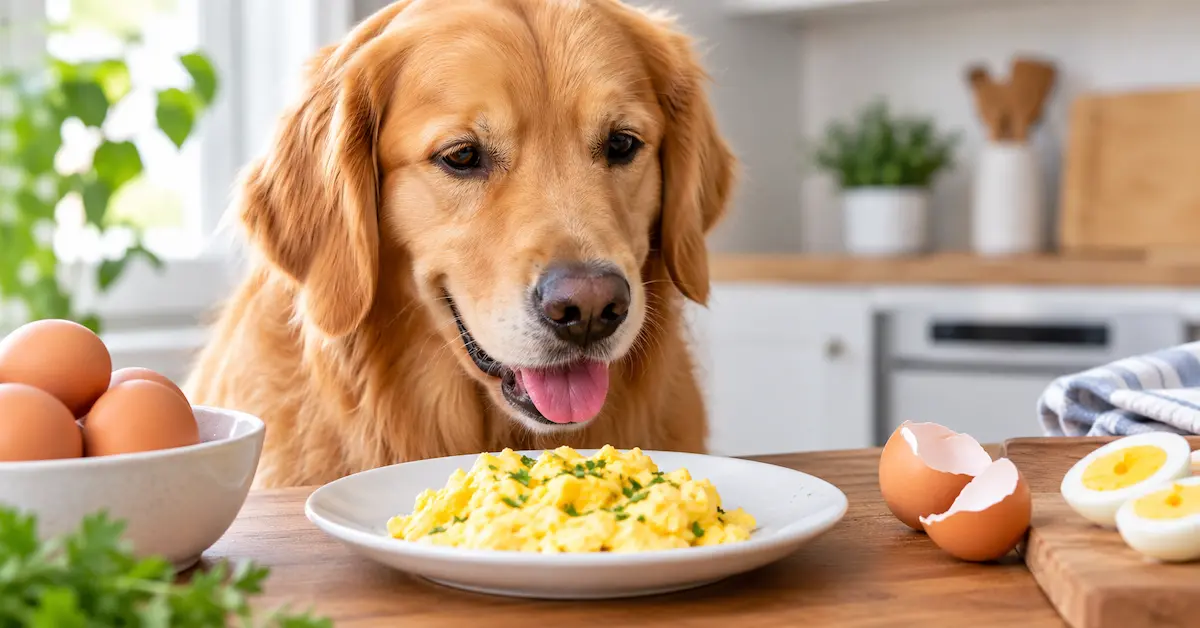
Your golden is sitting beside the stove again, eyes locked on the pan. Yes, golden retrievers can eat eggs, as long as the eggs are fully cooked, served plain, and given in small portions. Raw eggs and unprepared shells are the main problems.
This guide covers how much to feed, which cooking methods work best, what the research says, and when to call your vet.
When Fully Cooked and Served Plain
Yes, a golden can eat eggs in moderation. A fully cooked egg with no oil, butter, salt, or seasoning is a safe, protein-rich snack for most healthy dogs. Think of it as a treat or a food topper, not a meal.
Two things need extra care. Raw eggs can carry bacteria and interfere with how a dog absorbs one B vitamin. Shells can add calcium, but they need proper preparation, and many dogs don’t need them at all.
Dogs with health conditions, or dogs eating a prescription diet, should get a vet’s approval before any new food. What works for one golden may not work for another.
| Safe | Avoid |
| Hard-boiled, chopped | Raw eggs |
| Poached, cooked firm | Eggs fried in butter or oil |
| Scrambled with no fat | Omelets with cheese, onion, or garlic |
| Small portions within the treat allowance | Spoiled or expired eggs |
Why Eggs Can Be a Good Addition to a Golden’s Diet
An egg packs a lot into a small package. It contains protein, fat, vitamins, and minerals, and dogs digest cooked egg easily. That makes it a handy way to add variety to a bowl of kibble.
The protein helps maintain muscle, which matters for an athletic breed that loves to run and swim. The fat gives energy and supports healthy skin and coat. Eggs also provide vitamins such as A, D, E, and several B vitamins, plus minerals like iron, zinc, and selenium. These nutrients play a role in immune function, metabolism, and skin health.
Still, eggs are a supplement, not the base of a diet. A complete commercial dog food is formulated to cover a dog’s full nutritional needs, and eggs can’t replace that. A cooked egg on top of dinner gives your golden a small boost and a bit of excitement without throwing off the balance of the main meal.
Egg Whites vs. Yolks: What Each One Offers
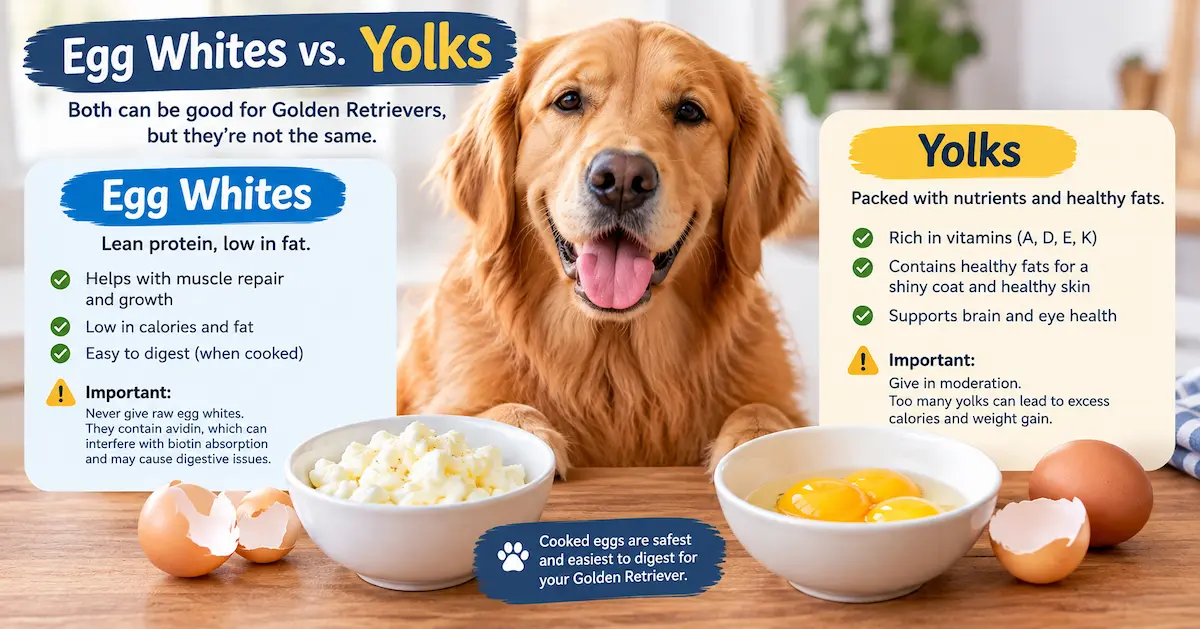
Each part of the egg brings something different. Most dogs can have both, so the right choice depends on your golden’s weight and health.
The yolk holds most of the fat, calories, and fat-soluble vitamins. It’s what makes eggs rich and filling. The white is mostly protein and water, with very little fat, which makes it lighter. But the white must be cooked. Raw white contains avidin, a protein that binds biotin, so cooking is the safer path.
| Egg White | Egg Yolk | |
| Main nutrient | Protein | Fat and vitamins |
| Fat and calories | Low | Higher |
| Best for | Dogs watching their weight | Healthy, active dogs in small amounts |
| Cook first? | Yes | Yes |
Choose whites only if your dog has a weight problem or a history of pancreatitis, and confirm that plan with your vet. For a healthy adult with a normal body shape, a whole cooked egg is fine in the portions below. Goldens gain weight easily, so the extra calories in yolks are worth keeping in mind.
How Many Eggs Can a Golden Eat, and How Often?
There’s no single number that fits every golden. Size, age, activity level, and overall diet all change the answer. The sections below give practical starting points and show how to tie them to your dog’s calorie needs.
Portions by Golden Size and Life Stage
Adult goldens usually weigh roughly 55 to 75 pounds, with females on the lighter end. The table below offers conservative starting points for a plain, cooked large egg. These are general estimates, not a prescription.
| Golden Group | Starting Portion | Frequency |
| Puppy (varies by age) | ¼ to ½ egg, vet approval first | Once a week at most |
| Adult female | ½ to 1 egg | 1–2 times a week |
| Adult male | 1 egg (up to 1½ for lean, active dogs) | 1–2 times a week |
| Senior | ¼ to 1 egg, based on weight and health | Once a week to start |
Treat these as ceilings, not goals. A dog that gets other treats that day should get a smaller egg portion, or skip the egg.
check our free Golden Retriever Age Calculator
Turning the 10% Treat Rule Into Real Numbers
Many vets suggest that treats make up no more than about 10% of a dog’s daily calories, with the rest coming from balanced dog food. This is a rule of thumb, but it works well as a guardrail.
A large egg has roughly 70 to 75 calories. Here’s an example. Say your vet tells you your golden needs about 1,200 calories a day. Ten percent is 120 calories. One egg uses about 72 of those, which leaves around 48 for everything else.
That “everything else” adds up fast. Training treats, a dental chew, and a bite of cheese all count. Ask your vet for your dog’s daily calorie target, then work backward from there.
How to Introduce Eggs the First Time
Start small, even if your dog has a sturdy stomach. Offer about a quarter to a half of a cooked egg, chopped and mixed into regular food. Then wait.
Watch your dog for the next 24 to 48 hours. Mild gas, softer stool, or a bit of stomach rumbling suggests the portion was too much or the food doesn’t agree with your dog. Vomiting, repeated diarrhea, or itching are signs to stop and call your vet.
If everything looks normal, raise the amount slowly toward the portions in the table. Don’t jump straight to a full egg. A gradual start gives you a clear read on how your dog handles it.
Boiled, Scrambled, Poached, or Fried: Which Cooking Method Works Best?
The best method is the one that adds nothing. Dogs don’t need salt, butter, or oil, and extra fat can upset digestion. Any method that cooks the egg fully and keeps it plain works well.
| Method | Safe? | Added Fat | Notes |
| Hard-boiled | Yes | None | Cool, peel, chop |
| Poached | Yes | None | Cook until white and yolk are firm |
| Scrambled, no fat | Yes | None | Use a non-stick pan |
| Fried | Not ideal | Oil or butter | Yolk is often runny |
| Omelet | Avoid | Butter, cheese, onion | Common add-ins cause trouble |
| Raw | No | None | Bacteria and avidin concerns |
Boiled and Poached Eggs
Boiling is the simplest option. Cook the egg until both the white and the yolk are solid, then let it cool. Peel it, chop it into small pieces, and sprinkle it over your dog’s food. Poached eggs work the same way, as long as the yolk is cooked firm instead of runny.
These two methods are also good for batch cooking. Prepare a few eggs, store them in a covered container in the refrigerator, and use them within about three to four days. Don’t leave cooked eggs sitting out on the counter, because bacteria grow quickly at room temperature.
Scrambled Eggs Without Butter or Oil
Scrambled eggs are safe when they’re cooked all the way through and made without fat. A non-stick pan lets you cook them dry, or you can use a splash of water instead of oil. Skip the milk, salt, and pepper.
Let the eggs cool before serving. A cooked, cooled scramble spreads easily on a lick mat or can be packed into a stuffable toy for a slower snack. This turns a small treat into something that keeps your golden busy for a few minutes, and it’s handy on a rainy day.
Fried Eggs and Omelets
Fried eggs are the weak spot. The oil or butter adds fat, and the yolk is often left soft, which means the egg may not be fully cooked. That combination is harder on digestion and riskier for dogs prone to pancreatitis or weight gain.
Omelets bring another problem: the fillings. Onions and garlic are harmful to dogs, and cheese, ham, and sauces add salt and fat. If you’re making breakfast for the family, set aside a plain portion for your dog before adding anything else to the pan.
Raw Eggs: What Are the Real Risks?
Raw eggs make some owners nervous, and some feeding trends call them natural. The truth sits in the middle. Most healthy dogs won’t get sick from one raw egg, but raw eggs offer no clear advantage over cooked ones, and they bring avoidable risks.
The first risk is salmonella. Raw eggs can carry this bacteria, which may cause vomiting, diarrhea, and dehydration in dogs. A dog can also carry salmonella without looking sick and pass it on to people through saliva, feces, or contaminated surfaces. Young children, older adults, and anyone with a weak immune system face the highest risk.
The second concern is avidin, a protein in raw egg white that binds biotin, a B vitamin. Cooking breaks avidin down. A single raw egg is unlikely to cause a deficiency, but regular feeding of raw whites over time could interfere with biotin absorption.
Households that feed raw diets should wash hands, bowls, and counters carefully after every meal. Cooking the egg removes the issue entirely.
What to Do If Your Golden Ate a Raw Egg
A golden that snatches a raw egg from the counter is usually fine. Stay calm, remove any remaining egg and shell, and keep a close eye on your dog.
Watch for these signs over the next few days:
- Vomiting
- Diarrhea, especially if it’s severe or contains blood
- Lethargy or low energy
- Loss of appetite
- Signs of dehydration, such as dry gums or reduced drinking
Call your vet if any of these appear, or sooner if the dog is a puppy, a senior, or has a chronic health condition. Those groups are more likely to struggle with an upset stomach or infection. If your dog ate several eggs or a whole carton, call right away.
Then protect the people in your home. Wash your hands after touching any egg or cleaning up. Disinfect the floor, counter, and bowls, and pick up any stool outside promptly. Because dogs can carry salmonella without symptoms, these steps are worth taking even if your dog seems perfectly healthy.
Eggshells: Helpful Calcium Source or Unnecessary Risk?
Eggshells are mostly calcium, and some owners grind them into a powder as a supplement. The idea is understandable, but it comes with limits.
If you do use shells, prepare them properly. Boil or bake the shells to kill bacteria, then grind them into a fine powder. Sharp pieces can irritate the mouth and throat, so a fine powder matters. There’s no standard dose for eggshell powder in dogs, so any amount you choose is a guess unless your vet helps you set it.
The bigger issue is whether your golden needs it. A dog eating a complete, balanced commercial food already gets the calcium it needs. Adding more can throw off the balance with other minerals. This matters most for large-breed puppies, because too much calcium during growth can affect bone development.
For most owners, the best choice is simple: skip the shells, feed the egg, and let the dog food handle the calcium. If you think your dog needs more calcium, talk with your vet first.
Eggs for Golden Retriever Puppies and Senior Goldens
Age changes how a dog handles food. Puppies are growing quickly, and seniors often have slower digestion and different calorie needs. Both groups need a more careful approach.
Feeding Eggs to Growing Puppies
Golden puppies grow fast, and large-breed puppies need carefully balanced nutrition. Their food is formulated to support steady growth, and too much of any single addition can disrupt that balance.
A small amount of plain, cooked egg is generally fine as an occasional treat, but ask your vet before starting. Keep portions small, such as a quarter of an egg or less for a young puppy. Never add eggshell powder or calcium supplements unless a vet directs you to.
Puppies also have sensitive stomachs. Introduce eggs slowly, offer them no more than once a week, and watch for loose stool or vomiting. If the puppy has any digestive trouble, stop and check in with your vet.
Eggs for Older Goldens
Senior goldens often slow down, which means they burn fewer calories. Extra treats can lead to weight gain quickly, and added weight puts more strain on aging joints.
A plain cooked egg can still work well for an older dog, especially one with a picky appetite. Egg is soft, easy to chew, and easy to digest. Start with a smaller portion than you’d give an adult, and use only the white if your vet advises a lower-fat approach.
Older dogs are also more likely to have health conditions that affect what they can eat. If your senior takes medication or follows a special diet, confirm with your vet before adding eggs. A short conversation can prevent a lot of trouble.
also read Healthiest Food for a Senior Golden Retriever
Golden Health Factors That Change the Egg Answer
The general advice works for most healthy goldens, but this breed has some tendencies that call for extra thought. Weight, fat sensitivity, and food reactions can all change what’s safe for your dog.
Weight Gain and Calorie Control
Goldens love food, and many gain weight easily. An egg is small, but its calories count. If your dog is already overweight, eggs can slip past your attention and push daily intake higher.
Count the egg inside the 10% treat allowance, and cut back on other treats that day. If your dog is losing weight, ask your vet how to adjust. A dog at a healthy weight has an easier time moving, running, and aging well.
If you’re not sure whether your golden is at a good weight, your vet can score body condition during a routine visit.
check our free Golden Retriever Weight & Growth Calculator
Pancreatitis and High-Fat Foods
Pancreatitis is inflammation of the pancreas, and a high-fat meal can trigger it in some dogs. Signs include vomiting, belly pain, loss of appetite, and low energy. It can become serious quickly.
Egg yolks are rich in fat. A dog with a history of pancreatitis, or one eating a low-fat diet, should avoid yolks unless the vet says otherwise. Whites may be an option, but get that approval first.
Even healthy dogs can get an upset stomach from a sudden fatty meal. Keeping egg portions small and avoiding added butter or oil helps lower the risk.
Egg Allergy vs. Food Intolerance
Egg allergies in dogs are not as common as some other food allergies, but they happen. An allergy involves the immune system, while an intolerance is a digestive problem. The signs can overlap, so it helps to know the differences.
| Allergy | Intolerance | |
| Cause | Immune reaction to egg protein | Digestive trouble with the food |
| Typical signs | Itchy skin, ear infections, paw licking, facial swelling, vomiting, diarrhea | Gas, loose stool, mild stomach upset |
| Timing | Can appear quickly or build over time | Usually soon after eating |
| Next step | Stop eggs, call your vet | Reduce or stop eggs, watch closely |
If your dog shows signs after eating eggs, stop feeding them and talk with your vet. Facial swelling or trouble breathing is an emergency.
also read Golden Retrievers Hypoallergenic
Common Egg Myths for Dogs
Pet feeding advice spreads fast online, and some of it is wrong or exaggerated. Here are five claims worth checking.
“Raw eggs make a coat shinier.” Raw eggs contain the same nutrients as cooked ones, so there’s no clear coat benefit from feeding them raw. A shiny coat usually comes from a balanced diet, good health, and regular grooming, and raw eggs add bacteria risk.
“Eggshells are necessary for strong bones.” Dogs on complete commercial food already get the calcium they need. Extra calcium can cause problems, especially in large-breed puppies.
“An egg every day is fine for every dog.” Daily eggs add up in calories and fat. For many goldens, once or twice a week is plenty.
“Egg whites cause biotin deficiency right away.” The concern is real, but it applies to regular, long-term feeding of raw whites. A cooked egg, or an occasional accident, is a very different situation.
“Eggs cure an upset stomach.” A plain cooked egg is sometimes part of a bland diet, but it isn’t a cure. Ongoing vomiting or diarrhea needs a vet visit.
What Research and Veterinary Sources Say
Most egg advice for dogs comes from general veterinary nutrition guidance rather than egg-specific trials. These sources shed light on the main risks and on the breed itself.
Salmonella risk. The U.S. Food and Drug Administration’s Center for Veterinary Medicine ran a pet food study and published the results in Get the Facts! Raw Pet Food Diets can be Dangerous to You and Your Pet. The agency said it is concerned about the public health risk of raw pet food. It also warns that people can pick up salmonella or listeria from handling raw pet food and spread it to surfaces and other people. That study looked at raw pet food, not eggs, but the handling lessons apply to any raw animal product.
Avidin and biotin. Nutrition references explain that cooking changes avidin so it no longer binds biotin. That’s why cooked egg white is the safer choice.
Large-breed puppy calcium. Veterinary nutritionists generally caution against extra calcium for growing large-breed puppies, which is one reason shell powder isn’t a good default for young goldens.
Golden Retriever Lifetime Study. The Morris Animal Foundation is following more than 3,000 golden retrievers over their lives. It reports that cancer is the leading cause of death in study dogs, accounting for 75 percent of deaths. The study also examines nutritional, environmental, lifestyle, and genetic risk factors in the breed. None of these findings are about eggs, but they show why regular vet care matters for goldens.
The 10% guideline. Many vets use it as a practical rule of thumb for treats. It’s a guide for keeping the main diet balanced, not a strict law.
Foods to Keep Away From Your Golden Alongside Eggs
Eggs rarely cause trouble on their own. Problems usually come from what gets added to them, or from other foods that end up near the breakfast plate.
Egg Add-Ins to Skip
Keep onion, garlic, and chives out of anything your dog eats. They can damage a dog’s red blood cells, and cooking doesn’t remove the risk. Powdered versions in seasoning blends count too.
Skip butter, oil, cheese, and sauces, which add fat and salt. Salt in large amounts can cause serious problems in dogs, and rich toppings can upset the stomach or trigger pancreatitis. Plain is the goal. If a recipe has anything beyond the egg itself, it probably doesn’t belong in your dog’s bowl.
Other Toxic Foods Goldens Should Never Eat
No single food is the “number one” danger, because several are harmful in different ways. Common ones include grapes and raisins, chocolate, xylitol (a sweetener in some gum, candy, and peanut butter), macadamia nuts, and alcohol.
If your dog eats any of these, call your vet or an animal poison hotline right away. For egg treats, this means checking labels on anything you mix in, such as peanut butter, before it goes near the egg.
Why Rotisserie Chicken Is Risky
Cooked bones can splinter, and the skin and seasoning add fat, salt, and sometimes onion or garlic. Like eggs, chicken should be plain, boneless, and part of the daily treat allowance.
Safer Treat Options Besides Eggs
Plain cooked turkey without skin or bones, carrot sticks, green beans, blueberries, and plain cooked sweet potato are safe for most dogs.
Introduce each one slowly, just as you would an egg. All treats share the same 10% allowance, so low-calorie options like green beans can help on days when an egg has already used most of it.
Quick Checklist Before Feeding Your Golden an Egg
Run through this list each time. It takes a few seconds and prevents most common mistakes.
- ☐ The egg is fully cooked, with a firm white and yolk
- ☐ It’s plain, with no oil, butter, salt, or seasoning
- ☐ It has cooled to a safe temperature
- ☐ It’s chopped into small pieces
- ☐ No onion, garlic, chives, cheese, or sauce is mixed in
- ☐ The portion fits within your dog’s daily treat allowance
- ☐ Your dog isn’t on a prescription diet or a vet-directed food plan
- ☐ If it’s the first time, you’ve started with a small amount and planned to watch for 24 to 48 hours
- ☐ The egg is fresh and was stored properly
If you can check every box, you’re set. If a box stays empty, fix that before serving.
When to Stop Feeding Eggs and Call the Vet
Most dogs handle eggs without trouble. When something does go wrong, the signs usually show up within hours or a day or two. Knowing which symptoms call for action helps you respond quickly.
| Level | Signs | What to Do |
| Mild (monitor) | Gas, soft stool, mild stomach noise | Pause eggs, watch closely, offer water |
| Concerning (call your vet) | Repeated vomiting, ongoing diarrhea, itching, ear infections, paw licking, low energy | Stop eggs and call your vet |
| Urgent (immediate care) | Facial swelling, trouble breathing, bloody stool, collapse, severe belly pain | Go to an emergency vet |
Pay special attention to puppies, seniors, and dogs with existing health problems. They can get dehydrated faster. When in doubt, a quick call to your vet costs little and can prevent a bigger problem.
If your golden has a known egg reaction, don’t try again unless your vet advises it.
Egg Feeding FAQs
Can a golden eat an egg every day?
It’s possible for some dogs, but it’s rarely a good idea. A daily egg adds calories and fat that can push a golden toward weight gain, and it uses up much of the treat allowance. Once or twice a week fits most dogs better. Ask your vet about daily feeding.
Are duck or quail eggs safe?
Both can be fed under the same rules as chicken eggs: fully cooked, plain, and in small portions. Duck eggs are larger and richer, so use a smaller serving. Quail eggs are tiny, so a few equal about one chicken egg. Avoid raw versions of either.
Can eggs help with diarrhea or an upset stomach?
A plain cooked egg is sometimes included in a short bland diet, and some dogs tolerate it well. But eggs don’t treat the cause. If diarrhea or vomiting lasts more than a day, or your dog seems weak, skip home remedies and call your vet.
Can goldens eat leftover or expired eggs?
Don’t feed expired or spoiled eggs, or any egg that smells off. Cooked eggs should go in the refrigerator soon after cooking and be used within about three to four days. Bacteria can grow on old eggs, and a dog’s stomach isn’t a safe place to test them. When unsure, throw it out.
The Bottom Line
Eggs can be a safe, useful treat for a golden when you keep to a few simple rules. Cook them fully, serve them plain, chop them small, and keep portions modest. Count each egg toward your dog’s treat allowance, and skip shells and raw eggs.
Your next step is easy. Pick one fully cooked, plain egg, offer a small piece, and watch your dog for a day or two. If your golden does well, you can slowly move toward the portions in this guide.
If your dog has a health condition, takes medication, or eats a prescription diet, check with your vet before adding eggs. A quick conversation will tell you whether eggs fit and which portions make sense for your dog.

Hi, I’m Jack Austin, founder of Cool Goldens. I share practical, research-backed advice on training, nutrition, and daily care to help you give your Golden Retriever the happiest, healthiest life possible.