

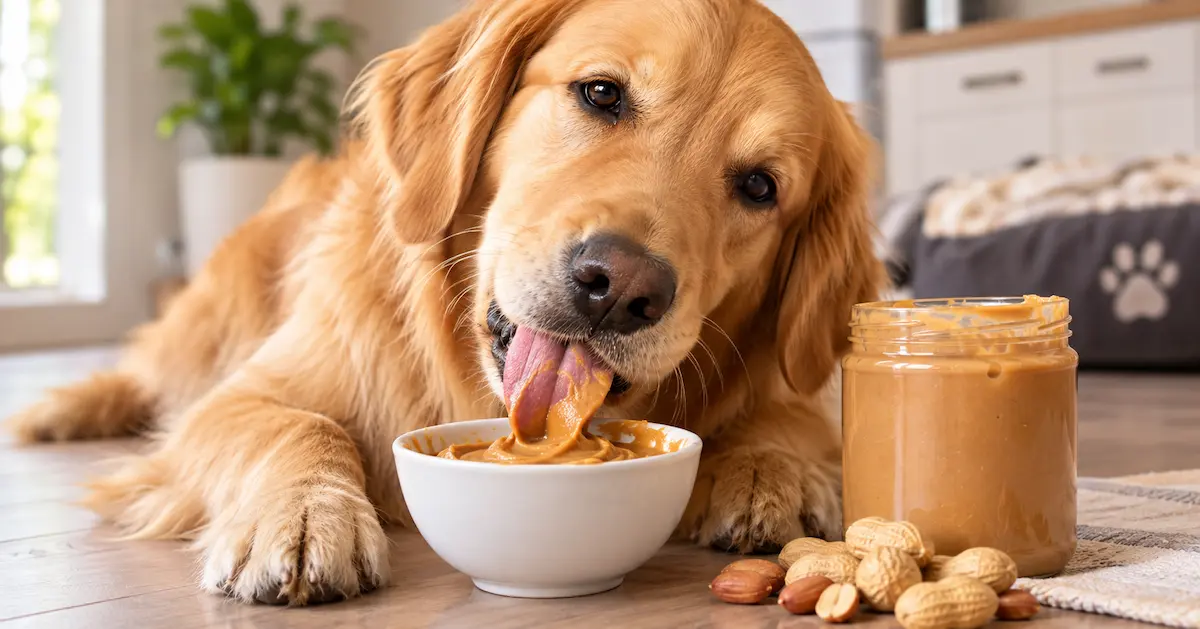
Your Golden sits by the pantry, tail sweeping the floor, eyes locked on the jar in your hand. Yes, Golden Retrievers can eat peanut butter in small amounts, as long as it contains no xylitol. Treat it as an occasional reward, not a daily snack, and read the label every time.
That one ingredient makes the difference between a harmless lick and a medical emergency. This guide covers how to check a jar, how much to give, what the research says, and what to do if your dog gets into the wrong product.
Is Peanut Butter Safe for Goldens?
Yes, peanut butter is safe for most Golden Retrievers when the jar has no xylitol and the portion is small. About a teaspoon as an occasional treat suits many healthy adult dogs. A plain product with a short ingredient list is the safer pick, and the label matters more than the brand name.
Keep these four rules in mind:
- Check for xylitol on every jar, even one you have bought before.
- Keep portions small. Peanut butter is high in fat and calories.
- Use it as a treat. It does not replace a balanced dog food.
- Call your vet fast if your dog eats a product that may contain xylitol.
The answer is a conditional yes because the risk does not come from peanuts. It comes from what manufacturers add to some jars and from how much a food-loving Golden is tempted to eat. Follow the rules above and most dogs enjoy this treat without trouble.
Why Peanut Butter Appeals to Golden Retrievers (and When It Helps)
Goldens are known for their love of food. Many of them will work hard for a treat, which is part of why the breed trains so well. Peanut butter is sticky, salty-sweet, and strong-smelling, so it holds a dog’s attention longer than a dry biscuit does.
The nutrition is modest. According to USDA-based data for smooth peanut butter, it contains protein, fat, vitamin E, niacin, and magnesium. A teaspoon adds very little of any of these, though, and a complete dog food already covers what your dog needs. Think of peanut butter as a tool, not a supplement.
That tool is useful in several situations:
- Hiding a pill or a bitter medicine
- Keeping a dog busy during a bath or nail trim
- Rewarding a hard training task, like a calm vet visit
- Filling a Kong or lick mat for mental stimulation
Used this way, a small amount does a lot of work. Spreading it thin on a lick mat, for example, gives your dog several minutes of licking from less than a teaspoon.
The One Ingredient That Makes Peanut Butter Dangerous: Xylitol
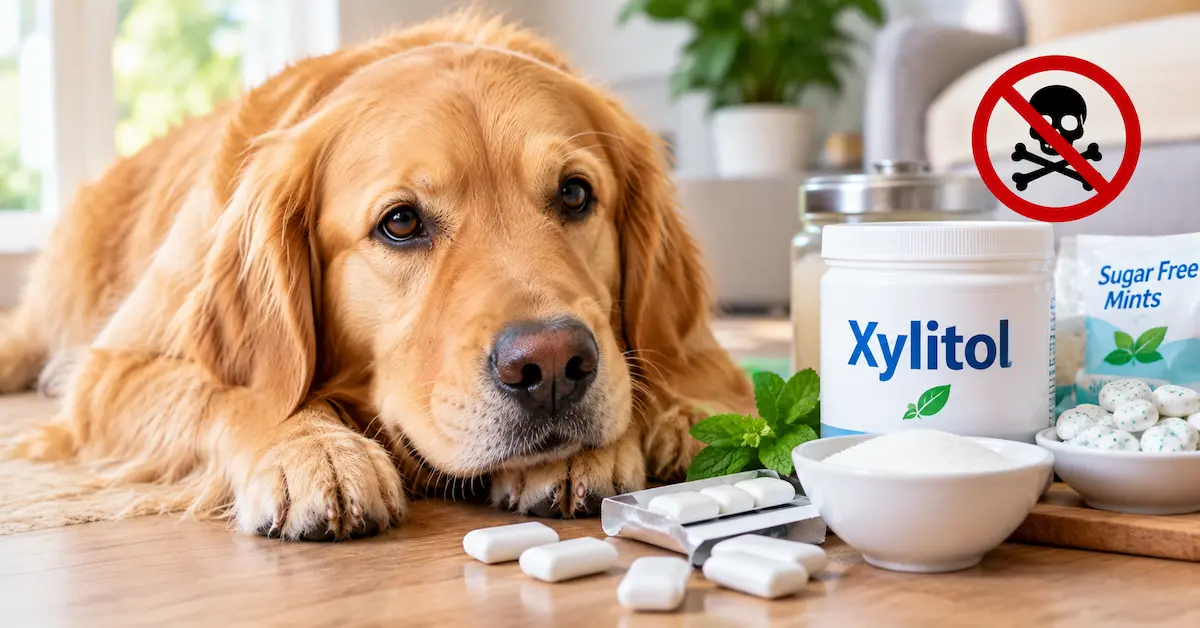
Xylitol is a sugar substitute used in many sugar-free products made for people. It is safe for humans, but it is dangerous for dogs, and it has appeared in some nut butters. Everything else in this guide is a matter of degree. This ingredient is a matter of safety.
What xylitol does to a dog’s body
In people, xylitol does not trigger a large release of insulin. In dogs, the FDA explains, it is absorbed quickly and can cause a strong insulin surge. That surge can drop a dog’s blood sugar sharply, sometimes within 10 to 60 minutes of eating it.
Signs include vomiting, weakness, low energy, staggering, collapse, and seizures. Xylitol can also harm the liver. Some dogs show signs hours later, and the FDA notes that serious effects may not appear for up to 12 to 24 hours, so a dog that looks fine at first still needs a vet’s attention.
Other names and hiding places on labels
The FDA says xylitol may also be called birch sugar or wood sugar. Check the ingredient list, not only the front of the jar. The agency advises extra care with products marked sugar-free or low sugar.
Xylitol turns up in more than nut butters. The FDA lists sugarless gum, breath mints, baked goods, chewable vitamins, toothpaste, mouthwash, cough syrup, and some supplements. A “Sugar Alcohol” line on a nutrition panel is a sign to read the ingredients more closely. Keep these items out of reach, because a Golden that counter-surfs can find a purse or a pantry shelf just as easily as a jar.
How to Pick a Safe Peanut Butter: A Label-Reading Checklist
Choosing a jar takes about thirty seconds once you know what to look for. Do this at the shelf, and again when you open a new jar of a familiar product. Recipes change, and a second look costs nothing.
Run through this checklist:
- Find the ingredient list. Ignore the front-of-jar claims.
- Look for xylitol, birch sugar, or wood sugar. If you see any of them, leave the jar on the shelf.
- Aim for a short list. Peanuts alone, or peanuts and a little salt, is ideal.
- Skip added sugar, honey, and chocolate. Dogs do not need them.
- Choose low salt when you can.
- Pass on anything with raisins or other mix-ins.
Natural, low-fat, and sugar-free versions compared
Natural peanut butter usually lists just peanuts and salt, so it is the easiest to judge. The oil may separate on top, so stir it well before serving. Keep it refrigerated if the label says to.
Reduced-fat versions can swap some fat for sugar or other ingredients, so a lower-fat jar is not automatically a better choice for a dog. Sugar-free products deserve the most suspicion, since that label is the red flag the FDA points to. For a dog, the plainest jar and a smaller spoonful beat any “light” version.
Why brand lists go out of date
Brand lists look helpful, but they age fast. A company can launch a new product or change a recipe, and one brand can sell both a classic jar and a specialty spread with a different sweetener. Xylitol has shown up in specialty nut butter spreads, not only in plain jars.
A list that was accurate last year may be wrong today. The safer habit is to read the current label every time you buy. That one routine protects your dog no matter which brand is on sale.
check our free Golden Retriever Age Calculator
How Much Peanut Butter Can a Golden Retriever Have?
A common vet guideline keeps treats to about 10 percent of a dog’s daily calories, with the other 90 percent coming from balanced dog food. Peanut butter counts as a treat. Most smooth peanut butters land near 95 calories per tablespoon, or about 32 per teaspoon, but check your jar since brands vary.
Here is an example. If your Golden eats 1,200 calories a day, which is only an illustration, the treat budget is about 120 calories. One tablespoon of peanut butter would use most of it, leaving little room for training treats or chews. Your dog’s real daily calories are on the dog food label or from your vet.
Portion table for puppies, adults, seniors, and overweight Goldens
These are general starting points, not a vet’s prescription. Adjust them to your dog’s weight, activity level, and health.
| Golden stage | Starting portion | How often |
| Puppy (under about 6 months) | ¼ to ½ teaspoon | Occasionally, a few times a week at most |
| Healthy adult | 1 teaspoon, up to 1 tablespoon for a large, active dog | A few times a week |
| Senior | ½ to 1 teaspoon | Occasionally |
| Overweight or on a diet | ½ teaspoon, or skip it | Rarely, and only after asking your vet |
A typical adult Golden weighs somewhere around 55 to 75 pounds, so most land in the adult row. When in doubt, go smaller. You can always give more later, but you cannot take back extra fat and calories.
Can Golden Retriever Puppies Eat Peanut Butter?
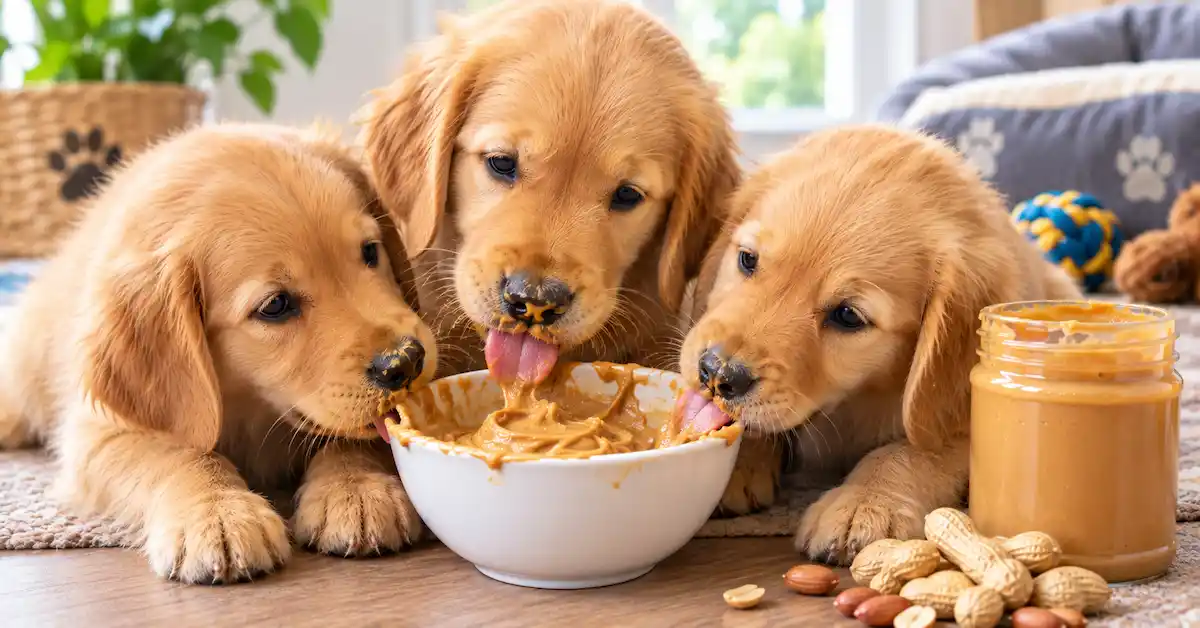
Most puppies can have a small amount, but there is no single age that every vet agrees on. A very young puppy has a sensitive stomach and is still getting used to solid food. Wait until your puppy is eating regular puppy food without trouble, and check with your vet if you are unsure.
Start with a tiny smear, about a quarter teaspoon. Then watch for the next day. Loose stool, vomiting, itching, or a change in energy means you should stop and call your vet. If everything looks normal, you can offer small amounts now and then.
Puppies grow fast, and their food is built to support that growth. Treats should stay a small part of the day. Peanut butter works well for puppy training, like crate comfort or calm behavior during grooming, but a lick from a spoon is plenty.
Keep the xylitol rule firm from the start. A puppy that explores everything with its mouth is at higher risk of finding a stray product, so store gum, mints, and baked goods well out of reach.
Health Risks Beyond Xylitol
A clean label does not make peanut butter risk-free. Most other problems come from too much, too often. They are easier to prevent than xylitol, but they are also easier to overlook.
Weight gain and a breed that gains easily
Many Goldens are enthusiastic eaters and put on weight without much effort, a pattern vets often mention for the breed. A tablespoon of peanut butter holds roughly the calories of a small meal for a toy dog, and it adds up quickly when it is given daily.
Extra weight puts more strain on a dog’s joints and can shorten an active life. If your Golden is already heavy, skip peanut butter for now and ask your vet about lower-calorie rewards. A few pieces of kibble from the daily ration can work just as well for training.
Check our free Golden Retriever Weight & Growth Calculator
Pancreatitis and high-fat diets
Peanut butter is high in fat. In some dogs, a sudden fatty food can trigger pancreatitis, which is painful inflammation of the pancreas. Signs include repeated vomiting, belly pain, a hunched posture, and loss of appetite. This needs prompt veterinary care.
Dogs that have had pancreatitis, or that eat a vet-prescribed low-fat diet, should not get peanut butter unless the vet approves it. Even healthy dogs can have a bad reaction to a large amount at once, such as an open jar they finish off alone.
Peanut allergy vs. simple stomach upset
True allergic reactions are possible. Signs include itching, redness, hives, and swelling of the face, and a swollen face needs urgent veterinary care. Stomach upset looks different. It usually brings loose stool, gas, or a single episode of vomiting soon after eating.
In practice, an upset stomach after peanut butter is often explained by the fat and the portion size, not an allergy. Only a vet can sort out the cause, though. If a reaction repeats, stop serving it and ask for advice.
What the Research and Veterinary Sources Say
The strongest evidence concerns xylitol, not peanut butter itself. In its consumer update, the FDA’s Center for Veterinary Medicine warns that xylitol is dangerous for dogs. It lists some peanut and nut butters among the products that may contain it. The agency says blood sugar can fall within 10 to 60 minutes and that other serious effects can take up to 12 to 24 hours to appear.
A 2006 report in the Journal of the American Veterinary Medical Association by Dunayer and Gwaltney-Brant of the ASPCA Animal Poison Control Center described eight dogs with liver failure after eating xylitol. Three dogs were euthanized and two died. Two recovered fully, and one was recovering but lost to follow-up. Some signs of liver failure appeared roughly 9 to 72 hours after ingestion.
The authors also wrote that, in their experience, a dose of 0.15 grams per kilogram of body weight had caused low blood sugar in dogs. They advised treating dogs that eat more than 0.1 grams per kilogram, and they noted that delaying treatment, even when a dog shows no signs, may raise the risk of fatal liver damage.
There are limits to this evidence. The report covered a small group, and the dogs ate gum, baked goods, and xylitol powder, not peanut butter. Labels do not always make the amount easy to work out. So the practical lesson is to treat any possible exposure as urgent.
My Golden Ate Peanut Butter with Xylitol: What to Do Right Now
Act quickly, even if your dog seems fine. The FDA’s advice is to call your vet, an emergency clinic, or an animal poison control center right away. Do not wait for signs to appear.
Follow these steps:
- Take the product away and keep the jar or package.
- Note how much your dog ate and when, as best you can.
- Call your vet, an emergency clinic, or an animal poison control center immediately.
- Do not try to make your dog vomit unless a veterinarian tells you to. A dog with low blood sugar can inhale vomit.
- Bring the label so the vet can check the ingredients.
Because low blood sugar and liver problems can develop at different times, your dog may need monitoring at the clinic for a day or more. That can feel like an overreaction when your dog looks normal, but early treatment gives dogs the best chance.
What if my dog ate too much regular peanut butter?
A large amount of xylitol-free peanut butter is much less dangerous, but it can still cause trouble. Expect possible loose stool, gas, or vomiting. Offer water and skip the next treats.
Call your vet if the vomiting repeats, if your dog seems to be in pain, or if your dog becomes very tired or stops eating. Those signs can point to pancreatitis. If your Golden has a history of stomach or pancreas problems, call sooner.
Peanut Butter Myths vs. Facts
A few ideas about dogs and peanut butter spread widely and cause real confusion.
Myth: Natural peanut butter is always safe.
Fact: Natural jars are often simpler, but you still need to read the label. Some specialty nut butters contain sweeteners, and a “natural” claim is not a safety check.
Myth: A small amount of xylitol is harmless.
Fact: The FDA says even dogs that eat xylitol need immediate veterinary care. Small dogs and large ingestions are more dangerous, but treat any exposure as urgent.
Myth: Sugar-free is the healthier choice for dogs.
Fact: Sugar-free is the label that deserves the most caution, because xylitol is a common sugar substitute.
Myth: Peanut butter is a health food for dogs.
Fact: It has some nutrients, but a spoonful adds little. It is a high-calorie treat.
Myth: Dogs are either allergic to peanuts or they are not, with no middle ground.
Fact: Many dogs digest small amounts fine, but some get an upset stomach, and a few react with skin or face signs. Watch your own dog.
Safe Ways to Serve It: Kongs, Lick Mats, and Frozen Treats
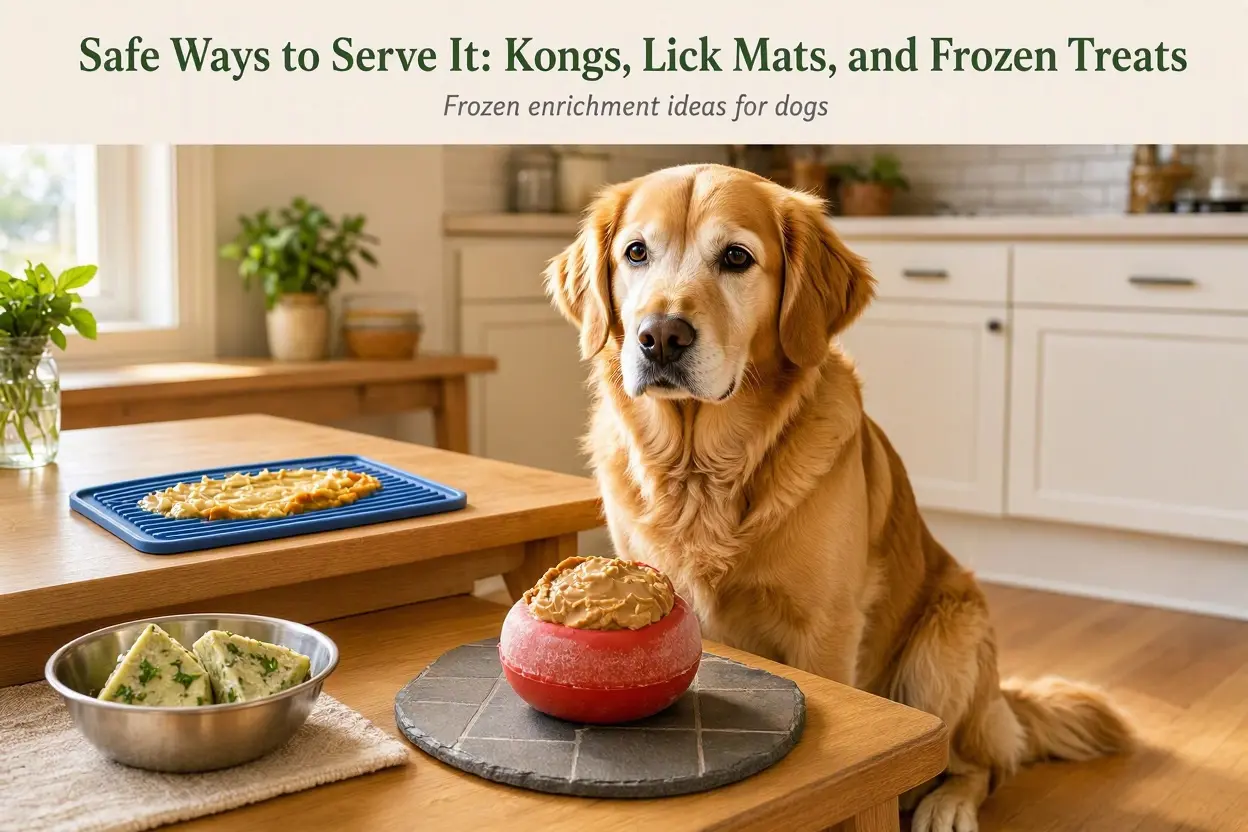
How you serve peanut butter changes how long it lasts and how many calories your dog eats. A thin layer on a lick mat stretches a teaspoon into several minutes of activity. A stuffed toy turns a snack into a puzzle.
Simple peanut butter recipes for dogs
These recipes use a small amount of peanut butter and count toward the daily treat budget. Always use a xylitol-free jar.
- Frozen Kong: Mix 1 teaspoon of peanut butter with 2 tablespoons of plain canned pumpkin (not pie filling). Stuff it into a Kong with a few pieces of kibble and freeze for a few hours.
- Banana bites: Mash half a ripe banana with 1 teaspoon of peanut butter, spoon the mix into an ice tray, and freeze. Give one or two bites at a time.
- Lick mat spread: Thin ½ teaspoon of peanut butter with a little water, spread it across the mat, and freeze for a longer-lasting treat.
Using it for pills, training, and grooming
For pills, wrap the tablet in a pea-sized dab of peanut butter. Check first that the medicine can be given with food, and read the jar for xylitol, because this is one of the most common ways dogs get exposed.
For training, use tiny dots on a spoon or a spatula as a high-value reward. During grooming, smear a little on the wall of the bath or on a lick mat so your dog stays occupied. Keep each serving small. The goal is a happy dog, not a full spoon.
Peanut Butter vs. Other Nut Butters and Treat Options
Peanut butter is not the only spread dogs enjoy, and some alternatives work well for dogs that need variety. The xylitol check applies to every nut butter, since the FDA lists nut butters in general.
| Option | Safe for Goldens? | What to know |
| Peanut butter (plain) | Yes, in small amounts | High in fat and calories |
| Almond butter | In small amounts | Similar fat level, may upset some stomachs |
| Cashew butter | In small amounts | Rich in fat, check the label |
| Sunflower seed butter | In small amounts | Watch for added sugar and salt |
| Plain canned pumpkin | Yes | Lower in calories, good for stuffing |
| Macadamia nut butter | No | Macadamia nuts are known to be toxic to dogs |
Plain pumpkin is a good lower-calorie filler for Kongs and lick mats, so it can stretch a smaller amount of peanut butter. Whatever you pick, read the ingredients and keep portions small.
FAQs
Can Golden Retrievers eat peanut butter every day?
Some healthy dogs can, but it is not the best plan. Peanut butter is dense in fat and calories, and Goldens gain weight easily. A few times a week keeps treats within the 10 percent limit and leaves room for other rewards. Ask your vet if your dog has any health conditions.
Can Goldens eat peanut butter cookies or crackers?
Plain peanut butter is the safer choice. Cookies and crackers add sugar, salt, and butter, and some recipes include chocolate, raisins, or xylitol. Bakery items can hide sweeteners, too. If your Golden steals one, check the ingredient list and call your vet if you find xylitol or chocolate.
Can dogs eat peanut butter and jelly?
It is best to skip it. The peanut butter may be fine, but jelly adds sugar, grape jelly is a concern because grapes are toxic to dogs, and sugar-free jelly may contain xylitol. Bread adds extra calories. Give your Golden a spoonful of plain peanut butter and keep the sandwich for yourself.
Is crunchy peanut butter safe?
Yes, crunchy works if the label is clean. The peanut pieces are small, but some Goldens gulp food without chewing, so smooth is easier for eager eaters and works better on lick mats. Use the same small portions and the same xylitol check you would for the creamy kind.
Should dogs with allergies or skin problems skip it?
Talk to your vet first. Dogs with a history of food allergies or itchy skin may react to a new food, and the cause can be hard to pin down alone. If your Golden develops itching, hives, or vomiting after peanut butter, stop feeding it and call your vet. Facial swelling needs urgent care.
Final Thoughts
Peanut butter can be a safe, useful treat for a Golden Retriever when you handle it with a few habits. Check the ingredient list for xylitol, serve a small amount, and count it toward the 10 percent treat limit. Skip it for dogs that are overweight or have pancreas problems unless your vet approves.
Your next step is quick. Pick up the jar in your pantry and read the ingredients before the next treat. If the label says xylitol, birch sugar, or wood sugar, throw it out of reach and call your vet if your dog has eaten any. If the label is clean, measure a teaspoon and enjoy the tail wags.
Related guides on your site, such as the toxic foods list and the Golden Retriever treats page, would fit naturally in the label and portion sections.

Hi, I’m Jack Austin, founder of Cool Goldens. I share practical, research-backed advice on training, nutrition, and daily care to help you give your Golden Retriever the happiest, healthiest life possible.