

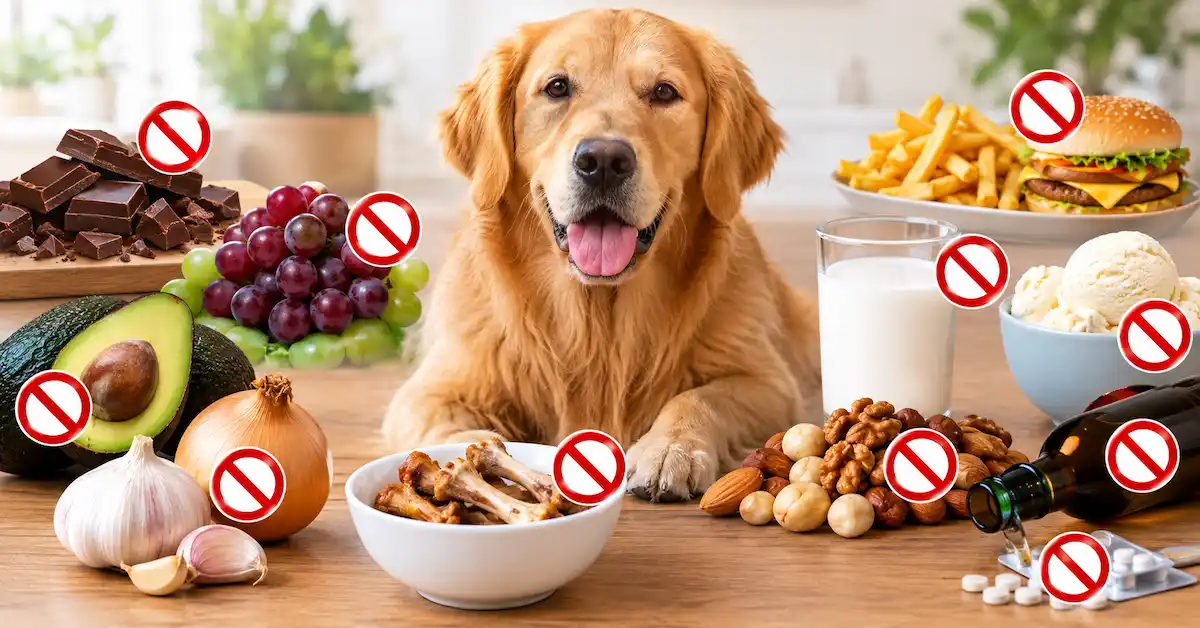
Goldens tend to eat almost anything that lands on the floor, and a few of those things can turn dangerous fast. Keep this short list of golden retriever foods to avoid in mind: chocolate, xylitol, grapes and raisins, onions and garlic, macadamia nuts, alcohol, and raw yeast dough. Greasy scraps, salty snacks, and cooked bones can also cause real harm.
Some of these risks are easy to spot. Others hide in peanut butter, sauces, and sugar-free products, and a few common myths lead owners to underestimate them. You’ll find foods sorted by urgency, the label traps worth knowing, and a clear plan for the first minutes after an accident. The short version comes first, then the details that help you act on it.
Emergency? Start here. ASPCA Poison Control: (888) 426-4435.
Which Foods Are Bad for Goldens?
Chocolate, xylitol (a sweetener in many sugar-free products), grapes and raisins, onions, garlic, macadamia nuts, alcohol, and raw bread dough are the most dangerous human foods for Golden Retrievers. Rich, fatty, or very salty foods and cooked bones can also cause serious illness or injury.
The short list of top offenders:
- Chocolate, cocoa, and caffeine
- Xylitol, also called birch sugar
- Grapes and raisins
- Onions, garlic, and chives
- Macadamia nuts
- Alcohol and raw bread dough
A second group of foods will not poison your dog in the usual sense but still fills vet waiting rooms. Greasy scraps, very salty snacks, and cooked bones belong here. The sections below sort every item by risk, and the table further down gives a one-glance summary you can save to your phone.
Why Goldens Need Extra Care Around Food
Goldens are big, athletic, and usually very interested in food. Many will counter-surf, dig through the trash, or gulp down whatever a child drops. That mix raises the odds of an accident more than any single food on the list.
Size also changes the math. Toxic doses depend on body weight, so a 65-pound dog can handle an amount that would endanger a small breed. That fact gives some owners a false sense of safety. A Golden can eat far more in one sitting, and some items, such as xylitol, can harm a dog even in small amounts.
Large dogs with deep chests also face a higher general risk of bloat. Any food that swells or makes gas in the stomach deserves extra respect, and raw yeast dough is the best example. Your vet can tell you whether your own dog carries added risk based on age, weight, and health history.
check our free Golden Retriever Weight & Growth Calculator
Highly Toxic Foods That Need Immediate Action
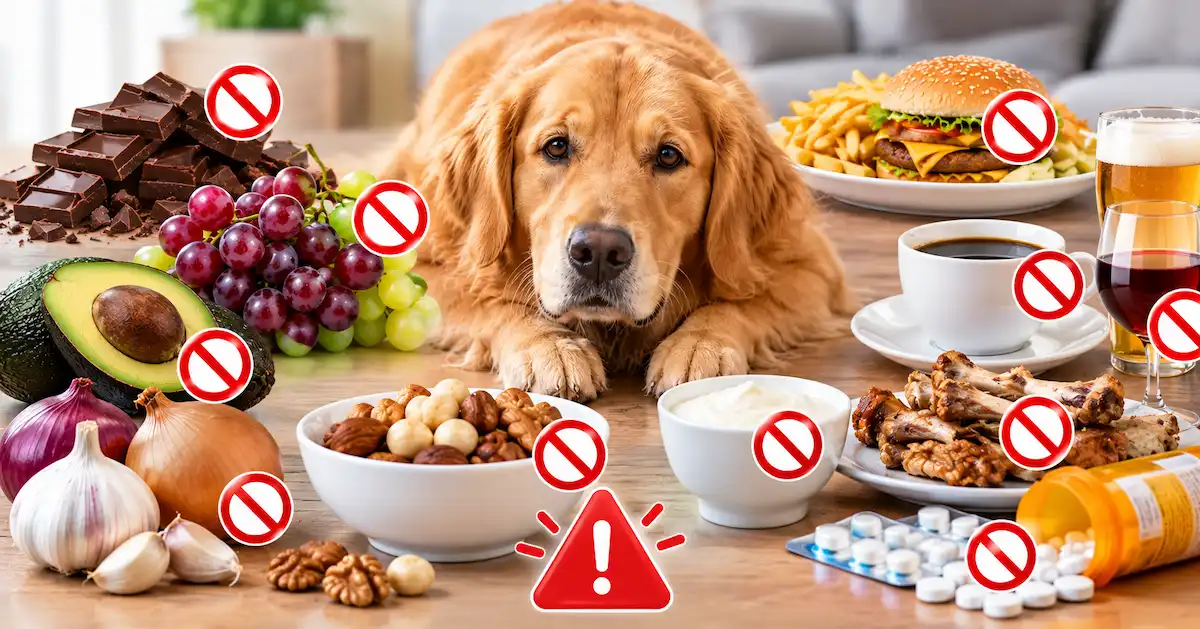
The six items below can cause serious harm, and some work fast. Treat each one as a reason to call a professional, not as something to monitor at home.
Chocolate and Caffeine
Chocolate, coffee, tea, and energy drinks contain methylxanthines, a group of compounds that dogs handle poorly. They can cause vomiting, diarrhea, panting, heavy thirst, restlessness, an abnormal heart rhythm, tremors, and seizures. The darker the chocolate, the greater the risk. White chocolate has the least, while baking chocolate and cocoa powder have the most, according to the ASPCA.
How quickly signs appear depends on the type and amount, so waiting to see what happens is a poor plan.
What to do: Call your vet or poison control right away. Have the product type, the amount eaten, and your dog’s weight ready. A few chocolate chips and a pan of brownies are very different situations, and the person on the phone can tell which one you face.
Xylitol and Other Sugar-Free Sweeteners
Xylitol is a sweetener found in gum, candy, baked goods, toothpaste, and some nut butters. Dogs absorb it quickly, and it can trigger a strong release of insulin that drops blood sugar, according to the FDA’s consumer update on xylitol and dogs. Vomiting often comes first, followed by weakness, staggering, collapse, and seizures.
An FDA poster states that poisoning can start within 20 minutes. Liver damage may follow within 12 to 24 hours in serious cases, based on ASPCA information.
What to do: Treat this as an emergency, even if your dog looks fine. Take the package with you and head to a vet or emergency clinic.
Grapes and Raisins
Grapes, raisins, and Zante currants have been linked to kidney failure in some dogs. Not every dog reacts, and that unpredictability is the best reason not to test your own. Early signs include vomiting, diarrhea, tiredness, and extra thirst. In severe cases, a dog may stop making urine.
Scientists have not settled on the exact toxin. Tartaric acid is the leading suspect, and the amount in fruit varies, which helps explain why the effects vary too.
What to do: Call your vet even after a small amount. They can judge risk based on your dog’s weight and decide whether treatment is needed.
Onions, Garlic, and Chives
These plants belong to the Allium family. They can irritate the stomach and damage red blood cells, which can lead to anemia. Raw, cooked, dried, and powdered forms all count, and powders pack the ingredient into a small space.
Stomach upset may show up first. Weakness, pale gums, and fast breathing can follow, sometimes after a delay of a day or more. Repeated small exposures, like a daily spoonful of leftover sauce, can add up.
What to do: Call your vet with the food, the amount, and your dog’s weight. Ask whether blood work makes sense, especially if your dog seems tired in the following days.
Macadamia Nuts
Macadamia nuts can cause weakness, wobbliness, vomiting, tremors, and a high body temperature in dogs. The ASPCA reports that signs usually appear within 12 hours and that recovery is generally expected within 24 to 72 hours. The exact reason these nuts affect dogs is not well understood.
The nuts often hide in cookies, granola, and trail mix. Chocolate-coated versions combine two problems in one bite.
What to do: Call your vet or poison control, and bring the packaging if you have it. Do not wait for symptoms to appear before making the call.
Alcohol and Raw Bread Dough
Alcohol can cause vomiting, diarrhea, poor coordination, slow breathing, tremors, coma, and death. Dogs absorb it quickly. It hides in more places than a spilled drink, including some desserts and unbaked dough.
Raw yeast dough adds a second hazard. It rises in the warm stomach and releases gas, which can cause painful bloating. As the yeast ferments, it also makes alcohol. This is a different problem from the twisting form of bloat, but it can still become life-threatening.
What to do: Act fast. Call a vet right away rather than waiting to see whether the belly swells.
check our free Golden Retriever Age Calculator
Foods That Cause Stomach Upset, Diarrhea, or Pancreatitis
These foods are less likely to cause a poisoning emergency, but they still make dogs sick. Repeated exposure raises the risk, and holiday meals tend to bring several of them at once.
Fatty Foods, Grease, and Table Scraps
Bacon, steak trimmings, poultry skin, gravy, and fried leftovers contain a lot of fat. A sudden fatty meal can bring on vomiting, diarrhea, and pancreatitis, an inflamed pancreas that causes belly pain, tiredness, and loss of appetite. Nuts such as almonds, pecans, and walnuts carry a similar risk because of their high oil content.
Goldens tend to gain weight easily, so regular scraps also add calories without adding balanced nutrition.
What to do: Call your vet if vomiting repeats, your dog seems to hurt, or appetite disappears after a rich meal. Skip the “treat” the next day and offer small, bland meals only if your vet says so.
Dairy and Lactose Sensitivity
Dogs make less lactase, the enzyme that digests milk sugar, than puppies do. Tolerance varies a lot from dog to dog. Some Goldens handle a lick of plain yogurt without trouble, while others get gas, loose stools, or diarrhea from a bowl of milk or a scoop of ice cream.
Ice cream adds sugar and fat, and some sugar-free versions contain xylitol, so it deserves extra caution.
What to do: If your dog has a bad reaction, skip dairy for now and watch the stool. Mild upset usually settles within a day, but call your vet if it lasts longer or comes with vomiting or tiredness.
Salty Foods and Salt Toxicity
Chips, pretzels, deli meat, and soy-sauce leftovers contain more sodium than a dog needs. Too much salt can cause extra thirst and urination, vomiting, diarrhea, and tremors, and in severe cases seizures or death, according to the ASPCA.
Salt dough crafts and large amounts of seawater can cause the same problem. Dogs that gulp ocean water at the beach sometimes end up with stomach trouble.
What to do: Provide fresh water and call your vet if your dog ate a large amount of salty food or shows signs of salt poisoning. Do not let your dog drink huge quantities all at once.
Raw Meat, Raw Eggs, and Bones
Raw meat and eggs can carry Salmonella and E. coli, which can sicken dogs and the people who handle the food. Raw eggs also contain an enzyme that can interfere with vitamin absorption. Some owners feed raw diets under veterinary guidance, and opinions among vets vary. The bacteria risk to the household remains either way, so careful handling matters.
Cooked bones are not safer. They can splinter, and pieces can injure the mouth or block the digestive tract. Raw bones carry their own risk of breaks and blockage.
What to do: Call your vet if your dog swallowed a bone and shows vomiting, belly pain, or trouble passing stool.
Fruits, Vegetables, Nuts, and Spices to Skip
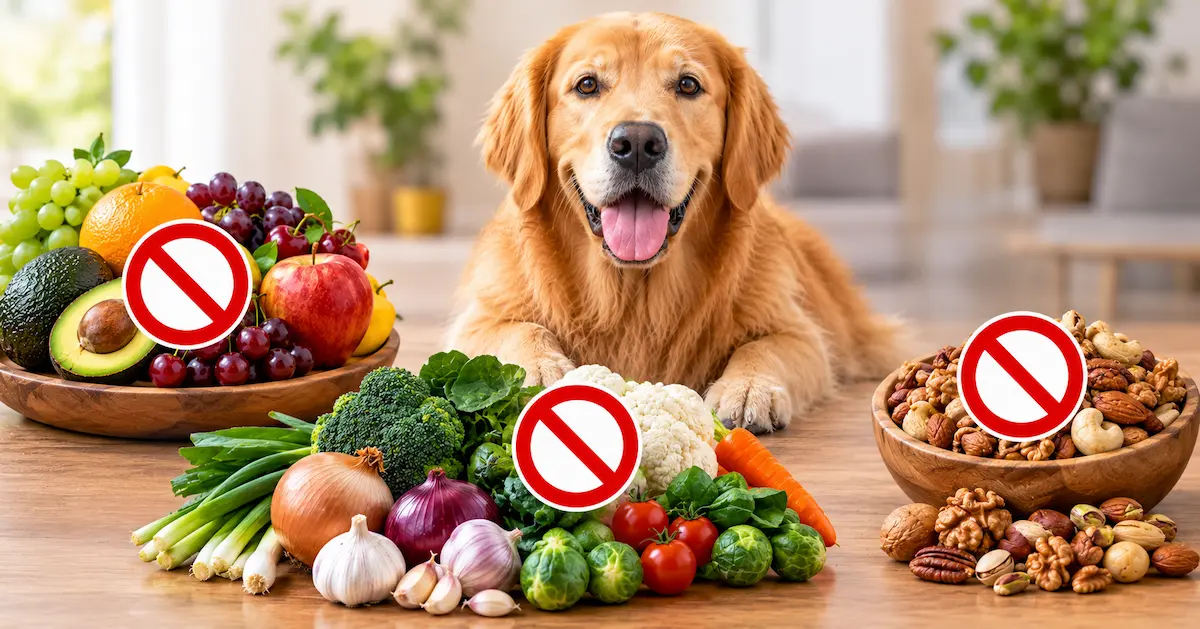
Plenty of produce is fine for dogs, but a few items cause real trouble. Most of the risks come from pits, seeds, rinds, and seasonings rather than the flesh itself.
Fruits and Vegetables
Pits from cherries, peaches, and plums can cause choking or intestinal blockage in a dog. Corn cobs are another common culprit, because a Golden can swallow a large chunk that then gets stuck. Surgery is sometimes needed.
Citrus peels and seeds contain oils that can irritate the stomach. The ASPCA notes that small amounts of the fruit itself usually cause no more than mild upset. Wild mushrooms in the yard are a separate concern, since some species are poisonous and are hard for owners to identify.
What to do: Remove pits and cobs before any sharing, and pick up fallen fruit in the yard. Call your vet if your dog eats a mushroom you cannot identify.
Nuts and Seeds
Macadamia nuts are the dangerous ones. Almonds, pecans, and walnuts are fatty and can bring on stomach upset or pancreatitis. Whole nuts can also get stuck in a dog’s throat or digestive tract. Old, moldy walnuts can carry toxins that affect the nervous system.
Salted and flavored nuts add sodium and seasonings that dogs do not need.
What to do: Keep nut bowls out of reach and skip trail mix, which often combines nuts, raisins, and chocolate in one handful.
Spices and Seasonings
Onion powder and garlic powder are the biggest seasoning risks, because they concentrate the same compounds that harm red blood cells. Nutmeg can be harmful to dogs in larger amounts. Heavily salted seasoning blends add sodium, and very spicy foods often cause stomach upset.
Seasoned leftovers, such as pasta sauce, stew, and taco meat, often contain several of these items at once.
What to do: Offer plain, unseasoned food when you share, and check labels on sauces and broths.
Avocado gets mentioned on many “toxic food” lists. The ASPCA says it is mainly a problem for birds, rabbits, horses, and ruminants. For dogs, the large pit is the main worry, since it can block the intestines. The fatty flesh can also upset the stomach.
Hidden Ingredients in Everyday Products
Some of the worst accidents come from foods that do not look dangerous. A jar of peanut butter seems harmless, and the label may say otherwise.
The FDA notes that xylitol shows up in more places than gum. It appears in mouthwash and toothpaste, cough syrups and liquid medicines, nasal sprays, fiber gummies and sleep aids, sugar-free jellies, jams, and nut butters, as well as sugar-free desserts, candy, and mints. It may be listed as birch sugar, wood sugar, or birch bark extract.
Onion and garlic also hide in broths, sauces, baby food, and seasoning blends. Processed snacks often carry high sodium, added sugar, and preservatives, none of which belong in a dog’s regular diet.
A quick label check before you share anything:
- Look for xylitol under any of its alternate names.
- Scan for onion, garlic, and chives, including powders.
- Check sodium and sugar levels on packaged snacks.
- Skip anything labeled sugar-free unless you can name every ingredient.
- When in doubt, do not share it.
Food Allergies and Sensitive Stomachs: Not Toxic, but Still a Problem
A food allergy or sensitivity is not the same as poisoning. Toxic foods harm almost any dog. An allergy or intolerance affects only dogs whose bodies react to a particular ingredient, and the food may be perfectly fine for others.
Common signs include itchy skin, repeated ear trouble, loose stools, gas, and vomiting. Many of these signs overlap with other conditions, such as environmental allergies and infections. That overlap makes guessing unreliable.
Veterinary sources often list beef, dairy, chicken, and wheat among the more common triggers, but any ingredient can cause a reaction. Some owners also suspect preservatives or additives. The evidence there is weaker, so a vet is the best person to sort it out.
The most reliable way to find a trigger is a vet-guided elimination diet. Your dog eats a limited, planned diet for several weeks, and ingredients return one at a time. Random food swaps and extra treats during that period can muddy the results, so everyone in the household needs to follow the plan.
Toxic Foods at a Glance
Save this table for quick reference. Onset times appear only where a source supports them.
| Food | Why it’s harmful | Common signs | When signs may start | Urgency |
| Chocolate and caffeine | Methylxanthines affect the heart and nervous system | Vomiting, panting, restlessness, tremors | Varies by type and amount | 🔴 Emergency (dark and baking chocolate) / 🟠 Call a vet (milk chocolate) |
| Xylitol | Causes a sharp drop in blood sugar; can damage the liver | Vomiting, weakness, staggering, seizures | As early as 20 minutes (FDA) | 🔴 Emergency |
| Grapes and raisins | Linked to kidney failure in some dogs | Vomiting, diarrhea, tiredness, extra thirst | Varies | 🔴 Emergency |
| Onions and garlic | Damage red blood cells | Stomach upset, weakness, pale gums | Can be delayed | 🟠 Call a vet |
| Macadamia nuts | Cause nerve and muscle effects | Weakness, wobbliness, vomiting, tremors | Usually within 12 hours (ASPCA) | 🟠 Call a vet |
| Alcohol and raw dough | Alcohol toxicity; gas and bloating | Vomiting, poor coordination, swollen belly | Alcohol absorbs rapidly (ASPCA) | 🔴 Emergency |
| Fatty foods | Can inflame the pancreas | Vomiting, belly pain, low appetite | Varies | 🟠 Call a vet if signs persist |
| Salty foods | Excess sodium upsets fluid balance | Thirst, vomiting, tremors | Varies | 🟠 Call a vet |
| Cooked bones | Splinters and blockages | Drooling, vomiting, belly pain | Varies | 🟠 Call a vet |
| Dairy | Lactose intolerance | Gas, loose stools | Varies | 🟡 Watch closely |
Does the Amount Matter? Size, Dose, and When to Call
Amount matters for most foods, but the rules differ from one item to the next. A single lick of vanilla ice cream will rarely cause problems. A few pieces of sugar-free gum can poison even a big dog.
Some foods need a weight-based risk check. Chocolate is the classic case, because the type, the amount, and your dog’s weight all change the outcome. Xylitol works the same way, and its danger depends on how much of the sweetener is in the product.
Grapes and raisins are harder to judge. The Merck Veterinary Manual describes a general rule of more than one grape or raisin per 4.5 kg (10 pounds) of body weight as potentially risky. It also notes that tartaric acid content varies. That variation makes any “safe” number unreliable, so treat the figure as a warning sign, not a limit you can eat up to.
Do not rely on online dose charts alone. Call poison control or your vet, give them your dog’s weight and the product details, and let them make the call. Professionals can also factor in your dog’s age and health, which no chart does.
Warning Signs of Food Poisoning in Goldens
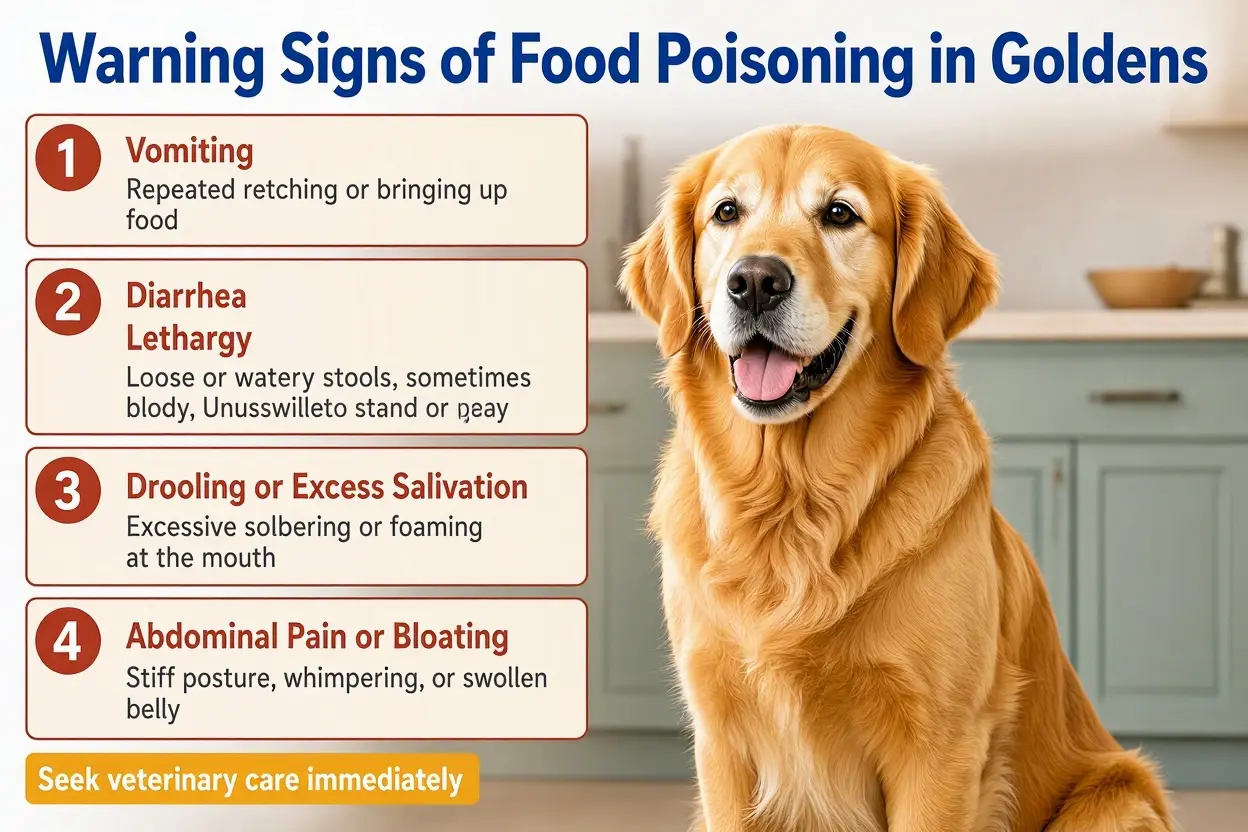
Early signs are often easy to miss. Watch for drooling, vomiting, diarrhea, tiredness, and a sudden lack of interest in food or play. A dog that hides, paces, or cannot settle may feel unwell too.
Some signs mean you should head to a vet or emergency clinic now:
- Tremors or seizures
- Collapse or severe weakness
- A swollen, tight belly
- Trouble breathing
- Pale or bluish gums
- Repeated vomiting that will not stop
Timing can fool owners. Some foods act within minutes, while others, such as grapes and onions, can cause trouble after a delay. A dog that looks normal an hour after the incident is not automatically safe. If your dog ate something on the danger list, make the call even when nothing seems wrong.
What to Do If Your Golden Eats Something Harmful
A calm, quick response helps your vet more than any home remedy does. Keep the following steps handy.
The First 10 Minutes
Take your dog away from the food and remove anything left behind. Pick up the wrapper, box, or container, since the label tells the vet exactly what was in it. Write down what your dog ate, roughly how much, and when it happened.
Check your dog’s weight. If you do not know the current number, use your best recent estimate. Notice any symptoms, even small ones, and keep your dog quiet and calm while you make the call.
Who to Call
Start with your regular vet. If the office is closed, go to an emergency animal clinic. You can also call ASPCA Poison Control at (888) 426-4435 or the Pet Poison Helpline.
Poison control services may charge a consultation fee, so ask when you call. Have the product name, the amount, the time, and your dog’s weight ready, and keep the packaging nearby for reference.
What Not to Do
Do not make your dog vomit unless a vet or poison control specialist tells you to. Some substances do more harm coming back up, and home methods can cause injuries or other problems. Do not give milk, oil, or other “remedies” on your own.
Do not wait for symptoms either. For several items on this list, treatment works best when it starts early. Follow the professional’s instructions exactly, and head to the clinic if they tell you to.
Common Myths About Dog Food Safety
“A little chocolate won’t hurt.” The harm depends on the chocolate type, the amount, and your dog’s weight. A small piece of milk chocolate may be a minor issue, while a small piece of baking chocolate can be a serious one. Call and find out.
“Cooked bones are safe.” Cooking makes bones brittle, and brittle bones splinter. Splinters can cut the mouth and throat or block the intestines.
“If my dog seems fine, it’s fine.” Xylitol, grapes, and onions can all cause trouble after a delay. Looking normal at first does not rule out a problem.
“Only some dogs react to grapes, so it’s okay to try.” Nobody can tell in advance which dog will react, and kidney damage is the price of guessing wrong.
“Dogs can’t have any dairy.” Many dogs tolerate a small amount of plain yogurt or hard cheese. Others get diarrhea from it. Your own dog’s reaction is the best guide.
What Veterinary Research and Poison Control Data Show
The strongest advice about toxic foods comes from veterinary references, regulators, and poison control centers, and their findings line up well with each other.
On xylitol, the FDA’s consumer update explains that dogs absorb it quickly and release a lot of insulin, which lowers blood sugar. An FDA poster on xylitol lists signs from vomiting to seizures, liver failure, and bleeding problems. The ASPCA reported in 2021 that its poison hotline had fielded more than 6,100 calls about xylitol that year up to the time of writing. The same page notes that some signs may not appear until days later.
On grapes and raisins, the Merck Veterinary Manual says the toxic principle is still only “proposed.” It points to tartaric acid and explains that dogs lack the organic acid transporters other species have, so the acid can build up in kidney cells. In a 2022 case review, Wegenast and colleagues described dogs that developed kidney injury after eating cream of tartar and tamarinds, both of which are high in tartaric acid. The authors connected those cases to the proposed toxin in grapes. A Pet Poison Helpline review of the paper noted its limits, since the study covered a small number of cases.
That difference matters. A documented toxin is one researchers have proven. A suspected toxin is a strong lead that still needs more evidence. For grapes and raisins, the safest approach is to avoid them while scientists keep working.
Safe Swaps: Treats to Offer Instead
Goldens love to eat, so a good replacement matters as much as a good rule. These swaps are widely considered safe for healthy dogs when prepared plainly.
| Instead of this | Try this | Why it works |
| Grapes or raisins | Blueberries or apple slices (no core or seeds) | Low in fat, easy to portion |
| Bacon or fatty scraps | A small piece of plain cooked chicken | Lean, and free of seasoning |
| Salty chips | Plain green beans | Crunchy, with no added salt |
| Cooked bones | A carrot stick or a vet-approved chew sized for large dogs | Satisfies chewing without splinters |
| Ice cream | Frozen blueberries or a few banana slices | Cold and sweet with no dairy |
| Peanut butter of unknown content | Peanut butter labeled xylitol-free, in small amounts | Avoids the hidden sweetener risk |
Introduce new foods slowly, one at a time, so you can spot a reaction. Keep treats to a small share of your dog’s daily calories, since Goldens gain weight easily. Dogs on a prescription or special diet should check with their vet before trying anything new.
Easy Ways to Prevent Food Accidents at Home
Most accidents happen because food was within reach. A few habits remove most of the risk.
Push counters back and keep food off the edges. Use a trash can with a locking lid, or store it behind a closed door. Keep pantry doors latched, since a determined Golden can open a simple handle. Store medications, gum, and toothpaste in closed cabinets, as some of them contain xylitol.
Holidays, parties, and barbecues call for extra planning. Set a spot for your dog away from the food, and ask guests to keep plates up high. After the meal, take out the trash right away, bones and corn cobs included.
Children need clear rules too. Explain that dogs have different food needs, and show kids which treats are safe to hand out. A small container of approved treats on a shelf gives them an easy way to share.
Consider printing a one-page checklist of the top dangers and the poison control number, and stick it to the fridge. Everyone in the house, and anyone dog-sitting, can see it at a glance.
Frequently Asked Questions
Are Golden Retriever puppies more at risk than adults?
Yes, in most cases. Puppies weigh less, so the same amount of a harmful food is a bigger dose for their size. They also explore with their mouths and swallow things whole. Call your vet sooner for a puppy, even when the amount eaten seems small.
Do poison control hotlines charge a fee?
Some do. The ASPCA and Pet Poison Helpline are professional consultation services, and they may charge a fee for a case. Amounts can change, so check each hotline’s website or ask when you call. Many owners find a consultation useful for deciding whether an emergency visit is needed.
Can I add human food as a topper to regular meals?
Sometimes. A small spoonful of plain cooked chicken or plain canned pumpkin can work as a topper for most healthy dogs. Check every ingredient, skip seasonings and sauces, and keep the portion small. Dogs on a medical or prescription diet should get approval from their vet first.
How long should I wait before calling a vet about mild stomach upset?
If your dog ate something on the danger list, do not wait. For a single loose stool in an otherwise bright dog, a short watch is often reasonable. Call the same day if vomiting repeats, diarrhea lasts more than about a day, you see blood, or your dog turns tired. Puppies and seniors need a call sooner.
Key Takeaways for Keeping Your Golden Safe
The most dangerous foods for a Golden are chocolate, xylitol, grapes and raisins, onions and garlic, macadamia nuts, alcohol, and raw yeast dough. Fatty scraps, salty snacks, and cooked bones cause illness and injury, and they show up at nearly every holiday table. Dairy, allergies, and sensitive stomachs call for patience and a plan from your vet.
When an accident happens, speed and good information help most. Remove the food, save the packaging, note the amount and time, and call a vet or poison control. Skip home remedies unless a professional tells you to use them, and do not wait for symptoms before calling.
Prevention does the rest. Secure the trash, store sugar-free products out of reach, and give everyone in the house a short list of safe treats.
Take two minutes today to save the ASPCA Poison Control number, (888) 426-4435, in your phone, along with your vet’s number and the nearest emergency clinic. Then print a copy of the checklist and put it on the fridge.

Hi, I’m Jack Austin, founder of Cool Goldens. I share practical, research-backed advice on training, nutrition, and daily care to help you give your Golden Retriever the happiest, healthiest life possible.