


Do Golden Retrievers Shed? The Short Answer
Yes, Golden Retrievers shed, and they shed a lot. Their thick double coat sheds lightly all year and then blows out heavily twice a year, usually in spring and fall. Regular brushing keeps loose fur under control, but this breed will never be a low-shedding dog.
That’s the quick version. The rest of this guide breaks down why it happens, how much is normal, and what actually works to manage it.
Why Golden Retrievers Shed So Much
This breed carries a coat built for cold water and rough weather, not for staying tidy on your living room floor. That coat sheds because it’s designed to renew itself constantly, replacing damaged or worn hair with fresh growth. The heavier bursts of loss happen when the body switches gears for a new season.
Genetics play a role too. Goldens were bred as working retrievers, meant to swim in cold lakes and handle harsh outdoor conditions. A dense double coat was part of that design, and shedding is simply the maintenance cost of carrying one.
Their Double Coat, Explained
A Golden Retriever’s coat has two distinct layers. The outer layer, called the topcoat or guard hair, is longer, water-resistant, and slightly wavy. It protects the skin from scratches, sun, and moisture. Underneath sits the undercoat, a soft, dense layer packed close to the skin.
These two layers work together. The topcoat repels water and debris, while the undercoat traps air for insulation, keeping the dog warm in winter and, oddly enough, cooler in summer by regulating airflow near the skin. Understanding the two distinct fur types of golden retrievers (topcoat vs. undercoat) is key to managing hair around the house. Most of the shedding you notice on your floor comes from the undercoat, not the outer guard hairs.
The Role of the Undercoat
The undercoat is the real source of the mess. It grows in thick during cooler months to provide insulation, then gets released in large amounts once temperatures rise and daylight hours shift. This process is sometimes called “blowing coat.”
Unlike the topcoat, which sheds gradually and in smaller amounts, the undercoat can come out in tufts and clumps during peak shedding weeks. A dog with a poorly maintained undercoat is also more prone to matting, since dead hair trapped close to the skin doesn’t fall away on its own.
How Much Golden Retriever Fur Is Normal?

Golden Retrievers are considered moderate-to-heavy shedders, and that reputation is well earned. Daily light shedding is expected year-round, with fur turning up on furniture, clothing, and floors on a regular basis. This is not a sign of poor health.
During coat-blow season, the amount increases noticeably. Owners often describe finding fur in clumps rather than loose strands, and brushing sessions can pull out handfuls of undercoat at a time. This is still within the normal range for the breed.
While average shedding for this breed is moderate-to-heavy, the exact volume varies by climate and health. Coat density, indoor heating and cooling, and overall condition all influence how much fur ends up around the house. A Golden living in a consistently temperature-controlled home may shed more evenly throughout the year instead of in two sharp bursts, since stable indoor conditions can blur the seasonal signals that trigger coat changes.
The main point to remember: light, steady shedding is routine. Heavy, sustained shedding accompanied by bald patches, skin irritation, or a dull coat is not, and that distinction matters more than the raw amount of fur itself.
Golden Retriever Shedding by Season
Shedding in this breed isn’t constant in intensity. It follows a pattern tied to changing daylight and temperature, with noticeable peaks and calmer stretches in between.
Spring and Fall Coat Blow
Most Golden Retrievers go through two major shedding periods each year. In spring, the dog releases its thicker winter undercoat to prepare for warmer weather. In fall, it sheds a lighter summer coat to grow in a denser one for the colder months ahead.
These periods typically last two to four weeks, though timing can shift depending on climate and individual dogs. During coat blow, daily brushing makes a real difference, both in reducing loose fur around the house and in preventing the undercoat from matting against the skin.
Do Golden Retrievers Shed All Year?
Outside of these two peak seasons, Golden Retrievers still shed lightly on a daily basis. This baseline shedding is part of the normal hair growth cycle and happens regardless of season. Many owners ask, do golden retrievers shed in the summer? While the main coat blow happens in spring, summer heat can still cause light daily shedding. It’s usually far less noticeable than the spring and fall coat blow, but it never fully stops.
Dogs kept indoors under artificial lighting and stable temperatures often shed more evenly across the year, since the environmental cues that usually trigger sharp seasonal shifts are less pronounced. This doesn’t mean the total amount of hair lost is necessarily lower, just spread out differently.
Puppy Shedding Stages
Golden Retriever puppies are born with a soft, fluffy single-layer coat that doesn’t shed much at all. This puppy coat is fine, lightweight, and lacks the coarser guard hairs that show up later.
Around four to six months of age, puppies begin transitioning into their adult double coat. This is when many owners notice shedding for the first time, sometimes mistaking it for a problem. It’s simply the puppy fluff being replaced by a longer topcoat and a denser undercoat.
This transition period can look uneven. Patches of the coat may appear thinner or textured differently as new adult hair grows in around older puppy fuzz. The process typically wraps up by the time the dog is around one year old, though some individual variation is normal. Once the adult coat is fully in, regular seasonal shedding patterns take over.
Does Shedding Change as Golden Retrievers Get Older?
Shedding patterns can shift somewhat as a Golden Retriever ages, though the breed never stops shedding altogether. Coat texture often changes with age, sometimes becoming coarser or slightly thinner, which can affect how shedding looks day to day.
Older dogs may also experience shifts tied to hormonal changes, reduced activity, or age-related health conditions, any of which can influence coat density and shedding volume. A senior Golden with a less active thyroid, for example, may shed differently than it did as a young adult.
Spaying and neutering can also play a role, regardless of age. Many owners notice a change in coat texture, sometimes described as “fluffier” or softer, after their dog is spayed or neutered. This is linked to hormonal shifts rather than aging itself, though the two often overlap since many dogs are altered relatively early in life. None of these changes typically mean less shedding overall. They tend to change the texture and pattern of shedding more than the total amount.
Golden Retrievers vs. Other Breeds: Shedding Compared
Golden Retrievers sit in the moderate-to-heavy shedding category, but how they compare to other popular breeds depends on coat type, climate adaptation, and grooming needs.
| Breed | Shedding Level | Coat Type |
| Golden Retriever | Moderate-heavy, seasonal peaks | Double coat, medium-length |
| Labrador Retriever | Heavy, less seasonal variation | Double coat, short and dense |
| German Shepherd | Heavy, near-constant | Double coat, medium-length |
| Siberian Husky | Very heavy, dramatic seasonal blow | Double coat, dense undercoat |
Golden Retrievers vs. Labs
Labs and Goldens both carry double coats and shed heavily, but the experience feels different day to day. A Lab’s coat is short and dense, so the hair that falls out is less visible individually but often described as harder to remove from fabric because of its short, wiry texture.
Goldens shed longer strands that tend to clump together, making them easier to spot but sometimes just as stubborn to vacuum out of carpet. Neither breed sheds meaningfully less than the other overall; the difference is mostly in how the shed hair behaves once it’s on your floor or furniture.
Golden Retrievers vs. German Shepherds
German Shepherds are often considered slightly heavier shedders than Golden Retrievers, with less distinct seasonal breaks between shedding periods. Their double coat sheds fairly consistently throughout the year, with the usual spring and fall increases layered on top of that steady baseline.
Goldens tend to have more defined seasonal patterns, with calmer stretches between coat blows. Both breeds require similar grooming tools and routines, so the practical difference for owners often comes down to how predictable the shedding schedule feels rather than the total volume.
Golden Retrievers vs. Huskies
Huskies are known for producing some of the most dramatic coat blows of any popular breed, releasing large amounts of undercoat in a short window during seasonal transitions. Compared to a Husky’s blow, a Golden’s shedding season is usually less intense but longer in duration.
Day-to-day baseline shedding also differs. Huskies are bred for extreme cold and carry a denser undercoat overall, which tends to make their off-season shedding lighter by comparison, with more of their total hair loss concentrated into the two major blow periods each year.
Golden Retrievers, Dander, and Allergies
Golden Retrievers are not a hypoallergenic breed, and no dog produces zero allergens. The myth that this breed, or any breed, is fully hypoallergenic comes from confusing shedding levels with allergen production. The two are related but not the same thing.
Pet allergies are usually triggered by dander, tiny flakes of dead skin, along with proteins found in saliva and urine that cling to fur. Since Goldens shed a good amount of hair, they also spread more of this dander around the home compared to low-shedding breeds. This is why heavy shedders are often, though not always, harder on people with allergies.
Regular grooming, frequent bathing, and consistent vacuuming can reduce allergen buildup at home, even if they can’t eliminate it completely. Air purifiers with HEPA filters and keeping dogs off furniture and out of bedrooms are common strategies allergy sufferers use when living with a shedding breed like this one. None of these steps make a Golden Retriever allergy-friendly on their own, but combined, they can meaningfully lower the allergen load in a household.
also read Ringworm in Golden Retriever
What the Research Says About Coat and Shedding
Shedding and coat quality in dogs have been studied from a few different angles, and one well-documented area is the role of diet, particularly omega-3 fatty acids, in coat condition. A controlled study published in Prostaglandins, Leukotrienes and Essential Fatty Acids examined dogs with poor-quality coats given a daily n-3 fatty acid supplement over 90 days. Researchers found measurable improvements in coat condition starting around day 60, along with increased omega-3 levels in the blood and hair shafts of treated dogs, compared with a placebo group (Combarros et al., 2020, Prostaglandins, Leukotrienes and Essential Fatty Acids).
Separately, veterinary sources have long recognized that a dog’s shedding cycle is influenced by day length and temperature, not just genetics. As daylight hours shift with the seasons, hormonal changes signal hair follicles to either grow a denser coat or release one. This explains why seasonal coat blow is so consistent across double-coated breeds, including Golden Retrievers, regardless of where they live.
Together, this research points to two practical takeaways: nutrition has a measurable, evidence-backed effect on coat quality, and shedding itself is largely governed by biological cues outside an owner’s control. Grooming and diet can support a healthier coat, but they won’t override the underlying seasonal shedding pattern.
When Shedding Might Signal a Health Problem

Most shedding in Golden Retrievers is completely normal, but certain patterns are worth paying attention to. Sudden increases outside of typical coat-blow season, bald spots, or a coat that looks dull and brittle can point to something beyond routine hair loss.
Underlying causes can include thyroid imbalances, skin allergies, parasites, poor nutrition, or stress. Some of these conditions cause hair to fall out in patches rather than the more even, diffuse pattern seen with normal shedding, which is often a useful clue when trying to tell the two apart.
Signs to Watch For
Watch for shedding that leaves visible bald patches rather than just thinning fur. Skin that looks red, flaky, or irritated underneath the coat is another warning sign, as is fur that comes out in an uneven pattern rather than spreading evenly across the body.
A change in coat texture, such as increased brittleness or a greasy feel, can also point to an underlying issue. Excessive scratching, licking, or visible skin lesions alongside heavier shedding are worth noting as well, since they suggest the hair loss may be tied to irritation or an allergic reaction rather than a normal seasonal shift.
When to Call Your Vet
Contact a veterinarian if shedding seems dramatically heavier than usual, especially outside the typical spring and fall windows, or if it’s paired with any of the warning signs above. Seeking professional veterinary advice on shedding helps rule out underlying skin conditions or hormonal imbalances. A vet can run basic tests to check thyroid function, screen for parasites, or evaluate for allergies.
Catching an underlying cause early usually makes treatment more straightforward. Conditions like hypothyroidism or flea allergies, for example, are manageable once identified, but they tend to get harder to treat the longer they go unaddressed.
How Diet Affects Your Golden Retriever’s Coat
Nutrition has a direct, measurable impact on coat health, which in turn affects how much a dog sheds. A diet lacking sufficient protein or essential fatty acids often results in a duller, weaker coat that’s more prone to breakage and excessive shedding.
Omega-3 and omega-6 fatty acids, found in fish oil, flaxseed, and some commercial dog foods, support skin barrier function and coat strength, as shown in controlled research on dogs with poor coat quality. High-quality protein is equally important, since hair is largely made of keratin, a protein-based structure that requires adequate dietary protein to rebuild properly.
Dogs on nutritionally incomplete or low-quality diets may shed more than genetics alone would predict, and switching to a more balanced diet can sometimes improve coat condition over a period of weeks to months. That said, diet won’t eliminate seasonal shedding entirely. Even a Golden Retriever on an ideal diet will still blow its coat twice a year; good nutrition mainly supports overall coat health and can reduce shedding tied to poor nutrition specifically, rather than the natural cycle itself.
How to Reduce Shedding at Home
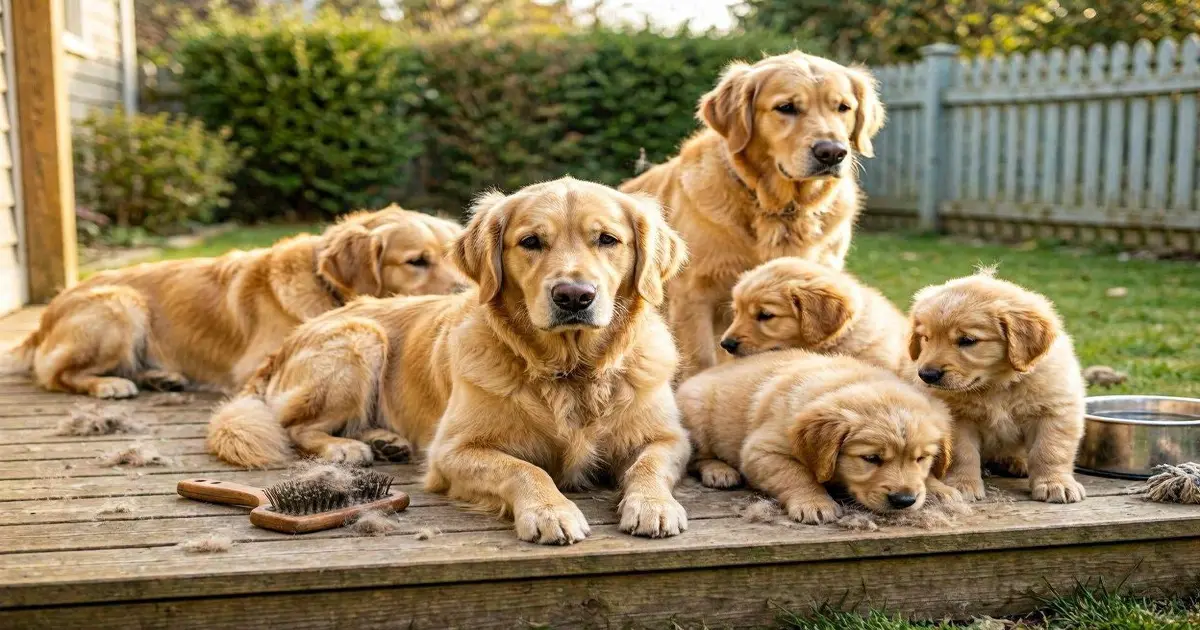
While shedding can’t be stopped completely, a few consistent habits make a real difference in how much fur ends up around the house.
- Brush regularly, adjusting frequency based on season
- Bathe with a dog-safe shampoo to loosen dead undercoat
- Feed a nutritionally complete diet with adequate fatty acids
- Vacuum floors and furniture frequently during peak shedding
- Use washable covers on furniture and car seats
Brushing Routine by Season
During normal, non-peak periods, brushing two to three times a week is usually enough to manage loose hair and prevent mats from forming. Adjusting your grooming frequency based on the season prevents loose undercoat from turning into mats. This keeps the coat healthy and removes debris before it builds up close to the skin.
During spring and fall coat blow, daily brushing is far more effective. At this intensity, a single session can remove a significant amount of loose undercoat before it has a chance to fall out around the house. Skipping brushing during peak season tends to make the process last longer and increases the risk of matting.
Bathing and Coat Care
Bathing a Golden Retriever every four to six weeks, or more often during heavy shedding periods, helps loosen dead hair and keep the skin healthy. A dog-specific shampoo, ideally one formulated for double coats, works best since human products can strip natural oils and dry out the skin.
Over-bathing can actually backfire, leading to dry, irritated skin that sheds more, not less. Drying the coat fully after a bath also matters, since a damp undercoat left to air dry slowly can trap moisture close to the skin and contribute to matting or minor skin issues.
also read Golden Retrievers Need to Be Groomed
Best Grooming Tools for a Golden Retriever’s Coat
The right tools make a noticeable difference when managing a double coat like this one. Using the wrong brush, or relying on just one tool for every job, tends to leave loose undercoat behind even after a thorough session.
Tools for the Undercoat
An undercoat rake is designed specifically to reach through the topcoat and pull loose fur from the dense layer underneath, without damaging the guard hairs above it. This tool is especially useful during coat-blow season, when the undercoat is releasing in large amounts.
Deshedding tools, which use a fine-toothed edge to catch loose hair, work similarly and are popular for their efficiency during heavy shedding periods. These should be used carefully and not too frequently, since aggressive or excessive use can irritate the skin or damage healthy topcoat hair.
Tools for the Topcoat
A slicker brush, with its fine, closely spaced pins, works well for the outer coat, smoothing out tangles and removing surface debris without digging into the undercoat. This is a good everyday tool for routine maintenance outside of peak shedding season.
A pin brush or bristle brush can also help distribute natural oils through the topcoat, adding shine and reducing dryness. Combining a slicker brush for the outer layer with an undercoat rake for the layer beneath tends to give the most complete results during a single grooming session.
Common Myths About Golden Retriever Shedding
Several persistent myths make managing this breed’s coat more confusing than it needs to be.
One common myth is that shaving a Golden Retriever reduces shedding. In reality, shaving can damage the coat’s structure, interfere with its ability to regulate temperature, and sometimes cause the hair to grow back unevenly or not at all in certain areas. It doesn’t address the underlying shedding cycle.
Another myth claims that certain foods or supplements can stop shedding entirely. While good nutrition supports coat health and can reduce shedding tied to deficiencies, no diet eliminates the natural seasonal coat-blow cycle. Some owners also believe that frequent bathing alone controls shedding, when in practice, bathing helps loosen dead hair but needs to be paired with brushing to be effective.
A final myth worth addressing: that heavy shedding always signals poor health. As covered earlier, seasonal coat blow is completely normal for this breed and isn’t, by itself, a sign that something is wrong.
Your Golden Retriever’s shedding isn’t a problem to solve completely, it’s a coat cycle to manage. Build a brushing routine around the seasons, keep the diet solid, and pay attention to any shedding pattern that looks unusual rather than simply heavy. That combination keeps both the dog and the house in better shape year-round.
Frequently Asked Questions
Do Golden Retriever mixes shed less than purebreds?
It depends entirely on which breed they’re mixed with. A mix with a low-shedding breed may shed less, but a mix with another heavy-shedding double-coated breed often sheds just as much, or in some cases even more.
Can shedding be stopped completely with the right grooming routine?
No. Even with ideal brushing, bathing, and diet, a Golden Retriever will still go through natural shedding cycles, including two seasonal coat-blow periods each year. Grooming reduces the mess; it doesn’t eliminate the underlying process.
Is it normal for a Golden Retriever to shed more after being sick or stressed?
Yes, physical or emotional stress, including illness, recovery from surgery, or major environmental changes, can trigger a temporary increase in shedding. This usually resolves once the underlying stressor passes.

Hi, I’m Jack Austin, founder of Cool Goldens. I share practical, research-backed advice on training, nutrition, and daily care to help you give your Golden Retriever the happiest, healthiest life possible.