

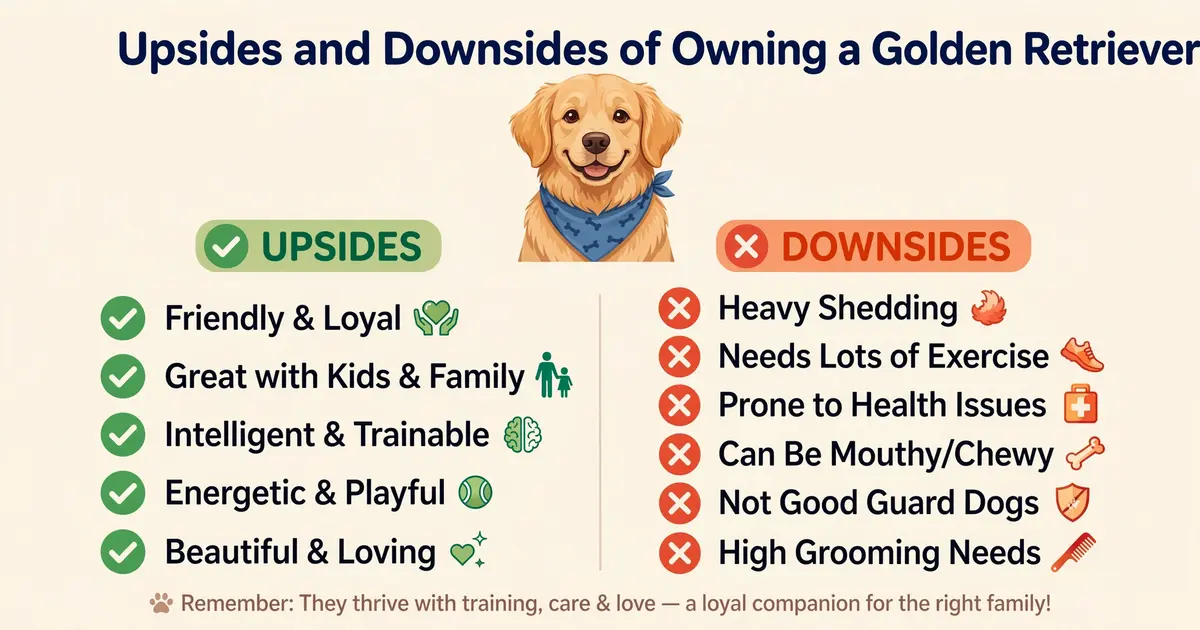
Golden retrievers are affectionate, trainable, and easy to love, but the upsides and downsides of owning a golden retriever go well beyond temperament. Shedding, daily exercise needs, grooming costs, and breed-specific health risks are all part of the deal.
This breed isn’t high-maintenance in a dramatic way, but it does require consistent time and money. Skip the guesswork and get the full picture here, starting with what actually matters most: whether your lifestyle can meet what this breed needs.
Golden Retrievers at a Glance: Quick Answer
Before going into detail, here’s a snapshot of what life with a golden retriever actually looks like. Use this table to see the tradeoffs at a glance.
Pros and Cons at a Glance (Comparison Table)
| Upsides | Downsides |
| Affectionate and gentle temperament | Heavy, year-round shedding |
| Great with kids and other pets | Needs 60+ minutes of exercise daily |
| Highly trainable and eager to please | Prone to certain health conditions |
| Sociable, low aggression risk | Can develop separation anxiety |
| Adaptable to many household types | Grooming takes real time and money |
No dog fits every household perfectly, and this table is a starting point, not a final verdict. The sections below explain why each item matters.
What Makes Golden Retrievers Such Popular Family Dogs

Golden retrievers rank among the most beloved breeds for a simple reason: their temperament fits well with family life. They tend to be patient with children, gentle with other animals, and genuinely eager to be around people rather than off on their own.
Their playfulness is part of what makes them so likable. A golden retriever will happily chase a ball for an hour, and then settle down for a nap on the couch a few minutes later. That mix of energy and calm makes them easy to live with once their needs are met.
They also read social situations well. Most goldens greet strangers with curiosity instead of suspicion, which is one reason they show up so often as therapy and service dogs. That said, temperament still varies by individual dog, and genetics and early socialization play a real role in how any specific golden retriever turns out.
The Key Advantages
Beyond their friendly reputation, golden retrievers offer some practical benefits that matter day to day. They were originally bred as hunting companions, which shaped their intelligence and their drive to work closely with people.
That working history is why they pick up commands quickly. Most golden retrievers respond well to consistent, reward-based training, especially when it starts early. First-time dog owners often find them more forgiving to train than more independent breeds.
They also tend to bond closely with the whole family rather than attaching to just one person. This makes them a solid choice for households where multiple people share dog-care duties, from walks to feeding to training sessions.
Owning any dog is linked to more physical activity and companionship, both of which support general wellbeing. Golden retrievers, given their need for daily walks and play, tend to keep their owners moving more than a lower-energy breed would.
How Their Temperament Compares to Other Family Breeds
Compared to Labrador retrievers, goldens are often described as slightly more sensitive and eager to please, though both breeds share a similar friendliness toward people. Compared to poodles, golden retrievers are generally less independent and more food– and praise-motivated, which can make basic training more straightforward.
German shepherds and other guardian breeds tend to be more watchful of strangers, while golden retrievers are rarely reliable guard dogs since they’re naturally trusting. If you want a dog that’s affectionate first and protective second, that’s a meaningful difference to weigh.
The Downsides of Owning a Golden Retriever You Should Know
The upsides get most of the attention, but the downsides are just as important to plan for. Shedding is probably the most common complaint from golden retriever owners, and it’s a fair one. Their double coat sheds throughout the year, with heavier shedding during seasonal coat changes.
Daily exercise is another real commitment. Adult golden retrievers generally need at least 60 minutes of physical activity a day, split between walks and active play. Without it, they can become restless, destructive, or overweight.
Separation anxiety shows up more often in this breed than in more independent dogs. Because goldens bond so closely with their families, being left alone for long stretches can lead to stress behaviors like chewing, whining, or pacing. Crate training and gradual alone-time practice can help, but it takes consistent effort.
Shedding and Grooming: What to Expect Season by Season
Golden retrievers typically “blow their coat” twice a year, in spring and fall, when shedding increases noticeably for a few weeks. Outside of those periods, they still shed at a steady, lower level year-round.
Brushing two to three times a week helps manage loose fur and reduces matting, and daily brushing during heavy shedding seasons makes a real difference. Many owners also use a de-shedding tool designed for double-coated breeds to cut down on loose hair around the house.
Professional grooming every six to eight weeks is common, though some owners handle bathing and trimming at home to save money. Either way, budget time for this, since skipping grooming leads to matting and skin issues over time.
Health Issues and Lifespan: What Owners Need to Watch For

Golden retrievers have a average lifespan generally cited between 10 and 12 years, though individual dogs vary based on genetics, diet, and care. This is shorter than some smaller breeds, partly because larger dogs tend to have shorter lifespans overall.
The breed has a known predisposition to certain health conditions. Hip and elbow dysplasia are common joint issues, caused by abnormal joint development that can lead to pain and arthritis over time. Regular vet checkups and maintaining a healthy weight can help manage the risk.
Golden retrievers also have a notably higher rate of certain cancers compared to many other breeds, including lymphoma and hemangiosarcoma. Researchers haven’t pinned down a single cause, and genetics likely plays a significant role. Some heart conditions, like subvalvular aortic stenosis, also appear more often in this breed.
None of this means every golden retriever will develop these conditions. Choosing a breeder who screens for hip, elbow, heart, and eye health, or adopting from a rescue with available health records, lowers the risk considerably. For detailed, current guidance on breed-specific health screening, the American Kennel Club and your local veterinarian are reliable places to start.
What It Really Costs to Own a Golden Retriever
The financial side of golden retriever ownership goes beyond the initial adoption or purchase fee. Food for a dog this size adds up monthly, and larger breeds generally eat more than smaller ones.
Routine vet care, including annual checkups, vaccinations, and parasite prevention, is an ongoing cost every year. Because goldens are prone to certain health conditions, unexpected vet bills are also more likely over the dog’s lifetime than with some other breeds.
Grooming costs matter too, whether you pay a professional or buy tools to do it yourself. Add in a leash, crate, toys, and pet insurance if you choose to carry it, and the total cost of ownership is a meaningful part of the decision, not an afterthought.
Budget-Friendly Ways to Manage Ownership Costs
Buying food in bulk and comparing prices across brands can lower one of the biggest recurring costs. Learning basic grooming skills at home, like brushing and nail trimming, also cuts down on professional grooming visits.
Pet insurance, purchased while your dog is young and healthy, can reduce the financial shock of an unexpected diagnosis later. Routine preventive care, like keeping up with vaccinations and weight management, tends to be cheaper than treating problems after they develop.
Is a Golden Retriever a Good Fit for Your Lifestyle?

Golden retrievers do best in homes that can meet their exercise and companionship needs, but that doesn’t mean they only work in houses with big yards. A smaller home or apartment can work if you commit to daily walks and playtime, since goldens are more about activity level than square footage.
For families with young kids, their patient, gentle nature is a genuine strength, though any dog and toddler should be supervised together. First-time owners often do well with this breed because of how trainable and forgiving they are compared to more stubborn or independent breeds.
Busy schedules are where things get harder. A golden retriever left alone for long hours without enough exercise or mental stimulation is more likely to develop anxiety or destructive habits. If your work schedule doesn’t allow for daily walks or a midday break, a dog walker or doggy daycare can help fill the gap.
Hot climates require extra care too. Their thick double coat, while useful in cold weather, makes them more prone to overheating in high temperatures, so shaded areas, fresh water, and avoiding midday walks in summer become important.
Common Misconceptions About Golden Retriever Ownership
“Golden retrievers are always easy to train.” They’re generally eager to learn, but eager doesn’t always mean effortless. Some goldens go through a stubborn adolescent phase, and consistent training still takes real time and patience, especially with basic obedience and impulse control around distractions.
“Their shedding isn’t that bad.” Compared to single-coated breeds, golden retriever shedding is significant. Anyone considering this breed should be honest with themselves about their tolerance for dog hair on furniture and clothing.
“They’re naturally calm dogs.” Golden retriever puppies and young adults often have high energy levels and can be quite excitable, especially around new people or other dogs. Calm behavior usually comes with age, training, and consistent exercise, not automatically.
“Golden retrievers don’t need much training since they’re so friendly.” Friendliness and good manners aren’t the same thing. Without training, a golden retriever’s enthusiasm can turn into jumping on guests or pulling hard on the leash.
Frequently Asked Questions
Are golden retrievers good for first-time dog owners?
Yes, generally. Their trainability and eagerness to please make the learning curve gentler than with more independent or stubborn breeds, though they still require real time and consistency from a new owner.
Do golden retrievers do well in apartments?
They can, as long as their daily exercise needs are met. Apartment living works better when owners commit to regular walks and active playtime rather than relying on limited indoor space.
How much exercise does a golden retriever need each day?
Most adult golden retrievers need at least 60 minutes of exercise daily, combining walks with active play like fetch or swimming. Puppies and senior dogs typically need less intense activity.
How long do golden retrievers usually live?
Average lifespan is generally cited between 10 and 12 years, though this varies based on genetics, health screening, diet, and overall care.
Do golden retrievers get along with other pets?
Most golden retrievers are sociable and adapt well to living with other dogs and even cats, especially with proper introductions and early socialization.
Final Takeaway
A golden retriever offers real rewards: loyalty, warmth, and a temperament that fits well into family life. The tradeoff is a genuine commitment to daily exercise, regular grooming, and being prepared for certain health risks that come with the breed.
If you can meet those needs consistently, a golden retriever is likely to be a rewarding, long-term companion. If your schedule, budget, or living situation can’t support that level of care right now, it’s worth being honest about that before bringing one home.
Before deciding, talk to a veterinarian about breed-specific health screening, and if you’re adopting, ask the breeder or rescue for available health and temperament records.

Hi, I’m Jack Austin, founder of Cool Goldens. I share practical, research-backed advice on training, nutrition, and daily care to help you give your Golden Retriever the happiest, healthiest life possible.