


A black german shepherd golden retriever mix isn’t some rare designer breed dreamed up on purpose. It’s a real, genetically explainable version of the golden shepherd cross, where the puppy inherits a black coat instead of the usual gold.
Coat color aside, these dogs carry the same mix of loyalty, energy, and intelligence you’d expect from either parent breed. This guide walks through where that black coat comes from, what these dogs typically look like and act like as adults, and what daily life with one actually involves.
Black German Shepherd Golden Retriever Mix — Quick Answer
Yes, this black crossbreed is completely real. It happens when the puppy inherits a black coat gene, usually from the German shepherd side, instead of the golden coloring typical of a golden retriever.
These dogs are large, active, and intelligent, generally standing 21 to 26 inches tall and weighing 50 to 90 pounds as adults. Temperament tends to combine golden retriever friendliness with German shepherd loyalty and drive.
Why Is a German Shepherd Golden Retriever Mix Black? (Coat Color Genetics)
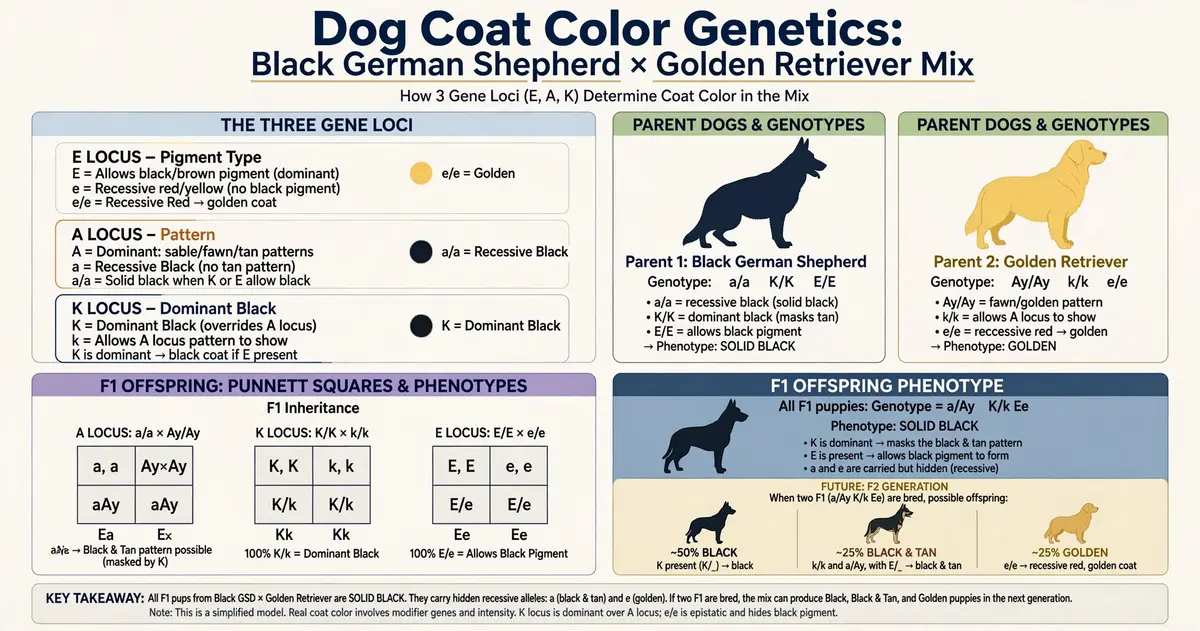
Coat color in dogs comes down to which genes each parent passes on, not which breed “wins out.” Golden retrievers carry genes that mostly restrict their coat to shades of gold and cream. German shepherds carry a wider range of coat genes, including black.
Recessive Genes and How Coat Color Is Inherited
Black coloring in dogs is often controlled by a recessive gene. A puppy needs to inherit that gene from both parents to actually show a black coat. Since German shepherds commonly carry black coat genes, and golden retrievers can carry hidden recessive genes even when their own coat is gold, a black puppy is a real, biologically explainable outcome, not a fluke.
This doesn’t mean the puppy is any less of a genuine mix. Coat color is a small part of a dog’s overall genetic makeup and has no bearing on which breed contributed more traits overall.
All-Black vs. Black-and-Tan Patterns
Not every black-coated mix looks the same. Some puppies come out solid black, resembling a solid black coat with almost no gold visible. Others develop a black-and-tan pattern similar to a traditional German shepherd, with tan or gold markings on the legs, chest, and face. Both patterns are genetically normal outcomes of this cross.
Physical Appearance and Features
Beyond coat color, this mix usually shows a blend of physical traits from both parent breeds. Ears can be floppy like a golden retriever’s, upright like a German shepherd’s, or somewhere in between. Body shape often leans toward the more athletic, angular build of a German shepherd, paired with the broader head and friendlier expression common in golden retrievers.
Full-Grown Size and Weight
Fully grown, these black mixes typically reach 21 to 26 inches at the shoulder and weighs between 50 and 90 pounds. Males tend to land at the higher end of that range, while females are often smaller. Genetics from each parent play a real role, so littermates can vary noticeably in adult size.
Coat Type and Length
Coat length is usually medium to long, with a dense double coat similar to both parent breeds. This double coat helps regulate temperature but also means regular shedding, which matters more with a black coat since loose hair shows up clearly on furniture and clothing.
Behavioral Traits and Temperament

This mix tends to be loyal, intelligent, and eager to please, drawing on strong traits from both parent breeds. Golden retrievers are known for being easygoing and social, while German shepherds bring focus, alertness, and a strong work ethic. Puppies from this cross often show a mix of both, though the exact balance varies from dog to dog.
Most owners can expect a dog that bonds closely with its family and does well with structure and consistency. Early socialization matters here, since German shepherd genetics can lean toward wariness with strangers if the dog isn’t exposed to new people and situations while young.
German Shepherd Traits vs. Golden Retriever Characteristics in the Mix
Because this is a hybrid, no two dogs turn out exactly alike. The table below breaks down which traits usually come from which parent breed, so you know roughly what to expect.
| Trait | Tends Toward German Shepherd | Tends Toward Golden Retriever |
| Coat color | Black, black-and-tan, sable | Gold, cream |
| Guarding instinct | Higher, more alert to strangers | Lower, generally friendly to all |
| Trainability | High, task-focused | High, reward-motivated |
| Energy level | High, needs a job or purpose | High, but more relaxed at rest |
| Sociability with other dogs | Can be more selective | Usually very social |
No mix follows this table exactly. It’s a general guide, not a guarantee for any individual dog.
Is the All-Black Coat Color Rare?
Solid black coloring is less common than the classic golden-and-black or golden-and-tan combinations you’ll see in most golden shepherd litters. Since German shepherds themselves come in a range of colors and black is one of the less frequent options, an all-black puppy from this cross isn’t guaranteed in any given litter.
This rarity can affect availability. Breeders who specialize in golden shepherds may not always have black puppies on hand, and predicting coat color before birth isn’t possible. If you specifically want a solid-black puppy, expect a longer search and be cautious of anyone who claims they can guarantee a specific color outcome.
Checking with local shelters and breed-specific rescue groups is often a more reliable path than seeking out specialty breeders, since mixed-breed litters end up in rescue fairly often.
Exercise Requirements and Mental Stimulation
Both parent breeds are active working and sporting dogs, so this mix needs daily exercise to stay healthy and well-behaved. Plan on at least 60 minutes of physical activity a day, split between walks, play, and off-leash time in a secure area if possible.
Mental stimulation matters just as much as physical exercise. German shepherds especially need tasks that engage their brain, so puzzle feeders, scent games, and short training sessions throughout the day help prevent boredom-related behavior problems like chewing or excessive barking.
Grooming Tips and Shedding Concerns
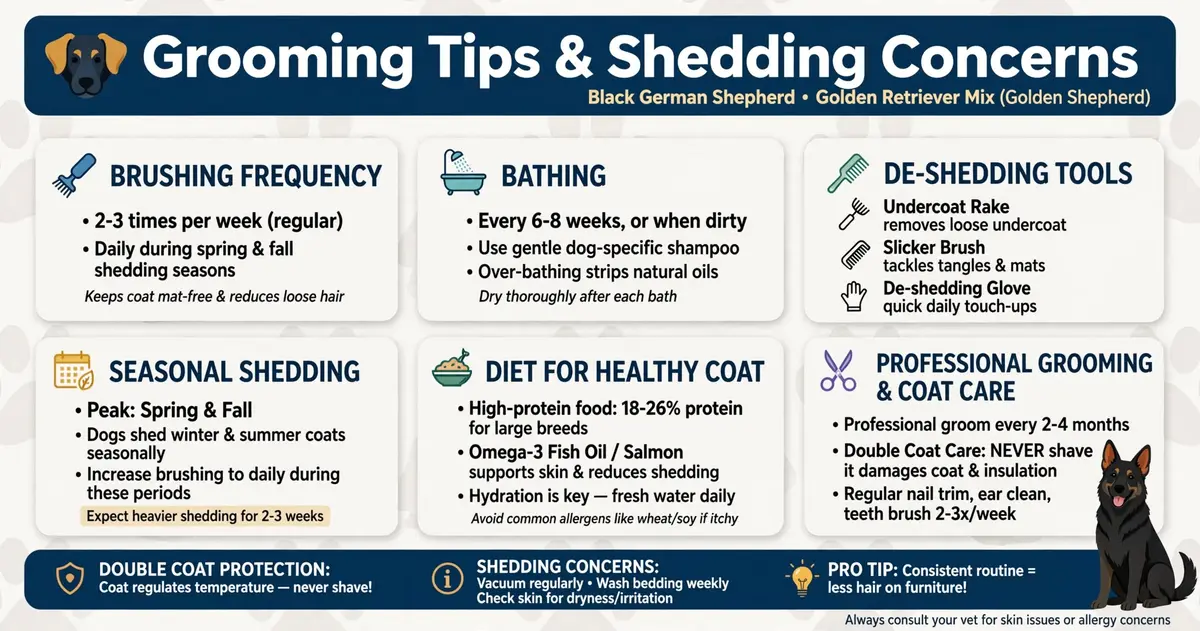
A double coat means regular brushing is non-negotiable. Brushing two to three times a week keeps loose fur under control and helps distribute natural oils through the coat.
Also read Golden Retrievers Need to Be Groomed
Managing Shedding Season
Both parent breeds shed heavily twice a year during coat blowouts, usually in spring and fall. During these periods, daily brushing makes a real difference in how much hair ends up on your floors and furniture. A black coat tends to show shed hair on light-colored surfaces more obviously than a golden coat does, so staying ahead of brushing during shedding season is worth the extra effort.
Bathing every four to six weeks with a dog-specific shampoo, along with regular nail trims and ear cleaning, rounds out a manageable grooming routine.
Dietary Needs
This mix is a large, active breed, so it needs a high-quality diet formulated for large or working breeds. Puppies benefit from large-breed puppy formulas, which support joint development at a controlled growth rate rather than rapid growth that can stress developing joints.
Adult dogs generally do well on two measured meals a day rather than free-feeding, since both parent breeds can be prone to weight gain if food intake isn’t monitored. Portion sizes should be based on the individual dog’s weight, age, and activity level, and it’s worth checking in with your veterinarian to confirm you’re feeding the right amount.
also read Can Golden Retrievers Eat Fruits and Vegetables
Common Health Issues to Watch For
Because this is a mixed breed, health conditions common to both German shepherds and golden retrievers are worth knowing about. These include hip and elbow dysplasia, certain eye conditions, and bloat, a serious and sometimes life-threatening condition that affects large, deep-chested dogs.
Mixed-breed dogs sometimes benefit from a wider gene pool, which some veterinary sources associate with a lower risk of certain inherited conditions compared to purebred dogs. That said, this isn’t guaranteed for every individual dog, and regular veterinary checkups remain the best way to catch potential issues early. The American Kennel Club is a solid resource for learning more about breed-specific health conditions in both parent breeds.
Puppy Training and Early Care
Starting training early makes a real difference with this mix, since both parent breeds are intelligent enough to pick up bad habits just as quickly as good ones. Puppy kindergarten classes or structured group training sessions help with socialization and basic obedience at the same time.
Positive reinforcement works best for this cross. Treats, praise, and short, consistent training sessions tend to get better results than harsh corrections, especially given the sensitivity golden retrievers often bring to the mix.
Expect these puppies to go through a noticeable growth spurt between four and eight months old, along with normal adolescent testing behavior. Consistency during this stage sets the tone for the dog’s adult temperament.
Common Misconceptions About Coat Color
A black coat doesn’t change a dog’s temperament, intelligence, or health risks in any meaningful way. Coat color genes and behavior genes are inherited separately, so a black puppy isn’t more aggressive, more protective, or less trainable than a gold or bicolor littermate.
Some people also assume a black-coated mix looks “more purebred” German shepherd and question whether it’s a true mix at all. Coat color alone doesn’t confirm or rule out parentage. A DNA test is the only reliable way to verify a dog’s breed background if that matters to you.
FAQs
How much does a black Golden Shepherd cost?
Prices vary widely depending on the breeder, location, and whether you’re adopting from a rescue. Rescue adoption fees are typically lower, often a few hundred dollars, while breeder prices can run higher and depend on demand for the litter.
Is this mix recognized by the AKC?
No. The AKC only recognizes purebred dogs, so a golden shepherd, including the black variant, isn’t eligible for AKC breed registration, though it can still participate in some AKC mixed-breed events.
Do black german shepherd golden retriever mixes shed more than golden ones?
Shedding amount is about coat density and season, not color. A black coat sheds the same amount as a gold one from the same litter, though the shed hair may be more visible on light surfaces.
Are they good family dogs?
Generally yes, especially with early socialization and consistent training. Their size and energy level mean they do best in homes with space to move and time for daily exercise.
A black german shepherd golden retriever mix is a genuine, biologically explainable outcome of this popular hybrid cross, not a rare fluke or a different breed altogether. Coat color comes down to genetics, and it doesn’t change the dog’s temperament, health, or training needs compared to its gold-coated littermates.
If you’re considering bringing one home, focus less on coat color and more on finding a responsible breeder or rescue, committing to early training and socialization, and being ready for an active, intelligent dog that needs daily engagement to thrive.

Hi, I’m Jack Austin, founder of Cool Goldens. I share practical, research-backed advice on training, nutrition, and daily care to help you give your Golden Retriever the happiest, healthiest life possible.