

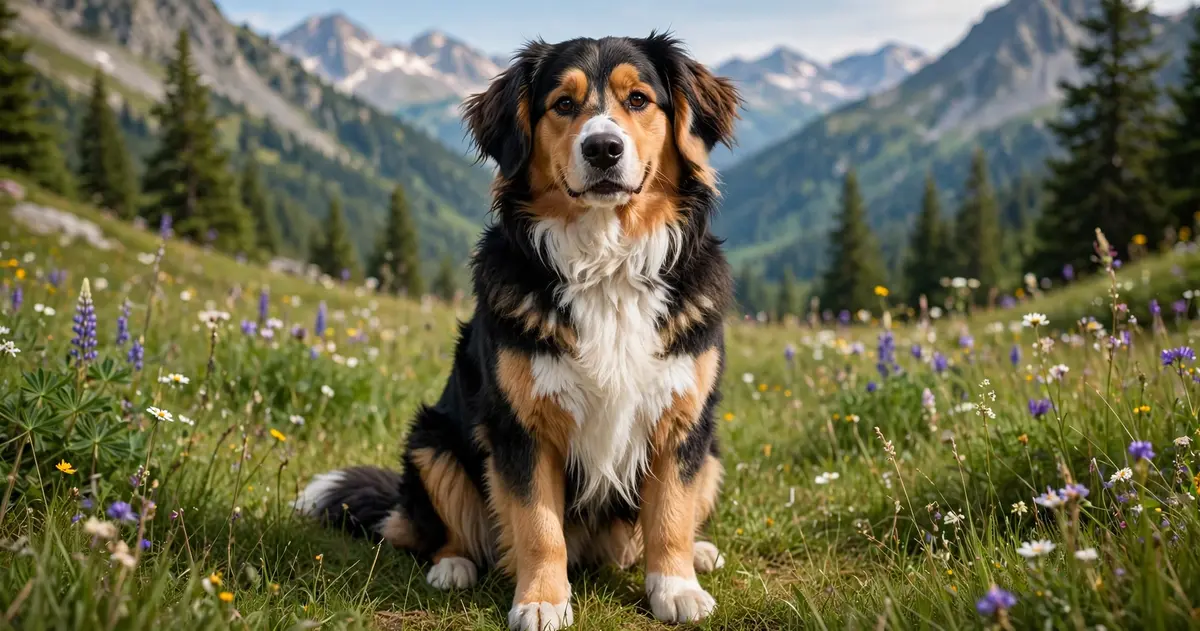
A Golden Mountain Dog is what you get when a Golden Retriever and a Bernese Mountain Dog decide neither breed alone is quite enough dog. The result is a large, fluffy crossbreed built for cuddles, chaos, and shedding season twice a year.
They’re friendly to the point of being useless as guard dogs, and they’d rather greet a burglar than bark at one. Bred partly for better health than the Bernese Mountain Dog on its own, this mix has become popular for its looks and its personality. Below, I’ll cover what actually goes into owning one, including a few things most breed pages skip entirely.
What Is a Golden Mountain Dog?
A Golden Mountain Dog, sometimes called a Golden Bernese, comes from crossing a purebred Golden Retriever with a purebred Bernese Mountain Dog. Breeders started this cross to combine the Golden Retriever’s steady temperament and stronger health record with the Bernese Mountain Dog’s calm, gentle nature and striking coat.
This is still a fairly new and uncommon crossbreed. Because it hasn’t been around long enough for large-scale studies or breed registries to track outcomes, some traits vary more from dog to dog than they would in an established breed. That variation is worth keeping in mind as you read on.
Golden Mountain Dog Traits and Appearance
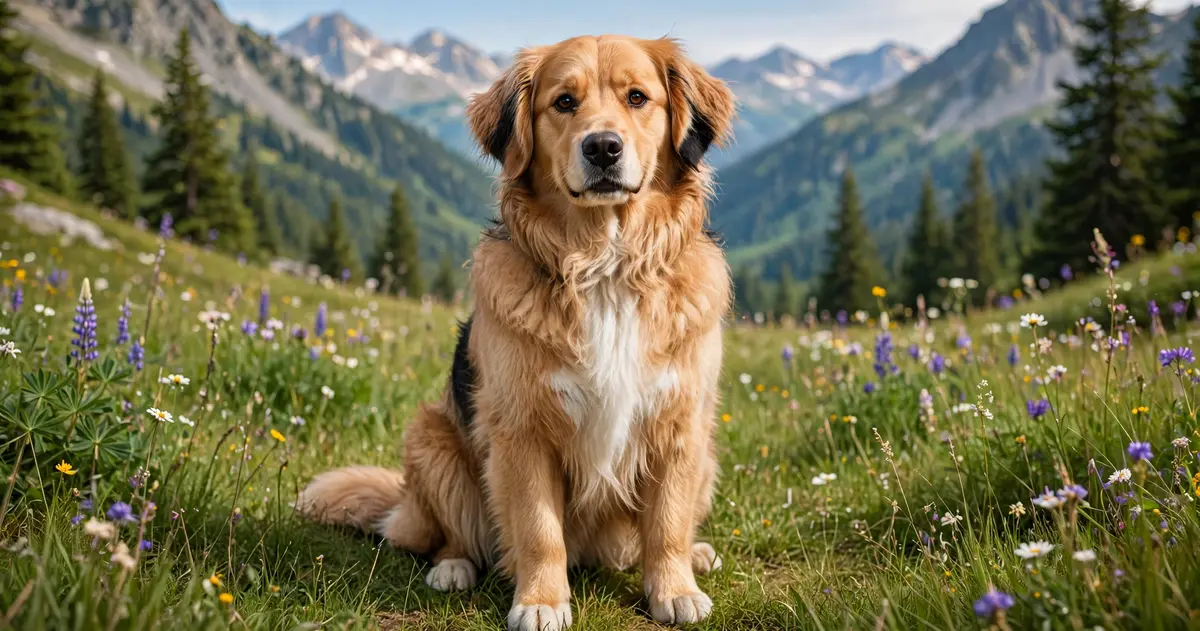
Golden Mountain Dogs are large, sturdy dogs with a build that sits between the two parent breeds. Most have a broad chest, a thick double coat, and the kind of expressive face that both parent breeds are known for. Ears tend to hang close to the head, similar to a Golden Retriever’s.
Because this is a first-generation type of cross in most cases, puppies from the same litter can look noticeably different from each other. One puppy might favor the Bernese Mountain Dog in build and coloring, while a littermate looks closer to a Golden Retriever.
Coat Colors and Patterns
The coat pattern is one of the most distinctive things about this breed. Four patterns show up most often, and each comes from a different mix of coat-color genes inherited from the parent breeds.
- Classic tricolor: a black base coat with brown and white markings on the face, chest, feet, and tail, closely resembling a purebred Bernese Mountain Dog.
- Radiant tricolor: starts out looking like a classic tricolor, then develops golden coloring across the face and chest within the first year or two.
- Brindle: brown brindling mixed throughout the coat, sometimes with white patches, in irregular patterns that vary widely between individual dogs.
- Bicolor: a black base coat with white patches on the chest, toes, and sometimes the face. This is genetically the most common pattern in the breed.
The exact combination a puppy ends up with depends on which coat-color genes it inherits from each parent, which is also why predicting a puppy’s adult coloring can be difficult before certain markings fully develop.
Temperament and Personality
Golden Mountain Dogs typically have a loving, easygoing temperament that draws heavily from both parent breeds. They tend to be social, eager to please, and genuinely happy to be around people, which makes them a good fit for families that want an involved family dog rather than an independent one.
They generally do well with children and get along with other dogs, cats, and even other household pets, since neither parent breed has a strong prey drive. Most are naturally friendly toward strangers too, which means they rarely make good guard dogs, though many will still bark to alert their owners.
This breed tends to be people-oriented to the point of wanting to be part of everything you do. That closeness is part of the appeal, but it also means early crate training and alone-time practice matter more than they might for a more independent breed.
Size and Growth: How Big Does a Golden Mountain Dog Get?
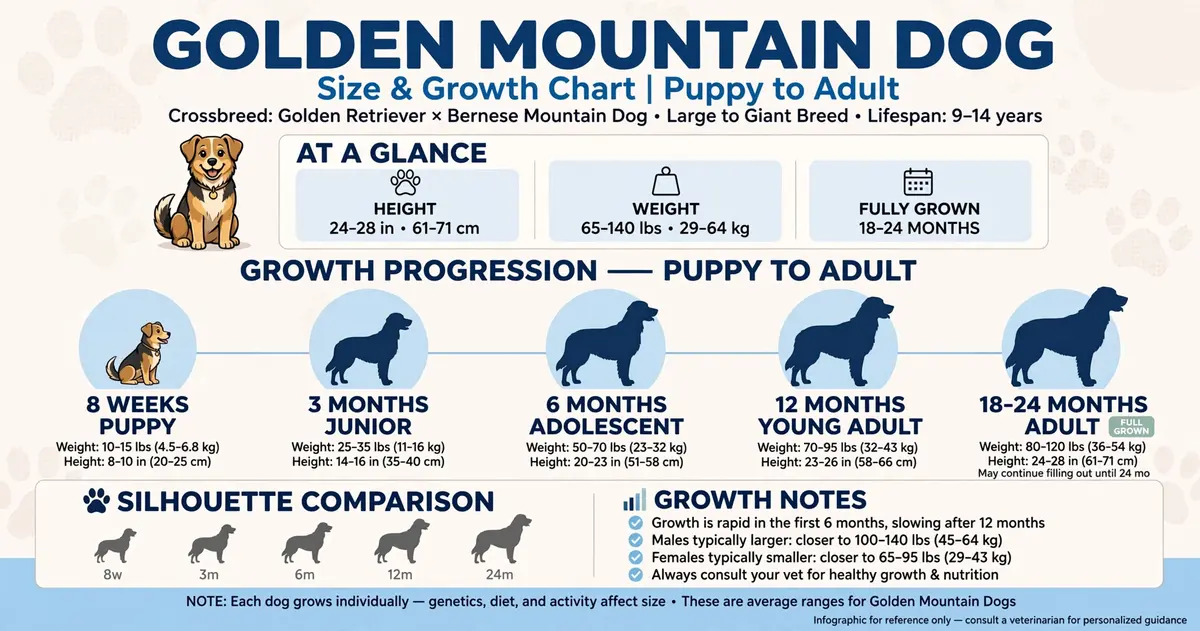
Golden Mountain Dog size typically falls between the two parent breeds, since Bernese Mountain Dogs are generally larger and heavier than Golden Retrievers. Most adults weigh between 70 and 110 pounds and stand up to around 26 inches at the shoulder.
Males usually run larger than females, following the same pattern seen in both parent breeds. Because exact growth data for this specific cross is limited, these ranges are estimates based on typical outcomes for the mix rather than fixed numbers.
Growth generally continues until 18 to 24 months of age, which is common for large-breed dogs. Puppies that grow quickly in their first year benefit from age-appropriate food that supports joint development without encouraging excess weight gain.
Lifespan and Common Health Issues
The typical Golden Mountain Dog lifespan falls somewhere around 12 to 15 years, though because this crossbreed is still relatively new, long-term data across many dogs isn’t available yet. This estimate is based on general patterns for the mix rather than large-scale studies.
Bernese Mountain Dogs, as a purebred line, tend to have a shorter average lifespan and a higher rate of certain cancers. Crossing with a Golden Retriever can improve genetic diversity, which sometimes lowers the risk of conditions tied to a narrow gene pool. This is a real and well-documented concept in genetics, but it’s not a guarantee for every individual dog.
Health issues that can show up in this cross include hip and elbow dysplasia, certain heart conditions, and some cancers linked to the Bernese Mountain Dog side of the family. Golden Retrievers also carry their own elevated cancer risk, so crossing the two breeds doesn’t eliminate cancer risk entirely; it may simply change the odds compared to a purebred Bernese Mountain Dog.
Genetic Health Tests to Ask Breeders About
A responsible breeder should be able to show health clearances for both parent dogs. Before choosing a puppy, it’s worth asking about these specific tests:
- Hip and elbow evaluations through OFA (Orthopedic Foundation for Animals) or a similar certifying body
- Cardiac clearance from a veterinary cardiologist
- Eye examination from a veterinary ophthalmologist
- DNA testing for known inherited conditions in Golden Retrievers and Bernese Mountain Dogs, such as degenerative myelopathy
A breeder who can’t provide any documentation for these tests, or who avoids the question, is a warning sign worth taking seriously.
Daily Care: Exercise, Diet, and Grooming
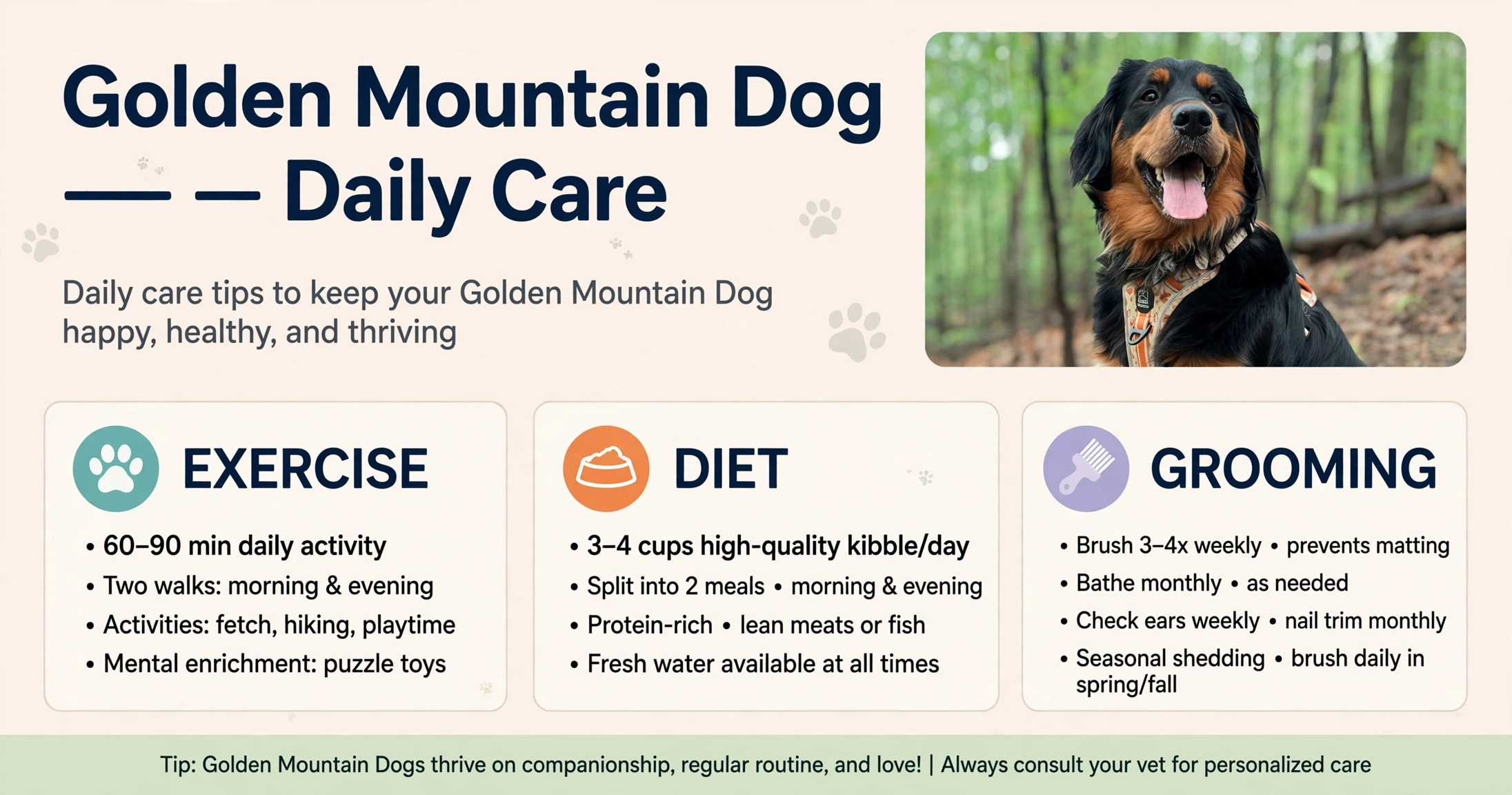
Day-to-day care for a Golden Mountain Dog is fairly manageable, but it does require consistency. This section covers what actually matters for keeping one healthy and comfortable.
Daily Exercise and Activity Level
This breed sits at a moderate energy level. They’re more active than a Bernese Mountain Dog but calmer than many high-drive retrievers, which makes them a reasonable fit for owners who want an active companion without needing to run several miles a day.
A daily walk, some off-leash play in a securely fenced area, and occasional hikes usually cover their needs. Around 45 to 60 minutes of activity per day is a reasonable target for most adult dogs of this size, split across one or two sessions.
Intense, high-impact activity like long-distance running isn’t a good match, especially while joints are still developing. Moderate hikes and family outings suit this breed far better than endurance sports.
Dietary Needs and Canine Nutrition
Golden Mountain Dogs need a diet formulated for large-breed dogs, particularly during puppyhood when controlled growth matters for joint health. A large-breed puppy formula helps regulate calcium and phosphorus levels to support healthy bone development.
Adult dogs generally do well on a high-quality commercial diet appropriate for their size, age, and activity level. Because both parent breeds can be prone to weight gain, portion control matters more than it might for a leaner, higher-energy breed.
Your veterinarian is the best source for specific calorie recommendations, since factors like age, activity level, and any existing health conditions all affect how much a particular dog should eat.
Grooming Requirements and How Often to Bathe and Groom
The coat is long, thick, and moderately dense, which means regular grooming is part of the routine rather than optional. Brushing two to three times a week helps prevent matting and cuts down on loose hair around the house.
During heavier shedding periods, which typically happen twice a year as the coat transitions seasonally, daily brushing makes a noticeable difference. Bathing every four to six weeks is usually enough unless the dog gets especially dirty or starts to develop a noticeable odor.
Routine nail trims, ear checks, and teeth brushing round out a full grooming routine. Because the coat is thick, it also traps heat, so grooming plays a role in keeping the dog comfortable in warmer weather.
Puppy Training and Socialization Tips
Golden Mountain Dog puppies tend to be quick learners, which makes early training go smoothly for most owners. Consistency matters more than intensity here; short, regular sessions work better than long, infrequent ones.
House training generally follows the same timeline as other large-breed puppies, with most dogs reliably house trained by four to six months when owners stick to a consistent schedule. Crate training from an early age helps with this process and also supports the alone-time training covered below.
Early socialization, meaning exposure to different people, environments, sounds, and other animals during the first few months, helps this naturally friendly breed grow into a well-adjusted adult. Puppy socialization classes are a practical way to structure this exposure safely.
Managing Separation Anxiety
Because this breed bonds closely with its family, separation anxiety is a real risk if alone time isn’t practiced early. Dogs left alone for the first time as adults, with no prior practice, are more likely to struggle with it.
Building tolerance gradually works best: start with very short absences, a few minutes at a time, and slowly increase the duration as the dog stays calm. A comfortable crate or designated space, paired with a consistent routine, also helps reduce anxiety when you’re away.
Is a Golden Mountain Dog Right for You?
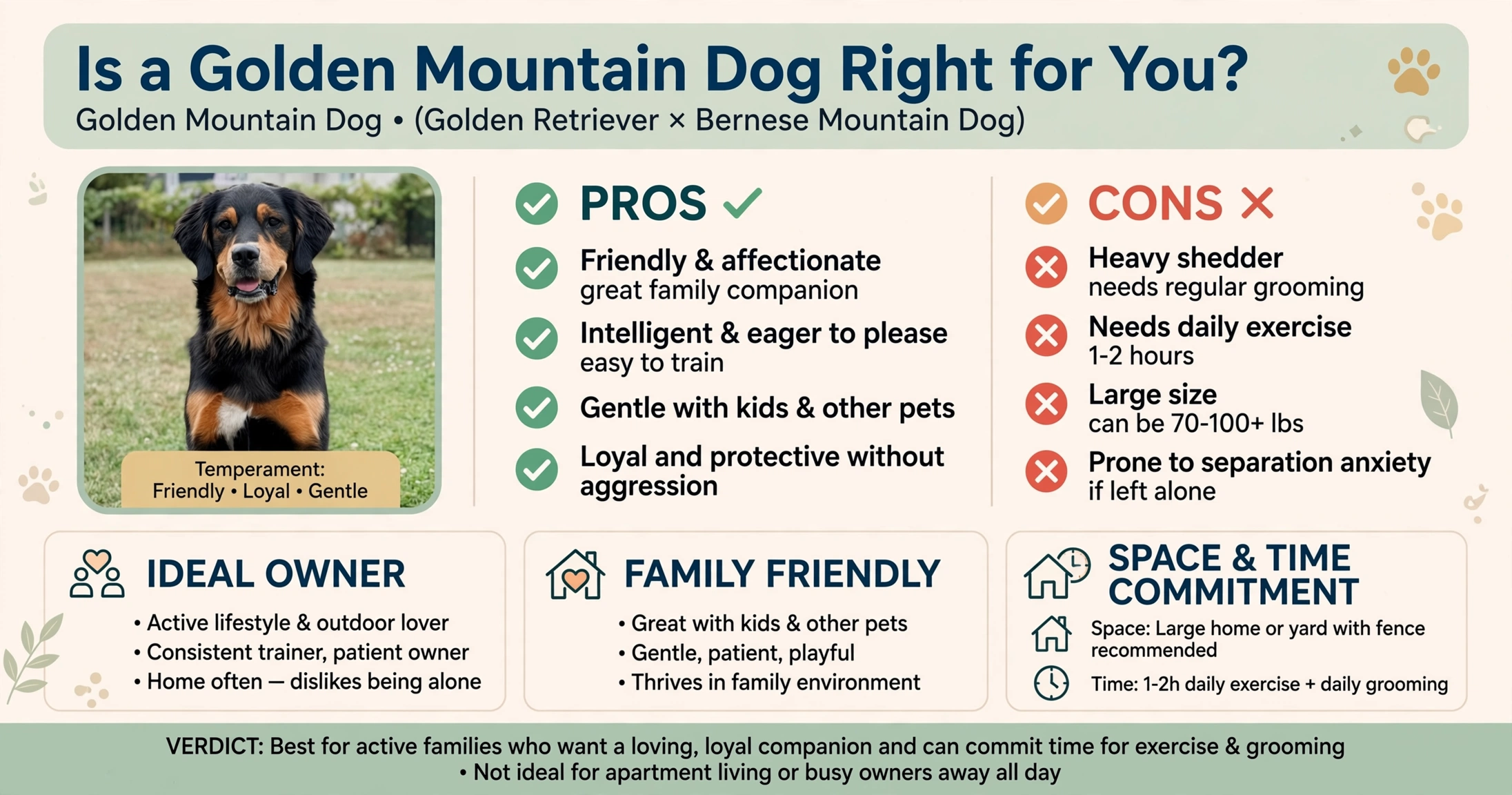
This breed suits people who want a large, affectionate dog and don’t mind a regular grooming routine. It’s a poor fit for anyone who needs a dog that’s comfortable being left alone for long stretches, given how attached this breed tends to become to its family.
Living space requirements matter too. While Golden Mountain Dogs can adapt to different homes, a house with a securely fenced yard is generally a better setup than a small apartment, given their size and moderate exercise needs. They tolerate cold weather well thanks to their thick coat, but need extra care to avoid overheating in hot climates.
Golden Mountain Dog vs. Golden Retriever vs. Bernese Mountain Dog
Seeing the three breeds side by side makes it easier to understand what you’re actually getting with a Golden Mountain Dog.
| Trait | Golden Mountain Dog | Golden Retriever | Bernese Mountain Dog |
| Weight | 70–110 lbs | 55–75 lbs | 70–115 lbs |
| Lifespan | 12–15 years (estimated) | 10–12 years | 7–10 years |
| Energy level | Moderate | High | Low to moderate |
| Shedding | Moderate to heavy | Moderate | Heavy |
| Good with kids | Yes | Yes | Yes |
| Guard dog ability | Low | Low | Low to moderate |
Puppy Cost and Finding a Reputable Breeder
Because Golden Mountain Dogs are still a rare crossbreed, prices vary more than they would for an established breed, and exact figures are hard to pin down without current market data. Buyers should expect to pay a premium compared to a standard Golden Retriever, given the added cost of health testing two different breeds’ worth of parent dogs.
A reputable breeder will provide health clearances for both parent dogs, let you meet the puppy’s parents when possible, and answer questions openly about temperament and health history. Avoid breeders who can’t produce documentation or who seem more focused on selling quickly than matching puppies to the right homes.
Common Misconceptions About Golden Mountain Dogs
A few myths about this breed come up often enough to address directly.
“Hybrid vigor guarantees a healthier dog.” Crossing two breeds can improve genetic diversity and may lower the risk of some inherited conditions, but it doesn’t erase health risk entirely. A Golden Mountain Dog can still inherit health issues common to either parent breed.
“All Golden Mountain Dogs look the same.” Coat pattern, size, and even temperament can vary noticeably between individual dogs, even within the same litter, since this cross isn’t yet standardized the way an established breed is.
“Black-and-brown bicolor dogs exist.” Some people mistake a tricolor dog with very small or hidden white markings for a black-and-brown bicolor. Genetically, that pattern doesn’t occur in this cross; what looks like a two-color dog is usually a tricolor with minimal white.
Frequently Asked Questions
Are Golden Mountain Dogs hypoallergenic?
No. Their coat sheds moderately to heavily, especially during seasonal coat blowing, so they aren’t a good fit for people with dog allergies.
Do Golden Mountain Dogs bark a lot?
Not typically. They’ll usually bark to alert their owners to something unusual, but they aren’t known for excessive or nuisance barking.
Are Golden Mountain Dogs good for first-time dog owners?
Generally yes, thanks to their trainable, people-focused nature. First-time owners should still be prepared for the grooming routine and the size of an adult dog.
Are Golden Mountain Dogs good with cats?
Usually. Neither parent breed has a strong prey drive, and most Golden Mountain Dogs do well with cats, especially with proper introductions and early socialization.
Key Takeaway
A Golden Mountain Dog offers a large, affectionate companion with a temperament shaped by two well-loved breeds and health benefits that come from genetic diversity, though not guarantees. Before bringing one home, focus on finding a breeder who health-tests both parent dogs, and plan for a grooming routine and moderate exercise schedule that fits your daily life. If you’re still comparing options, it’s worth reading up on Golden Retriever grooming needs or Bernese Mountain Dog health issues to understand exactly what traits this cross is drawing from.
For general guidance on canine nutrition, vaccination schedules, and preventive health care, the American Veterinary Medical Association (avma.org) is a reliable resource to check alongside advice from your own veterinarian.

Hi, I’m Jack Austin, founder of Cool Goldens. I share practical, research-backed advice on training, nutrition, and daily care to help you give your Golden Retriever the happiest, healthiest life possible.