


A golden retriever dachshund mix, often called a Golden Dox, is a hybrid bred from a purebred Golden Retriever and a purebred Dachshund, usually resulting in a long, low-bodied dog with a friendly, golden-hued face.
The combination sounds unlikely on paper, and it looks even more unlikely in person. But behind the odd proportions is a dog with real health considerations, a distinct personality split between two very different breeds, and daily care needs that go well beyond what most people expect from a “cute mix.” Understanding those details early makes the difference between a good match and a frustrating one.
What Is a Golden Dox?
A Golden Dox is a designer hybrid, meaning breeders intentionally cross two established breeds rather than let it happen naturally. The size gap between a Golden Retriever and a Dachshund is large, so most litters come from artificial insemination, with the Golden Retriever acting as the mother for safety reasons.
The result is a dog that doesn’t fit neatly into either parent’s mold. Some pups end up closer in size to a small Golden Retriever with a longer back. Others look almost like an oversized Dachshund with a golden coat. Because this is a first-generation cross in most cases, predicting the exact outcome is difficult even for experienced breeders.
What stays fairly consistent is temperament and general care needs, which this guide covers in detail. Knowing the range of possible outcomes matters more than expecting one fixed “look” or one fixed set of traits, since every litter can vary quite a bit from the next.
Where This Hybrid Came From
Golden Retriever Traits and Origins
Golden Retrievers were developed in Scotland during the 1800s, originally bred as hunting companions skilled at retrieving waterfowl. Their friendly, food-motivated, people-pleasing nature made them popular family pets well beyond their original hunting role, and the American Kennel Club recognized the breed in 1932.
That working background still shows up today. Golden Retrievers need regular exercise and mental engagement, and they tend to form strong attachments to their families. Their coat, size, and gentle temperament are the traits most likely to show up strongly in a Golden Dox, especially around the face and general disposition.
Dachshund Characteristics and Origins
Dachshunds come from 15th-century Germany, where hunters bred them specifically to chase badgers into underground burrows. Their name translates to “badger dog,” and their long body and short legs were built for tunneling, not for looking cute, even though that’s mostly what they’re known for now.
That hunting history explains a lot about Dachshund behavior: a strong prey drive, a tendency to bark or alert loudly, and a stubborn streak that can frustrate first-time owners. Dachshunds are also known for a specific spinal structure that makes them prone to back problems, a trait that carries real weight when this breed is mixed with a larger dog like a Golden Retriever.
What a Golden Dox Looks Like
Size Considerations
| Trait | Typical Range |
| Height | 10 to 23 inches at the shoulder |
| Weight | 30 to 60 pounds |
| Mini variant weight | As low as 25 pounds |
| Body length | Longer than a typical Golden Retriever, shorter legs |
The wide range here comes down to genetics. A mix bred from a Miniature Dachshund will produce a smaller, more compact dog, while one bred from a Standard Dachshund tends to run larger. Even within one litter, puppies can grow into noticeably different sizes as adults.
Coat Types and Color Range
Coat outcomes split roughly into two camps: short and smooth, favoring the Dachshund side, or medium-length and slightly wavy, favoring the Golden Retriever side. Color usually lands somewhere in the golden, cream, or light brown range, though darker shades do occur.
Shedding tends to be lighter than a purebred Golden Retriever but heavier than a short-coated Dachshund. No golden retriever dachshund mix is considered hypoallergenic, regardless of which coat type a puppy ends up with, since shedding and dander production still happen at a moderate level either way.
Golden Dox Personality and Temperament
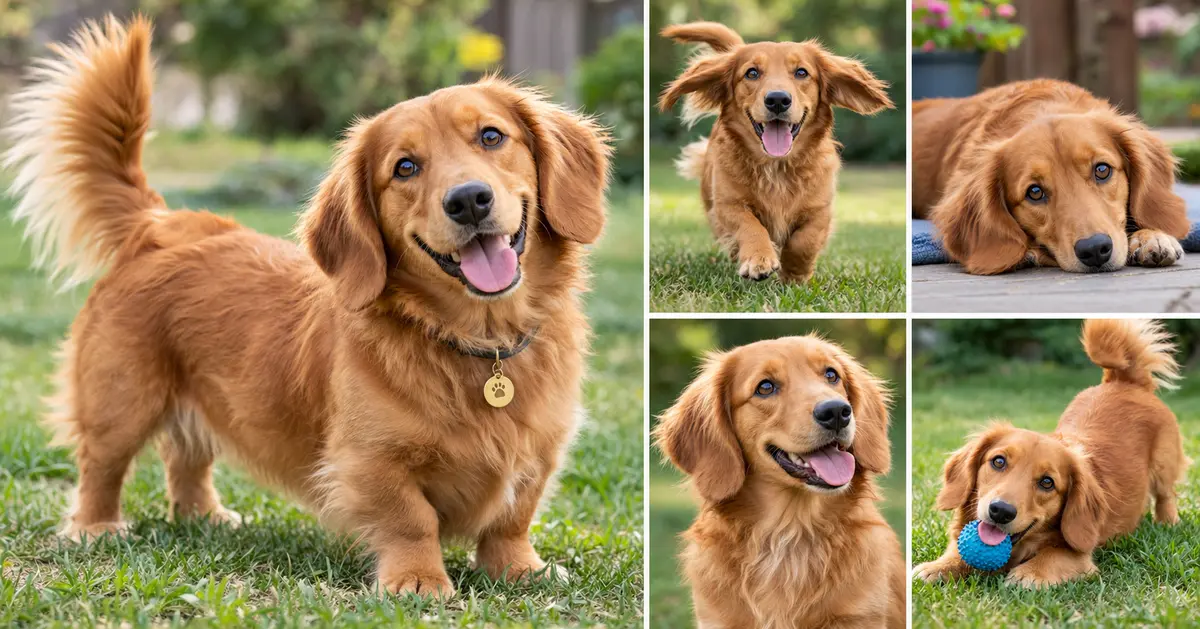
Golden Dox personality traits sit somewhere between two very different dogs, and the balance can lean either direction depending on the individual.
Traits Inherited from the Golden Retriever Side
Dogs leaning toward this side of the family tend to be eager to please, easy to train, and comfortable around strangers and children. They often show a gentle, patient attitude and form close bonds with their families. This side of the personality generally makes daily life easier, since these traits respond well to consistent, reward-based training.
Food motivation is common too, which helps during training but also means portion control matters, especially given the spinal risks discussed later in this guide. A Golden Dox with a strong Golden Retriever influence is usually the easier of the two temperament outcomes to manage.
Traits Inherited from the Dachshund Side
The Dachshund side brings independence, a bit of stubbornness, and a strong prey drive that can make off-leash time risky around small animals. These dogs also tend to be vocal, since Dachshunds were bred to alert hunters by barking. Some individuals develop separation anxiety, a trait tied to how strongly they bond with one or two specific people.
None of these traits make a dog difficult to live with, but they do call for patience and consistency. A Golden Dox with a strong Dachshund influence often needs a firmer, more structured training approach than a typical Golden Retriever would.
Golden Retriever vs. Dachshund vs. the Mix: A Side-by-Side Comparison
| Trait | Golden Retriever | Dachshund | Golden Dox |
| Weight | 55–75 lbs | 16–32 lbs | 30–60 lbs |
| Lifespan | 10–12 years | 12–16 years | 10–14 years |
| Energy level | High | Moderate to high | Moderate to high |
| Trainability | Very high | Moderate (independent) | High, with patience |
| Shedding | Heavy | Light to moderate | Moderate |
| Back health risk | Low | High (IVDD-prone) | Moderate to high |
This comparison makes one thing clear: a Golden Dox doesn’t simply average out the two parent breeds. Traits like back health risk and trainability tend to reflect whichever parent’s genetics dominate more strongly in that individual dog, rather than landing neatly in the middle.
read also Male vs Female Golden Retriever
Common Health Issues to Watch For
Spinal Health and IVDD Risk
Dachshunds carry a genetic predisposition to intervertebral disc disease, a condition where the discs between spinal vertebrae bulge or rupture and press on the spinal cord. Mixing that spinal structure with a heavier body type, like a Golden Retriever’s, can raise the risk further, since more weight puts more strain on the same vulnerable spine.
Watch for these signs of a developing back problem:
- Reluctance to jump onto furniture or into a car
- A hunched or arched back
- Dragging or wobbly back legs
- Yelping or flinching when picked up or touched near the spine
- Reduced appetite paired with reduced movement
Any of these signs warrants a same-day or next-day vet visit rather than a wait-and-see approach, since IVDD can worsen quickly.
Other Inherited Health Concerns
Beyond spinal issues, this mix can inherit hip dysplasia from the Golden Retriever side, along with a tendency toward certain eye conditions. Bloat, a dangerous stomach condition, is a risk for both parent breeds, and food-motivated dogs of either lineage are prone to obesity, which makes every other health risk worse.
Routine vet checkups, weight management, and asking a breeder for both parents’ health clearances go a long way toward catching problems early. None of these conditions are guaranteed to appear, but a responsible owner should know the warning signs for each one.
Typical Life Expectancy
A golden retriever dachshund mix typically lives between 10 and 14 years, landing between the average lifespans of its two parent breeds. Diet, exercise, weight management, and how well spinal health is protected over the dog’s life all affect where in that range an individual dog falls.
Exercise Requirements and Daily Activity

Safe Activities for a Long-Backed Dog
This mix needs at least 30 to 60 minutes of activity a day, split across walks and play rather than one long session. Brisk walks, secure-yard fetch, and swimming all work well, and swimming in particular is easy on the spine while still burning energy. Puzzle toys and nose-work games tap into the Dachshund’s tracking instinct and provide mental exercise on days when physical activity is limited.
Movements and Habits to Avoid
Repeated jumping on and off furniture, beds, or car seats puts real strain on a long back over time, and this adds up even if no single jump causes an obvious injury. A dog ramp or a set of steps by the couch and bed removes this risk almost entirely. Rough play that involves twisting the spine, like tug-of-war held at an angle, is also worth limiting.
Grooming Needs by Coat Type
Caring for a Short, Smooth Coat
A short, Dachshund-leaning coat needs weekly brushing and occasional baths, making it the lower-maintenance option of the two. Nail trims, ear checks, and basic dental care still apply regardless of coat length, since these needs come from the dog’s build rather than its coat type.
Caring for a Medium or Wavy Coat
A medium or wavy, Golden Retriever-leaning coat sheds more and mats more easily, so daily brushing works best to prevent tangles. Regular grooming appointments every six to eight weeks help manage shedding and keep the coat from becoming uncomfortable, especially around the ears and legs where matting tends to start.
Training a Golden Dox: What Actually Works
Working With the Stubborn Side
Short, frequent training sessions work better than one long session, since this mix responds best to consistency rather than volume. Ten to fifteen minutes, two or three times a day, keeps a dog engaged without triggering the boredom that leads to stubborn behavior. Positive reinforcement through treats, praise, and play gets far better results than correction-based methods, which tend to backfire with the Dachshund side’s independent streak.
Harness vs. Collar for a Dog With Back Risk
A harness is generally the safer choice for this mix, since a collar puts pressure directly on the neck and can encourage pulling that translates into strain further down the spine during walks. A well-fitted, back-supportive harness spreads pressure more evenly and gives an owner better control without adding stress to a vulnerable back.
Common Myths About This Hybrid
One common myth is that mixed breeds automatically inherit fewer health problems than purebreds, sometimes called “hybrid vigor.” In reality, a mix can inherit health risks from either parent, or both, and this cross specifically combines two breeds with distinct, well-documented health concerns rather than canceling them out.
Another myth is that all Golden Dox puppies from the same litter will look and act alike. Because this is usually a first-generation cross, littermates can vary widely in size, coat, and temperament, even when they share the same two parents. A third myth worth addressing: this mix is not hypoallergenic, no matter what coat type it ends up with, since shedding and dander are still part of the picture either way.
Is This Mix a Good Fit for Your Home?
Households Where This Dog Tends to Thrive
This mix does well with families that have older children who understand gentle handling, since younger kids may unintentionally play too roughly for a dog with spinal sensitivity. Experienced dog owners who already understand stubborn breeds tend to have an easier time with training. Homes with moderate outdoor space and owners who are around often, rather than gone for long stretches, also tend to be a good match.
Situations That Can Be Difficult for This Dog
Apartment living without nearby outdoor space can be tough, since this mix needs daily physical activity to stay balanced. First-time dog owners sometimes struggle with the stubborn streak if they expect a purely easygoing Golden Retriever temperament. Long work hours or frequent travel can also be difficult, since separation anxiety shows up more often in dogs with a strong Dachshund influence.
aslo read Are Golden Retrievers Good With Kids
Finding a Golden Dox: Breeders vs. Rescue

What to Ask a Breeder Before Buying
Ask to see health clearances for both parents, including hip evaluations for the Golden Retriever and spinal or back health screening for the Dachshund. A responsible breeder should be willing to show you where the puppies are raised and let you meet at least the mother. Be cautious of any breeder who can’t answer basic questions about the health risks specific to this cross, since that’s a sign they haven’t researched the mix carefully.
Where to Look for Rescue and Adoption Options
Mixed-breed dogs, including Golden Dox dogs, show up in shelters more often than people expect. Breed-specific rescue groups for both Golden Retrievers and Dachshunds sometimes take in mixes, and general adoption platforms are worth checking regularly, since availability changes often and a good match can appear with little notice.
What It Really Costs to Own One
One-Time and Setup Costs
Breeder pricing for this mix commonly falls between $1,500 and $4,000, depending on lineage and location, while adoption fees are typically far lower. Initial setup costs, including a crate, bed, leash, harness, food and water bowls, and a first vet visit, usually add several hundred dollars on top of the adoption or purchase price.
Ongoing Yearly Expenses
| Expense | Estimated Yearly Cost |
| Food | $500–$900 |
| Routine vet care | $400–$700 |
| Grooming | $200–$500 |
| Pet insurance | $400–$800 |
Pet insurance is worth serious consideration given the spinal health risks in this mix, though it’s worth checking whether a specific policy treats back problems as a pre-existing or breed-related exclusion before assuming full coverage.
A golden retriever dachshund mix asks for more thought than its cute appearance might suggest. If you can commit to spine-conscious daily habits, consistent training, and a realistic yearly budget, this mix can make a loyal, food-motivated, endlessly entertaining companion. Talk to a vet about spinal health screening early, and choose a breeder or rescue that can speak honestly about the risks involved before you commit.
Frequently Asked Questions
How big does a mini version of this mix get?
A mini Golden Dox, bred from a Miniature Dachshund parent, typically weighs between 20 and 35 pounds and stands shorter at the shoulder than a standard-sized mix. Exact size still depends on which parent’s genetics dominate, so even mini-labeled litters can produce some variation in adult size among littermates.
Are these dogs hypoallergenic?
No golden retriever dachshund mix is hypoallergenic. Both parent breeds shed and produce dander, and mixing them does not remove that trait. People with allergies should spend time around a specific puppy or adult dog before committing, since individual reactions can still vary somewhat.
Do males and females differ in temperament or size?
Males tend to run slightly larger on average, though the difference is usually modest rather than dramatic. Temperament differences between sexes are inconsistent and often depend more on individual personality and training than on sex alone, so this shouldn’t be a primary factor in choosing a puppy.
What should I feed a dog with spinal risk?
A balanced, portion-controlled diet appropriate for the dog’s age and weight matters more than any specific brand or formula. Keeping the dog at a lean, healthy weight reduces strain on the spine, so working with a vet to set appropriate calorie targets is more useful than chasing a particular “joint health” marketing claim on a bag of food.
Can this breed live in an apartment?
It’s possible, but only with a consistent daily exercise routine and easy access to outdoor space nearby. Without that commitment, this mix can become restless or develop behavior problems tied to pent-up energy, since apartment space alone doesn’t meet its activity needs.

Hi, I’m Jack Austin, founder of Cool Goldens. I share practical, research-backed advice on training, nutrition, and daily care to help you give your Golden Retriever the happiest, healthiest life possible.