

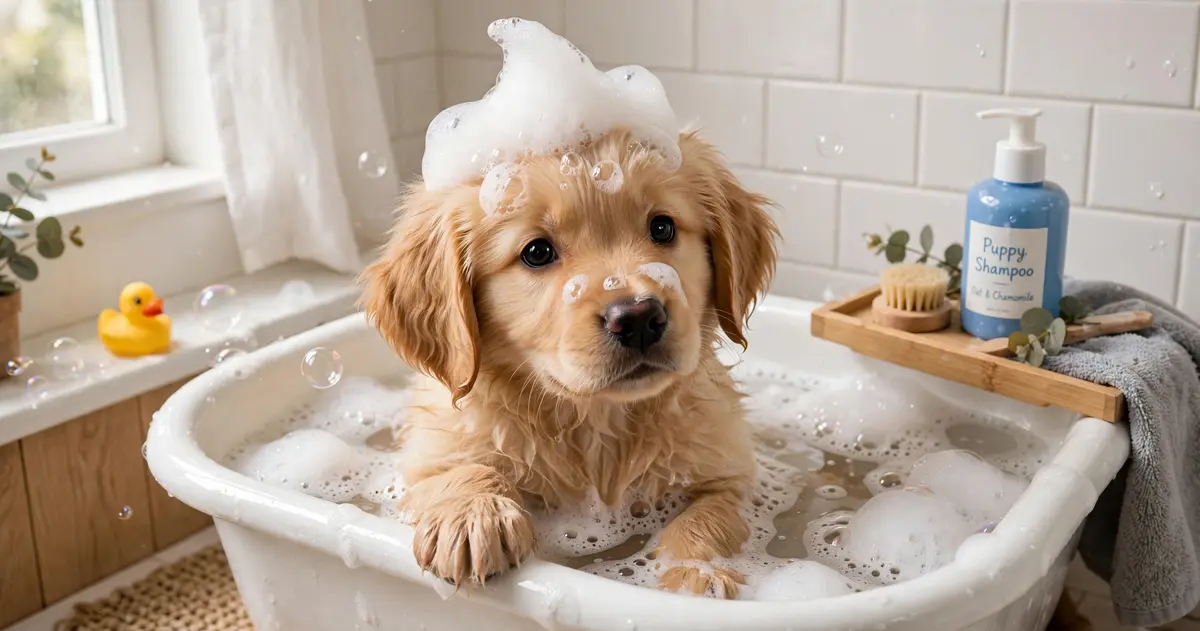
A Golden Retriever puppy is usually ready for its first bath around 8 weeks old, once it’s settled into its new home. Bathing too early can dry out sensitive skin and disrupt a coat that’s still developing.
Getting the timing, products, and technique right matters more than most owners realize. The wrong shampoo or a too-early bath can cause irritation that lingers for weeks.
This guide breaks down exactly when to start, what supplies you need, and how to keep the whole process calm for a puppy that’s likely never seen a bathtub before.
When Can You Give a Golden Retriever Puppy Their First Bath?
Most Golden Retriever puppies can have their first real bath around 8 weeks of age, once they’ve had a few days to adjust to their new environment. Before that age, a damp washcloth works better for spot-cleaning than a full bath.
The 8-week mark isn’t a strict rule. If your puppy gets into something messy or smelly before then, a quick, gentle wipe-down with a warm cloth is safer than skipping hygiene altogether. Full baths with shampoo should wait until your puppy is a bit older and steadier on its feet.
Why Timing Matters for a Puppy’s First Bath
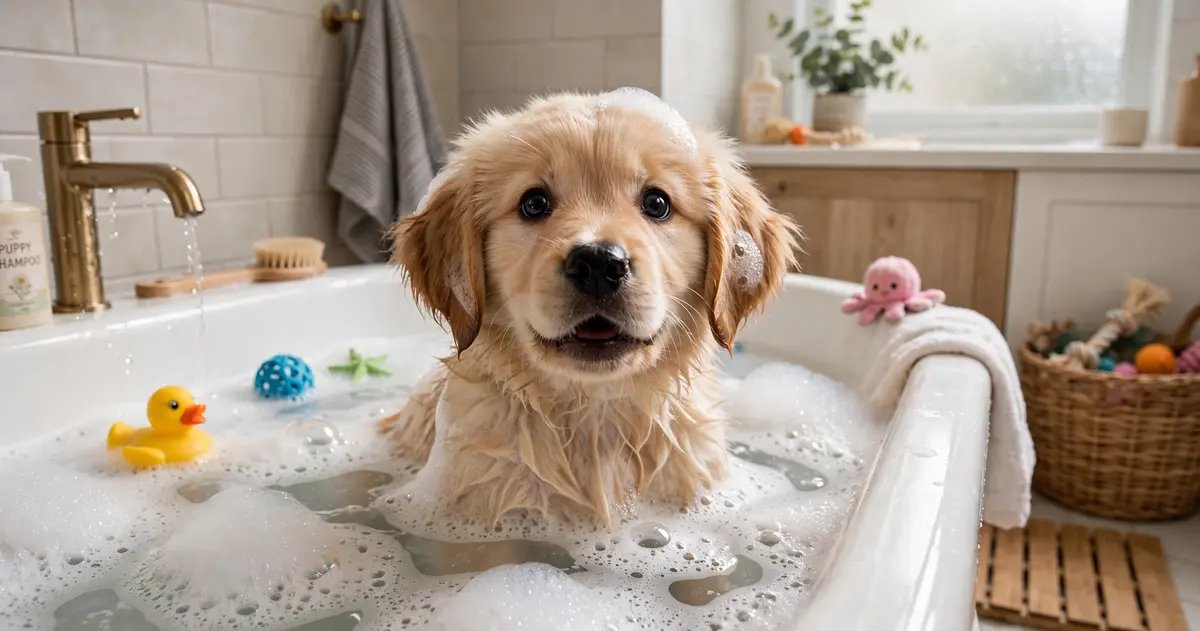
A young puppy’s skin is thinner and more sensitive than an adult dog’s. Its natural oil production is still developing, so frequent or early bathing can strip away oils it needs for healthy skin. This makes the puppy more prone to dryness and irritation.
Golden Retriever puppies also have a soft undercoat that’s still forming. Bathing too often at a young age can disrupt this process before the coat has a chance to develop normally.
Temperature Regulation Risks in Very Young Puppies
Puppies under 8 weeks old aren’t great at regulating their own body temperature. A bath, even in warm water, pulls heat away from a small body faster than most owners expect. Getting chilled after a bath is a real risk for very young puppies.
Waiting until your puppy is a little older and has more body mass helps it handle the temperature swing of getting wet, then dried, without added stress.
What You Need Before You Start (Supplies Checklist)
Having everything ready before you start keeps the bath calm and quick, which matters a lot for a puppy that’s already unsure about the process.
- Puppy-safe shampoo (avoid adult dog or human shampoo)
- Two to three soft towels
- A non-slip mat for the tub or sink
- A cup or handheld sprayer for controlled rinsing
- Cotton balls to gently block water from the ear canal
- Small treats for positive reinforcement
- A soft brush for after the bath
Skipping this step often means fumbling for a towel mid-bath while a wet, wriggling puppy tries to escape. It’s worth the extra two minutes of setup.
Puppy Shampoo vs. Human Shampoo vs. Adult Dog Shampoo
Not all shampoo is interchangeable, and this is one area where a shortcut can genuinely hurt your puppy’s skin.
| Shampoo Type | pH Level | Safe for Puppies? | Why It Matters |
| Puppy-specific shampoo | Formulated near a dog’s natural skin pH | Yes | Gentlest option for sensitive, developing skin |
| Adult dog shampoo | Similar range but often stronger formulas | Use with caution | Some contain ingredients for adult coat issues (like flea treatment) that are too harsh for puppies |
| Human shampoo | More acidic, formulated for human skin | No | Disrupts a dog’s skin barrier and can cause dryness or irritation |
A dog’s skin pH sits closer to neutral than human skin, which is naturally more acidic. That difference is exactly why human shampoo, even a mild baby version, isn’t a safe substitute. If you’re ever unsure which product is appropriate, a quick check with your vet or a read of the label’s age recommendations solves it fast.
How to Bathe a Golden Retriever Puppy Step by Step
Once your puppy is old enough and you’ve got supplies ready, the actual bath comes down to a handful of steps done calmly and in order.
- Brush your puppy first to remove loose fur and prevent matting once wet.
- Place the non-slip mat in the tub or sink before adding water.
- Fill the tub with a few inches of lukewarm water, or use a handheld sprayer instead of submerging the puppy.
- Wet the coat gradually, starting at the shoulders and working back, avoiding the head at first.
- Apply puppy shampoo and massage gently into the coat, avoiding the eyes, ears, and nose.
- Rinse thoroughly until the water runs clear.
- Wrap your puppy in a towel right away to reduce chill.
Getting the Water Temperature Right
Lukewarm water, close to body temperature, is the safest choice. Water that feels comfortably warm to your hand is usually about right. Hot water can scald sensitive puppy skin, and cold water adds unnecessary stress on top of an already new experience.
Washing Without Getting Water in Ears or Eyes
Placing a cotton ball loosely in each ear before you start helps block water from entering the ear canal, which can lead to irritation or infection if left damp. For the face, use a damp cloth instead of pouring water directly, and keep shampoo well away from the eyes.
Rinsing Thoroughly
Leftover shampoo residue is one of the most common causes of itchy, irritated skin after a bath. Rinse longer than feels necessary, running your hands through the coat to check for any slippery or soapy patches before you stop.
Drying and Grooming After the Bath
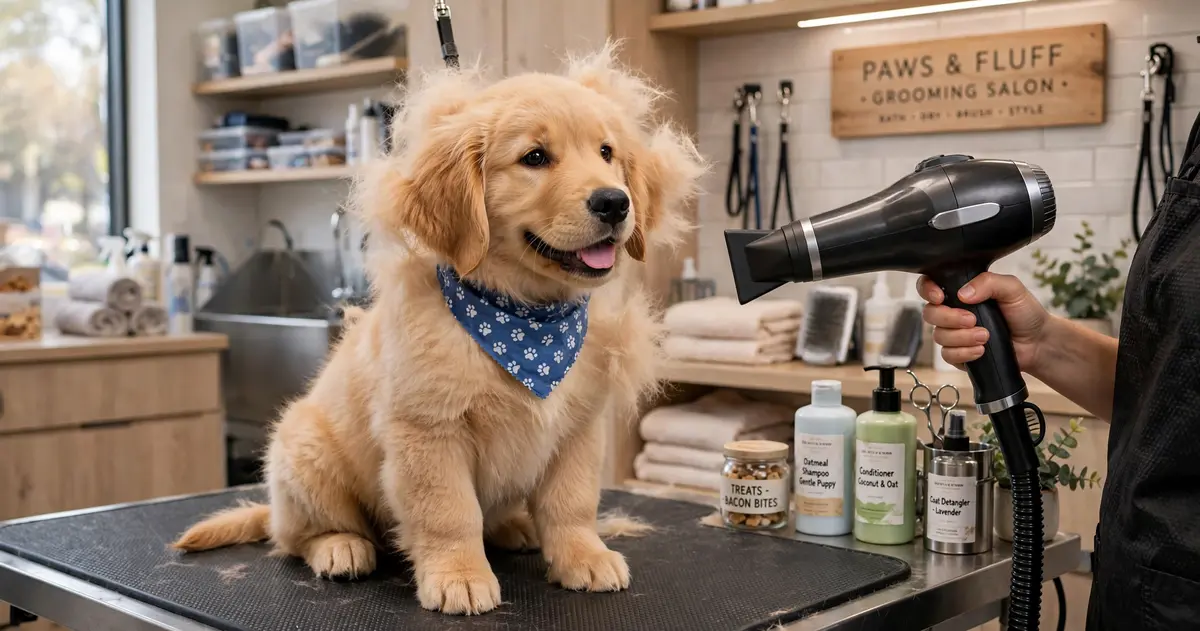
A Golden Retriever’s double coat holds water longer than a short-haired breed, so drying takes real effort, not just a quick towel pass.
Start by pressing towels against the coat to absorb water rather than rubbing, which can cause tangling. Two or three towels are often needed before the coat feels mostly dry.
Aslo read Golden Retrievers Need to Be Groomed
Towel Drying vs. Hair Dryer Safety
A hair dryer on a low, cool setting can speed up drying, but it should stay several inches from the skin and keep moving constantly to avoid overheating one spot. Many puppies find the noise unsettling at first, so a short test run at a distance helps them adjust before you dry the full coat.
If your puppy seems distressed by the dryer, towel drying alone works fine, though it takes longer and the puppy should stay somewhere warm and draft-free until fully dry.
Helping a Nervous or Scared Puppy Through Bath Time
Some whining, shaking, or trying to climb out of the tub is a normal reaction to a new experience, not a sign that something is wrong. Puppies often settle into bath time after a few repeated, calm sessions.
Keeping the first few baths short helps build tolerance gradually. Speaking in a calm, steady voice and offering treats during and after the bath links the experience with something positive instead of something scary.
Watch for the difference between normal fussiness and genuine distress. Frantic escape attempts, prolonged panting, or a puppy that goes completely still and unresponsive are signs to stop and try again another day, possibly with a shorter session next time.
Common Mistakes to Avoid During a Puppy’s First Bath
| Mistake | Why It’s a Problem | What to Do Instead |
| Bathing before 8 weeks | Puppy’s skin and temperature regulation aren’t ready | Use a damp cloth for spot cleaning instead |
| Using human or adult dog shampoo | Wrong pH can irritate sensitive skin | Use a shampoo made specifically for puppies |
| Skipping the rinse step | Leftover soap causes itching and dryness | Rinse until water runs completely clear |
| Letting the puppy air-dry outside | Increases risk of chill, especially in cooler weather | Towel dry indoors, then use a low-heat dryer if tolerated |
| Bathing too frequently | Strips natural oils and dries out skin | Stick to a schedule based on activity level and coat condition |
How Often Should You Bathe a Golden Retriever Puppy After the First Time?
Once your puppy has had a successful first bath, every four to six weeks is a reasonable starting point for most Golden Retrievers, adjusted based on how active or messy your puppy tends to be. Puppies that spend a lot of time outdoors or love water may need baths a bit more often.
Bathing too frequently, even with the right shampoo, can still dry out the skin over time. If your puppy’s coat starts looking dull or the skin seems flaky, stretching out the time between baths usually helps more than switching products.
Frequently Asked Questions
Can I use baby shampoo on my Golden Retriever puppy?
Baby shampoo is gentler than regular human shampoo, but it’s still formulated for human skin pH, not a dog’s. A shampoo made specifically for puppies remains the safer choice.
Is it normal for my puppy to shake or cry during a bath?
Mild shaking, whining, or trying to escape is common for a first bath. It usually settles with repeated, short, calm sessions. Ongoing extreme distress is worth mentioning to your vet.
What if my puppy hates water completely?
Start with very shallow water or a damp cloth instead of a full bath, and build up gradually over several sessions. Rushing the process tends to make the fear worse, not better.
Can I bathe my puppy after vaccinations?
There’s no universal rule against bathing after vaccinations, but it’s worth asking your vet directly, since they know your puppy’s specific vaccination schedule and any recent reactions.
Do Golden Retriever puppies need special shampoo for their coat type?
A basic puppy shampoo works fine for most young Goldens. Coat-specific formulas become more relevant later, once the adult double coat is fully developed.
Conclusion
Giving a Golden Retriever puppy its first bath comes down to good timing, the right supplies, and a calm, gradual approach. Waiting until around 8 weeks, using puppy-safe shampoo, and keeping sessions short and positive sets the stage for bath time to become a routine part of life rather than a stressful event. If you’re ever unsure about timing or your puppy’s reaction, a quick check with your vet is always a safe next step.

Hi, I’m Jack Austin, founder of Cool Goldens. I share practical, research-backed advice on training, nutrition, and daily care to help you give your Golden Retriever the happiest, healthiest life possible.