


Golden Retrievers stop growing in height around 12 to 18 months old, but weight and muscle often keep developing until they’re closer to 2. Height and weight don’t finish on the same timeline, and neither do males and females.
This guide breaks down exactly what happens at each stage, why growth doesn’t stop all at once, and what actually affects how big your dog ends up. No vague ranges or guesswork, just a clear picture of what to expect from puppyhood through full maturity.
When Do Golden Retrievers Stop Growing? (Quick Answer)
Most Golden Retrievers reach their full height between 12 and 18 months old. Weight and muscle mass, though, often keep filling in until 18 to 24 months.
Height depends mostly on bone growth, which finishes earlier. Weight depends on muscle and body condition, which takes longer to catch up. This is why a 14-month-old Golden can already look “full grown” in height but still feel lean or narrow through the chest.
Genetics play a role too. A dog from a larger bloodline may take a little longer to fill out than one from a smaller line, even at the same age.
Golden Retriever Growth Stages, Month by Month
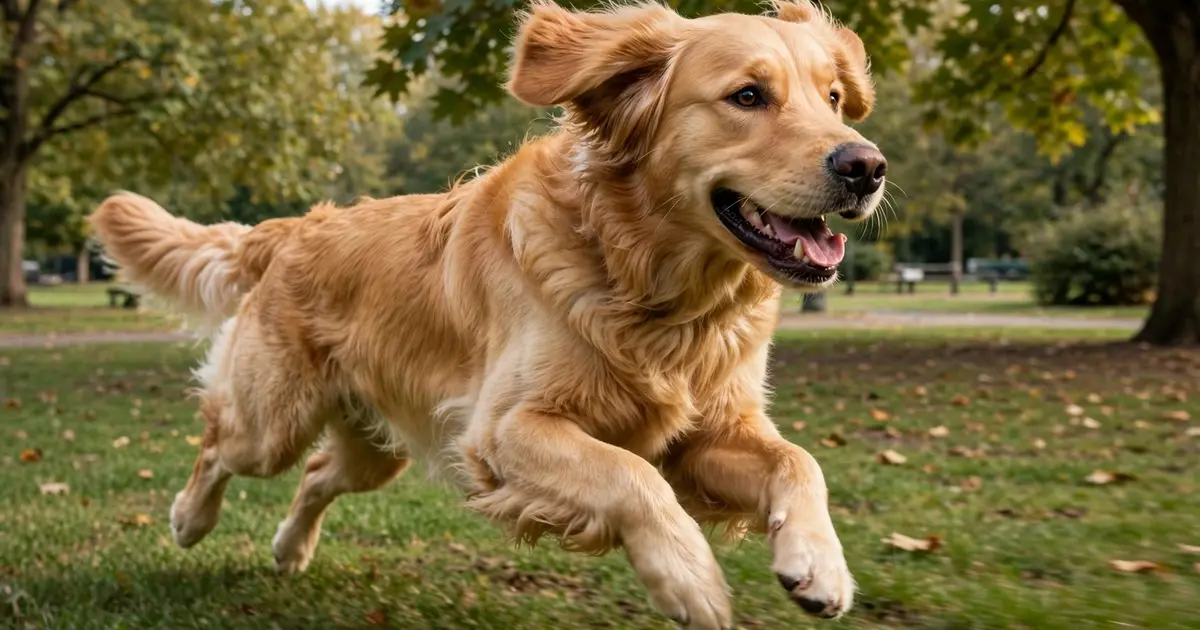
Growth isn’t steady. It moves fast early on, slows in the middle, and tapers off gradually. Breaking it into three windows makes the pattern easier to follow.
Birth to 6 Months — Rapid Early Growth
This is the fastest growth window in a Golden Retriever’s life. A puppy can go from under a pound at birth to 30 pounds or more by 6 months old.
Bones, joints, and organs are all developing quickly during this stage. This is also when overfeeding does the most damage, since rapid growth already puts stress on developing joints. Puppy food formulated for large breeds helps keep that growth rate controlled rather than accelerated.
6 to 12 Months — Slowing Down
Growth noticeably slows after 6 months. Your dog will still gain size, but not at the dramatic pace of the first few months.
Many owners notice their Golden looks lanky or awkward during this stretch, almost like a teenager who hasn’t grown into their limbs yet. That’s normal. Legs, ears, and paws often develop ahead of the rest of the body, and everything evens out over time.
12 to 24 Months — Filling Out
By 12 months, most Goldens have reached close to their full height. What continues after that is mostly muscle development and body filling out, especially through the chest and shoulders.
This stage is where the difference between “tall enough” and “fully mature” becomes clear. A 1-year-old Golden and a 2-year-old Golden can be the same height but look noticeably different in build.
Do Male and Female Golden Retrievers Stop Growing at Different Ages?
Yes. Female Golden Retrievers typically finish growing earlier than males, both in height and weight.
Here’s a general comparison of adult size and typical maturity timing:
| Females | Males | |
| Average adult height | 21.5–22.5 inches | 23–24 inches |
| Average adult weight | 55–65 pounds | 65–75 pounds |
| Typical age fully grown | 12–14 months | 18–24 months |
This gap comes down largely to hormonal timing. Growth plates, the soft areas at the ends of bones where new bone tissue forms, close earlier in females than in males. Once a growth plate closes, that bone stops lengthening.
Individual dogs vary, so these numbers are general guidelines rather than fixed rules. A male Golden that finishes growing at 16 months isn’t unusual, and neither is a female still filling out slightly at 15 months.
Height, Length, and Body Structure — Do They Stop Growing at the Same Time as Weight?
No, and this is one of the most misunderstood parts of Golden Retriever growth. Height and body length depend on skeletal growth, which wraps up first. Weight depends on muscle, fat, and overall body condition, which takes longer to develop.
A Golden Retriever’s skeleton, including the length of the legs and the overall frame, is usually close to its adult size by 12 to 15 months. The head also reaches close to full size around this time, since skull growth follows the same skeletal timeline as the rest of the frame.
Weight is a different story. Even after the skeleton stops growing, a Golden can keep adding muscle mass and filling out through the chest and hindquarters until 18 to 24 months. This is why two dogs of the same height can weigh noticeably different amounts depending on how developed their muscle and body condition are.
Think of it like a house frame going up quickly, then the interior work continuing for months afterward. The structure is set early. What fills that structure takes longer.
What Affects How Fast a Golden Retriever Grows?

Genetics set the baseline, but several other factors influence the exact pace and final size.
Genetic Factors and Bloodline
Size and growth rate are inherited traits. Puppies from larger parents tend to grow into larger adults, and the same applies to smaller parents. Looking at the size of both parents, when available, gives a reasonable idea of what to expect.
Genetics also affect growth speed, not just final size. Some bloodlines mature a few months faster or slower than others, even within the same general size range.
English Golden Retrievers vs. Field Golden Retrievers
English (or European-type) Golden Retrievers are generally stockier and slightly shorter than American field-bred lines, which tend to be leaner and taller. This difference shows up in the growth timeline as well.
Field-bred Goldens, built for stamina and movement, often reach their height a bit earlier but can take just as long, if not longer, to fill out in muscle. English-type Goldens tend to build muscle and bulk a little earlier, since their frame is naturally more compact. Neither pattern is better, just different in how the growth process plays out.
Does Spaying or Neutering Affect Growth and Maturity Age?
Yes, timing matters here. Spaying or neutering before a dog reaches skeletal maturity can delay the closing of growth plates, sometimes resulting in a slightly taller adult dog with longer bones than would have developed otherwise.
This happens because sex hormones play a role in signaling growth plates to close. Removing that hormonal influence early, before growth plates have finished closing, can extend the growth window in certain bones.
This isn’t automatically a health problem, but it’s part of why many veterinarians now recommend waiting until closer to 12 to 24 months, depending on the individual dog, before spaying or neutering large-breed puppies like Golden Retrievers. The right timing depends on your dog’s individual development and health history, so this is worth discussing directly with your veterinarian rather than following a fixed age for every dog.
Supporting Healthy Growth Through Proper Nutrition and Diet

Nutrition has a direct effect on how a Golden Retriever grows, particularly during the rapid growth phase in the first 6 months. Overfeeding during this window can cause growth to happen too fast, putting extra strain on developing joints and bones.
Large-breed puppy food is formulated specifically for this reason. It typically contains a more controlled calcium and phosphorus ratio than regular puppy food, which supports steady bone development instead of rapid growth spurts.
A few practical points worth keeping in mind:
- Feed a large-breed-specific puppy formula through at least the first 12 months.
- Avoid free-feeding or excessive treats, since extra weight during growth stresses joints more than extra weight later in life.
- Base portions on your puppy’s current weight and the feeding guide on the food packaging, adjusting as needed with input from your vet.
- Transition to adult food only once your vet confirms your dog has reached the appropriate stage for it, rather than switching at a fixed age.
Nutrition needs shift again once growth slows, so what worked at 4 months won’t necessarily be right at 14 months. Checking in with your vet at regular intervals helps keep feeding on track through each stage.
Common Misconceptions About Golden Retriever Growth
A few ideas about puppy growth get repeated often enough that they start to sound like fact, even when they aren’t accurate.
“Bigger paws always mean a bigger adult dog.” Paw size can offer a rough hint, but it isn’t reliable on its own. Plenty of Golden Retrievers with large paws as puppies turn out to be average-sized adults.
“Growth stops exactly at 12 months.” Height growth is mostly finished by then for many dogs, but weight and muscle fill-out commonly continue for several more months, sometimes up to 2 years.
“A growth spurt after 1 year means something is wrong.” Not necessarily. Some dogs, particularly males, still show noticeable filling out between 12 and 20 months. A gradual change in build isn’t the same as abnormal growth.
“All Golden Retrievers reach the same adult size.” Genetics, sex, and bloodline type all lead to real variation in adult size. A breed standard range exists, but individual dogs land at different points within it.
How to Tell If Your Golden Retriever Has Finished Growing
There’s no single test that confirms growth is complete, but a few signs together give a good indication.
- Weight has stayed consistent across two or three consecutive vet visits, typically spaced a few months apart.
- The body proportions look balanced rather than lanky, with the legs, chest, and head no longer looking out of sync with each other.
- Your dog’s coat has filled in with the fuller adult texture and feathering typical of a mature Golden Retriever.
- Your veterinarian confirms, based on age and physical exam, that growth plates are likely closed.
If you want a more definitive answer, especially before a spay or neuter procedure, your vet can take an X-ray to check whether the growth plates have fully closed. This is the only way to confirm skeletal maturity with certainty.
FAQs
Is it normal for my Golden Retriever to still be growing at 2 years old?
Slight filling out in muscle and body condition can continue until around 2 years in some dogs, especially males. Noticeable height or bone growth at this age is less common and worth mentioning to your vet.
Can a Golden Retriever’s growth be stunted?
Yes, poor nutrition, illness, or parasites during the early growth stages can affect how well a puppy grows. A vet can help identify and address the underlying cause if growth seems slower than expected.
Do Golden Retriever heads stop growing at the same time as their bodies?
Roughly, yes. Skull growth follows the same general skeletal timeline as the rest of the frame, so it’s usually close to full size by 12 to 15 months.
Should I worry if my puppy seems small compared to littermates?
Not usually. Individual growth rates vary even within the same litter. Consistent weight gain and a healthy energy level matter more than comparisons to siblings.
Conclusion
Golden Retrievers typically stop growing in height by 12 to 18 months, while weight and muscle can keep developing until closer to 2 years old. Females usually finish earlier than males, and factors like genetics, bloodline type, and spay or neuter timing all play a part in the exact pace.
The most useful thing you can do during this stage is track your puppy’s growth with regular vet visits, feed a large-breed-appropriate diet, and avoid pushing growth faster through overfeeding. If your dog’s growth pattern ever seems off compared to what’s typical for their age and sex, a conversation with your veterinarian is the most reliable next step.
For more on this stage of ownership, related guides on puppy feeding schedules, exercise guidelines for growing joints, and recognizing early signs of joint issues in large breeds can help round out your care routine.

Hi, I’m Jack Austin, founder of Cool Goldens. I share practical, research-backed advice on training, nutrition, and daily care to help you give your Golden Retriever the happiest, healthiest life possible.