

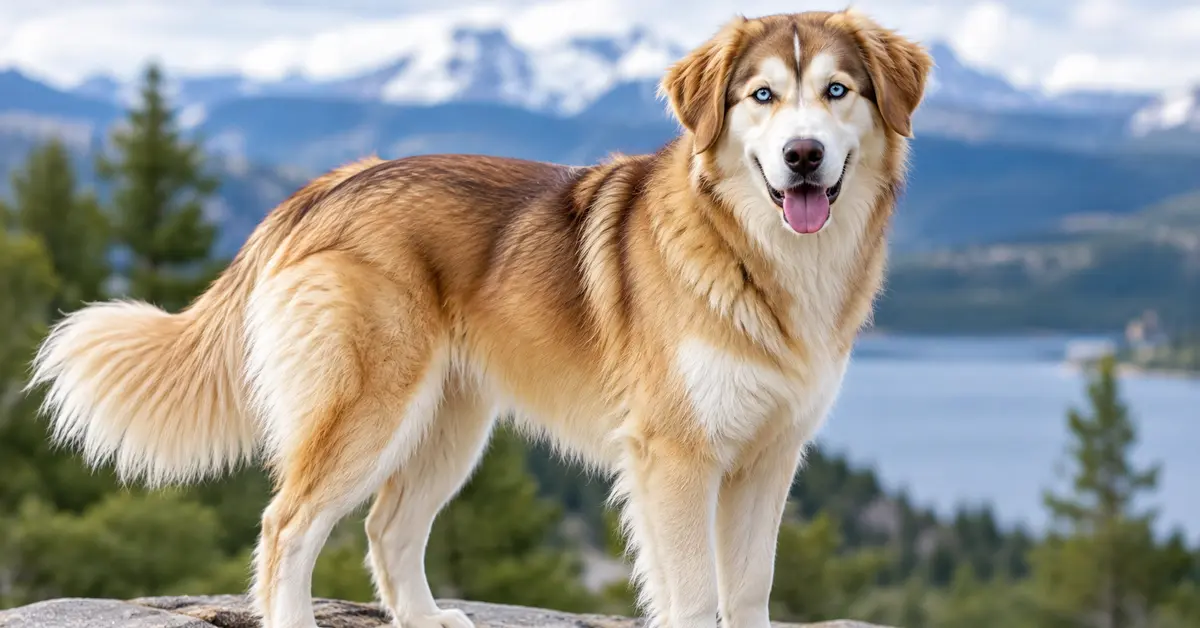
A golden retriever and husky mix brings together two very different working breeds in one dog, and the result is exactly as interesting as it sounds. One parent wants to please you; the other wants to run the show.
Somewhere in between, you get a loyal, high-energy companion with a coat built for cold weather and a personality that keeps owners on their toes. Before you fall for those blue eyes or that goofy grin, it helps to know what daily life with this mix actually looks like — starting with the basics.
What Is a Golden Retriever and Husky Mix?
This mixed breed, often nicknamed a Goberian, is not officially recognized by major kennel clubs, but that hasn’t slowed its popularity. Breeders started crossing goldens and huskies specifically to combine the golden’s gentle, people-focused nature with the husky’s athleticism and striking looks.
Here’s a quick snapshot of what to expect:
| Trait | What to Expect |
| Adult Size | 45–90 lbs, 20–24 inches tall |
| Lifespan | Roughly 10–13 years |
| Shedding | Heavy, year-round with seasonal blowouts |
| Energy Level | High |
| Trainability | Moderate — can be independent at times |
| Good With Kids | Generally yes, with supervision |
| Hypoallergenic | No |
No two litters look or act exactly alike. Because this is a first-generation cross between two distinct breeds, puppies from the same litter can vary quite a bit in size, coat, and temperament.
Where This Mixed Breed Comes From
Golden retrievers were originally bred in Scotland during the 1800s to retrieve waterfowl for hunters. Siberian huskies come from a completely different background — they were developed by the Chukchi people in Siberia to pull sleds across long, frozen distances. Pairing these two breeds means combining a dog built for calm, cooperative work with one built for endurance and independence.
This contrast is part of what makes the mix interesting, but it also explains why puppies from the same litter can turn out differently. Genetics don’t split evenly down the middle, so one puppy might lean more toward golden retriever traits while a littermate favors husky characteristics more strongly.
Golden Retriever Traits Passed Down
Golden retrievers are known for being eager to please, patient with children, and quick to bond with their families. Puppies that lean toward this side of the mix are usually easier to train and more food-motivated, since goldens were bred to work closely with handlers.
They also tend to be less vocal and less prone to wandering off. A golden-leaning Goberian often settles into a household routine faster and shows less of the escape-artist behavior huskies are known for. This side of the mix also tends to bring a softer, more affectionate temperament that adapts well to family life.
Husky Characteristics Passed Down
Huskies bring high energy, strong prey drive, and a stubborn streak that shows up even in mixed-breed puppies. A husky-leaning Goberian may be more vocal, using howls and unusual sounds to communicate rather than typical barking.
They also tend to be escape artists. Huskies are famous for digging under or jumping over fences, and that instinct can carry into the mix. Owners should plan for secure fencing and supervised outdoor time, especially with younger dogs still testing boundaries.
Appearance and Coat Variations
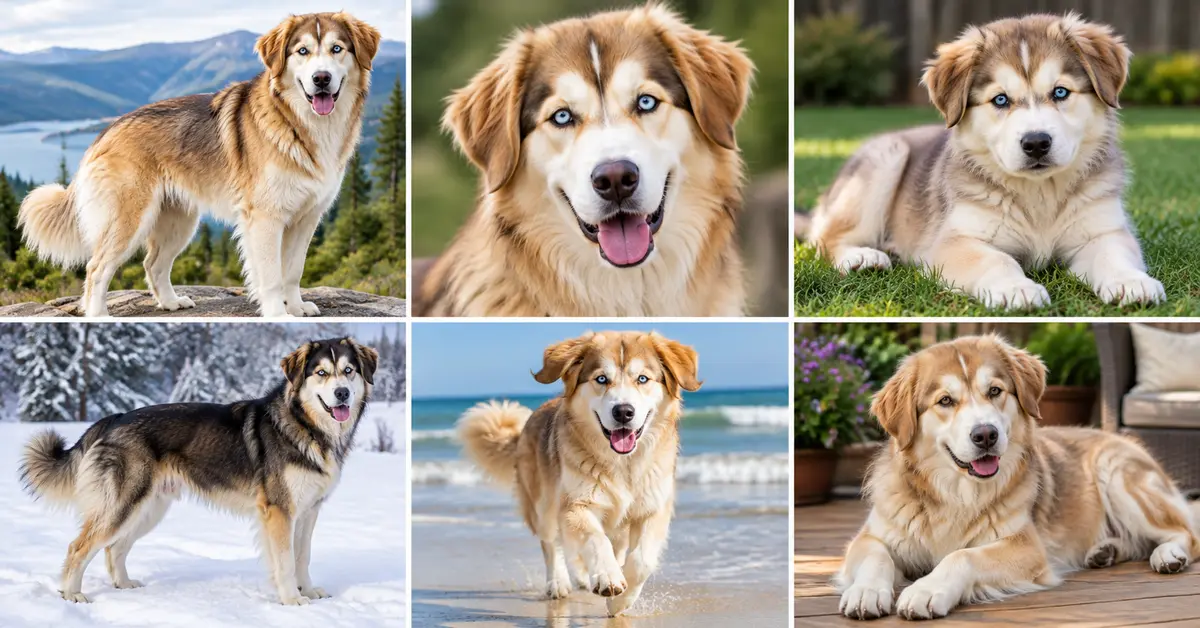
This mix produces some of the most visually varied puppies among designer breeds, since the two parent breeds look so different from each other. Coat length, color, and even eye shape can shift significantly from one puppy to the next, even within a single litter.
Body type also varies. Some puppies grow up with the husky’s lean, athletic frame, while others take on the stockier, more solid build of a golden retriever. Ears may stand up like a husky’s or fold down like a golden’s, and tails can curl over the back or hang in a relaxed sweep.
Common Coat Colors (Including Black and White Variations)
Coat colors range widely across this mix. Cream and gold shades from the golden retriever side often blend with the black, gray, red, or white patterns typical of huskies.
A golden retriever and husky mix in black usually gets that coloring from a husky parent with darker pigmentation, sometimes paired with white markings on the chest, face, or paws. A mostly white version tends to come from breeding with a golden retriever and white husky mix, producing a lighter, sometimes near-solid pale coat. Both double coats shed heavily and need regular brushing regardless of color.
Eye Color Possibilities
Husky genetics can produce strikingly blue eyes, and that trait sometimes carries over into this mix. Other puppies end up with the warm brown eyes typical of golden retrievers, and some develop heterochromia, where each eye is a different color, or parti-color eyes with two shades in a single iris.
There’s no reliable way to predict eye color before a puppy is born. Even breeders with years of experience can’t guarantee which combination a litter will produce, since eye pigmentation genes don’t follow a simple pattern.
Golden Retriever and Siberian Husky Mix vs. Golden Retriever and Alaskan Husky Mix
Most of what’s discussed online refers to a golden retriever and Siberian husky mix, since Siberian huskies are a recognized, standardized breed. Alaskan huskies, by contrast, aren’t a single breed at all — they’re a loosely defined working-dog type bred purely for sled-pulling performance, with a mixed genetic background that varies by kennel.
This means a golden retriever and Alaskan husky mix is far less predictable in appearance and temperament, since the Alaskan husky parent itself isn’t a fixed genetic template. Anyone considering this pairing should ask the breeder directly about the specific dogs involved, since general breed information won’t apply as cleanly.
also read Labrador Retriever vs. Golden Retriever
Size and Growth Expectations
Puppies from this mix usually weigh 8 to 12 pounds at eight weeks old and grow steadily through their first year, reaching close to full height by 12 months. Full weight and muscle mass typically fill out by 18 to 24 months, similar to the growth timeline of both parent breeds.
Adult size depends heavily on which parent the puppy takes after more strongly. A golden-leaning adult tends to land on the heavier, stockier end around 65 to 90 pounds, while a husky-leaning adult often stays leaner, closer to 45 to 60 pounds. Males typically run slightly larger than females across the board.
Because growth can vary so much litter to litter, it helps to look at the size of both parents when trying to estimate how big a specific puppy will get. A veterinarian can also track growth curves during puppy checkups to flag anything unusual early.
Temperament and Personality
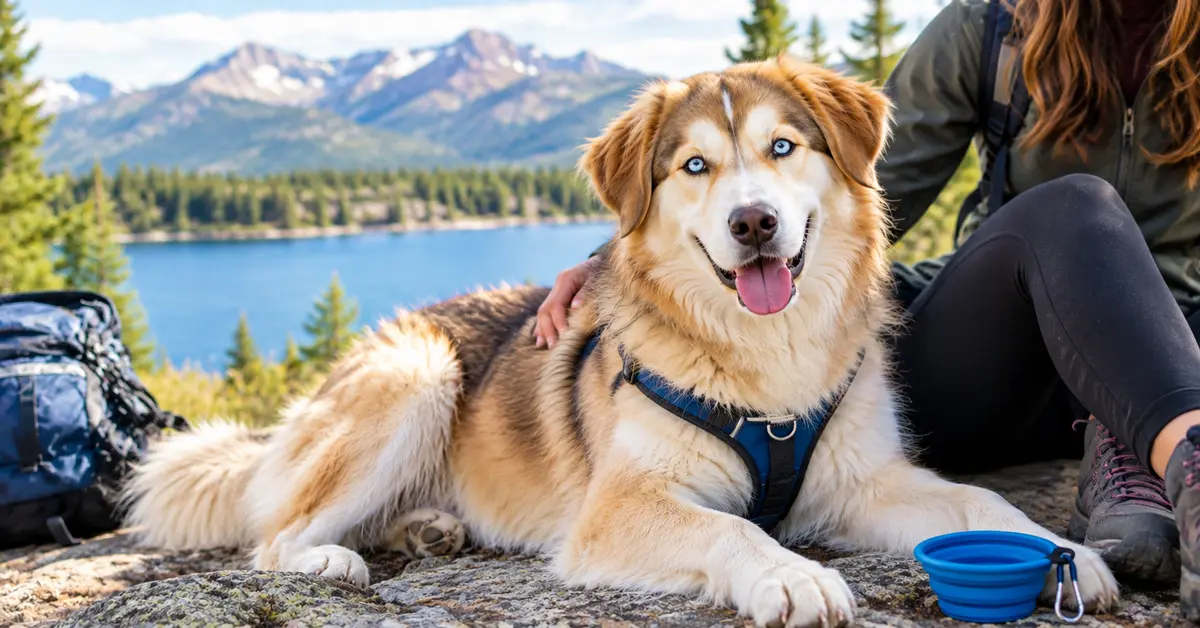
This mix tends to be alert, playful, and deeply attached to its family, though the balance between golden warmth and husky independence shows up differently in every dog. Most are social animals that don’t do well left alone for long stretches, since both parent breeds were bred to work alongside people.
Curiosity runs high in this mix, along with a strong drive to investigate anything new in the yard or on a walk. Owners often describe them as expressive, using body language, vocalizations, and plenty of eye contact to communicate what they want.
How Golden Retriever Traits and Husky Traits Balance Out
The clearest tension in this mix shows up in obedience. Golden retriever traits push toward cooperation and a desire to make their owner happy, while husky characteristics lean toward independent decision-making and a lower tolerance for repetitive commands.
In practice, this often means a dog that’s affectionate and easygoing at home but tests boundaries outdoors, especially around distractions like squirrels or other dogs. Recognizing which traits dominate in an individual dog helps set realistic expectations for training and daily management.
Family Friendly Behavior and Good With Children
Most dogs from this mix do well in households with children, thanks largely to the golden retriever’s patient, tolerant nature. They tend to enjoy active play and can keep up with energetic kids better than many other family dog breeds.
That said, their size and enthusiasm mean young children should be supervised during play, since an excited 70-pound dog can accidentally knock over a toddler. Early socialization with kids of different ages helps this mix learn appropriate play boundaries.
also read Are Golden Retrievers Good With Kids
Daily Exercise and Mental Stimulation Needs
Both parent breeds were built for physical work, so this mix needs significantly more exercise than an average family dog. Most adults do well with 60 to 90 minutes of activity daily, split between walks, off-leash play, and structured exercise like jogging or hiking.
Without enough outlets, this mix tends to develop problem behaviors — chewing, digging, or excessive barking are common signs of pent-up energy. A tired Goberian is generally a well-behaved one, which makes consistent daily exercise less optional and more of a baseline requirement.
Exercise Requirements by Age
Puppies under six months shouldn’t be pushed into long runs or hikes, since their joints and growth plates are still developing. Short, frequent play sessions work better at this stage, along with basic leash walks that build stamina gradually.
By 12 to 18 months, most dogs can handle longer runs, hikes, and more demanding activities like swimming or agility work. Senior dogs, typically from age 8 onward, usually need lower-impact exercise like leisurely walks to protect aging joints while still staying active.
Keeping an Active Mixed Breed Mentally Engaged
Physical exercise alone isn’t enough for this mix. Puzzle feeders, scent games, and short training sessions throughout the day help satisfy the mental stimulation both parent breeds need to stay balanced.
Huskies in particular were bred to problem-solve during long working shifts, so boredom can show up as destructive behavior faster than in many other breeds. Rotating toys, introducing new tricks, and varying walking routes all help keep the mind as engaged as the body.
Obedience Training and Socialization Skills
Training this mix takes more patience than training a purebred golden retriever, mostly because of the husky’s independent streak. Short, varied training sessions tend to work better than long, repetitive ones, since this mix can lose interest quickly if a task feels monotonous.
Positive reinforcement methods — treats, praise, and play — work far better than harsh corrections, which can make an already stubborn dog shut down or become more resistant. Consistency matters more here than with easier breeds, since inconsistent rules give the husky side an opening to test limits.
Socialization skills should start early, ideally between 8 and 16 weeks old, exposing puppies to different people, animals, sounds, and environments. Well-socialized dogs from this mix tend to be more confident and less reactive as adults, particularly around unfamiliar dogs or loud environments. Enrolling in a puppy socialization class alongside basic obedience training often gives both new owners and puppies a strong head start.
Coat Care and Shedding

Both parent breeds carry a double coat, which means this mix almost always inherits heavy shedding. A soft, insulating undercoat sits beneath a coarser topcoat, and both layers shed throughout the year with especially heavy shedding, sometimes called “blowing coat,” during spring and fall.
Brushing two to three times a week helps manage loose fur and prevents matting, with daily brushing recommended during seasonal shedding periods. A slicker brush or undercoat rake works well for reaching the dense undercoat that regular brushing tools can miss.
This breed is not considered hypoallergenic, despite what some sellers may claim. Neither golden retrievers nor huskies are low-shedding breeds, so combining them does nothing to reduce dander or loose fur. Anyone with allergies should spend time around an adult dog from this mix before committing, since reactions vary from person to person.
Common Health Issues to Know About
Mixed breeds sometimes benefit from a wider gene pool, but this cross can still inherit health conditions common to both parent breeds. Hip dysplasia is one of the most frequent concerns, a joint condition where the hip socket doesn’t form correctly, leading to pain and mobility issues over time. Reputable breeders screen for this using hip evaluations through organizations like OFA (Orthopedic Foundation for Animals).
Eye conditions also show up in both parent breeds, including progressive retinal atrophy and cataracts, both of which can affect vision as the dog ages. Annual eye exams from a veterinary ophthalmologist can catch these issues early, when treatment options are more effective.
Heart conditions, particularly subvalvular aortic stenosis, occur in golden retrievers at higher rates than many other breeds, so cardiac screening is worth asking about before buying a puppy. Bloat, a life-threatening stomach condition, is also worth understanding, since deep-chested dogs from either parent line can be more susceptible.
Asking a breeder for documentation of hip, eye, and cardiac testing on both parent dogs gives a clearer picture of a puppy’s health risks than relying on general breed reputation alone.
Living Situation Fit: Climate, Space, and Lifestyle
Huskies were built for cold climates, with a coat designed to trap heat and protect against freezing temperatures. That same coat becomes a liability in hot, humid weather, putting this mix at higher risk for overheating during summer months in warmer regions.
Owners in hot climates need to plan carefully — shaded outdoor space, access to water, and exercise scheduled for cooler parts of the day all matter more with this mix than with short-coated breeds. Indoor air conditioning during peak summer heat isn’t a luxury for this dog; it’s closer to a necessity in many regions.
Space matters just as much as climate. A small apartment can work if owners commit to serious daily exercise, but a house with a securely fenced yard makes life easier given this mix’s energy level and husky-driven tendency to escape. First-time dog owners should weigh both the exercise commitment and the training challenge honestly before choosing this breed, since it demands more consistency than many beginner-friendly dogs.
Mixed Breed Benefits and Myths Worth Clearing Up
Mixed breeds like this one sometimes benefit from what’s called hybrid vigor, a general term for the health advantages that can come from a wider genetic pool compared to purebred lines. This doesn’t guarantee a healthier dog, but it can reduce the concentration of certain inherited conditions that show up more often in purebred populations.
A few myths are worth addressing directly. First, this mix isn’t hypoallergenic — that claim shows up often in online listings, but neither parent breed sheds less because of the crossing. Second, puppies don’t always look like an even 50/50 blend of both parents; genetics don’t distribute that predictably, and one parent’s traits can dominate. Third, blue eyes aren’t guaranteed just because a husky is in the bloodline — plenty of puppies from this mix end up with brown eyes or one of each color.
Understanding these realities ahead of time helps set accurate expectations, rather than relying on marketing language used by some sellers.
Golden Retriever Husky Mix Puppy Cost and Where to Find One
Prices for a golden retriever and husky mix puppy typically range from $800 to $2,000, depending on the breeder’s location, the health testing performed on parent dogs, and general demand in the area. Puppies with rarer coat colors or striking eye combinations sometimes carry a higher price, though color alone doesn’t reflect health or temperament.
What Reputable Breeders Should Offer
A trustworthy breeder should provide documentation of health testing on both parent dogs, including hip evaluations, eye exams, and cardiac screening where applicable. They should also allow potential buyers to meet at least one parent dog and see where puppies are raised.
Red flags include breeders who won’t provide health records, always have puppies available with no waitlist, or push same-day purchase decisions. A breeder who asks questions about your home and lifestyle before selling a puppy is usually more invested in responsible placement than one who doesn’t.
Adoption and Rescue as an Alternative
Breed-specific rescues and general shelters occasionally have Goberians or similar mixes available, often at a lower cost than buying from a breeder. Adoption also means giving a home to a dog that might otherwise wait a long time for placement, since mixed breeds are common in shelter populations.
Checking with local golden retriever or husky rescue groups, since some accept mixed-breed dogs, is a practical starting point. Shelters can also flag known behavior or health issues from an adult dog’s history, which can actually make it easier to know what you’re getting compared to a young puppy.
Comparing This Mix to Other Popular Hybrids
| Breed Mix | Shedding | Trainability | Energy Level | Size |
| Golden Retriever & Husky Mix | Heavy | Moderate | High | 45–90 lbs |
| Goldendoodle | Low to Moderate | High | Moderate to High | 15–90 lbs (varies by generation) |
| Purebred Golden Retriever | Heavy | High | Moderate to High | 55–75 lbs |
| Purebred Siberian Husky | Heavy | Moderate | Very High | 35–60 lbs |
This comparison shows why the golden retriever and husky mix sits in a specific niche: it sheds more than a Goldendoodle, trains a bit less predictably than a purebred golden, and generally has more energy than either purebred parent alone. Anyone comparing hybrid options should weigh shedding tolerance and training patience heavily, since those two factors vary the most across this table.
Frequently Asked Questions
How long does a golden retriever and husky mix typically live?
Most live between 10 and 13 years, which falls within the typical range for medium to large mixed-breed dogs. Diet, exercise, and regular veterinary care all play a role in reaching the higher end of that range, along with the specific health history of each parent dog.
Is this mix a good choice for a first-time dog owner?
It can work for a first-time owner who’s committed to daily exercise and consistent training, but it’s not the easiest starter breed. The husky-driven independence and high energy level mean new owners should be realistic about the time and patience required.
Do golden retriever and husky mixes get along with other pets?
Generally yes, especially with early socialization, though the husky side can carry a stronger prey drive around smaller animals like cats or rabbits. Introducing this mix to other pets gradually and under supervision produces the best long-term results.
How much grooming does this mix actually need?
Expect to brush two to three times weekly year-round, increasing to daily during seasonal shedding periods in spring and fall. Occasional baths, regular nail trims, and routine ear checks round out a manageable grooming routine for this double-coated breed.
If this mix sounds like the right fit, the most useful next step is finding a breeder or rescue willing to share health records and let you meet the dog’s parents or history in person. Taking that extra time upfront makes it far more likely you’ll end up with a healthy, well-matched companion for the next decade or more.

Hi, I’m Jack Austin, founder of Cool Goldens. I share practical, research-backed advice on training, nutrition, and daily care to help you give your Golden Retriever the happiest, healthiest life possible.