

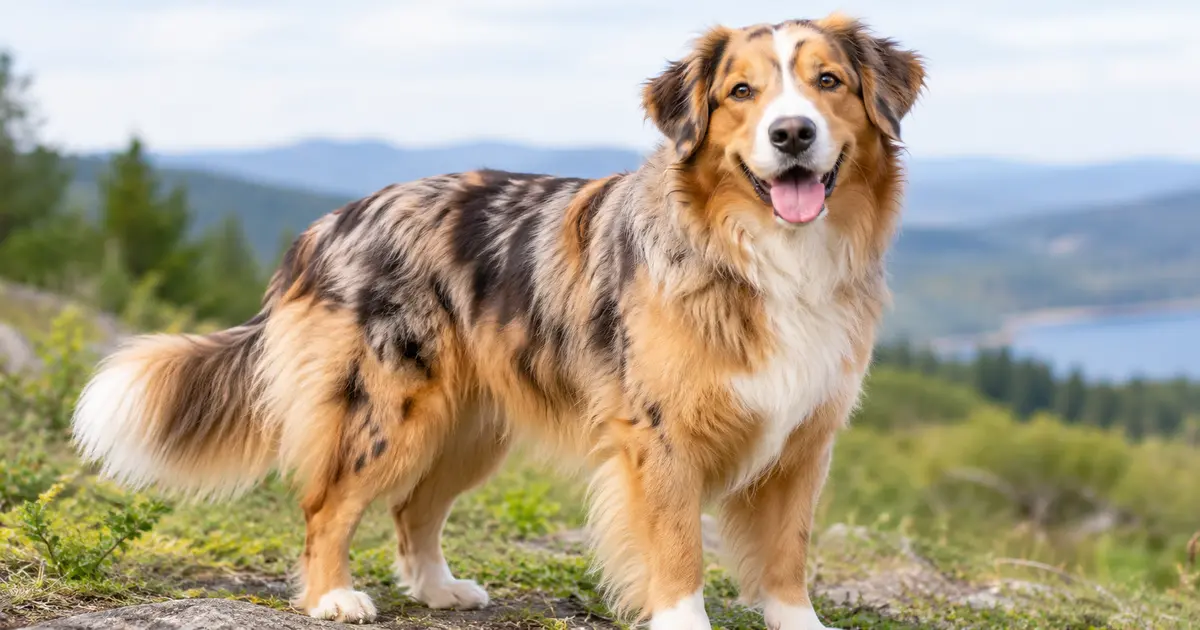
An Australian Shepherd Golden Retriever mix pairs two of the most people-oriented working breeds around, which explains why this crossbreed shows up so often on wish lists for active households.
The combination sounds simple on paper: herding smarts meet retrieving warmth. But the actual dog that results needs more thought than a cute name suggests, especially around energy, training, and a few genetic quirks worth knowing before puppy shopping begins..
What Is a Golden Aussie, in Short?
A Golden Aussie is a crossbreed between a purebred Australian Shepherd and a purebred Golden Retriever. Most adults weigh between 40 and 65 pounds and stand 18 to 23 inches tall at the shoulder, though size can vary based on which parent breed dominates.
These dogs tend to be friendly, alert, and eager to work alongside their owner. They need daily physical activity and mental engagement, and they do best in homes that can offer both. Coat color ranges widely, from black and brown to merle patterns inherited from the Aussie side.
also read Black German Shepherd Golden Retriever Mix
Where This Crossbreed Comes From
Mixed breeds like this one don’t have a long, documented history the way purebreds do. Breeders likely started crossing Australian Shepherds with Golden Retrievers within the last couple of decades, aiming to combine two popular, working-oriented breeds into a single dog with broad appeal.
The Australian Shepherd Side
Despite the name, Australian Shepherds were actually developed in the United States, primarily to herd livestock on ranches in the western states. Herding dogs like this one are bred for stamina, quick decision-making, and a strong drive to keep moving. That heritage shows up clearly in the mix.
Aussies are known for being highly intelligent and responsive to training, but that same intelligence can turn into restlessness or unwanted behaviors if the dog doesn’t get enough to do. Many Aussies also carry a genetic sensitivity to certain medications, a trait worth understanding before adopting any dog with Aussie ancestry.
The Golden Retriever Side
Golden Retrievers were originally bred in Scotland during the 1800s to retrieve waterfowl for hunters. That job required a soft mouth, a cooperative attitude, and genuine enthusiasm for working closely with people. Those qualities remain central to the breed today.
Goldens are widely known for their patience and warmth, especially around children and other animals. They tend to be less independent than Aussies and more focused on pleasing their owner, which often balances out some of the Aussie’s sharper herding instincts in a mixed litter.
Size and Physical Appearance
Because this is a crossbreed rather than a standardized breed, size and appearance can vary from one litter to the next. Most adults fall somewhere between the two parent breeds, typically landing in the 40 to 65 pound range with a height around 18 to 23 inches.
Build tends to be athletic and well-proportioned, reflecting two breeds built for physical work rather than a compact or toy-sized frame. Ear shape, tail carriage, and head structure often show a mix of traits from both sides rather than clearly favoring one parent.
Common Coat Colors (Black and Brown Variations)
Coat color in this mix depends heavily on which genes get passed down. Black and brown (sometimes called chocolate or liver) are two of the more common results, often appearing solid or combined with white markings on the chest, face, or paws.
Merle patterning, a mottled or speckled coat effect common in Australian Shepherds, sometimes appears in the mix as well. Breeders who understand merle genetics should avoid pairing two merle-carrying parents, since that combination raises the risk of health problems in puppies.
Temperament and Personality
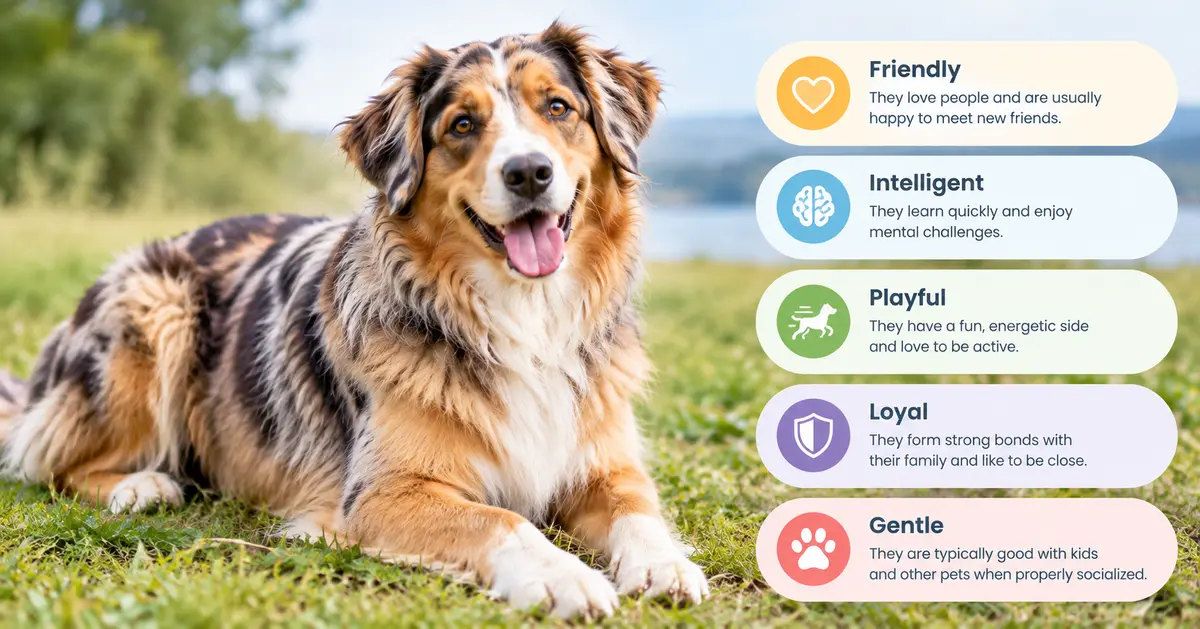
This mix tends to be loyal, alert, and closely bonded to its family, often following its owner from room to room. That trait comes largely from the herding instinct on the Aussie side, paired with the people-focused warmth typical of Golden Retrievers.
Expect a dog that is smart, responsive, and generally eager to please, but also one that needs a job to stay content. Left without enough structure or activity, this crossbreed can become anxious, vocal, or prone to chewing and other destructive habits.
Most owners describe these dogs as affectionate without being overly clingy, though individual personality varies based on which traits show up more strongly. Early socialization plays a large role in shaping how confident and adaptable the adult dog eventually becomes.
Are Golden Aussies Good With Children and Other Pets?
Generally, yes. Golden Retrievers are known for their patience with kids, and that trait often carries over into the mix. Most Golden Aussies do well in households with children, especially when they’ve been raised around them from puppyhood.
One thing worth watching is the Australian Shepherd’s herding instinct, which can show up as nipping at heels or trying to “herd” running children. This behavior isn’t aggression, but it does need gentle correction and consistent training early on.
With other pets, socialization matters more than breed tendency alone. Dogs from this mix usually get along fine with other household pets when introduced properly, though supervision is worthwhile during the first few interactions, especially with smaller animals that might trigger prey drive.
Daily Exercise and Mental Stimulation Needs
This is not a low-energy dog. Both parent breeds were built for physically demanding work, and that combination shows up clearly in daily exercise needs. Most adults do best with 60 to 90 minutes of active exercise spread across the day.
Exercise Guidelines by Age
Puppies need shorter, more frequent bursts of activity rather than long runs, since their joints are still developing. Structured play sessions of 10 to 15 minutes several times a day work well through the first year.
Adult dogs can handle longer sessions, including runs, hikes, or games of fetch that tap into the retrieving instinct from the Golden side. Senior dogs still need regular movement, though the intensity should shift toward lower-impact activities like leashed walks and swimming.
Mental Enrichment Ideas
Physical exercise alone often isn’t enough for this crossbreed. Puzzle feeders, scent games, and short training sessions throughout the day help satisfy the mental sharpness inherited from both parent breeds.
Herding-style games, like directing the dog around obstacles or teaching it to gather and move objects, can also tap into natural instincts in a controlled way. Dogs that get enough mental work tend to show far fewer behavior problems than those who only get physical exercise.
Training and Socialization Tips
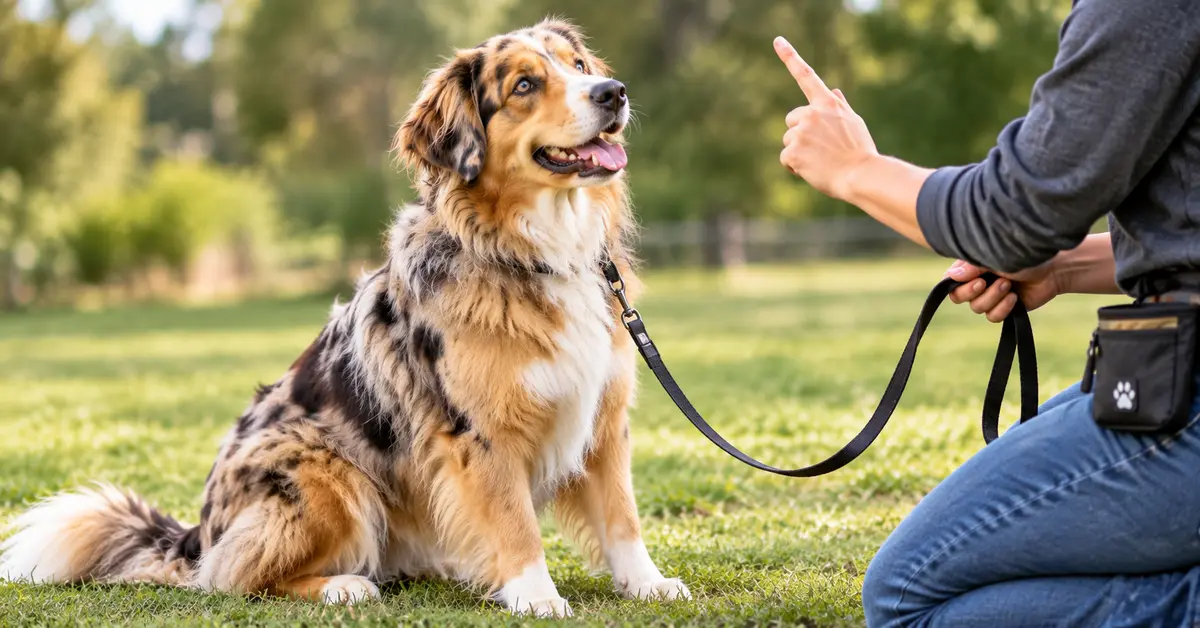
Training tends to go smoothly with this mix, since both parent breeds rank among the most trainable dog breeds available. Positive reinforcement methods, using treats, praise, and consistency, work especially well.
Early socialization matters a great deal for a dog with herding instincts. Exposing puppies to different people, environments, sounds, and other animals during the first several months helps prevent nervousness or overly protective behavior later on.
Because this mix is intelligent and quick to learn, training sessions should stay varied and interesting to avoid boredom. Short, frequent sessions tend to work better than long, repetitive ones, and many owners find success moving into activities like agility or obedience sports once basic commands are solid.
Grooming Requirements and Shedding Levels
Coat care depends somewhat on which parent’s coat type the puppy inherits, but most dogs from this mix need regular brushing to manage shedding and prevent matting, particularly around the ears and legs.
Brushing Schedule and Tools
Brushing two to three times a week is a reasonable baseline for most coats in this mix. A slicker brush works well for catching loose undercoat, while a metal comb helps with any tangles that form around the ears or leg feathering.
Bathing every four to six weeks is usually sufficient unless the dog gets particularly dirty. Overbathing can strip natural oils from the coat and skin, so it’s worth sticking to a schedule rather than washing too frequently.
Seasonal Shedding (Coat Blow)
Like both parent breeds, this mix typically goes through heavier shedding periods twice a year, often called blowing coat, when the undercoat sheds out in preparation for seasonal change. During these weeks, daily brushing helps manage the volume of loose hair around the house.
Outside of these seasonal periods, shedding is more moderate but still noticeable, since neither parent breed is considered low-shedding. Owners with allergies should be aware that this crossbreed is not hypoallergenic.
Health Considerations and Genetic Risk Factors
Crossbred dogs can benefit from what’s known as hybrid vigor, a concept where genetic diversity between two distinct breeds may reduce the likelihood of inheriting certain breed-specific conditions. That said, this mix can still inherit health issues common to either parent breed.
Hip and elbow dysplasia, joint conditions that affect mobility over time, show up in both Australian Shepherds and Golden Retrievers, so they remain a possibility in the mix. Eye conditions, including progressive retinal atrophy and certain inherited cataracts, are also worth screening for.
One condition specific to the Aussie side deserves particular attention: a mutation in the MDR1 gene, which affects how a dog’s body processes certain common medications, including some used for parasite prevention and anesthesia. Dogs with this mutation can have severe reactions to normal drug doses.
Health Testing Parents Should Have
Responsible breeders test parent dogs for hip and elbow dysplasia through radiograph evaluation, along with eye exams from a veterinary ophthalmologist. MDR1 testing is a simple cheek swab and is widely recommended for any dog with Australian Shepherd ancestry.
Buyers should ask to see documentation of these tests before committing to a puppy. A breeder who can’t or won’t provide test results is a signal to look elsewhere, regardless of how healthy the puppies appear.
What Research Says About Mixed-Breed Health and Temperament
The MDR1 mutation isn’t a folk theory. It has been studied and documented by the Veterinary Clinical Pharmacology Laboratory at Washington State University, which identified the gene mutation and now offers testing used across the veterinary field to identify affected dogs before they’re prescribed certain medications. Washington State University Veterinary Clinical Pharmacology Laboratory, MDR1 Research
Herding breeds, including Australian Shepherds, are among the breeds most commonly affected by this mutation, which is why testing matters for any dog carrying that ancestry, mixed or purebred. Beyond MDR1, broader research on crossbred dogs has looked at inherited disease patterns compared to purebreds, generally supporting the idea that a wider gene pool can lower, though not eliminate, the risk of certain hereditary conditions tied to a single breed’s limited gene pool.
Average Lifespan of an Australian Shepherd Golden Retriever Mix
Both parent breeds typically live between 10 and 14 years, and this mix generally falls within that same range. Actual lifespan depends on a combination of genetics, diet, exercise, and access to routine veterinary care throughout the dog’s life.
Keeping up with preventive care, including regular checkups, dental cleaning, and weight management, tends to make the biggest difference in how long any dog lives comfortably. Since this mix is prone to joint issues, maintaining a healthy weight also helps reduce strain on hips and elbows as the dog ages.
also read Average Lifespan Golden Retrievers
Common Myths About This Crossbreed
One common myth is that this mix is hypoallergenic because of the Aussie’s lower-shedding reputation compared to Goldens. In reality, no dog is fully hypoallergenic, and this crossbreed still produces dander and sheds a noticeable amount, especially during seasonal coat blow.
Another myth assumes the dog will automatically be calm because Golden Retrievers have a reputation for being easygoing. Herding instinct from the Aussie side often overrides that calm reputation, particularly in dogs under two years old, when energy levels tend to peak.
Some people also assume mixed breeds are automatically healthier than purebreds in every case. Hybrid vigor can lower certain risks, but it doesn’t erase the possibility of inheriting conditions common to either parent breed, which is why health testing still matters.
Cost of an Australian Shepherd Golden Retriever Mix Puppy

Prices for puppies from this mix vary widely depending on the breeder’s location, the health testing performed on the parents, and general demand in the area. Buyers should expect a wide range rather than a fixed number, and should be cautious of prices that seem unusually low, since that can sometimes signal skipped health testing.
Adoption and Rescue Options vs. Buying From a Breeder
Adoption through a shelter or breed-specific rescue is often more affordable than buying from a breeder, and it gives a dog in need a home. Mixed breeds like this one do show up in shelters, though availability depends heavily on location and timing.
Buying from a breeder allows more certainty about health testing, early socialization, and the specific traits of the parent dogs. Whichever route someone chooses, asking direct questions about health screening and living conditions is a reasonable step before committing.
Is This Mix the Right Fit for Your Lifestyle?
This crossbreed works best for people with an active daily routine and enough time to commit to training and mental engagement. Runners, hikers, and families who spend a lot of time outdoors tend to be a strong match.
| Lifestyle Factor | Good Fit | Needs Consideration |
| Activity level | Daily runners, hikers, active families | Sedentary households, limited outdoor time |
| Living space | House with yard | Small apartment without nearby exercise areas |
| Time availability | Owners home most of the day | Long work hours with little companionship |
| Experience level | First-time or experienced owners willing to train | Owners unwilling to commit to daily training |
Apartment living isn’t automatically off the table, but it does require a strong commitment to daily walks and outside exercise, since this mix won’t do well cooped up for long stretches without an outlet for its energy.
Frequently Asked Questions
Do Golden Aussies bark a lot?
Barking levels vary by individual dog, but herding instinct can make some dogs more vocal, especially when alerting to movement or strangers. Consistent training from puppyhood typically helps manage excessive barking over time.
Can they live in hot or cold climates?
Yes, generally. Both parent breeds have double coats suited to varied weather, though extra care is needed in extreme heat to prevent overheating during exercise, and paw protection helps in very cold conditions.
Do they get along well with cats?
Often, yes, particularly when raised together from a young age. Herding instinct might cause some chasing behavior early on, so supervised introductions and gradual exposure work better than letting the pets meet unsupervised right away.
How do I find a responsible breeder or rescue?
Look for breeders who provide health testing documentation for both parents, including MDR1 results, and who allow you to meet the puppy’s parents. For rescues, breed-specific organizations or local shelters are good starting points.
If you’re considering this crossbreed, the most useful next step is finding a breeder or rescue that can show documented health testing, particularly MDR1 results, and spending time with an adult dog from a similar mix before committing. That firsthand look at energy level and temperament will tell you more than any general guide can.

Hi, I’m Jack Austin, founder of Cool Goldens. I share practical, research-backed advice on training, nutrition, and daily care to help you give your Golden Retriever the happiest, healthiest life possible.