

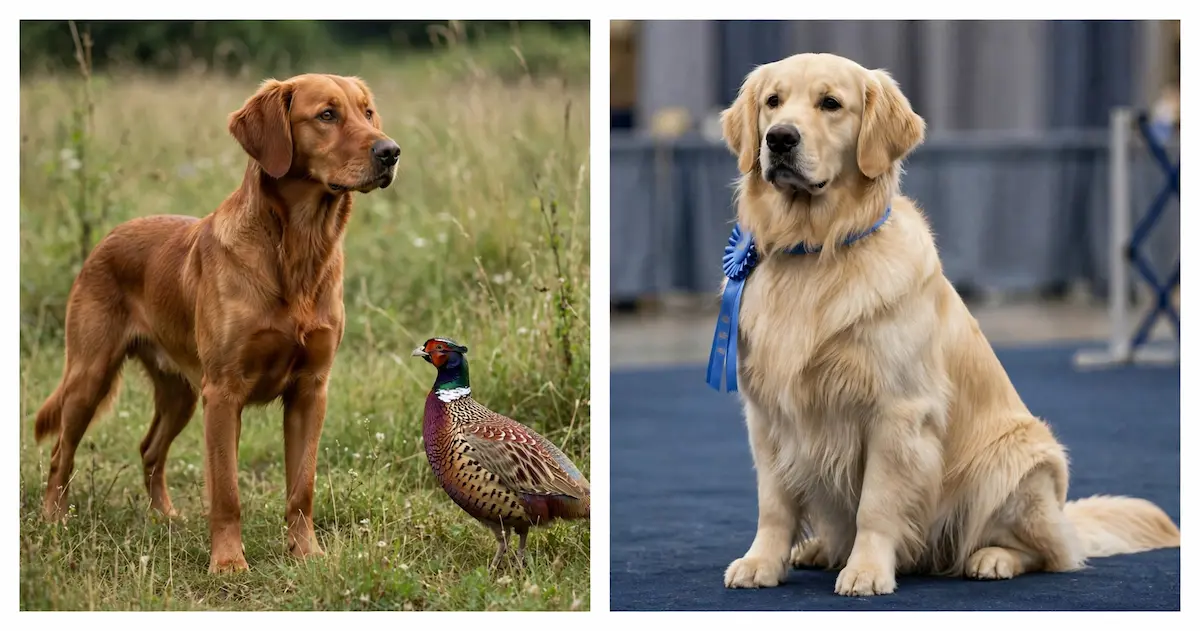
Field goldens and show goldens are the same breed with two different breeding goals. One was bred to retrieve for hours in the field. The other was bred to match a show-ring standard. That single difference shapes almost everything else — build, coat, energy, and trainability.
Field Goldens or Show Goldens? The Quick Answer
Both are purebred golden retrievers. The difference comes down to what each line was bred to do. Field goldens descend from dogs selected for hunting and field trial performance. Show goldens descend from dogs selected for conformation shows, where judges score them against a physical breed standard.
That single difference in breeding goals shapes almost everything else: body shape, coat, energy level, and even trainability. A field golden and a show golden can come from the exact same registry and still look and act noticeably different.
Some breeders now mix the two lines on purpose, aiming for a dog with a moderate build and a more balanced temperament. We’ll get to that later, since it’s a genuinely useful option many buyers don’t know exists.
Where the Difference Comes From: Breeding Purpose and Standards

Golden retrievers were originally bred as hunting companions, developed to retrieve waterfowl and upland game. Over time, two separate breeding goals emerged within the breed, and each one pulled the dogs in a different direction.
Field trials test a dog’s ability to mark falls, take direction from a handler at a distance, and work through difficult terrain or water. Breeders focused on field trial success select for drive, stamina, and quick problem-solving under pressure. This is where the “field line” or “working line” golden comes from.
Show breeding follows a different goal entirely. The AKC breed standard describes an ideal golden retriever’s proportions, coat, head shape, and movement. Breeders working toward the show ring select for dogs that match this written standard as closely as possible, generation after generation.
Neither approach is more “correct” than the other. They’re two answers to two different questions: one asks “can this dog do the job it was bred for,” and the other asks “does this dog match the standard.” Both produce genuine, purebred golden retrievers.
Field Golden vs Show Golden: Size, Build, and Coat
The physical differences are usually the first thing people notice, even before they know the terms “field” and “show.”
Field goldens tend to have a leaner, more athletic frame. Their heads are narrower with a longer muzzle, and their overall build favors speed and endurance over bulk. Show goldens are typically heavier-boned, with a broader, more square head and a sturdier frame built more for a balanced show-ring gait than for hours of retrieving work.
Coat color also tends to differ, though this isn’t a hard rule. Field lines often run darker and more red-toned, while show lines lean toward the lighter, honey-gold color most people picture when they think of a golden retriever. Plenty of exceptions exist on both sides, so coat color alone isn’t a reliable way to identify a dog’s line.
Shedding and Grooming Needs
Coat length affects grooming more than color does. Field goldens usually have a shorter, flatter coat with less feathering on the legs, tail, and chest. This means less brushing and somewhat easier upkeep.
Show goldens carry the fuller, longer coat most people associate with the breed’s classic look, including heavier feathering. That coat needs more frequent brushing to prevent matting, and it sheds more visibly around the house. Both lines shed year-round with heavier shedding during seasonal coat blowouts, so neither is a low-shedding option.
Temperament and Trainability Differences

Field golden vs show golden temperament is where the practical, day-to-day differences really show up, and it matters more than looks for most owners.
Field goldens tend to be higher energy, more independent, and more driven to work. They often need a job or consistent physical outlet, whether that’s retrieving, swimming, or structured training. Without it, that energy can turn into restlessness or destructive habits like chewing or excessive barking.
Show goldens are generally described as calmer and more people-focused. Their steady temperament is part of why they’re commonly chosen for therapy work and service dog roles, alongside their trainability and eagerness to please.
Trainability differs slightly too. Show goldens often respond well to basic obedience with minimal fuss, since biddability was part of what breeders selected for. Field goldens can be just as trainable, sometimes more so for advanced tasks, but their independent streak means training sessions may need to be more engaging and structured to hold their focus.
Hunting Instincts and Energy Levels in Field Lines
Field goldens carry strong natural retrieving instincts, even in dogs that never see a hunting field. This shows up as an intense drive to fetch, carry objects in their mouth, or chase moving things like squirrels or bikes.
That drive isn’t a flaw. It’s the trait field breeding was built around. But it does mean a field golden living as a family pet usually needs more daily exercise and mental stimulation than a show-line dog to stay settled and content.
Health, Genetics, and Life Expectancy
Health is one of the most search-worthy parts of this topic, and it’s also where careful, honest wording matters most. Golden retrievers as a breed face known health risks, including certain cancers, hip and elbow dysplasia, and heart conditions like subvalvular aortic stenosis.
Some breeders and owners report anecdotally that field-line goldens seem to face fewer cancer diagnoses, but there’s no established research confirming a lifespan or cancer-rate difference between the two lines. Genetics, individual breeding practices, and overall care matter far more than line alone. Genetics, individual breeding practices, and overall care all play a role, so line alone shouldn’t be treated as a guarantee either way.
What matters more than the line itself is whether the breeder actually tests for known issues. Reputable breeders from both lines should provide health clearances for hips, elbows, heart, and eyes, typically through the Orthopedic Foundation for Animals (OFA) or a similar recognized program.
For general breed health information, the American Kennel Club’s golden retriever health resources and a conversation with your veterinarian are more reliable starting points than anecdotal claims about one line being universally healthier.
Price, Puppies, and What to Ask a Breeder

Field golden vs show golden price can vary quite a bit depending on the breeder, location, and the dog’s pedigree, so there’s no single fixed number for either line. What matters more than the price tag is what you’re getting for it.
A responsible breeder, field or show, should be able to show you:
- Health clearances for hips, elbows, heart, and eyes (OFA or equivalent)
- Pedigree information, including any field trial titles (FC, AFC) or show titles (CH)
- Where the puppies and parents are raised, and whether you can meet at least one parent
- A written health guarantee and a willingness to take the dog back if things don’t work out
Field trial titles and show championships in a pedigree are a useful clue about which line a puppy comes from, since they reflect what the breeder has been actively selecting for. If a breeder can’t explain their dogs’ background or dodges questions about health testing, that’s worth treating as a warning sign regardless of which line they’re selling.
Common Misconceptions About Field and Show Goldens
A few myths about this topic circulate often enough that they’re worth addressing directly.
“Field goldens are more aggressive.” This isn’t accurate. Golden retrievers, field or show, are not bred for guarding or aggression. Field goldens are higher energy and more independent, which can look like unruly behavior in an under-exercised dog, but that’s a management issue, not aggression.
“Show goldens are unhealthy because of overbreeding.” Some show-line dogs from poorly managed breeding programs do carry higher risk for certain conditions, but this is a breeder-practice issue, not something true of all show-line goldens as a group. Health testing matters far more than which line a dog comes from.
“Field and show goldens are basically different breeds.” They’re not. Both are registered as golden retrievers, can be shown or bred together, and share the same breed history. The differences come from selective breeding within one breed, not from separate bloodlines that can’t mix.
Which Line Fits Your Lifestyle? A Practical Decision Guide
Instead of asking which line is “better,” it helps to ask which one matches how you actually live. Here’s a practical way to think it through:
| If you… | Consider a… |
| Want an active hiking, running, or hunting companion | Field golden |
| Prefer a calmer dog for a household with young kids | Show golden |
| Have limited time for daily exercise | Show golden |
| Want a dog for advanced training, agility, or dock diving | Field golden |
| Are a first-time dog owner wanting a predictable temperament | Show golden |
| Want a middle-ground dog with moderate energy | A dual-purpose or mixed-line golden |
If neither extreme sounds quite right, a dual-purpose golden, bred from a mix of field and show lines, is worth asking breeders about. These dogs often land in between: more energy than a typical show golden, but a bit more relaxed than a dedicated field line. It’s a practical option that a lot of first-time buyers don’t realize exists until they start researching further into golden retriever temperament differences.
FAQs
Can field and show goldens be mixed?
Yes. Many breeders intentionally combine both lines to produce a dog with a moderate build and a more balanced temperament. This isn’t crossbreeding since both parents are still golden retrievers, just from different breeding traditions within the breed.
How can I tell which line a puppy comes from?
Ask the breeder about the parents’ titles. Field trial titles (FC, AFC) point to a field line, while show championships (CH) point to a show line. Body build and coat can offer hints, but pedigree information is more reliable.
Are field goldens harder to train than show goldens?
Not necessarily. Field goldens are highly trainable but tend to need more engaging, structured sessions because of their independence and drive. Show goldens often pick up basic obedience with less effort, but both lines are considered highly trainable compared to most breeds.
Do English cream goldens fit into the field or show category?
English cream goldens are generally part of the show line, bred to a related British standard that favors a lighter, cream-colored coat. They’re not a separate line from field and show, just a color variation within the show type.
Key Takeaway
Field and show goldens are the same breed with two different breeding histories behind them. Field lines lean athletic, driven, and lower-maintenance in coat care. Show lines lean calmer, heavier-coated, and easier for a first-time owner to manage day to day.
Neither is the “right” choice on its own. The right choice depends on your energy level, your household, and how much time you can realistically put into exercise and training. If you’re still unsure, talking to a few breeders from both lines, and asking direct questions about health testing and temperament, will tell you more than any general comparison can.

Hi, I’m Jack Austin, founder of Cool Goldens. I share practical, research-backed advice on training, nutrition, and daily care to help you give your Golden Retriever the happiest, healthiest life possible.