

The healthiest food for a senior Golden Retriever won’t turn your dog into a puppy again, but it can slow down some of the wear and tear. Around age seven, that tireless retriever who once chased every squirrel in the yard starts negotiating for more nap time.
His metabolism slows, his joints get creakier, and suddenly the same food that fueled his younger years isn’t doing him any favors. The good news: fixing this doesn’t require a miracle diet, just the right nutrients in the right amounts. Before you start reading ingredient labels like they’re written in another language, here’s what actually matters.
.
What Is the Healthiest Food for a Senior Golden Retriever?
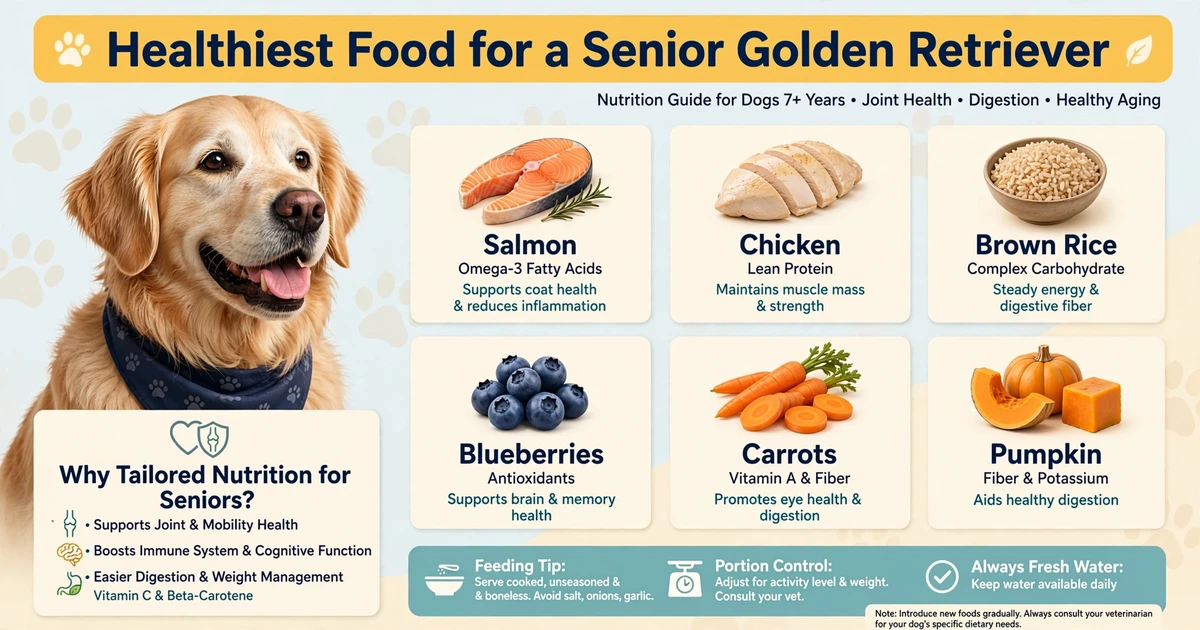
The healthiest food for a senior Golden Retriever includes lean protein for muscle, omega-3 fatty acids for joints and skin, moderate calories to prevent weight gain, and fiber for digestion. Look for a formula labeled for senior or “mature” large breeds, since these are built with a large dog’s slower metabolism and joint stress in mind.
Beyond the label, the right food depends on your dog’s weight, activity level, and any health conditions your vet has flagged. A senior Golden with arthritis needs a different balance than one with a sensitive stomach.
When Does a Golden Retriever Become a Senior?

Large breeds age faster than small ones, and Golden Retrievers usually reach senior status around age 7 to 8. This is earlier than many owners expect, especially compared to smaller dogs that stay “middle-aged” well into their teens.
According to clinical nutrition guidelines from the Tufts University Cummings School of Veterinary Medicine, adjusting caloric intake and prioritizing high-quality protein as a Golden Retriever reaches age 7–8 is essential to maintain lean muscle mass and protect aging joints.
A few signs your Golden is entering this stage:
- Slower to get up after resting
- Less interest in long walks or play
- Gaining weight without eating more
- Graying around the muzzle
- Sleeping more during the day
None of these signs mean something is wrong. They’re a normal part of aging, and they’re your cue to start paying closer attention to diet and portion size.
Related Read: Curious about how Golden Retriever mixes age? Check out our complete guide to the Golden Mountain Dog (Golden Retriever and Bernese Mix).
Key Nutrients an Aging Golden Retriever Needs
A senior Golden’s body handles food differently than it did at age two. Muscle repairs more slowly, joints take more wear, and digestion can become less efficient. The right nutrients help offset these changes.
High-Quality Protein for Muscle Maintenance
Older dogs lose muscle mass more easily, a process vets often call sarcopenia. Despite older advice suggesting seniors need less protein, most veterinary nutritionists now agree that aging dogs need protein that is just as high in quality, if not more, to slow muscle loss.
Look for named animal proteins like chicken, turkey, or salmon listed as the first ingredient. Avoid vague terms like “meat meal” without a specific animal source.
Essential Fatty Acids and Fish Oil for Joints, Skin, and Brain Health
Omega-3 fatty acids, especially EPA and DHA found in fish oil, help reduce joint inflammation and support skin and coat condition. Some research also points to omega-3s supporting cognitive function in older dogs, though results vary between individual dogs.
Flaxseed provides a plant-based omega-3 source, but fish oil delivers EPA and DHA directly, which dogs use more efficiently than plant-based omega-3s.
Antioxidant-Rich Foods and Taurine Benefits for Heart Health
Antioxidants like vitamin E, vitamin C, and beta-carotene help support a senior dog’s immune system as it naturally weakens with age. Blueberries, spinach, and carrots are common antioxidant sources added to quality senior formulas.
Taurine is an amino acid tied to heart muscle function. While Golden Retrievers as a breed have been part of ongoing research into diet-related heart conditions, taurine’s role in canine heart health is still being studied, and owners should rely on their vet’s guidance rather than adding supplements on their own.
Dietary Fiber and Prebiotics for Digestive Health
Digestion tends to slow down in older dogs, making fiber more important than it was in their younger years. Pumpkin, sweet potato, and beet pulp are common fiber sources that help keep bowel movements regular without causing loose stool.
Prebiotics, like chicory root or inulin, feed the good bacteria already living in your dog’s gut. A healthy gut microbiome has been linked to better digestion and a stronger immune response in dogs, similar to patterns seen in humans.
Best Dry Dog Food for a Senior Golden Retriever (Comparison)
Several well-established brands make senior large-breed formulas built around the nutrients covered above. Exact protein, fat, and calorie counts vary by bag size and formula version, so always check the current label before buying.
| Brand & Formula | Protein Source | Notable Features | Best For |
| Hill’s Science Diet Senior 7+ | Chicken meal | Clinically tested formula, joint and cognitive support | Owners who want a widely vet-recommended option |
| Royal Canin Large Aging 8+ | Chicken meal | Formulated for large dogs 56–100 lbs, supports bone, joint, kidney, and heart health | Goldens in their senior years (large-breed specific) |
| Blue Buffalo Life Protection Senior | Deboned chicken | Glucosamine and chondroitin included, whole-grain based | Owners wanting a natural ingredient list |
| Wellness Complete Health Senior | Deboned chicken | Balanced omega fatty acids, added glucosamine | Everyday senior maintenance |
| Orijen Senior | Deboned chicken, turkey, and fish | Very high protein, minimally processed | Active, healthy seniors without kidney concerns — check with your vet first if kidney function is a question |
This table is a starting point, not a final answer. Your vet can help you narrow the list based on your dog’s weight, activity level, and any existing health issues.
How Much to Feed: Portion Control by Weight
Overfeeding is one of the most common mistakes with senior Goldens, since lower activity levels mean they burn fewer calories than they did as adults. The chart below offers a general starting point based on typical senior maintenance needs.
| Weight | Approximate Daily Food (Senior Formula) |
| 55–65 lbs | 2 to 2.5 cups, split into two meals |
| 65–75 lbs | 2.5 to 3 cups, split into two meals |
| 75–85 lbs | 3 to 3.5 cups, split into two meals |
These amounts are general guidelines, not fixed rules. Calorie needs shift based on your dog’s activity level, muscle mass, and metabolism, so use these figures as a starting point and adjust based on your dog’s body condition.
If your dog is already overweight, don’t cut portions drastically overnight. Reduce food gradually over a few weeks, and ask your vet about a weight-management formula if progress stalls.
Homemade Meals for an Older Golden Retriever: What to Include and Avoid
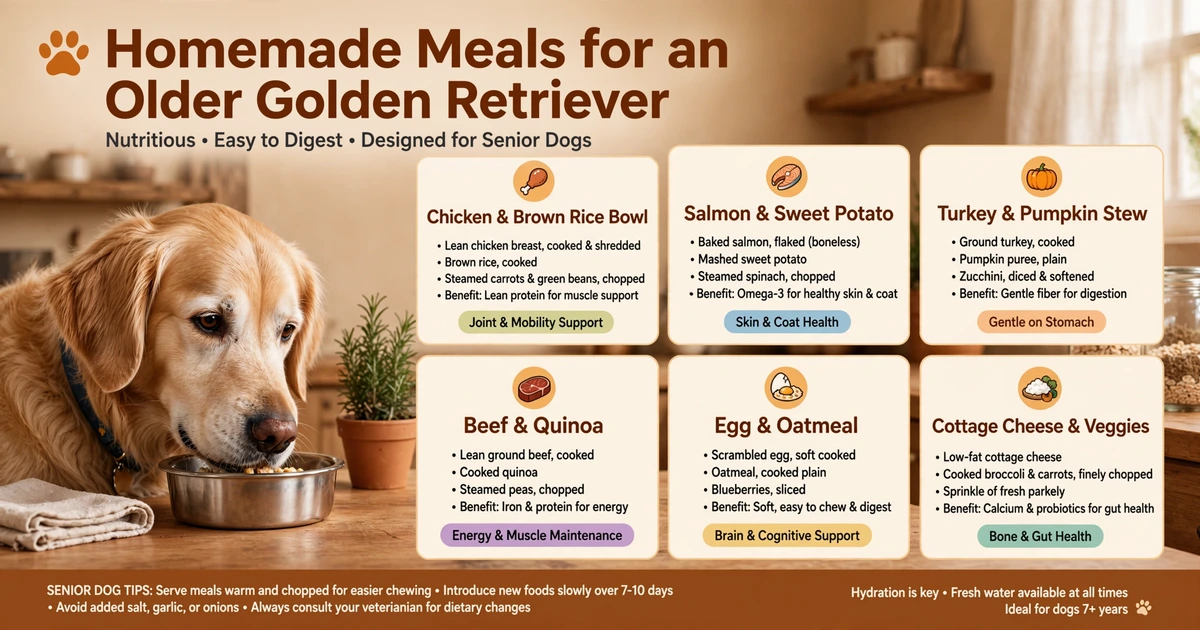
Some owners prefer cooking for their senior dog rather than relying on commercial food. This can work well, but it takes more planning than most people expect.
A balanced homemade meal for a senior Golden typically includes:
- A lean protein source, such as chicken, turkey, or white fish
- A digestible carbohydrate, like sweet potato or brown rice
- Non-starchy vegetables, such as green beans or carrots
- A fat source, like a small amount of fish oil
The biggest risk with homemade diets is an imbalanced calcium-to-phosphorus ratio, which matters for bone health and can cause problems over time if it’s off. This isn’t something to guess at. Work with your vet or a board-certified veterinary nutritionist to build a recipe with the right mineral balance, rather than assembling one from general online advice.
Common Feeding Mistakes and Misconceptions
A few widely repeated ideas about senior dog food don’t hold up well under closer look.
“Grain-free is automatically healthier.” Grain-free diets became popular over the past decade, but the FDA has investigated a possible link between certain grain-free formulas and dilated cardiomyopathy (DCM) in dogs, including Golden Retrievers. The connection isn’t fully settled, and research is ongoing, but it’s worth discussing with your vet before choosing a grain-free formula for a breed already known to have some cardiac risk.
“Joint supplements work the same for every dog.” Glucosamine and chondroitin are common ingredients in senior formulas, and many owners report improvement in their dog’s mobility. That said, clinical research on their effectiveness in dogs is mixed, and results vary by individual. They’re reasonable to try, but they aren’t a guaranteed fix.
“Senior food is just a marketing label.” This one is only partly true. Not every “senior” formula is meaningfully different from adult food, so it pays to check the actual nutrient breakdown rather than trusting the word “senior” on the bag alone.
Signs Your Senior Golden Retriever’s Diet Isn’t Working

Watch for these signs that a food or portion size isn’t working well for your dog:
- Noticeable weight gain or loss over a few weeks
- Dull, flaky, or itchy coat
- Low energy that doesn’t match age-related slowing
- Frequent loose stool or constipation
- Excessive gas or bloating after meals
One or two of these on their own aren’t usually a reason to panic. But if you notice a pattern, it’s a good reason to review the food with your vet rather than switching brands on your own.
Frequently Asked Questions
Is wet food or dry food better for a senior Golden Retriever?
Neither is automatically better. Wet food can help dogs with dental issues or reduced appetite, while dry food supports dental health through chewing. Many owners mix both, based on their dog’s comfort and preference.
How long does it take to switch a senior dog to new food?
Plan for 7 to 10 days. Start with about 25% new food mixed into the old, and increase the ratio gradually. Switching too fast can cause stomach upset in older dogs with more sensitive digestion.
Does a senior Golden Retriever with kidney or thyroid issues need a special diet?
Yes, often a prescription or vet-formulated diet. Kidney disease usually calls for reduced phosphorus and controlled protein, while thyroid conditions may need calorie adjustments. These diets should always be set up with a vet, not chosen independently.
Can I give my senior dog supplements in addition to their food?
Yes, but check with your vet first. Some supplements, like extra calcium, can cause harm if a dog is already getting enough through their food.
The Bottom Line
Feeding a senior Golden Retriever well comes down to a few consistent habits: choosing a formula with real protein and joint support, watching portion sizes as activity drops, and paying attention to changes in weight, coat, and energy. No single food works for every dog, so treat labels and comparisons as a starting point rather than a final decision.
The most reliable next step is a conversation with your vet about your dog’s current weight, activity level, and any health conditions. For general nutrition standards, the American Animal Hospital Association (AAHA) publishes senior care guidelines that can help guide that conversation.

Hi, I’m Jack Austin, founder of Cool Goldens. I share practical, research-backed advice on training, nutrition, and daily care to help you give your Golden Retriever the happiest, healthiest life possible.