


American and English Golden Retrievers are not two different breeds. The popular debate between these two types comes down to distinct regional breeding standards, not separate animals
English lines run paler and calmer. American lines run darker and higher-energy. That’s the surface-level answer, and it’s the one most articles stop at. What actually matters for choosing a puppy goes deeper than coat color, and it starts with understanding exactly where these two lines diverged.
| English Golden Retriever | American Golden Retriever | |
| Coat color | Cream to light gold | Gold to dark, rich amber |
| Build | Stockier, broader head | Leaner, athletic frame |
| Temperament | Calm, steady | Playful, higher drive |
| Best fit | Family companion, therapy work | Active homes, hunting, field work |
Where These Two Golden Retriever Lines Actually Come From
Every Golden Retriever traces back to Scotland in the 1800s. Lord Tweedmouth, a Scottish breeder, crossed a Tweed Water Spaniel with a yellow retriever, and that pairing became the foundation of the breed we know today.
The dogs later spread in two directions. Some stayed in Britain and were bred to the UK Kennel Club standard. Others were brought to North America and bred to the American Kennel Club standard. Over a century, those two paths shaped two distinct looks.
Why “American” and “English” Are Breeding Lines, Not Separate Breeds
The UK Kennel Club recognized the Golden Retriever in 1911. The AKC followed in 1925. Both organizations register the exact same breed — there’s no “American Golden Retriever” or “English Golden Retriever” listed anywhere as its own breed.
The real split comes from the wording in each standard. The AKC calls for a rich, lustrous gold and considers very pale coats a fault in the show ring. The UK standard is more relaxed and accepts any shade from cream to gold. That one line in the rulebooks is a big reason American dogs trend darker and English dogs trend paler.
So when someone asks about an american golden retriever vs english cream dog, they’re really asking about two versions of one breed shaped by two different sets of show ring preferences, not two different animals.
American Golden Retriever vs. English Cream: Physical Differences
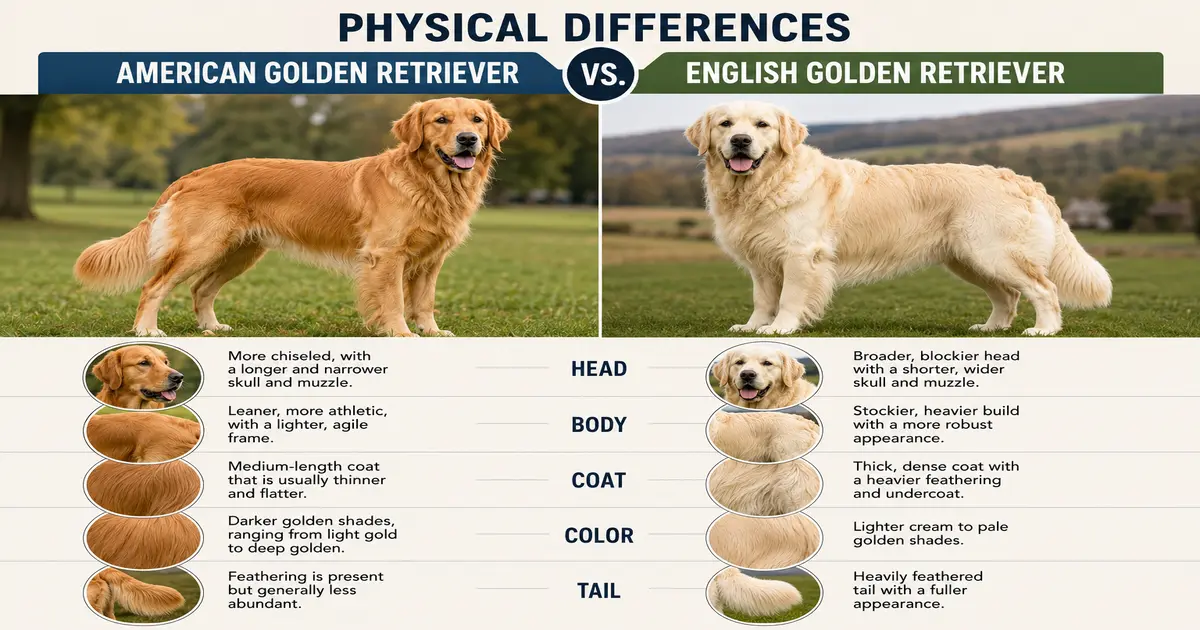
Once you know both lines come from the same root, the physical differences make more sense. They come down to what breeders on each side of the Atlantic selected for over the decades.
Coat Color and Texture
English cream Goldens run pale, from nearly white to light gold. Their coats tend to be dense and slightly wavier, with heavy feathering around the ears, chest, and legs.
American-line Goldens usually show deeper color, from honey gold to a rich, dark amber. Their coats are often a bit longer with moderate feathering, and the texture can vary more between individual dogs.
Neither shade is rarer or more “pure” than the other. Breeders who market pale coats as a rare or premium bloodline are using a marketing angle, not a meaningful health or quality distinction.
Size, Build, and Head Shape
English lines tend to look stockier and more compact, with a broader skull and deeper chest. American lines are usually leaner with a narrower head and a more athletic build overall.
Under the AKC standard, males run 65 to 75 pounds and stand 23 to 24 inches tall; females run 55 to 65 pounds and stand 21.5 to 22.5 inches. The UK standard doesn’t list specific weights, which is one reason English-line dogs can vary more from breeder to breeder.
Aslo read Field Goldens or Show Goldens
Personality and Temperament Traits: What to Expect From Each Line
Temperament traits are where a lot of buyers actually focus, and for good reason. This is what shapes your daily life with the dog far more than coat color does.
English-line Goldens are usually described as calm, steady, and a little more serious in their approach to the world. Many mature faster and settle into a relaxed adult temperament sooner than their American cousins.
American-line Goldens tend to be more playful and higher-drive, especially as adolescents. They’re often the dogs you see excelling at agility, dock diving, or field work, because that drive was bred into them on purpose.
These are general tendencies, not guarantees. Individual personality varies a lot within both lines, and a puppy’s early socialization and training matter just as much as its bloodline.
Energy Levels, Exercise Needs, and Daily Activity
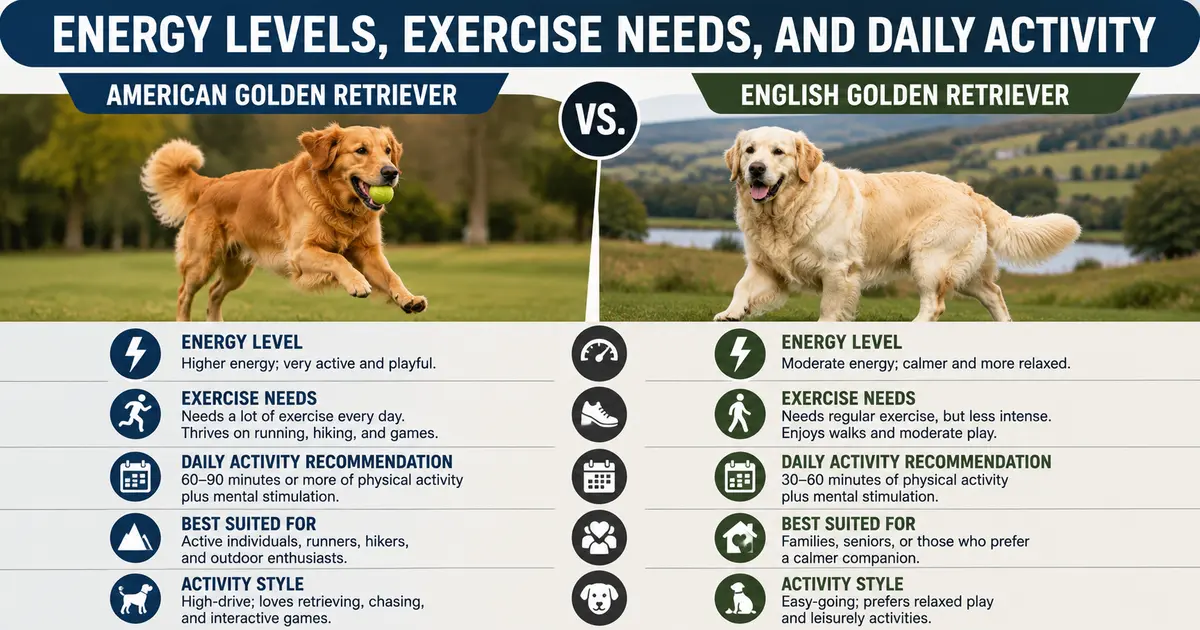
Energy levels track fairly closely with temperament differences between the two lines. American-line Goldens, bred for stamina in the field, usually need more daily exercise to stay balanced and calm indoors.
A typical American-line adult often does well with 60 to 90 minutes of active exercise a day — running, fetch, swimming, or structured training. English-line dogs are usually satisfied with a bit less, though every Golden needs regular physical activity regardless of line.
Puppies from both lines are more energetic than their adult selves will be. If you’re comparing two litters, remember that a bouncy American-line puppy and a slightly calmer English-line puppy will both mellow out somewhat by age two or three.
American Golden Retriever vs. British Golden Retriever: Health and Lifespan
This is the section where marketing claims cause the most confusion, so it’s worth being careful and specific here.
Golden Retrievers from both lines have an average lifespan of about 10 to 12 years. You’ll often see claims online that English or British Goldens live meaningfully longer. Those claims usually trace back to comparing separate regional health surveys — different countries, different time periods, different methods — not a controlled study of the two lines side by side. No solid research has shown one line reliably outliving the other.
Common health issues affect both lines at similar rates, including:
- Certain cancers, which are a leading health concern in the breed
- Hip and elbow dysplasia
- Eye conditions such as cataracts
- Heart conditions
- Hypothyroidism
- Skin and ear issues related to their coat and floppy ears
What actually predicts a puppy’s health isn’t its coat color or country of origin. It’s the health testing behind its specific parents — hip and elbow scores, eye clearances, heart clearances, and DNA testing for known genetic conditions. A well-tested American-line dog and a well-tested English-line dog carry similar risk profiles. An untested dog from either line carries more risk, regardless of how pale or dark its coat is.
For general breed health guidance, the American Kennel Club and organizations like the Orthopedic Foundation for Animals publish current information on Golden Retriever health testing standards.
Grooming and Maintenance Differences
Grooming needs follow directly from the coat differences we covered earlier, so this part is fairly predictable once you know the coat type.
English cream coats are dense and slightly wavier, which tends to trap loose hair and needs regular brushing to avoid matting, especially around the feathering. American-line coats are often a bit longer with less dense feathering, but still shed heavily and need consistent care.
Both lines need brushing several times a week, with daily brushing during the heavy spring and fall shedding seasons. A slicker brush for the topcoat, a metal comb for the feathering, and an undercoat rake during shedding season will cover most of what either line needs.
Aslo read Golden Retrievers Groomed
Common Myths About English Cream and American Golden Retrievers
A few claims about these two lines show up constantly online, and most of them don’t hold up well.
Myth: English cream Goldens are a separate, rarer breed. They’re the same breed as any other Golden Retriever. Pale coloring is a coat variation, not a distinct type or a sign of rarity.
Myth: English or cream Goldens live longer or get sick less. No controlled research supports this. Health depends on individual genetics and testing, not coat color or country of breeding.
Myth: American Goldens are automatically more aggressive or harder to train. Both lines rank among the most trainable dog breeds. American-line dogs may need more structured outlets for their energy, but that’s a management issue, not a temperament flaw.
Myth: White or near-white coloring means poor breeding or poor health. A very pale coat is within the normal range for the breed, particularly under UK standards. It says nothing about the dog’s health on its own.
How to Choose the Right Line for Your Lifestyle

Neither line is objectively better. The right choice depends on your home, your schedule, and what you want to do with the dog day to day.
Consider an English-line Golden if:
- You want a calmer, steadier household companion
- You’re a first-time dog owner looking for an easier adjustment period
- You’re interested in therapy or emotional support work
Consider an American-line Golden if:
- You’re active and want a running, hiking, or swimming partner
- You’re interested in hunting, field trials, or dog sports
- You have the time for 60+ minutes of daily exercise
Either line can work well if:
- You have kids, since both lines are typically gentle and patient with children
- You want a dog that’s easy to train, since trainability doesn’t vary much by line
- You have a fenced yard or regular access to safe off-leash space
If you’re still deciding between a Golden Retriever and a similar breed, it’s worth comparing energy levels and grooming needs against other popular retrievers before committing to either line.
What to Check Before Buying: A Breeder Health Checklist
Since line doesn’t predict health, your best protection as a buyer is checking what a specific breeder actually tests for. Ask to see documentation for:
- Hip and elbow scores through OFA or PennHIP
- Eye clearances from a board-certified veterinary ophthalmologist, done within the last year
- Heart clearance from a cardiologist, ideally with an echocardiogram
- DNA testing for known genetic conditions in the breed, such as progressive retinal atrophy and ichthyosis
A responsible breeder, regardless of whether they focus on American or English lines, should provide this documentation without hesitation. If a breeder can’t or won’t show you test results for the parents, that’s a bigger red flag than any difference in coat color or country of origin.
Frequently Asked Questions
Can American and English Golden Retriever lines be mixed?
Yes. Many breeders cross the two lines intentionally, producing puppies with a mix of traits from each side. A mixed-line puppy is still a purebred Golden Retriever, just with less predictable coat color and build than a dog from a single, consistent line.
Is an English cream Golden Retriever more expensive than an American one?
Often, yes. Cream-colored puppies are frequently marketed at a premium because of demand for the pale coat, not because they cost more to breed or come from a healthier line.
Do English Golden Retrievers shed less than American ones?
No. Both lines shed heavily, especially during spring and fall. Coat texture differs slightly, but shedding volume is similar across the breed.
Are English Golden Retrievers better for families with young kids?
Both lines are typically good with children. English-line dogs may settle faster into a calm household routine, but plenty of American-line Goldens make excellent family dogs with regular exercise and training.
Key Takeaway
American and English Golden Retrievers come from the same breed, shaped by two different standards and breeding goals. Coat color and build differences are real, but they don’t determine health, intelligence, or how well a dog will fit your home.
Your best next step is picking the traits that actually matter for your lifestyle — energy level, coat maintenance, and temperament — then finding a breeder who health-tests thoroughly, regardless of which line the puppy comes from.

Hi, I’m Jack Austin, founder of Cool Goldens. I share practical, research-backed advice on training, nutrition, and daily care to help you give your Golden Retriever the happiest, healthiest life possible.