

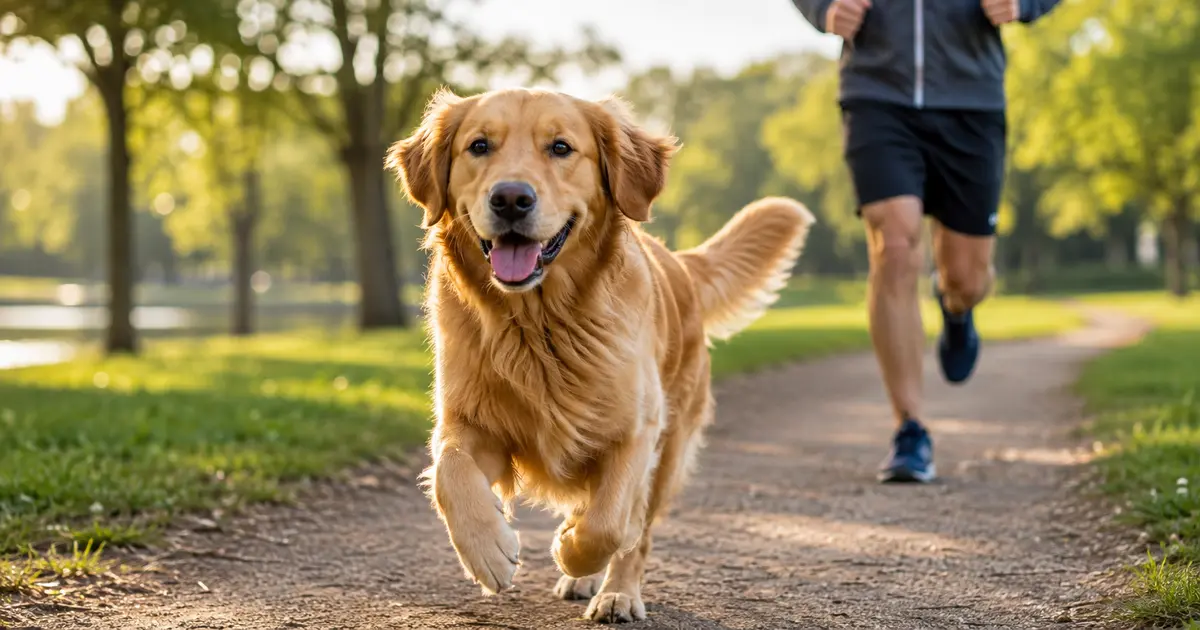
Adult Golden Retrievers need 60 to 120 minutes of exercise a day. Puppies need far less, following a simple age-based rule, and seniors need shorter, gentler sessions. That’s the short answer.
The full answer depends on your dog’s age, health, and individual energy level, since a field-bred Golden and a mellow show-line Golden won’t always need the same routine. Get the amount wrong, and you’ll see it in behavior, weight, or joint strain.
This guide breaks down exact numbers by life stage, explains why the common puppy exercise rule actually exists, and covers warning signs most owners miss until it’s too late.
How Much Exercise Does a Golden Retriever Need?
As a general guide, adult Golden Retrievers do best with 60 to 120 minutes of exercise daily. This can be split into two or three sessions rather than one long outing.
Puppies need much less. The commonly used guideline is 5 minutes of exercise per month of age, twice a day, until they’re fully grown. Senior dogs usually need 30 to 60 minutes, broken into shorter, low-impact sessions.
These numbers are a starting point, not a strict rule. A Golden recovering from surgery, carrying extra weight, or dealing with arthritis will need an adjusted plan. When in doubt, a conversation with your vet is worth more than any general guideline.
Exercise Needs by Age and Life Stage
Exercise needs change a lot as a Golden Retriever grows and ages. Applying an adult routine to a puppy, or expecting a senior dog to keep up with a young adult, can cause real harm.
Puppy Exercise Needs (0–12 Months)
Golden Retriever puppies are still developing bone and joint structure, so their exercise has to stay light and controlled. The 5-minutes-per-month rule means a 4-month-old puppy gets about 20 minutes of structured exercise, twice a day.
Free play in a securely fenced yard doesn’t count the same way as structured walks or runs. Puppies naturally self-regulate during off-leash play, stopping when they’re tired, which makes it gentler on their joints than a forced walk or jog.
Avoid running, jumping from heights, or long hikes until your puppy is closer to a year old. High-impact activity during this stage is one of the biggest risk factors for joint problems later in life.
Adult Golden Retriever Exercise (1–8 Years)
Once a Golden reaches physical maturity, usually between 12 and 18 months, daily exercise needs go up. Most healthy adults do well with 60 to 120 minutes split across the day.
This is the stage where variety matters most. A mix of walking, fetch, swimming, and mental stimulation keeps an adult Golden satisfied in a way that a single long walk can’t match on its own.
Watch your dog’s body condition as a guide. If your Golden seems restless, gains weight, or gets destructive indoors, it may be a sign the current routine isn’t enough.
Senior Golden Retriever Exercise (8+ Years)
Senior Goldens still need daily movement, but the intensity should drop. Aim for 30 to 60 minutes, broken into two or three short, gentle sessions rather than one long walk.
Joint conditions like arthritis become more common with age, so low-impact activities become more valuable. Swimming, in particular, lets an older dog stay active without putting weight on sore joints.
Pay close attention to how your senior dog recovers after activity. Stiffness the next day, or reluctance to get up, usually means the previous day’s exercise was too much.
Also Read Food for a Senior Golden Retriever
Why the “5 Minutes Per Month” Rule Exists
The 5-minutes-per-month guideline isn’t an arbitrary number. It’s tied to how a puppy’s growth plates develop.
Growth plates are areas of cartilage near the ends of a puppy’s bones. They gradually harden into solid bone as the dog matures, a process that generally isn’t complete until around 12 to 18 months in a breed the size of a Golden Retriever.
Until growth plates close, repeated high-impact stress, like jumping, hard running, or long hikes, can damage them. This kind of damage doesn’t always show up right away, but it can lead to joint problems that affect a dog for the rest of its life.
This is why structured exercise, like a scheduled walk, is treated differently from free play in a yard. Free play lets a puppy set its own pace and stop when tired, while a walk on a leash often pushes a puppy past that natural stopping point.
Daily Walking Schedule and Duration
Walking makes up a large part of most Golden Retrievers’ daily exercise, but how you structure it matters as much as the total time.
For adult dogs, splitting walks into two sessions, one in the morning and one in the evening, tends to work better than one long walk. This keeps energy levels more even throughout the day and avoids overexertion in hot weather.
Structure makes all the difference when you’re planning a daily exercise and play routine for a Golden Retriever. Here’s a sample schedule you can use as a starting point, tailored to their age.
A simple starting schedule looks like this:
| Life Stage | Daily Walking Time | Sessions Per Day |
| Puppy (3–6 months) | 15–30 minutes total | 2–3 short walks |
| Puppy (6–12 months) | 30–45 minutes total | 2 walks |
| Adult (1–8 years) | 40–60 minutes total | 2 walks |
| Senior (8+ years) | 20–40 minutes total | 2–3 short walks |
A healthy adult Golden can easily handle 2 to 4 miles a day — roughly 4,000 to 8,000 steps — as long as you build them up to it gradually.
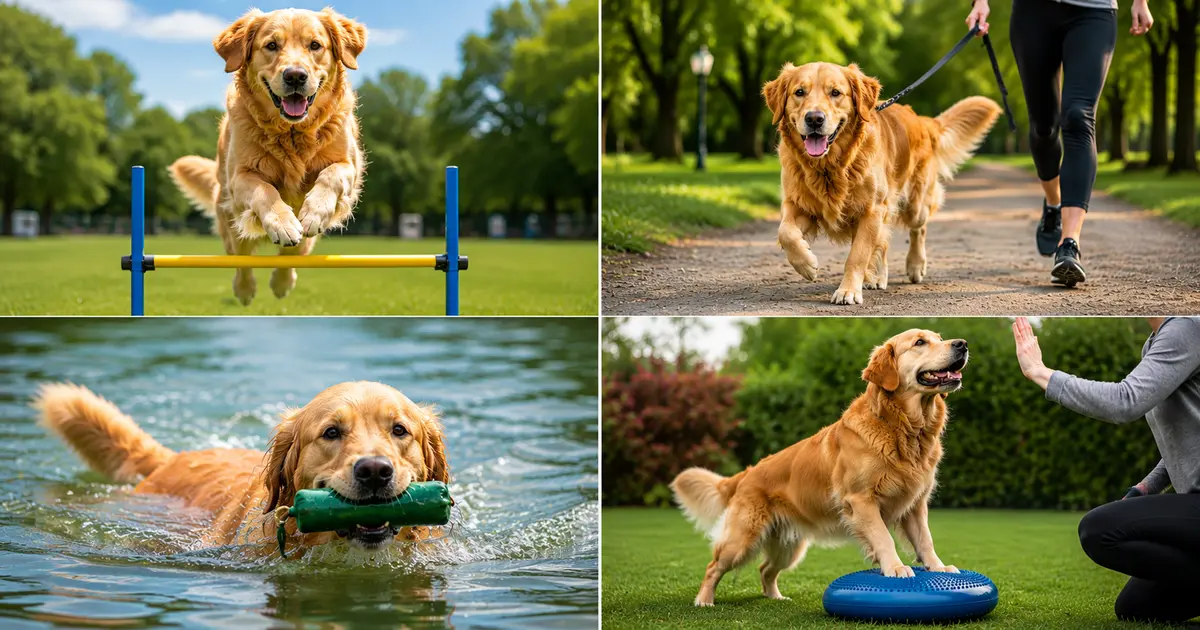
Walking alone doesn’t always meet a Golden’s full exercise needs. Higher-energy activities like fetch, swimming, or a game of tug can fill the rest of the daily requirement, especially for adult dogs with energy to spare.
Best Types of Exercise for a Golden Retriever
The best exercise for Golden Retrievers isn’t about repeating the same workout every day — it’s about balancing physical activity with some brainwork too.
For dogs with yard access:
- Fetch with a ball or retrieving dummy
- Backyard agility using simple obstacles
- Supervised off-leash play with other dogs
For apartment dwellers or limited space:
- Structured leash walks with direction changes
- Indoor puzzle toys and scent games
- Stair climbing in short, controlled sets
For hot weather or joint concerns:
- Swimming, which is easy on joints and great cardio
- Shaded walks during cooler parts of the day
- Wading in shallow water for older dogs
Retrieving games deserve a specific mention here. Golden Retrievers were bred for this exact task, and a game of fetch often tires them out mentally as well as physically, since it combines focus, memory, and repeated bursts of movement.
Mental stimulation counts as exercise too. A 15-minute training session or puzzle feeder can leave a Golden just as satisfied as a longer walk, particularly for dogs that get bored easily.
Field Line vs. Show Line: Do All Goldens Need the Same Exercise?
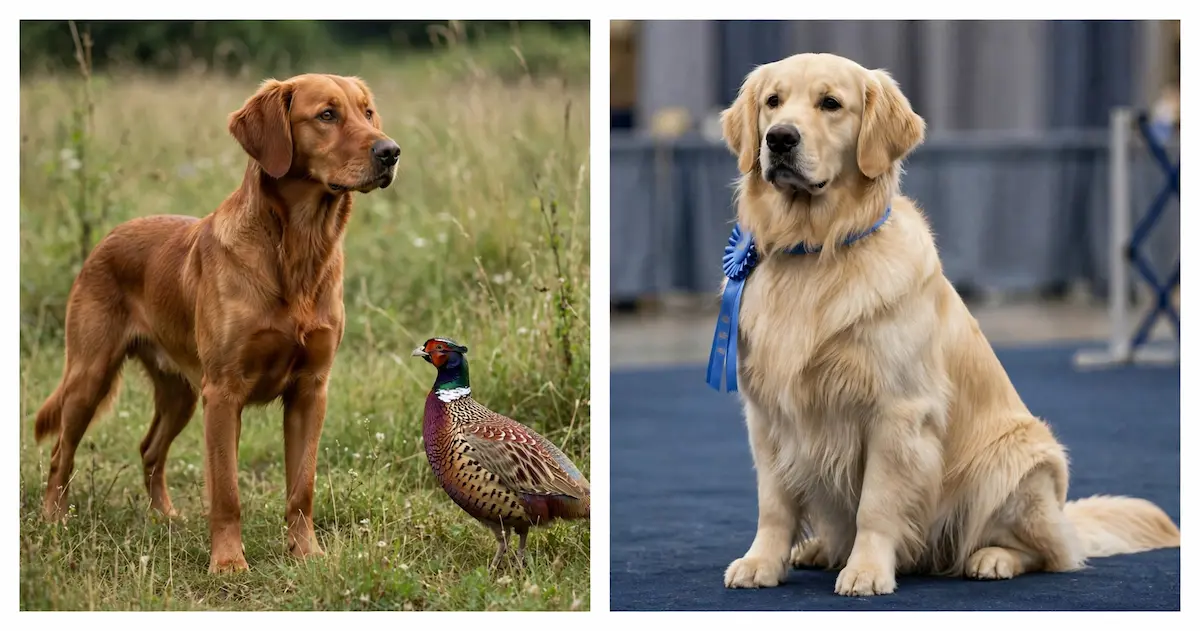
Not every Golden Retriever has the same energy level, and genetics play a real role in that difference. Field line and show line Goldens, while the same breed, are often bred for different purposes.
Field line Goldens are typically bred from working and hunting stock, and tend to be leaner, higher-energy dogs that need more intense daily exercise to stay settled. Show line Goldens, bred more for conformation and temperament, are often calmer and may do well with less intense activity.
This distinction matters when you’re following general exercise guidelines. A field line Golden might need closer to 2 hours of vigorous activity, while a show line Golden of the same age could do well with something closer to the lower end of that range.
If you’re not sure which type your dog is closer to, watching their behavior is a practical way to judge. A dog that seems restless and antsy even after a full walk likely needs more intense or longer sessions than the general guideline suggests.
Also Read Field Goldens or Show Goldens
Signs of Too Little or Too Much Exercise
Knowing what to watch for helps you adjust your Golden’s routine before small issues turn into bigger ones.
| Under-Exercised | Over-Exercised |
| Destructive chewing | Limping or stiffness |
| Excessive barking | Heavy panting long after activity ends |
| Restlessness at night | Reluctance to get up or move |
| Weight gain | Lagging behind on walks |
| Digging or pacing | Signs of heat stress (excessive drooling, glazed eyes) |
A dog that’s under-exercised often shows behavior problems before physical ones. These issues tend to improve within a week or two of increasing daily activity.
Overexertion is more urgent to address. Limping, unusual stiffness, or a dog that’s reluctant to move the day after exercise are signs the previous routine was too much, and a vet visit is worth considering if these signs don’t improve with rest.
Common Misconceptions About Golden Retriever Exercise
A few ideas about Golden Retriever exercise get repeated often, even though they don’t hold up well in practice.
“Goldens need hours of running every day.” High energy doesn’t always mean high mileage. Many Goldens do better with shorter, varied sessions that include mental engagement, rather than long stretches of running alone.
“More exercise is always better.” This isn’t true, especially for puppies. Overexercising a young Golden can cause lasting joint damage, and even adult dogs can be pushed into overexertion during hot weather or after illness.
“A big yard means my dog doesn’t need walks.” Yard access helps, but it doesn’t replace structured walks. Walking exposes a dog to new smells, sights, and mild physical challenges that free yard time doesn’t fully provide.
“All Goldens have the same energy level.” As covered earlier, field line and show line differences, along with individual temperament, mean exercise needs can vary noticeably between two dogs of the same breed.
Frequently Asked Questions
How much exercise does a Golden Retriever need a day?
Most adult Golden Retrievers need 60 to 120 minutes of exercise daily, split into two or more sessions. Puppies need much less, following the 5-minutes-per-month guideline, while seniors typically do well with 30 to 60 minutes of gentler activity.
How many hours of exercise does a Golden Retriever need?
Adult Goldens generally need 1 to 2 hours of exercise per day. This can combine walking, active play, and mental stimulation rather than requiring two full hours of continuous physical activity.
Does a Golden Retriever need a lot of exercise compared to other breeds?
Golden Retrievers are considered a moderately high-energy breed. They typically need more exercise than smaller companion breeds but less intense activity than working breeds like Border Collies or Belgian Malinois.
How much exercise does a 10-year-old Golden Retriever need?
A 10-year-old Golden usually falls into the senior category and does well with 30 to 60 minutes of low-impact exercise daily. Swimming and short, frequent walks tend to work better than long or high-intensity sessions at this age.
Key Takeaway
The right amount of exercise for a Golden Retriever depends on age, health, and individual energy level, not a single fixed number. Puppies need short, controlled sessions to protect their growing joints, adults need a solid daily routine of 60 to 120 minutes, and seniors need gentler, shorter activity that respects aging joints.
Pay attention to how your dog responds after exercise. Adjust the routine if you notice signs of restlessness or if your dog seems overly tired or sore. If you’re ever unsure whether your Golden’s exercise routine fits their health condition, a quick check-in with your vet is the most reliable way to get a plan suited to your specific dog.
For more on keeping your Golden healthy at every stage, you may also want to look into how much sleep Golden Retrievers need, the signs of joint problems in Golden Retrievers, and a full guide to Golden Retriever weight and diet management.
For more detailed guidance on canine exercise and growth plate development, the American Veterinary Medical Association (AVMA) is a reliable resource.

Hi, I’m Jack Austin, founder of Cool Goldens. I share practical, research-backed advice on training, nutrition, and daily care to help you give your Golden Retriever the happiest, healthiest life possible.