

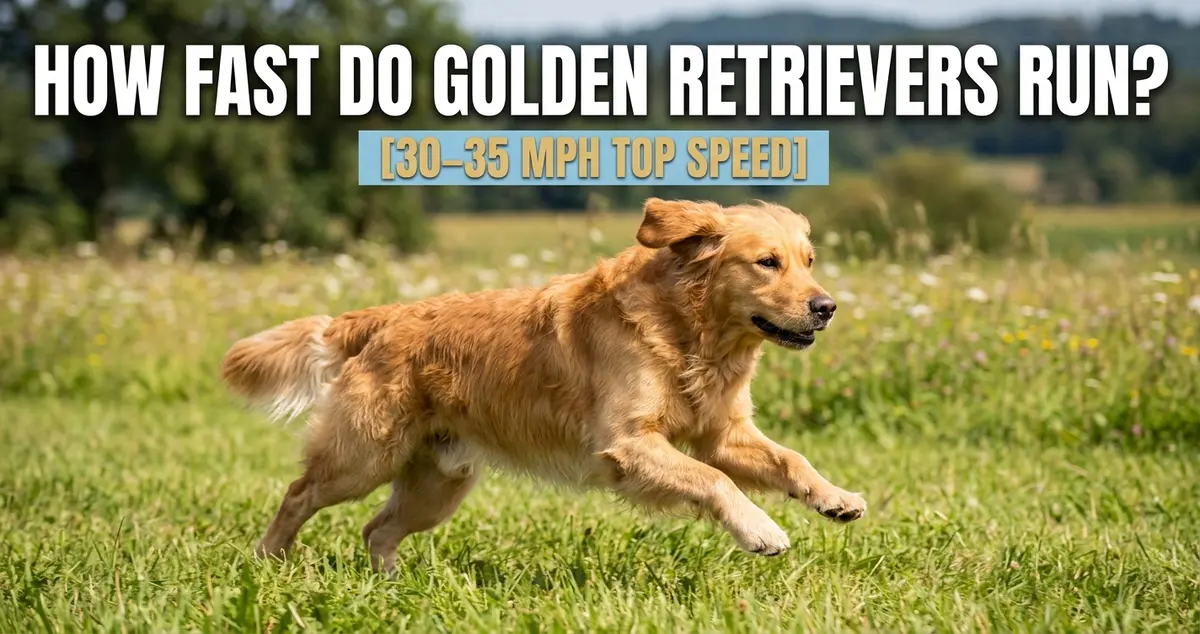
A healthy adult Golden Retriever runs at a top speed of 30 to 35 mph, with a comfortable jogging pace of 12 to 15 mph over distance. That number changes based on age, weight, breeding line, and joint health.
This breed wasn’t built for pure sprinting like a Greyhound. It was built for stamina, hours in the field, and steady effort over time. Understanding that difference matters if you plan to run with your dog, since speed alone doesn’t tell you what’s actually safe..
Golden Retriever Speed Compared to Other Breeds
Numbers mean more with context. A Golden Retriever’s top speed sits in the middle of the pack compared to other common breeds, and well behind a dog built purely for sprinting.
| Breed | Approximate Top Speed |
| Greyhound | 45 mph |
| Border Collie | 30 mph |
| Labrador Retriever | 30–35 mph |
| Golden Retriever | 30–35 mph |
| Vizsla | 40 mph |
| Average human (sprinting) | 15–18 mph |
Even at the lower end of its range, a Golden Retriever can outrun almost any person on foot. Most owners will never actually see their dog hit top speed, since that pace only happens in short bursts, similar to a 100-meter dash, not something a dog holds for more than a few seconds.
What Affects How Fast a Golden Retriever Can Run

Speed isn’t a fixed trait. It shifts based on a handful of physical factors that change throughout a dog’s life.
Age and Physical Development
Young puppies have soft, developing joints and haven’t built the muscle needed for real speed. Growth plates typically don’t close until around 12 to 18 months, depending on the dog’s size. Speed and stamina both increase steadily as a Golden matures into adulthood.
Weight and Muscle Condition
An overweight Golden Retriever will be noticeably slower and tire faster than one at a healthy weight. Extra pounds put more strain on joints with every stride, which cuts into both speed and endurance. Lean muscle, on the other hand, supports quicker acceleration and better stamina.
Overall Health and Joint Condition
Hip or elbow issues, which are common in the breed, can reduce speed and make running uncomfortable. Arthritis in older dogs has a similar effect. A dog with an underlying health condition should only run with a vet’s guidance on safe limits.
Field-Bred vs. Show-Bred Golden Retrievers: Are Field Lines Faster?
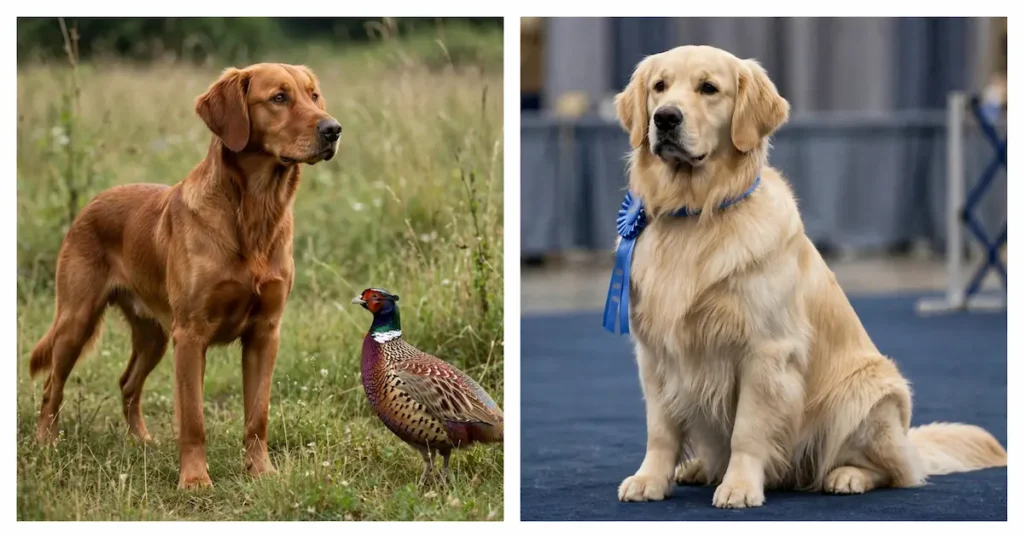
Not all Golden Retrievers are built the same. Field-bred lines tend to be leaner, lighter, and more athletic, while show-bred lines are typically stockier with a heavier coat.
That lighter build usually gives field-bred Goldens an edge in speed and agility. Show-bred dogs aren’t slow by any means, but their heavier frame is built more for steady movement than quick acceleration. If you’re comparing specific bloodlines, our guide on field vs. show line Golden Retrievers covers the differences in more detail.
Puppy vs. Adult Running Speed and Safety
A grown Golden Retriever and a Golden puppy are not comparable when it comes to running. Puppies have more energy in short bursts but far less structural readiness for sustained speed or distance.
Why Puppies Shouldn’t Run Long Distances Yet
Running long distances before a puppy’s growth plates close can raise the risk of joint damage later in life. Most veterinary guidance recommends holding off on structured running, like jogging alongside a bike or treadmill, until the dog is fully grown. Short bursts of play in a yard are a different matter and are generally fine at any age.
Built for Endurance, Not Just Speed
Golden Retrievers were originally bred to retrieve waterfowl for hunters across long days in the field. That history shaped a body built for stamina, not for outright sprinting.
This is why a Golden Retriever will often keep pace on a 30-minute jog more easily than it holds a full sprint for more than a few seconds. Their broad chest and strong hindquarters support sustained effort, and many also take naturally to swimming, which uses similar muscle groups without the joint impact of running on hard ground.
Common Misconceptions About Golden Retriever Speed
A few assumptions about this topic don’t hold up once you look closer.
- “A fast sprint means the dog can handle long runs.” Sprinting and endurance use different muscle systems. A dog that bursts quickly across a yard may still tire on a three-mile jog.
- “All Golden Retrievers run at the same speed.” Age, weight, line, and health all cause real variation between individual dogs.
- “If a dog can run fast, it’s safe to push its limits.” Physical ability doesn’t remove the risk of joint strain or overheating, especially in young or older dogs.
How to Safely Build Your Golden Retriever’s Running Fitness
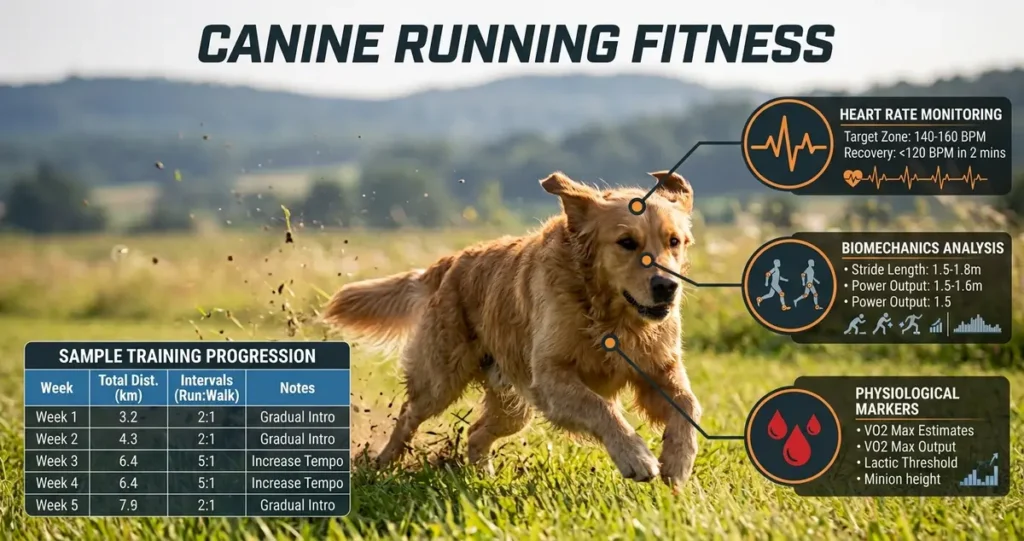
Building running fitness takes patience. Jumping straight into long runs is one of the more common mistakes owners make with an eager, high-energy breed like this one.
A Gradual Training Progression
Start with short walks and gradually add light jogging intervals over several weeks. Increase distance slowly, giving muscles and joints time to adapt. A basic approach looks like this:
- Weeks 1–2: Brisk walks, 20–30 minutes
- Weeks 3–4: Add short jogging intervals within the walk
- Weeks 5–6: Extend jogging segments gradually
- Ongoing: Increase distance only when the dog recovers well after each session
Always check with a veterinarian before starting a running routine, particularly for puppies, seniors, or dogs with existing joint concerns.
Signs of Overexertion to Watch For
Watch for heavy panting that doesn’t slow down after a rest, lagging behind on the leash, or reluctance to keep moving. Limping, excessive drooling, or stumbling are signs to stop the activity right away and let the dog recover. In hot weather, these signs can appear faster, so shorter, cooler-time runs are safer.
Pairing a running routine with the right daily exercise needs for Golden Retrievers helps prevent overtraining and keeps activity levels balanced across the week.
FAQs
Can a Golden Retriever outrun a human?
Yes. Even a Golden Retriever’s lower speed range, around 30 mph, is faster than nearly any human sprinter. Most people top out around 15 to 18 mph at a full sprint, so a healthy adult Golden will outrun a person without much effort.
Are Golden Retrievers considered a fast breed overall?
They’re moderately fast compared to other breeds, but not among the fastest. Breeds built specifically for sprinting, like Greyhounds or Vizslas, outpace them. Golden Retrievers are better known for endurance and stamina than raw top speed.
Do Golden Retrievers slow down significantly with age?
Yes, most dogs show a gradual decline in speed and stamina as they age, often starting around 7 to 8 years old. Joint stiffness and reduced muscle mass are usually the main causes. Adjusting exercise intensity for a senior dog helps keep them active without added strain.
Key Takeaway
A Golden Retriever’s running speed depends less on a single number and more on age, build, and health. Most healthy adults comfortably sprint around 30 to 35 mph and jog at 12 to 15 mph, but getting there safely means building up gradually and watching for signs of fatigue.
Check with your vet before starting any new running routine, especially with a puppy, a senior dog, or one with joint concerns. For general guidance on canine exercise and joint health, the American Kennel Club is a reliable resource to consult alongside your vet’s advice.

Hi, I’m Jack Austin, founder of Cool Goldens. I share practical, research-backed advice on training, nutrition, and daily care to help you give your Golden Retriever the happiest, healthiest life possible.