

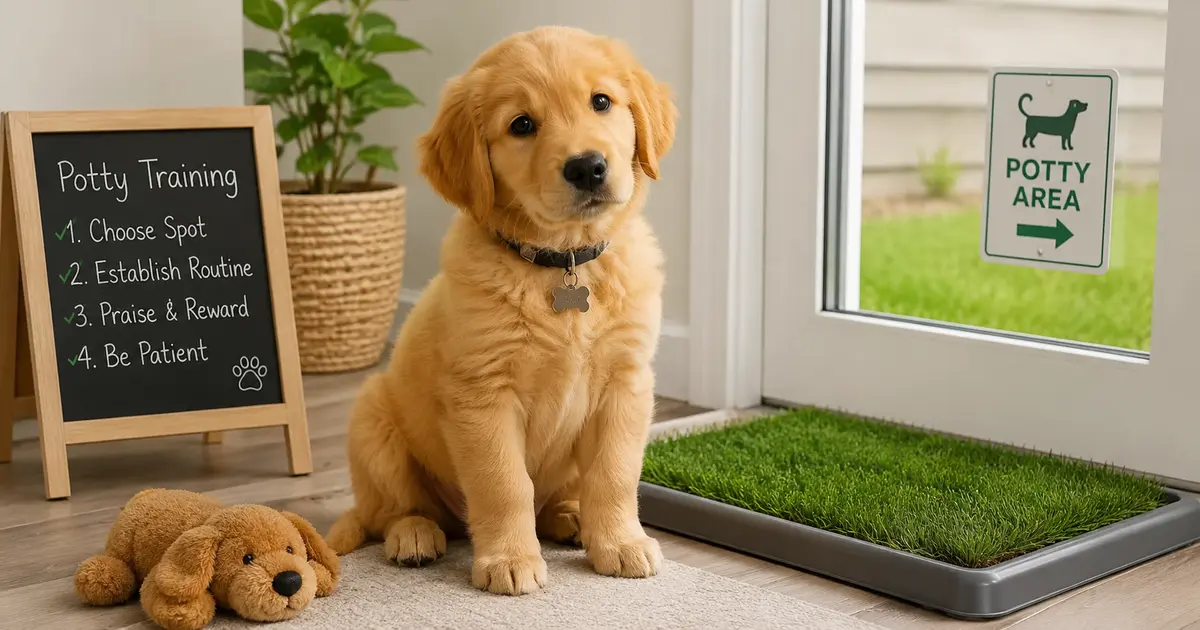
Potty training a Golden Retriever puppy takes consistency, not luck. Take your puppy outside every 1-2 hours, right after meals and naps, and reward them immediately when they go in the right spot.
Combine that with crate training and a fixed daily schedule, and most puppies pick up the basics within a few weeks. Full reliability takes longer, usually a few months, and setbacks along the way are normal rather than a sign of failure.
Here’s exactly how the process works, what to expect at each stage, and how to fix the most common mistakes that slow it down..
How Long Does It Take to Fully Potty Train a Golden Retriever Puppy?
There’s no single number that fits every puppy. Most Golden Retrievers get the basics down within a few weeks of consistent training. Full reliability, where accidents almost never happen, often takes four to six months.
Some puppies take longer. Individual temperament, your consistency, and how much supervision the puppy gets all play a role.
Setbacks are common and don’t mean training has failed. A puppy who was doing well for weeks may suddenly have a few accidents during a growth spurt, a schedule change, or a stressful event like moving house. This is normal puppy development, not a sign you need to start over.
Understanding Your Puppy’s Bladder Control
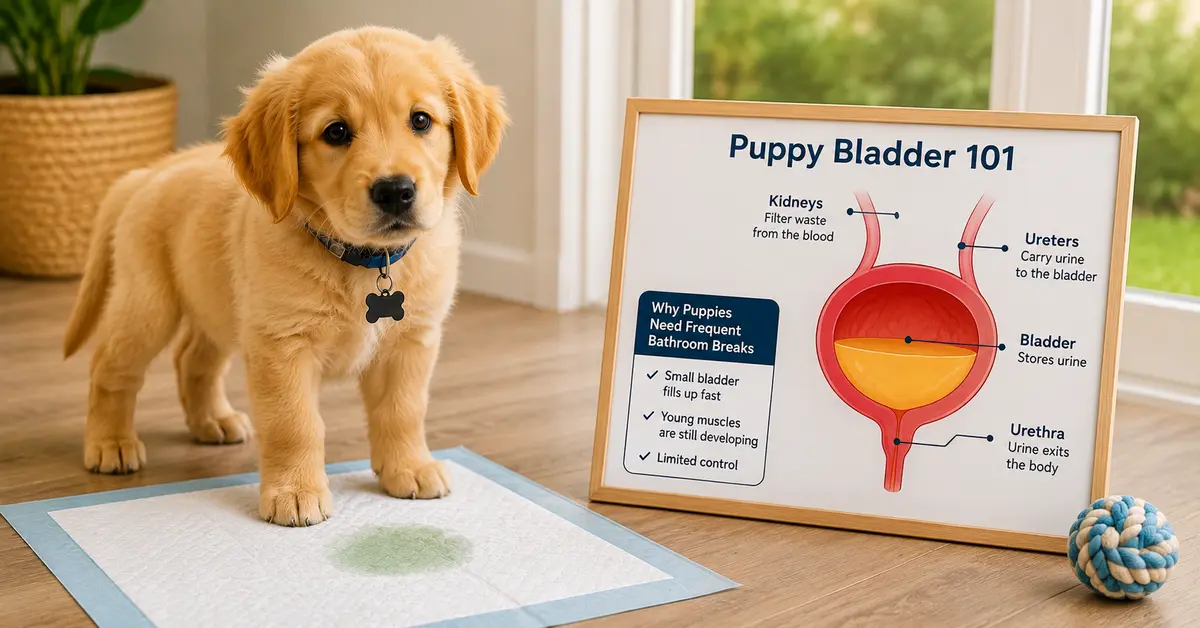
Young puppies physically cannot hold their bladder for long periods. Their bladder muscles and the nerve signals that control them are still developing. This is why punishment doesn’t speed up training. A puppy who has an accident often isn’t being disobedient. Their body simply isn’t ready yet.
Bladder Control by Age
A commonly used guideline is that puppies can hold their bladder for roughly one hour per month of age, plus one hour, up to about eight or nine hours as an adult.
| Puppy Age | Approximate Max Hold Time |
| 8-10 weeks | 1-2 hours |
| 3 months | 3-4 hours |
| 4 months | 4-5 hours |
| 5-6 months | 5-6 hours |
| 6+ months | Up to 6-8 hours (still needs regular breaks) |
This is a general guideline, not a guarantee. Some puppies need breaks more often, especially after drinking water or during active play.
Read aslo Golden Retrievers Weigh Guide
Building a Daily Potty Schedule
A predictable routine helps your puppy learn faster than random bathroom trips. The goal is to take your puppy out before accidents happen, not after.
Key times to build your schedule around:
- First thing in the morning, right after waking up
- After every meal, usually within 5-15 minutes
- After naps
- After play sessions or training
- Right before bedtime
A Sample First-Week Schedule
This is a starting point, not a fixed rule. Adjust it based on your puppy’s age and how quickly they seem to need to go.
| Time | Activity |
| 6:30 AM | Wake up, go straight outside |
| 7:00 AM | Breakfast, then outside again |
| 9:00 AM | Outside after playtime or a nap |
| 11:00 AM | Outside break |
| 12:00 PM | Lunch, then outside again |
| 2:00 PM | Outside after nap |
| 4:00 PM | Outside break |
| 6:00 PM | Dinner, then outside again |
| 8:00 PM | Outside after evening play |
| 9:30 PM | Final outside break before bed |
Feeding your puppy at consistent times each day also makes their potty schedule more predictable. Irregular feeding times often lead to irregular bathroom needs.
Crate Training as a Potty Training Tool
Dogs generally avoid soiling the space where they sleep, which makes a crate a useful tool for building bladder control. The crate should feel like a safe resting spot, never a punishment.
Introduce the crate gradually. Let your puppy explore it with the door open, and feed meals near or inside it so they build a positive association before you start closing the door for any length of time.
Choosing the Right Crate Size
The crate should be large enough for your puppy to stand up, turn around, and lie down comfortably, but not much bigger. A crate that’s too large gives your puppy room to potty in one corner and sleep in another, which defeats the purpose.
Many crates come with a divider panel so you can adjust the space as your puppy grows, rather than buying a new crate every few months.
Crate Training at Night
Take your puppy outside right before placing them in the crate for the night. Keep the crate near your bedroom for the first few weeks so you can hear if your puppy wakes up needing a bathroom break.
Young puppies often need at least one nighttime bathroom trip. As bladder control improves with age, most puppies can gradually sleep through the night without a break.
Read aslo Exercise Does a Golden Retriever Need
Reading Your Puppy’s Signals Before Accidents Happen
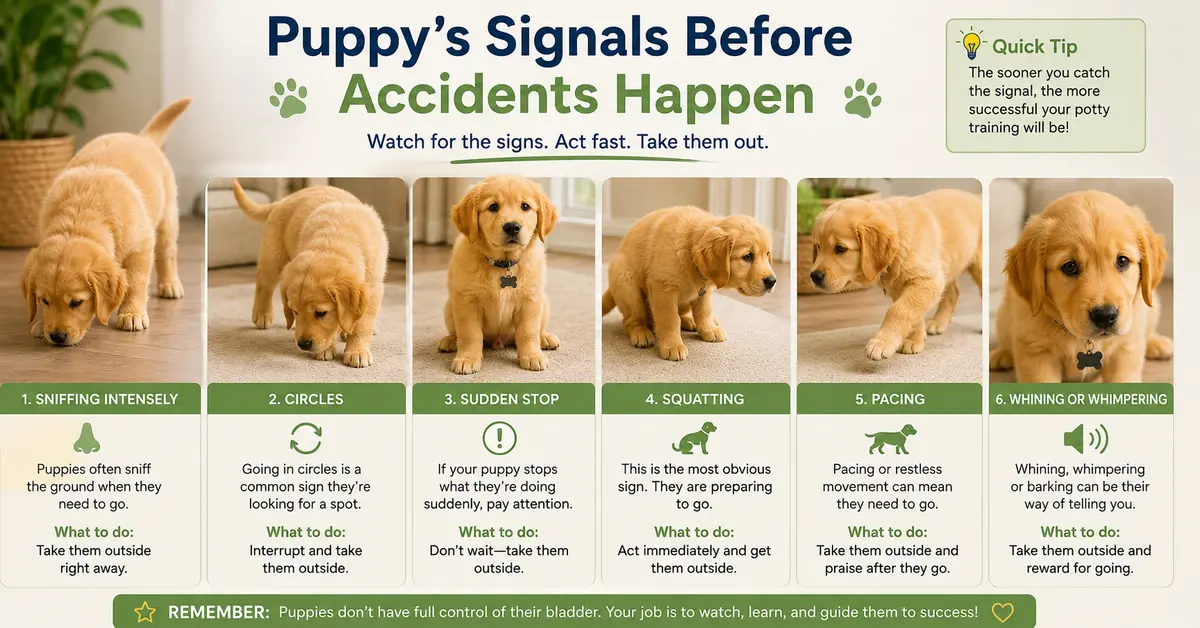
Catching the signs before an accident happens is one of the most useful skills in potty training. Common signals include sniffing the floor, circling, sudden restlessness, whining, or heading toward the door.
Some puppies also pause mid-play and go still for a moment right before they need to go. Watching for this during active playtime catches accidents that supervision alone might miss.
It helps to know the difference between a potty training issue and unrelated causes of “accidents”:
- Excitement urination: Some puppies leak a small amount of urine when greeting people or getting excited. This isn’t a training failure. It usually fades as the puppy matures, and calm, low-key greetings can help reduce it.
- Submissive urination: A puppy may urinate briefly when they feel overwhelmed, such as during scolding or when meeting an unfamiliar dog. Punishing this makes it worse, since it’s a stress response rather than disobedience.
If either of these seems to be happening often, it’s worth watching for patterns and, if needed, asking your vet whether anything else could be contributing.
Using Positive Reinforcement and Potty Commands
Reward-based training works better than punishment for teaching a puppy where to go. The moment your puppy finishes going in the right spot, praise them and offer a small treat. Timing matters more than the size of the reward.
Pick one simple verbal cue, like “go potty,” and use it consistently every time you take your puppy to their spot. Over time, your puppy connects the phrase with the action, which can help prompt them to go even in new environments like a vet’s office or a friend’s yard.
Avoid scolding or punishing accidents. This can teach your puppy to fear going to the bathroom in front of you at all, which sometimes leads to a new problem: puppies who hide to potty indoors instead of learning to go outside.
Common Mistakes That Slow Down Potty Training
A few habits tend to slow potty training down without owners realizing it.
- Rubbing a puppy’s nose in an accident. This doesn’t teach a connection between the action and the mess. It mostly teaches the puppy to be afraid of you.
- Using a crate that’s too big. As mentioned earlier, extra space lets a puppy potty and rest in separate corners, removing the natural incentive to hold it.
- Restricting water too aggressively. Limiting water right before bed can help, but cutting water access throughout the day can lead to dehydration and doesn’t actually speed up training.
- Inconsistent verbal cues. Switching between “go potty,” “hurry up,” and “do your business” makes it harder for a puppy to build a clear association.
- Cleaning accidents with the wrong products. Standard household cleaners often don’t fully remove the scent markers in urine, which can draw a puppy back to the same indoor spot. An enzymatic cleaner breaks down these compounds more thoroughly.
Handling Accidents, Regression, and Special Situations
Accidents are a normal part of the process, even with a solid routine. How you respond matters more than trying to prevent every single one.
Potty Training a Golden Retriever Puppy in an Apartment
Apartment living adds a few extra steps, but it doesn’t make housebreaking a Golden Retriever puppy impossible. Set up a consistent indoor option, such as puppy pads or an artificial turf patch, for times when getting outside quickly isn’t realistic.
If you plan to transition to outdoor-only potty breaks eventually, start reducing reliance on indoor pads gradually rather than switching all at once. A sudden change can confuse a puppy who has learned the pad is the correct spot.
Potty Training When You Work Full-Time
Long workdays make the every-1-2-hour rule difficult, especially for very young puppies. A midday dog walker, a trusted neighbor, or a doggy daycare visit can fill the gap during the hours a young puppy can’t be left alone.
Setting up a puppy-proofed pen with a designated potty area is another practical option for owners who can’t get home during the day.
Why Accidents Happen Even After Weeks of Progress
A puppy who was doing well and suddenly starts having accidents again is usually dealing with one of a few common triggers: a growth spurt, a change in routine, a new environment, or increased independence during adolescence. This is a normal part of development, not a reason to restart training from scratch.
Going back to a tighter supervision schedule for a week or two, the same routine used early in training, usually gets things back on track.
Frequently Asked Questions
Is it normal for my puppy to whine in the crate?
Some whining when first adjusting to the crate is common. If it continues past the first couple of weeks or seems tied to needing a bathroom break, take your puppy out and reassess how gradually you introduced the crate.
Can bad weather cause potty training setbacks?
Yes. Many puppies are reluctant to go outside in rain, snow, or extreme heat, which can lead to more indoor accidents during certain seasons. Sticking to the same schedule and using positive reinforcement, even during short weather-shortened trips, helps limit setbacks.
Does potty training differ between English and American Golden Retrievers?
The basic method is the same for both types. Individual temperament and maturity rate matter more than which type your puppy is, so training pace can vary from dog to dog regardless of type.
When should I be concerned that something other than training is causing accidents?
If a fully house-trained adult dog suddenly starts having frequent accidents, or a puppy strains, whines, or shows signs of discomfort while trying to go, it’s worth checking with a vet. This can sometimes point to a urinary tract infection or another medical issue rather than a training problem. The AVMA is a reliable resource for general pet health guidance.
Key Takeaway
Potty training a Golden Retriever puppy comes down to a few consistent habits: a predictable schedule, close supervision, quick rewards for going in the right spot, and patience during the inevitable setbacks. There’s no shortcut that replaces consistency over time.
Start with the sample schedule above, adjust it to your puppy’s age and your daily routine, and expect the process to take weeks for the basics and months for full reliability. If you’re also working through crate training or dealing with chewing and mouthing during this stage, those challenges are worth tackling with the same patient, reward-based approach.

Hi, I’m Jack Austin, founder of Cool Goldens. I share practical, research-backed advice on training, nutrition, and daily care to help you give your Golden Retriever the happiest, healthiest life possible.