


Few sounds wear down a household like a dog scratching at 2 a.m. Most Golden Retrievers itch because of fleas, environmental allergies, food allergies, or a skin infection that follows one of them. The cause decides the fix, so finding it comes first.
This guide walks through each cause, the signs that point to it, and how vets confirm it. You will also find safe care steps for today, a reality check on popular home remedies, and a simple log to bring to your next appointment.
Why Is My Golden Retriever So Itchy?
A Golden Retriever is usually itchy because of fleas, an environmental allergy such as pollen or dust mites, a food allergy, or a bacterial or yeast infection of the skin. Infections often build on top of an allergy. Only a vet visit can confirm which cause is behind it.
The order matters. Vets usually rule out parasites first, since fleas are common and easy to miss. Next they check for infection, and then they look at allergies to food and the environment. Skipping ahead often means spending money on shampoos, supplements, or new foods that do not address the real problem.
Goldens are also a breed that vets see often for skin allergies, which the next section explains. A single cause is possible, but two or three at once is just as common. A dog with a pollen allergy can also have fleas and a yeast infection, and each one adds to the itch.
The sections below show how to tell these causes apart and when to stop guessing and call the vet.
Do Golden Retrievers Itch a Lot?
Many do. Skin allergies are among the more common health problems in the breed, and veterinary research backs that up. A multicentre study in Veterinary Dermatology found that Golden Retrievers were predisposed to atopic dermatitis (a long-term skin allergy to things in the environment) at three of five referral centres in Australia, Germany, and the United States. Predisposition means the breed showed up more often than expected, not that every Golden will be affected.
Genes play a part, but they do not tell the whole story. Researchers at the University of Nottingham reported that in Labradors and Golden Retrievers, roughly 25 to 44 percent of the risk came from genetics and 56 to 75 percent from environment. That second number is good news. Things like parasite control, bathing routines, and allergen exposure can change how itchy a dog gets.
Atopic dermatitis is sometimes called canine eczema. It is a lifelong condition that tends to flare and settle over time.
How Much Scratching Is Normal?
Every dog scratches now and then. A short scratch after a nap, or a quick shake and rub after a walk, is normal. A healthy dog moves on and the skin looks fine.
Scratching becomes a concern when it is frequent, hard to interrupt, or wakes the dog or the household at night. Other signs include chewing at the paws, rubbing the face on carpet, licking the belly, or shaking the head. Look at the skin too. Redness, scabs, bald patches, a musty smell, or dark, thickened skin all suggest the itch has gone beyond a passing irritation.
One useful rule is to watch the pattern, not a single moment. If the scratching lasts more than a few days, comes back every season, or leaves marks on the skin, treat it as a health issue and book a visit.
Where Your Dog Itches Can Point to the Cause
The body area your dog focuses on gives real clues. A study of 552 dogs with atopic dermatitis, published in Veterinary Dermatology by Jaeger and colleagues, found lesions most often on the paws (62%), the belly (51%), the ears (48%), and the face (39%). Those are the places to check first.
| Where the itch shows up | Causes to consider | Sensible next step |
| Paws (licking, chewing, rust-colored staining) | Environmental allergy, food allergy, yeast infection | Wipe paws after walks and book a vet visit if it continues |
| Ears (head shaking, redness, odor, dark debris) | Allergy, yeast or bacterial ear infection, ear mites | Have a vet look inside the ear before using any drops |
| Belly, armpits, groin | Environmental allergy, contact irritation, yeast | Check for redness and a greasy feel, and note any new products |
| Base of the tail and lower back | Fleas, flea allergy dermatitis | Use a flea comb and review flea prevention |
| Face and muzzle (rubbing on furniture) | Environmental or food allergy | Track timing and seasons |
| Whole body | Fleas, mange mites, widespread allergy, dry skin | Book a vet visit |
| One wet, red, painful patch | Hot spot | Keep it clean and dry, stop licking, and see a vet |
These patterns overlap, and no table can replace an exam. Use it to describe the problem clearly to your vet, not to diagnose it at home.
Common Causes of Itching in Golden Retrievers
Most cases trace back to one of the seven causes below, though several can be present together. Each one looks a little different, which is why details like location, timing, and skin changes help so much.
Fleas and Flea Allergy Dermatitis
Fleas are the first suspect, and they are easy to miss. Many dogs only need a few bites to react, because some develop an allergy to flea saliva. This is called flea allergy dermatitis, and it can cause intense itching even when a dog carries very few fleas.
The classic sign is itching and scabbing near the base of the tail and the lower back. You may see tiny black specks in the coat. Place them on a damp paper towel, and if they turn reddish-brown, they are likely flea dirt.
A flea comb helps with checking. Even if you find nothing, your vet may still advise treatment, since a clear comb does not rule fleas out.
Environmental Allergens and Atopic Dermatitis
Dogs can react to pollen, grass, mold, and dust mites. When the immune system overreacts to these, the result is atopic dermatitis. The skin becomes itchy, usually at the paws, face, ears, belly, and skin folds.
The University of Bern, which studied the disease in Labradors and Golden Retrievers, notes that affected dogs often have recurrent ear infections. It also states that no useful genetic test for breeders exists yet.
Seasonal allergies are one form. Some dogs itch only during spring or fall, while others react to indoor allergens and itch all year.
This condition is managed, not cured. A good plan lowers the itch, protects the skin, and keeps flare-ups short.
Food Allergies
Food allergies are less common than environmental ones, but they are worth ruling out, especially in dogs that itch all year. The trigger is usually a protein in the diet. Reports commonly name beef, dairy, chicken, and wheat.
Skin signs include itchy paws, ears, and face. Some dogs also have loose stools or frequent ear infections, though many have skin signs alone.
Food allergy looks very much like environmental allergy, so only a proper food trial can separate them. A later section explains how that trial works and why it needs to be strict.
Bacterial and Yeast Infections
Infections are often a result of the itch, not its first cause. Scratching and licking damage the skin barrier, and bacteria or yeast move in. The infection then adds its own itch.
Signs include a musty or sour smell, greasy or flaky skin, crusts, small pimple-like bumps, and darkened skin in chronic cases. Yeast often shows up in the ears, paws, and skin folds.
Infections need treatment of their own, often with medicated shampoos, wipes, or prescription medicine. Allergy care alone will not clear them, and an infection left in place keeps the dog scratching.
Hot Spots
A hot spot is a red, wet, painful patch of skin that appears quickly, sometimes within hours. It usually starts with an itch. The dog licks or chews the spot, the skin breaks down, and bacteria thrive in the damp area.
Goldens are prone to them because the thick coat traps moisture, especially after swimming or baths when the undercoat stays wet. Allergies and fleas are frequent triggers.
Small hot spots may stay mild, but they can spread fast. Keep the area dry, stop the licking, and have a vet check anything that grows, oozes, or looks painful. Trimming the hair around the spot usually needs a vet or groomer, because the area can be sore.
Mites and Mange
Mites cause two very different conditions. Sarcoptic mange is intensely itchy and spreads between dogs. It can also pass to people, causing a temporary itchy rash. Common spots include ear edges, elbows, and the belly.
Demodex mites live on most dogs in small numbers without causing trouble. Problems usually appear when a dog’s immune system is weak, and the signs include hair loss and sometimes secondary infection.
Neither can be diagnosed by looking. A vet confirms mites with skin scrapings or other tests, and the treatments differ, so a correct diagnosis matters.
Dry Skin and Irritants
Dry skin can come from low humidity, frequent bathing, harsh shampoos, or cold weather with indoor heating. The coat looks dull, and flaky skin appears along the back.
Contact irritants are another source. Dogs can react to a new shampoo, laundry detergent, floor cleaner, or lawn treatment. If the itch started soon after a change at home, note it and tell your vet.
Dry skin is usually mild, but it can also sit alongside allergy, so persistent flaking deserves a check. Switching to a gentle dog shampoo and bathing less often are reasonable first steps while you arrange a visit.
Seasonal, Year-Round, and Age Patterns
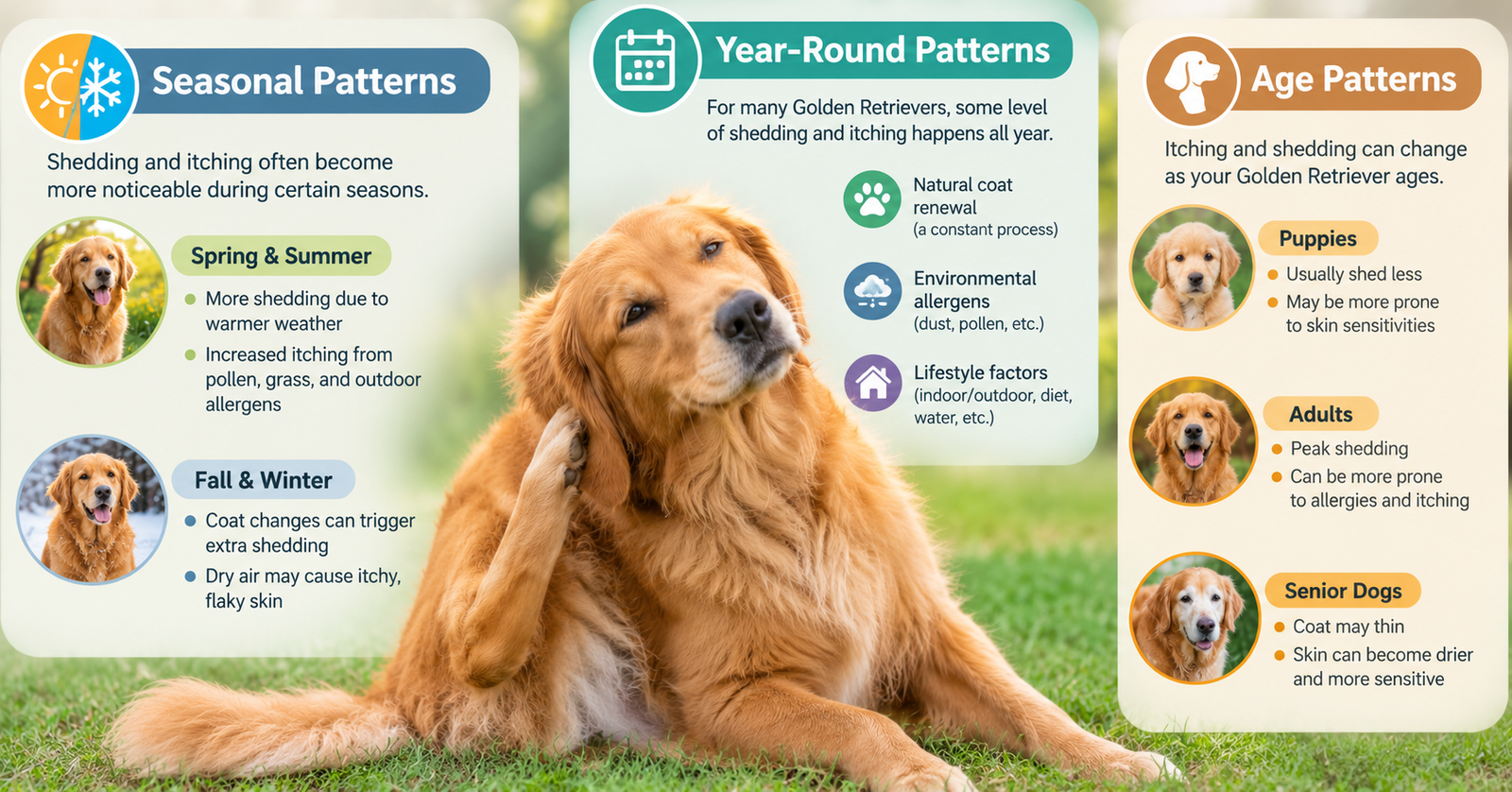
The timing of the itch gives clues. Itching that rises in spring or autumn points toward pollen or mold. Itching during warm, humid months may involve fleas, grass, or yeast. Winter itching can come from indoor allergens, dry air, or dust mites in bedding.
Year-round itch fits several causes: dust mites, mold, food allergy, or ongoing flea exposure. Some dogs start with seasonal flare-ups that stretch longer each year until the itch never fully stops.
Age matters as well. Environmental allergies often begin in the first few years of life, so a young adult Golden with new itching fits that pattern. Puppies can pick up fleas, mites, or ringworm from other animals, and ringworm needs a vet to diagnose.
New itching in a senior dog deserves a careful check. Skin infections, parasites, and other health problems become more likely with age. Record when the itch began and whether the season, a diet change, or a new product lined up with it.
Warning Signs That Mean a Vet Visit
Some situations should not wait. Contact a vet the same day if your dog has any of these signs:
- Open sores, bleeding, or skin that looks raw
- Swelling of the face, hives, or sudden widespread redness
- A hot spot that is growing quickly or looks painful
- Strong odor, pus, or discharge from skin or ears
- Head tilting, pain when the ears are touched, or constant head shaking
- Lethargy, fever, loss of appetite, or vomiting along with the itch
Book a visit within the week if the itch lasts more than a few days, wakes the dog at night, causes hair loss, or keeps returning in the same season. Repeated ear or paw problems also fit this group.
Home monitoring is reasonable when the scratching is mild, the skin looks normal, and your dog is eating, playing, and sleeping well. Even then, set a deadline. If there is no improvement in a few days, move to a vet visit.
Waiting often makes things harder. A short itch can become a skin infection quickly, and infected skin takes longer to heal than a problem caught early.
How Vets Find the Cause of Itching
Vets work through the possibilities in a set order. They begin with the history: when the itch started, which body areas are affected, and what changed in food, products, or home. They then examine the skin, ears, and paws.
Tests often include flea combing, skin scrapings for mites, and cytology. Cytology means pressing tape or a slide to the skin or ear to look for bacteria and yeast under a microscope. These tests are quick and inexpensive, and they answer the first big questions.
Once parasites and infection are treated or ruled out, the focus moves to allergy. According to Clinician’s Brief, a positive blood allergy test does not diagnose environmental allergy, which is identified by excluding other causes of itch. This is why the process can feel slow, but each step narrows the list and prevents wasted treatment.
Elimination Diets and Hypoallergenic Dog Food
A food trial is the most reliable way to find a food allergy. Your dog eats only a special diet for several weeks. The diet is either hydrolyzed (proteins broken into pieces too small to trigger a reaction) or built on a protein your dog has never eaten.
Eight weeks has long been the standard length, though your vet will set the exact plan. Strictness matters. Table scraps, treats, chews, and many flavored medicines are not allowed, because a single slip can ruin the result.
Store-bought “hypoallergenic” or limited-ingredient foods are not the same as a veterinary trial diet, and they may contain traces of other proteins. Ask your vet before choosing one.
If the itch improves, the vet usually reintroduces the old food. If signs return, food allergy is confirmed. If they do not, the search moves on.
What the Research Says About Itchy Skin in Dogs

Several studies give useful context for Golden owners.
Breed risk. A study by Jaeger and colleagues in Veterinary Dermatology looked at 552 dogs with atopic dermatitis at five referral centres in Australia, Germany, and the United States. Golden Retrievers were predisposed in three of the five. The authors also found that breed risk varied by location, so the pattern is not identical everywhere.
Genes and environment. The University of Nottingham’s Itchy Dog Project, reported by Vet Nurse Online, found that in Labradors and Golden Retrievers about 25 to 44 percent of atopic dermatitis risk came from genetics, with 56 to 75 percent influenced by environment. The same report noted that dogs who scratched less severely tended to be managed without medication, using topical products, fatty acid supplements, and bathing or wiping after walks.
Food allergy diagnosis. A 2024 review in Today’s Veterinary Practice states that an elimination diet trial is the most reliable tool for diagnosing food allergy in dogs, and that serum, saliva, and hair tests are inaccurate and can lead to misdiagnosis. A 2019 study in The Veterinary Journal reached a similar result. It found that a saliva test and a blood test for food-specific antibodies were not reliable for diagnosing adverse food reactions.
Taken together, this research supports a plain message: expect a gradual diagnosis, and be careful with at-home allergy test kits.
Itchy Skin Treatments Vets Use
Treatment depends on the cause, and most dogs need more than one type at once. Vets commonly use four groups of therapy.
Anti-itch medicines calm the itch signal or the immune response behind it. Options include oclacitinib, lokivetmab, and short courses of steroids. Each has benefits and side effects, so a vet must prescribe and monitor them.
Antibiotics or antifungals treat bacterial or yeast infections. Medicated shampoos, wipes, and sprays often work alongside them and can sometimes handle mild infections alone.
Allergen immunotherapy is another option for dogs with confirmed environmental allergy. It exposes the dog to small, increasing amounts of the allergens over time. It can take months to show benefit, and not every dog responds.
Skin support is the fourth group. It includes regular bathing with suitable products, fatty acid supplements, and barrier-support products. These help, but they rarely solve a strong allergy alone.
Chronic allergies are managed over time, with periods of control and occasional flare-ups. A realistic goal is comfort and healthy skin, not a permanent cure.
Flea and Tick Treatments
Reliable parasite control is the foundation of any itch plan. Without it, other treatments often fail, because one flea bite can restart an allergic reaction.
Options include monthly chewable tablets, longer-lasting oral products, spot-on liquids, and collars. They differ in how long they last, which parasites they cover, and whether a prescription is needed. Your vet can recommend one that matches your area and your dog’s lifestyle.
Always choose a product made for dogs, and check the label for your dog’s weight and age. Do not use a product made for another species. Dosing for dogs is based on weight bands, so ask your vet if your dog sits near a limit.
Give the product on schedule. In many regions, year-round use works better than seasonal use, since fleas can survive indoors in cold weather.
Safe Care You Can Do at Home Today

While you wait for a vet visit, a few steps are safe and often helpful. Stopping the licking and chewing comes first, because damaged skin is the fastest route to infection. A soft recovery collar or a clean cotton shirt can protect a spot, and your vet may suggest the best option for the area.
Keep affected skin clean and dry. Gently rinse dirt off paws and belly with plain lukewarm water after walks, then dry well, including between the toes. Brush your dog regularly to remove loose hair and debris.
Check for fleas with a flea comb, focusing on the base of the tail and the belly. Wash bedding in hot water. Vacuum floors and furniture where your dog rests.
Note any recent changes, such as new foods, treats, cleaning products, or walking routes. Write these down for the vet, because they often point to the cause.
Do not apply creams, ointments, or oils meant for people. Dogs lick them off, and some ingredients can upset the stomach or irritate broken skin.
Choosing a Shampoo for Sensitive Skin
A gentle shampoo can ease itch and remove allergens from the coat, but not all products suit all dogs. Look for a formula made for dogs, with a skin-friendly pH, and with soothing ingredients such as colloidal oatmeal. Avoid heavy fragrance and harsh detergents.
If your dog has an infection, a plain shampoo will not be enough. Vets often recommend medicated shampoos with antibacterial or antifungal ingredients, and these usually need several minutes of contact time. Follow the label or your vet’s instructions closely.
Bathing frequency depends on the skin problem. Some dogs benefit from regular baths, while others dry out. Ask your vet to set a schedule.
Rinse thoroughly, since leftover shampoo can itch. Then dry the thick coat all the way down to the skin. A damp undercoat is a common starting point for hot spots in Goldens.
Home Remedies for Itching: What Helps, What’s Unproven, What’s Risky
The internet is full of quick fixes. Some are harmless, some are unproven, and a few can cause real problems. This table sorts the common ones.
| Remedy | What to know | Verdict |
| Colloidal oatmeal products made for dogs | May soothe mild irritation; does not treat the underlying cause | Reasonable for short-term comfort |
| Fatty acid supplements (omega-3) | Often used as skin support; results vary and take weeks | Ask your vet about type and amount |
| Coconut oil on skin | Little reliable evidence; dogs lick it off, and it can leave a greasy coat or upset the stomach | Unproven |
| Apple cider vinegar | No strong evidence; can sting inflamed or broken skin | Avoid on raw or irritated skin |
| Human antihistamines | Results in dogs are inconsistent, and some products include decongestants or other unsafe ingredients | Only with a vet’s guidance |
| Human hydrocortisone cream | Dogs lick it off, and steroid creams may not suit infected skin | Ask a vet first |
| Cold compress on a red patch | May ease heat and swelling for a short time | Fine as a short comfort measure |
The pattern is simple. Remedies that soothe may help a little, but none replace finding the cause. If the problem is a mite, an infection, or an allergy, home products only mask the signs.
When in doubt, ask your vet before using anything on irritated skin.
Common Myths About Itchy Golden Retrievers
“Grain-free food fixes allergies.” Grain is only one possible trigger. Food allergies in dogs are more often tied to proteins such as beef, dairy, or chicken. Changing to a grain-free brand without a vet-guided plan can waste months.
“No fleas seen means no fleas.” Dogs with flea allergy can react to a few bites, and fleas move quickly. A clear coat does not rule them out.
“A saliva or hair test will find the allergy.” Studies, including the 2019 report in The Veterinary Journal, found these tests unreliable for food allergy. A food trial is the standard method.
“A shiny coat means healthy skin.” A glossy coat can hide infection, and skin trouble often begins underneath.
“Itching is just part of being a Golden.” The breed does face a higher risk of skin allergy, but that does not make constant scratching normal. Most dogs can be made much more comfortable.
“Allergies can be cured.” Atopic dermatitis is a long-term condition. Treatment aims to control signs and prevent flare-ups, and the plan may change over time.
Prevention and Daily Routine
Prevention works best as a steady routine, not a reaction to flare-ups. Keep parasite control on schedule all year if your vet advises it. Missed doses are one of the more common reasons itching returns.
Brush your Golden several times a week. This removes loose hair and debris, spreads natural oils, and lets you check the skin for redness, bumps, or hot spots. After swimming or baths, dry the coat down to the skin.
Wipe paws and the belly after walks, especially in pollen season. This takes a minute and removes allergens before they spread to the bedding.
Wash bedding often in hot water, vacuum regularly, and use fragrance-free laundry and cleaning products. Keep any food changes slow and planned, and avoid adding new treats during a food trial.
Schedule regular vet checkups, including ear checks. Early ear or skin infections are much easier to treat. Keep notes on what works, so your plan stays consistent as the seasons change.
Track the Itch: A Simple Log for Your Vet Visit
A short log turns vague worries into useful details. Vets can make faster, better decisions when they see patterns. Start tracking as soon as you notice the problem, even a week before the appointment.
Copy this layout into a notebook or phone note:
| Date | Time of day | Body area | Itch level (1–5) | Food and treats | New products or places | Notes |
Add a line when anything changes, such as a new food, a groomer visit, a trip, or a flea treatment date.
Bring these items to the visit:
- Your log and the date the itch began
- Photos of the skin, taken in good light
- The name of your dog’s food, treats, and chews
- Current flea and tick products, and the last dose date
- A list of shampoos and cleaners used at home
Questions worth asking:
- Which causes are most likely, and in what order will we test?
- Does my dog need a food trial, and how strict must it be?
- What is the plan if the itch returns?
- How will we know the treatment is working?
Frequently Asked Questions
Why does my Golden scratch more at night?
Fewer distractions at night make the itch more noticeable, and a resting dog has little else to focus on. Bedding can also hold dust mites and fleas. Nighttime scratching that interrupts sleep is worth raising with your vet, because it often signals a significant itch.
Can itchy skin go away on its own?
Mild irritation from a one-time trigger, such as a new shampoo, can settle once the trigger is gone. Allergies, mites, and infections rarely clear without treatment. If scratching lasts more than a few days or the skin looks damaged, book a vet visit.
Can my dog’s itching spread to people?
Some causes can. Sarcoptic mange mites can cause a temporary itchy rash in people, ringworm spreads to humans, and fleas bite people too. Allergies do not spread. If you or family members develop itchy spots, mention it to your vet and your doctor.
How long does it take to see improvement after starting treatment?
It depends on the cause. Flea control and infection treatment may bring relief within days to a few weeks. A food trial usually takes about eight weeks to judge. Allergy management is ongoing, and your vet may adjust the plan as your dog responds.
Key Points to Remember
Itching in Golden Retrievers has a handful of common causes: fleas, environmental allergies, food allergies, and infections that follow them. Because these overlap, guessing at home usually leads to delay. Start with a vet visit, and bring your notes.
Until then, keep your dog from licking and chewing the skin, use only dog-safe products, and keep parasite control up to date. Avoid at-home allergy tests, and do not give human medicine without advice.
Plan on a gradual process. Diagnosis often takes several steps, and long-term allergy care means managing signs, not curing them. Most dogs can be kept comfortable with the right plan.
Your next step is simple: start the itch log today, check for fleas with a comb, and book an appointment if the scratching has lasted more than a few days or the skin looks damaged.

Hi, I’m Jack Austin, founder of Cool Goldens. I share practical, research-backed advice on training, nutrition, and daily care to help you give your Golden Retriever the happiest, healthiest life possible.